

Actian is a data management and data intelligence company focused on helping organizations build trusted AI by making enterprise data more understandable, governed, reliable, and accessible. Its Actian Data Intelligence Platform brings together metadata management, data governance, lineage, observability, an enterprise data marketplace, and conversational analytics to help both people and AI systems work with trusted information. Pulse 2.0 interviewed Actian CTO Emma McGrattan to learn more about her background, the company’s evolution, its approach to AI-ready data, and why governance and context are becoming increasingly important as AI agents consume more enterprise information.
Emma McGrattan’s Background

When asked about her background, McGrattan shared:
After earning my degree in Electronic Engineering from Dublin City University, I started my career in Ireland building a data-driven application, which is where I was introduced to Actian database technologies.
In December 1992, I joined Actian, then known as Ingres, and moved through engineering roles and successive leadership positions as the company evolved through the client-server era, cloud transformation, and now the AI era.
I’ve played a major role in helping Actian evolve from a database pioneer to a leader in data intelligence.
Outside of Actian, I’m a vocal advocate for women and LGBTQ+ professionals in technology.
I’m engaged with Lesbians Who Tech + Allies, serve as executive sponsor for HCLTech’s Pride Employee Resource Group, and mentor women at various stages of their careers.
I’ve also worked with legal and social services organizations to raise awareness about AI-driven scams targeting elderly populations, which is a cause that I really care about.
Primary Responsibilities
When asked about her primary responsibilities, McGrattan explained:
As CTO, I’m responsible for where Actian’s technology is going next.
That includes our product strategy, engineering direction, research, and making sure we’re solving the problems customers will face two or three years from now, not just today.
A big part of my role is turning acquisitions into a coherent platform.
Over the past two years we’ve added metadata management, conversational analytics, and embedded analytics to create a unified foundation for enterprise AI.
I also spend a lot of time with customers, analysts, and industry groups.
Technology leadership isn’t just about building products. It’s about understanding where the market is heading and helping shape that conversation.
Favorite Memory
When asked about her favorite memory working for Actian, McGrattan said:
It’s hard to pick a single memory because what I’ve enjoyed most has been the journey itself.
I joined Actian more than thirty years ago as an engineer fixing bugs and bringing products to new platforms.
Since then, I’ve had the opportunity to work through every major technology shift, from client-server computing to cloud and now AI.
Along the way I’ve built lifelong friendships and had the privilege of working with talented teams around the world, particularly in India, where I’ve watched our engineering organization grow into a major center of innovation.
Looking back, the technology has changed many times, but what has kept me here is the opportunity to keep learning while helping shape the company’s future.
Core Products And Features
When asked about Actian’s core products and features, McGrattan explained:
We help organizations build trusted AI by making their data understandable, governed, trusted and reliable.
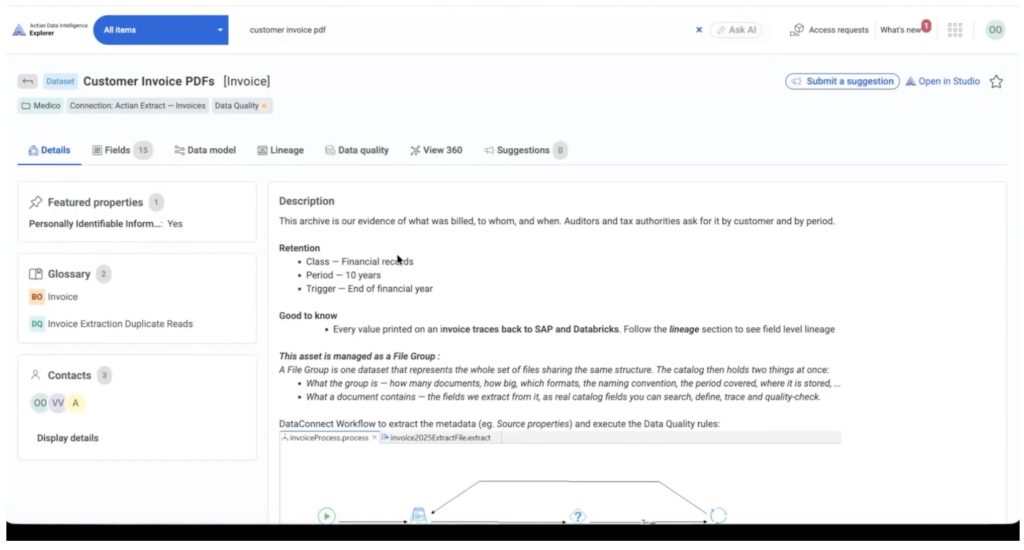
Our Actian Data Intelligence Platform combines metadata management, data governance, lineage, observability, and an enterprise data marketplace all in a single platform.
At its core is a federated knowledge graph that gives both people and AI systems the business context they need to use data with confidence.
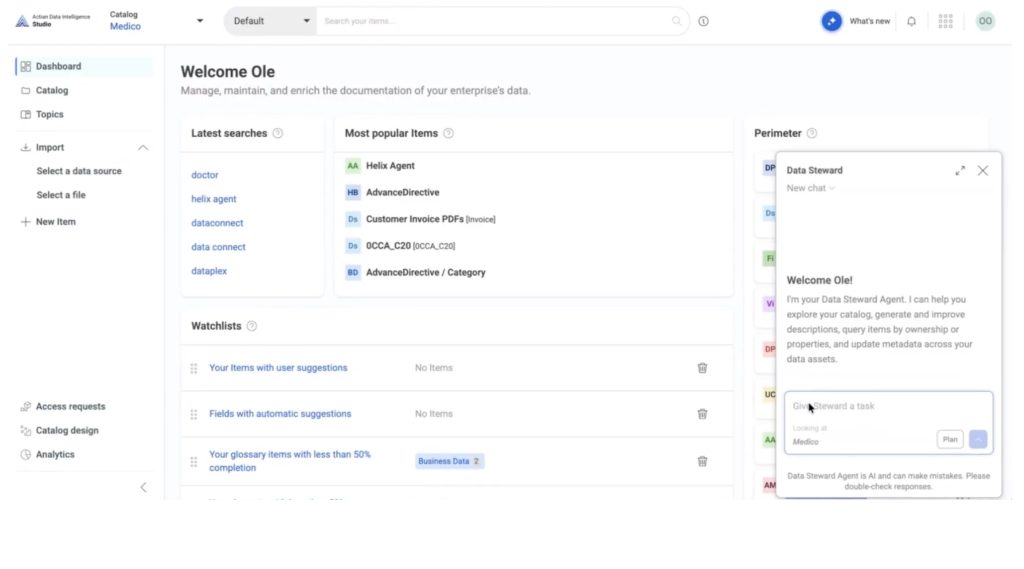
We also provide conversational analytics through Actian AI Analyst, allowing business users to ask questions in natural language, in Teams and Slack, while ensuring every answer is grounded in trusted, governed data.
Building AI On Trusted Data
When asked about recent challenges in the sector, McGrattan said:
The biggest challenge companies face today isn’t AI itself.
It’s that most organizations are trying to build AI on top of data they don’t fully understand or trust.
Companies are under pressure to move quickly, but AI shines a huge spotlight on every weakness in the underlying data.
If the data is inaccurate, poorly governed, or lacks context, AI simply scales those problems faster.
That’s why I encourage organizations to start with a single AI use case that solves an important business problem.
Define a data product to establish trust in the underlying data required for this one use case.
Build trust in the data and the business teams that they know how to do this and expand from there.
Success with AI is much more about building the right foundation than deploying the latest and greatest models.
How Actian’s Technology Has Evolved
When asked how Actian’s technology has evolved since launching, McGrattan explained:
We’ve spent more than fifty years helping organizations manage data, but the role of data has fundamentally changed.
In the past, data existed primarily for people to consume.
Today it’s increasingly consumed by AI agents.
That requires much richer context, stronger governance, and greater automation than traditional data platforms were designed to provide.
Our evolution reflects that shift.
We’ve moved beyond managing data to helping organizations create trusted, AI-ready information that can be safely used by both humans and machines.
Key Company Milestones
When asked about Actian’s most significant milestones, McGrattan said:
One of our biggest milestones has been our ability to continually reinvent ourselves.
Few technology companies remain relevant for more than fifty years, and we’ve done that by adapting to each major shift in the industry.
We started as a database company.
As customers’ needs evolved, we expanded into analytics, integration, cloud data management, metadata, and now AI.
Each step built on the previous one rather than replacing it.
More recently, acquisitions like Zeenea, Wobby, and Jaspersoft have accelerated that journey by adding capabilities that help customers build trusted AI on a stronger data foundation.
For me, the milestone isn’t any one acquisition, it’s the platform we’ve been able to create by bringing those capabilities together.
Customer Success Stories
When asked to share specific customer success stories, McGrattan highlighted two examples:
Two examples I come back to often: I’m Irish, so I’ve always had a special connection to the Revenue Commissioners, Ireland’s tax and customs authority.
Their systems are critical to the country’s economy, and for more than thirty years our technology has been part of that foundation.
One of the things I’m proudest of is that our software has done exactly what enterprise software should do: run reliably in the background.
When you’re supporting national infrastructure, the best outcome is that nobody notices you’re there because everything simply works.
McGrattan also highlighted France Travail:
France Travail, France’s national employment agency, used the platform to centralize data governance and make 25,000 datasets with 10,000 glossary definitions accessible across 30 connected platforms.
Every team in the organization can now find the right information quickly, which is transformative for an institution of that scale and complexity.
Market Opportunity
When asked about the market opportunity, McGrattan explained:
AI is creating one of the biggest platform shifts since the internet, but organizations are discovering that AI is only as good as the data behind it.
That’s creating enormous demand for technologies that improve data quality, governance, metadata, and trust.
Those markets are rapidly converging because enterprises no longer want isolated tools.
They want an integrated foundation that enables AI to operate safely at scale.
That’s exactly where Actian is focused.
Competitive Differentiation
When asked what differentiates Actian from its competition, McGrattan said:
Most vendors solve one piece of the puzzle.
Some focus on metadata, others on observability, governance, or analytics.
We bring those capabilities together into a single platform designed specifically for the AI era.
Our federated knowledge graph provides the business context that AI needs, while integrated governance and observability ensure the data remains trustworthy.
That combination allows organizations to move from AI experiments to production with much greater confidence.
Future Goals
When asked about Actian’s future goals, McGrattan explained:
Our vision is to make trusted enterprise AI practical at scale.
We want organizations to be able to use all of their data, including sensitive and regulated information, with confidence because governance, security, and quality are built into the foundation rather than added afterwards.
We’ll continue investing in AI-powered experiences, stronger governance for autonomous agents, and capabilities that help organizations meet growing data and AI sovereignty requirements around the world.
AI Literacy And The Next Architectural Era
When invited to discuss another topic, McGrattan highlighted the importance of AI literacy:
One topic I’m particularly passionate about is AI literacy.
AI is becoming part of almost every job, yet many people still don’t understand how it uses data or what questions they should be asking about the answers it produces.
I also think we’re entering a new architectural era.
For decades enterprise systems were designed assuming humans were the primary consumers of information.
AI has broken that assumption.
Organizations that redesign their data foundations for both human and machine consumers will be the ones that realize AI’s full potential.
