

AirMDR is a company that provides an AI-powered Managed Detection and Response (MDR) service that uses autonomous virtual analysts to handle 80–90% of security operations center (SOC) tasks—such as triaging, investigating, and responding to threats—enabling 24/7, enterprise-grade cybersecurity for small and medium-sized businesses. Pulse 2.0 interviewed AirMDR co-founder and CEO Kumar Saurabh to learn more.
Kumar Saurabh’s Background
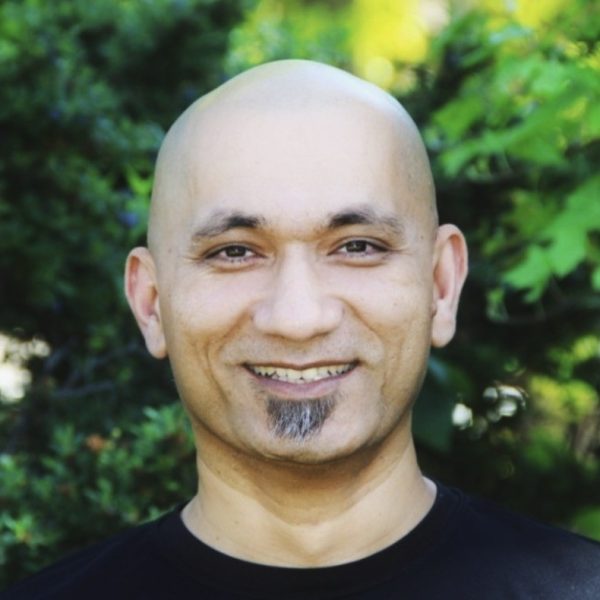
Could you tell me more about your background? Saurabh said:
“I’ve spent more than twenty-five years in security operations, working with organizations of every size, ranging from Fortune 500 SOCs to mid-market teams with only one or two security engineers trying to keep up. I started on the engineering side, which gave me a deep technical foundation. It also showed me what happens when you are too far from the people using what you build. By the time feedback reached me, the nuance was gone, and that shaped a lot of how I lead today.”
“My early experience at ArcSight influenced how I think about modern detection and response. I often say ArcSight was the Palantir of 2008 because it had an unusually strong hold at the top of the enterprise market. Later, when I worked closely with hundreds of mid-market teams, I kept seeing the same pattern. Smaller companies face the same attacks as the biggest enterprises, yet they rarely have the resources or expertise to match them. That contrast is what set the foundation for AirMDR.”
“Cybersecurity shouldn’t be a luxury item. It should be as basic as a seatbelt. If adding a seatbelt to a car costs $100,000, everyone would agree the system is broken. That’s how security feels today: you shouldn’t have to buy a Ferrari just to get a seatbelt.”
“My background has centered on closing that gap by making high-quality detection and response accessible for companies of all sizes.”
Formation Of The Company
How did the idea for the company come together? Saurabh shared:
“I had this realization in July 2015. I could look to solve a problem in five minutes that would take an equally smart engineer three days. This wasn’t about intelligence – it was the years of experience and mental models sitting in my head. That was the moment I realized how constrained cybersecurity was by human expertise and how slow the current process of sharing that expertise was.”
“Then ChatGPT arrived. My previous company had just been acquired, and I immediately told the CEO to give me five engineers because this is going to be transformative. He wasn’t interested – they were focused on other priorities. That’s when I knew I needed to start AirMDR.”
“AI is not just artificial intelligence – it’s abundant intelligence. For the first time, the kind of knowledge that used to require decades to accumulate became available to everyone instantly. I could copy a security log line into Claude or ChatGPT and ask it to explain what it is, and like an infinitely knowledgeable person, it tells me exactly what it is. That shift reshapes the entire foundation of how detection and response should work.”
“My focus since then has been very clear: rebuild the SOC for a world where intelligence is no longer scarce. For mid-market companies in particular, a fully autonomous SOC is not the right answer. The strongest model is a hybrid one where AI agents handle the bulk of the work and human analysts bring judgment, oversight, and partnership. That combination delivers significantly better detection and response at a fraction of the historical cost.”
Favorite Memory
What has been your favorite memory working for the company so far? Saurabh reflected:
“The moments that stand out the most are when customers validate the hypothesis we started with. We believed AI could meaningfully transform the SOC, and every time a customer shows that shift in their own environment, it reinforces why we built this in the first place.”
“What makes it meaningful is the consistency. When a team goes from struggling to keep up with alerts to operating at a much stronger detection and response posture within two to three weeks, it’s a clear signal that the model works. We’ve seen this pattern across 85-90% of our customers. Every time another company experiences that transformation, it tells me we are solving a real problem.”
Core Products
What are the company’s core products and features? Saurabh explained:
“AirMDR delivers a hybrid human-AI agentic SOC platform built specifically for mid-market companies. The foundation of the platform is an AI Agent that handles the bulk of alert triage and analysis, often taking on more than 90% of the work that used to require a human. Our AI agents review logs, interpret signals, and surface insights with a level of speed and consistency that is hard to match manually.”
“The second layer is our human analysts. They validate decisions, investigate the cases that require deeper judgment, and work directly with customer teams. This combination is what makes the model so effective. It is not about replacing people. It is about pairing abundant intelligence with human expertise to deliver high-quality detection and response at a scale and cost that mid-market companies simply could not reach before.”
Challenges Faced
Have you faced any challenges in your sector of work recently? Saurabh acknowledged:
“The biggest challenge has been organizational inertia. Technology is often five years ahead of what people are willing to change. You can still find offices with landlines today. That should tell you something.”
“When we launched, we expected AI to handle a meaningful share of alert triage, but the speed of improvement exceeded anything we anticipated. Work that once took a team days can now be handled by an AI system in seconds. Our own SOC saw a sharp drop in the volume of alerts that required human attention.”
“The harder problem is not the technology – it’s helping teams recognize how dramatically the ground has shifted. Many still operate as if intelligence is scarce when it is now widely available. Our focus has been showing where AI already creates immediate value and guiding teams toward an operating model that reflects this new reality.”
Evolution Of The Company’s Technology
How has the company’s technology evolved since launching? Saurabh noted:
“The biggest change in our technology since launching has been the pace of progress in the AI layer. When we started, our early models could automate close to 80% of alert triage. Since then, we’ve consistently seen automation rates above 97%, that jump happened in a matter of months, not years.”
“Between April and August of this year, we saw an 80% reduction in human triage work in our own SOC. Four months ago, 13-14% of alerts needed human touch. Now it’s less than 3%. That’s a 4x improvement in four months.”
“That kind of improvement changes how the entire SOC operates. The AI layer can now take on almost all of the repetitive and time-consuming work, which allows our human analysts to focus only on the cases that genuinely require expertise and judgment. The result is a model that is faster, more accurate, and significantly more efficient than what was possible when we first launched.”
Significant Milestones
What have been some of the company’s most significant milestones? Saurabh cited:
“Launching the AirMDR platform was the first major milestone because it proved that a hybrid human-AI SOC platform built for the mid-market could deliver the level of outcomes we envisioned.”
“The rapid improvement in our automation layer has been another. Going from around 80% to 97%+ automated alert triage in months fundamentally changed the way our SOC operates and confirmed that abundant intelligence can remove the bottlenecks that have limited security teams for decades.”
“We see this in our own operations: human triage workload dropped by 80% in 4 months, and the quality and consistency of detections improved as the AI layer advanced. That internal validation was important because it showed that the model worked at scale, not just in controlled environments.”
“As the technology has matured, we have expanded into more industries and company sizes, and the hybrid model continues to perform across a wide range of environments. The ability to take what used to be an enterprise-only security capability and make it accessible to smaller teams has been one of the most meaningful indicators that we are on the right path.”
Customer Success Stories
Can you share any specific customer success stories? Saurabh highlighted:
“One of our customers had one security engineer trying to keep up with a nonstop stream of alerts. Within two to three weeks of turning on AirMDR, the AI layer was taking on the majority of the triage work, their detection and response posture moved up several levels, and the human work that remained became far more focused and meaningful.”
“We see the same transformation across a large share of our customers, especially teams that were previously stretched thin. They start with a heavy alert burden and a limited staff, and within weeks, the AI is handling almost all of the repetitive work while the analysts focus on the small set of cases that truly need judgment. That consistency has been one of the strongest validations of the model we set out to build.”
Funding/Revenue
Are you able to discuss funding and/or revenue metrics? Saurabh revealed:
“We recently raised $15.5 million in seed funding. This capital allows us to accelerate work that’s already proven its value – our AI detection layer and hybrid SOC model are seeing strong demand from mid-market teams and managed security providers.”
“The broader story here is about access. High-quality detection and response have historically required enterprise-class budgets. We’re changing that equation. Smaller teams deserve Fortune 500-grade security, and this funding helps us scale the infrastructure and intelligence to deliver it.”
Total Addressable Market (TAM)
What total addressable market (TAM) size is the company pursuing? Saurabh assessed:
“We focus on the part of the market that has been underserved for decades. Almost every company outside the Fortune 500 struggles to build or staff a full SOC, yet they face the same level of threat. That represents roughly 99% of the market.”
“The organizations that are the best fit for AirMDR are companies with 150-250 employees and up. Below that threshold, security isn’t a big enough priority yet. But once companies hit that 150-250 range, they transition from not caring about detection and response to caring deeply about it. From there upward, it’s a universal problem. Whether you’re Walmart or a 300-person Series C start-up company, you’re worried about having strong cybersecurity. This is the segment that needs high-quality detection and response most, and the segment that benefits most from a hybrid AI SOC model.”
Differentiation From The Competition
What differentiates the company from its competition? Saurabh affirmed:
“A lot of AI SOC vendors are pushing unsupervised agents, the idea that an AI agent is all you need, but that is not realistic today, especially for mid-market companies. AI Agents require a lot of work to go from a snazzy demo to one that is delivering high quality investigations in real production setups. Most lean security teams do not have the time to supervise and train AI Agents. The best results come from fully managed AI Agents. The AI handles the majority of the work with speed, scale, and consistency, and the human analysts (who manage AI Agents) bring judgment, nuance, and direct partnership with the customer.”
“This is not just a belief – we have seen it play out across a large share of our customers. For most of the market, the combination of AI and people delivers better outcomes, faster response, and a level of coverage that a purely autonomous approach cannot match. That is the model we committed to from day one, and it continues to prove itself.”
Future Company Goals
What are some of the company’s future goals? Saurabh concluded:
“Our goal is to keep pushing the SOC into the era of abundant intelligence. We want to expand the capabilities of the AI layer, improve the speed and accuracy of automated triage, and make the hybrid model even more effective. As the technology scales, we plan to support a wider range of industries and company sizes while keeping the experience simple for the teams using it. The larger mission is to give mid-market companies access to the level of security that was once limited to the Fortune 500.”
