

Aliya is a company that builds AI-powered operational intelligence software and infrastructure for banks. Their aliyaOS platform enables financial institutions to modernize lending workflows, optimize risk management, and increase revenue through autonomous, data-driven decisioning. Their technology helps banks move from manual processes to real-time, governed, and scalable lending operations. Pulse 2.0 interviewed Aliya co-founder and CEO Wije S. P. “Wije” Wijegoonaratna to learn more.
Wije S. P. “Wije” Wijegoonaratna’s Background
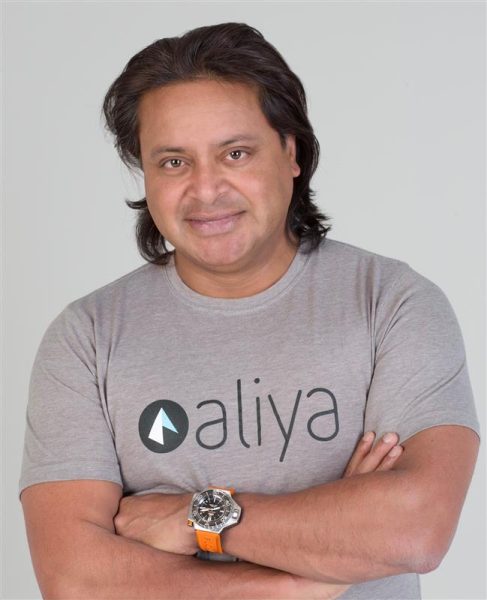
Could you tell me more about your background? Wijegoonaratna said:
“I came to banking technology from a different direction than most. I am a computer science-trained global macro investor who has spent 15 years managing portfolios for Tiger Management, Soros Fund Management, Moore Capital, Fortress, and Discovery Capital. I later became an early-stage investor and advisor to data-centric technology companies like Palantir and served on the boards of SoFi and Cardlytics. My professional foundation is rooted in creating data-driven systems that identify complex patterns, manage risk, and deploy capital in volatile global markets. Macro investing teaches one lesson above all else: cycles change, and those relying on yesterday’s framework eventually get punished.
Across those experiences, I served as an operator, investor, and builder, and became increasingly drawn to sectors that sit at the core of our economy – financial services and healthcare.
Financial services stood out. It’s foundational to the economy, yet many critical decisions are still made using abstractions – credit scores, static income snapshots, rigid segmentation. Those proxies worked reasonably well in a more stable era. They are far less effective in a world defined by volatility and rapid change, especially given the availability of high-frequency data such as bank transactions to help make more accurate decisions.
That realization ultimately led to Aliya.”
Formation Of The Company
How did the idea for the company come together? Wijegoonaratna shared:
“Palantir is widely credited with helping the CIA find Bin Laden and they showed what’s possible when you take messy, real-world data and turn it into action—so I kept thinking: if data and analytics can solve problems that hard, we should be able to do a far better job predicting probability of default and pricing credit accurately, without ‘padding’ for uncertainty.
When I looked at lending, the real source of truth wasn’t another bureau variable—it was behavior: paycheck deposits, bill payments, spending patterns, cash buffers, and volatility sitting in bank transaction data. That ledger is the ground truth of financial behavior, yet it’s still fragmented, unstructured, and underused.
Macro-wise, it’s even more obvious: consumption drives the U.S. economy, and almost every transaction begins and ends with a bank. The bank ledger is one of the most valuable datasets in finance – we just weren’t turning it into decision-grade intelligence. The simple truth wasn’t just at a micro level–being able to better predict losses–but also at a macro level using the data to predict inflection points and economic attributes such as overall consumption and jobs.
So, I walked away from my hedge fund career to build Aliya. The vision was simple to describe and hard to execute: convert raw transaction data into governed, explainable intelligence banks can use across the full credit lifecycle—origination, pricing, line management, and continuous monitoring—inside regulatory guardrails.
And we built it the hard way: eight years inside a top five, OCC-regulated U.S. bank, starting with the hardest problems—structuring transaction data, building explainable models, and designing an AI operating system that runs continuously in a regulated environment.
Ultimately, Aliya came together around a simple belief: better decision systems in banking don’t just improve returns – they reduce fragility in a critical part of the economy.”
Favorite Memory
What has been your favorite memory working for the company so far? Wijegoonaratna reflected:
“Sitting on bench outside the offices of our mega bank partner immediately after our first meeting with the CEO and calling my wife to tell her the news that we had been given a greenlight. While we weren’t even close to having a contract, I knew deep down this was the beginning of our journey.”
Core Products
What are the company’s core products and features? Wijegoonaratna explained:
“Aliya builds AI-powered operational intelligence software and infrastructure for banks.
Our platform, aliyaOS, is a closed-loop operating system that connects bank account data governed risk decisioning, straight-through processing, and continuous feedback into a single environment. The goal isn’t to replace a bank’s existing systems, but to orchestrate the data, policies, and workflows they already have so decisions can happen continuously rather than episodically.
aliyaOS allows banks to move from manual, point-in-time lending decisions to always-on operations that are controlled, explainable, and scalable.”
Challenges Faced
Have you faced any challenges in your sector of work recently? Wijegoonaratna acknowledged:
“One of the biggest challenges isn’t technical, it’s structural. Banking is a highly regulated industry where trust, governance, and consistency matter more than speed alone. Many AI solutions are designed for environments where experimentation can happen quickly, but banks need systems that are explainable, auditable, and durable across cycles.
We addressed that by building Aliya inside a regulated U.S. bank from the beginning rather than developing technology in isolation. That forced us to solve governance, model transparency, and operational integration early, which ultimately shaped the platform into one that infrastructure banks can adopt responsibly.
In many ways, the challenge has been aligning advanced AI capabilities with the realities of regulated institutions—and helping banks recognize that adopting this kind of intelligence is increasingly essential to defending their franchise in a rapidly changing competitive landscape.”
Evolution Of The Company’s Technology
How has the company’s technology evolved since launching? Wijegoonaratna noted:
“Early on, we started with a narrow wedge: improving credit risk decisioning using better machine learning—what we call aSCORE. But that was never the end goal. The real objective was always to harness bank-account data as the source of truth.
Once we built aliyaTRANSACT – the layer that turns messy transaction strings into usable, decision-grade categories – the next step was to wrap these AI-powered models with what we think of as smart infrastructure. The point was to embed intelligence directly into day-to-day operations, not leave it sitting in a model or a dashboard or require human intervention.
So, the tech evolved from analytics to operational infrastructure powered by analytics. Today, aliyaOS runs as a continuous, closed-loop system—ingesting data, and governing decision-making through to customer outcomes with feedback loops that continuously inform risk and decisioning. The system optimizes in real time.
That shift—from static analysis to operational intelligence—is the core evolution of the company, and incredibly relevant to the new world order of AI-powered transformation.”
Significant Milestones
What have been some of the company’s most significant milestones? Wijegoonaratna cited:
“One of the most important milestones was building and operating the platform inside a top-five, OCC-regulated U.S. bank under real regulatory scrutiny. Spending nearly a decade in that environment shaped how we think about technology – governance, explainability, and durability had to work in practice, not just in theory.
Another key milestone was moving from improving individual credit decisions to delivering a closed-loop operating system that enables continuous decision-making across the lending lifecycle. That transition marked the shift from analytics to operational intelligence.
Aliya’s ability to decision over $30 billion in loans validated that this approach can operate at meaningful scale while improving efficiency and risk management for banks.”
Customer Success Stories
Can you share any specific customer success stories? Wijegoonaratna highlighted:
“Getting paid on our first invoice.”
Funding/Revenue
Are you able to discuss funding and/or revenue metrics? Wijegoonaratna revealed:
“Aliya is self-funded. We do not have any outside investors.”
Total Addressable Market (TAM)
What total addressable market (TAM) size is the company pursuing? Wijegoonaratna assessed:
“TAM is a tricky question for us because we’re not building a single point product—we’re trying to be part of a much bigger platform shift. I think we’re in a ‘SpaceX moment’ with AI: early innings, but the trajectory is transformative.
What we’re really going after is the modernization of the operating middle in banking—the decades of technology ‘spaghetti’ that sits between customer-facing channels like mobile and online banking and the core ledger. In every industry, AI is reshaping that middle layer. In banking, it’s the layer that turns data into governed decisions and straight-through execution.
So our market isn’t just ‘lending software’ or ‘risk models.’ It’s the operating infrastructure that runs decisions and workflows across the bank.
If you want a clean way to frame it: we’re pursuing the market for banking’s intelligence and execution layer—and we view aliyaOS today the way you’d view the iPhone in 2007: early, but foundational.”
Differentiation From The Competition
What differentiates the company from its competition? Wijegoonaratna affirmed:
“Aliya is hard to compare to a traditional competitor because we’re not really playing inside an existing product category. Most vendors in this space sell point solutions—a model, a workflow tool, a decision engine, a core add-on, a personalization layer. We built something different: an operational intelligence layer that sits between channels and the core and turns bank transaction data into governed decisions and straight-through execution across the lifecycle.”So, the real “competition” is usually one of three things:
- The legacy stack—the spaghetti of systems and manual processes banks have stitched together over decades.
- Generic AI tools—impressive demos, but hard to govern, hard to audit, and not decision-grade inside a bank.
- Internal builds—smart teams, but it’s difficult to replicate the data normalization, model governance, and continuous operating loop without years of iteration in a regulated environment.
What differentiates Aliya is that we’ve already done the hard part: we translated messy transaction behavior into decision-grade intelligence, wrapped it in bank-controlled governance, and built it to run continuously—not as a one-time model, but as an operating system that gets smarter through outcomes while staying inside policy.
So I’d summarize it this way: we’re not just improving decisions—we’re modernizing how banks make and execute decisions, in real time, with governance built in.”
Future Company Goals
What are some of the company’s future goals? Wijegoonaratna emphasized:
“Our near-term goal is to partner with five to ten like-minded banks to prove a new category: an AI-powered operating layer that sits between digital channels and the core—turning transaction data into governed decisions and real-time execution. In simple terms, we want to help banks move faster, serve customers better, and run leaner without ripping out their core systems.”
