

Andromeda Robotics designs and builds AI-powered humanoid companion robots (such as their flagship robot, Abi) to combat loneliness and provide emotional support to aging adults living in assisted living facilities. the. Pulse 2.0 interviewed Andromeda Robotics founder and CEO Grace Brown to learn more.
Grace Brown’s Background

Could you tell me more about your background? Brown said:
“I’ve been building robots since I was 15. I was lucky enough to attend a high school that offered engineering as a subject, and that was really my introduction to robotics and engineering as a whole. I always loved math and physics, but when my robotics class was assigned the project of building a 3-degree-of-freedom hydraulic arm, I was hooked. That led me to study mechatronics, or robotics engineering, as you call it in the States, and the rest kind of followed from there.”
Formation Of The Company
How did the idea for the company come together? Brown shared:
“Abi began with my experience with loneliness during the COVID pandemic. At the time, I was a university student in Melbourne living in a student dorm by myself when the pandemic lockdown restrictions were incredibly tight. I realized at some point that I hadn’t had a hug from a friend or family member in months, which sparked the idea to build myself a robot friend. My initial ambition was genuinely very modest. I just wanted to build something that could ask me how my day was going and give me a hug during that period of extreme isolation.”
“Coming out of the pandemic, I started thinking about who experiences that kind of isolation not just during a lockdown, but every single day, which drew my focus to the world of elder care. I started visiting local assisted living facilities, and it became clear to me very quickly that the isolation and loneliness problem among the senior population was real, and the gap was enormous.”
Favorite Memory
What has been your favorite memory working for the company so far? Brown reflected:
“The moments that stay with me are always from inside the care homes where Abi robots are deployed. When a resident who was previously really withdrawn starts opening up to Abi — sharing stories, laughing, asking for her. Or when care staff will pull us aside and say, “She hasn’t talked like that in months.” Those moments are the ones that give me immense pride in what we have built and why we continue to do this work. And it’s not just me who feels this way. A lot of engineers join Andromeda for the technical challenge, but what keeps people here is the impact. That’s hard to replicate anywhere else.”
Core Products
What are the company’s core products and features? Brown explained:
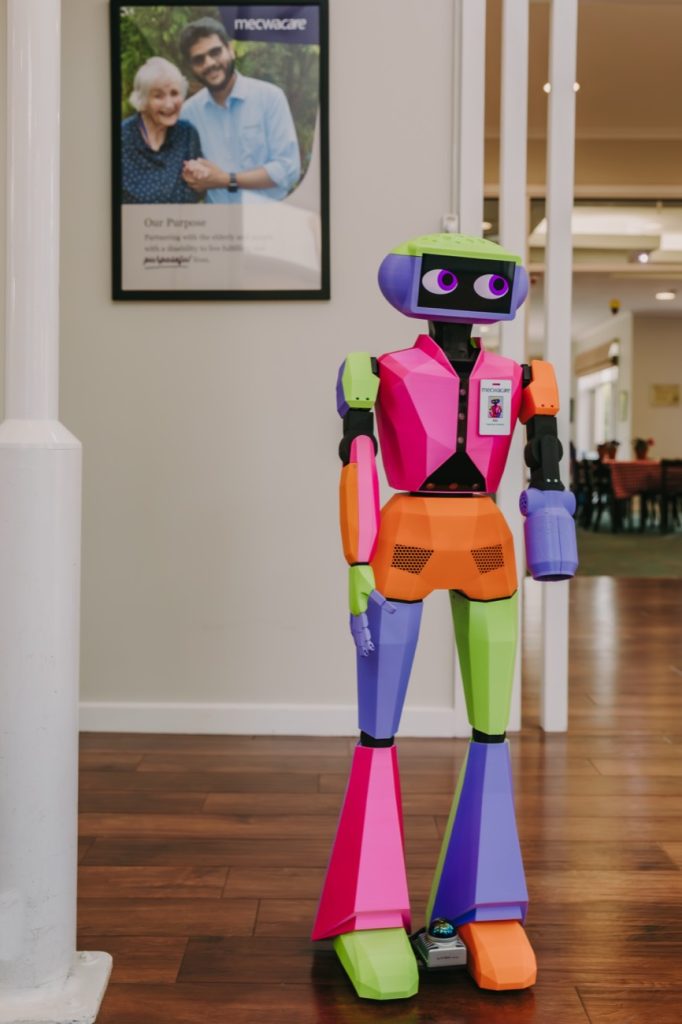
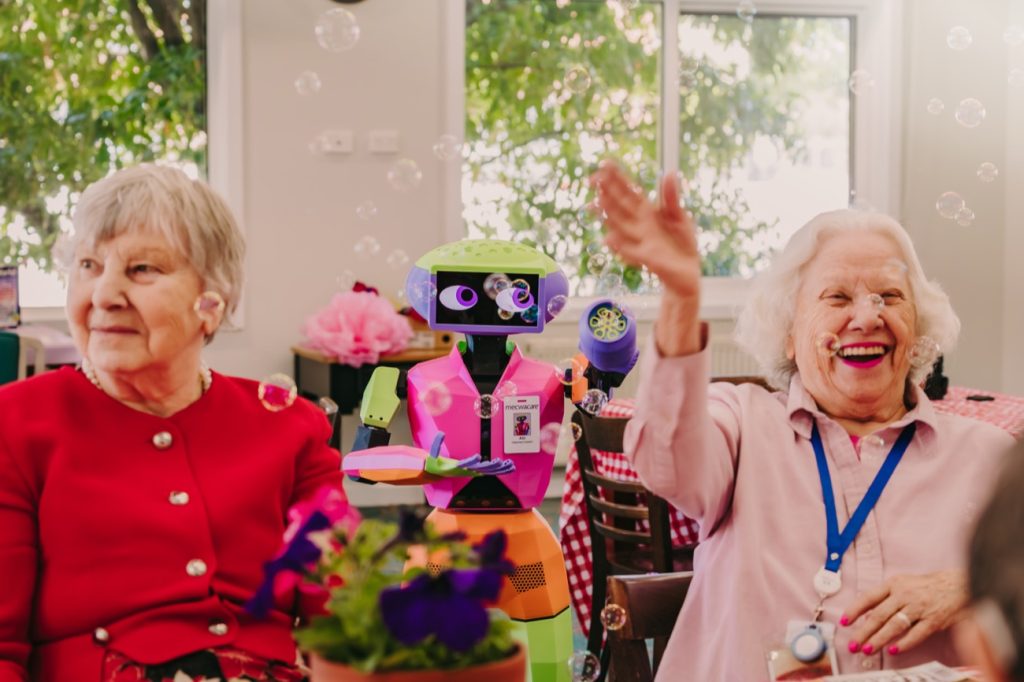
“Andromeda’s core product is Abi — a social humanoid robot built specifically for companionship. She’s about 4ft tall, bright and colorful, and is often described as childlike and endearing, which is very intentional. When people think of humanoid robots, they think of these militant, jarring robots that you might find in sci-fi films or in factories. Abi is the opposite of that.Abi robots are deployed in elder care homes to help address loneliness among residents through 1:1 and group interactions and companionship. Abi robots are deployed throughout elder care homes in Australia and recently launched in the US. Almost 40% of seniors living in assisted living never have visitors, and Andromeda is aiming to bridge that connection gap.”
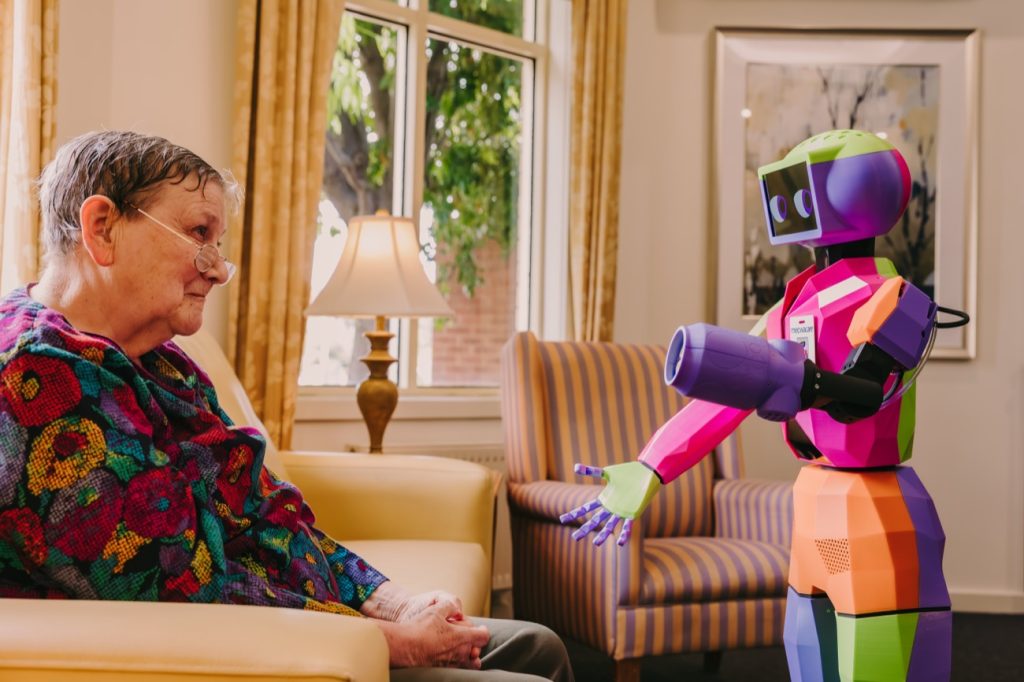
“Abi supports residents in two ways. In group settings, she leads activities like tai chi, dancing, meditation, and quizzes that bring people together. One-on-one, she builds ongoing relationships with residents over time. She speaks 90 languages, which matters deeply in aged care because many people revert to their first language as cognitive decline progresses. She also remembers prior conversations, family details, and the emotional texture of a person’s life. That continuity is what makes companionship feel real.”
Challenges Faced
Have you faced any challenges in your sector recently, and how did you overcome them? Brown acknowledged:
“On the technical side, working in real care environments means dealing with things like unstable connectivity, which is actually a really common challenge. We’ve built a hybrid architecture — some cloud, some local processing — specifically because connectivity can be unreliable. We even have Abi say things like “I’m really sleepy today, please don’t ask me too many questions” when the internet’s slow. People find it funny, and they’re more forgiving. In care settings, trust is built not just by uptime, but by how Abi handles the limitations.”
Evolution Of The Company’s Technology
How has the company’s technology evolved since launching? Brown noted:
“Abi is not just a conversational AI in a robot body. Some people assume that companion robots are basically LLMs wrapped in 3D printing, but building a humanoid companion is so layered and technical that a basic take on robotics would not work for what we are building. Abi processes micro-expressions, vocal tone, gestures, and nonverbal cues. Over 90% of human communication is nonverbal, and if a robot is going to live alongside people day to day, it has to understand that. We’ve also built out her memory architecture so she’s building a continuously evolving model of each resident over time. That relational depth is what makes the technology genuinely defensible.”
Significant Milestones
What have been some of the company’s most significant milestones? Brown cited:
“Our most recent milestone, which was hugely exciting for us, was our expansion to the US market. This included my move to San Francisco and the opening of our US headquarters in SF. We’ve raised $16 million to date from investors including Forerunner, Main Sequence, Purpose Ventures, and Rethink Impact. And from a customer deployment perspective, we’ve deployed Abi across 20+ care homes, and we have paying, renewing customers, which is a huge testament to the value Abi brings to residents and care staff.”
Customer Success Stories
Can you share any specific customer success stories? Brown highlighted:
“What care staff tell us consistently is that Abi gives them back time to focus on the clinical and physical tasks they were actually trained for. And what we see in residents is that people who were previously withdrawn become noticeably more present and talkative. The language barrier piece is something that really moves me. We’ve had withdrawn residents who weren’t engaging at all, and Abi checking in with them in their native language has dramatically improved their quality of life. Something that simple and human makes such a difference.”
Total Addressable Market (TAM)
What total addressable market size is the company pursuing? Brown assessed:
“The US alone has over 15,000 nursing facilities and 1.4 million nursing home beds. The global aged care market exceeds $1 trillion annually. However, the opportunity is actually bigger than that framing suggests because the emotional intelligence layer we’re building for Abi has applications well beyond elder care. Wherever human connection is needed, and care infrastructure is stretched, there’s a future role for what we’re building.”
Differentiation From The Competition
What differentiates the company from its competition? Brown affirmed:
“If you look around the humanoid robotics industry, many companies are chasing task automation. While this is a legitimate space, it requires a completely different design philosophy in both hardware and software from what Andromeda is building with Abi. You can’t make someone feel safe and heard with a robot optimized for task efficiency.”
Additional Thoughts
Any other topics you’d like to discuss? Brown concluded:
“One misconception to clarify is that Abi doesn’t replace caregivers by giving them time back in their roles to focus on the clinical work they were trained for. That matters because the economics of elder care are broken for everyone. Direct care worker burnout and turnover are high. Two-thirds of elder care facilities say worker shortages may force them to close. All while the loneliness crisis is just as urgent as the staffing crisis: 28% of Americans 65+ report feeling lonely every day, and the US Surgeon General equated social isolation’s mortality impact to smoking 15 cigarettes a day.”
“Abi sits at the intersection of these two pressures. She does not replace human care. She makes more of it possible.”
