Aria Networks is developing Deep Networking, an integrated hardware-and-software platform designed to turn the network into an active optimization layer for AI factories. The company combines purpose-built Ethernet switching, high-resolution telemetry, specialized AI agents, and embedded engineering support to improve accelerator utilization, performance, reliability, and AI infrastructure economics. Pulse 2.0 interviewed Aria Networks Founder and CEO Mansour Karam to learn more.
Mansour Karam’s Background
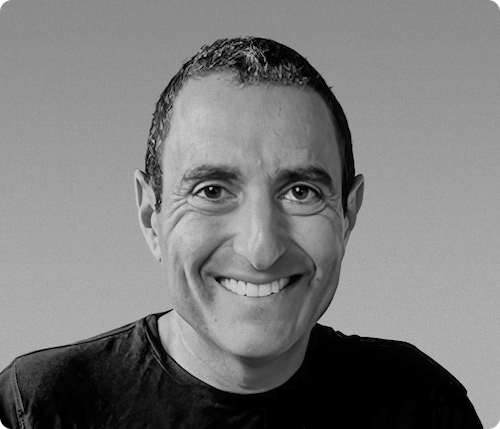

When asked about his background and the experiences that led him to Aria Networks, Karam shared:
I’ve spent more than 25 years building networking and infrastructure companies at moments when the industry’s architecture was being rewritten.
I began at RouteScience as a Principal Architect, helping shape the product and working with customers and partners through the company’s acquisition by Avaya. In 2006, I joined Arista as its first business leader, working directly with early customers to define requirements and bring the company’s first Cloud Networking products to market.
I later joined Big Switch Networks during the first wave of Software-Defined Networking, then founded Apstra in 2014. Apstra helped pioneer intent-based networking and was acquired by Juniper Networks in 2021. I subsequently led Juniper’s Data Center products organization as GVP of Products.
I hold an MS and PhD in Electrical Engineering from Stanford and a bachelor’s degree in Computer and Communications Engineering from the American University of Beirut.
Networking has been the throughline of my career. AI is the most consequential shift I have seen because it changes the network topology and traffic patterns and transforms the operating model of the AI network.
How Aria Networks Started
When asked how the idea for Aria Networks came together, Karam explained:
The idea came together around three observations.
First, the objective function had changed. Cloud infrastructure was primarily optimized for cost and availability, and the network was increasingly treated as a commodity. AI factories must optimize output: accelerator utilization, tokens per second, and cost per token. Because the network touches every accelerator and every distributed workload, a suboptimal network becomes a system-wide tax. The right network becomes a multiplier.
Second, the technology had changed. Intent-based networking used deterministic models effectively for configuration correctness and assurance. But AI infrastructure requires continuous performance optimization under changing workloads and physical conditions.
Fine-grained telemetry, combined with specialized AI, now allows the network to sense, reason, and act at a scale and resolution that was not previously possible. It is analogous to the shift self-driving systems made when they moved beyond rigid, hard-coded rules.
Third, the market was expanding rapidly while most networking architectures had been designed for earlier eras. That created an opportunity for a clean-sheet company.
I co-founded Aria with our CTO, Subhachandra Chandra, and we assembled a team spanning networking, distributed systems, AI, hardware, and self-driving software.
Our core insight was simple: if you can observe the physical system at the right resolution, connect those signals to workload context, and give specialized agents safe ways to act, the network can become an active optimizer of the AI factory.
A Different Operating Model
When asked about his favorite memory from building the company, Karam recalled:
My favorite memory was watching customers and operators react to our product during the launch event.
They saw the system answer a straightforward question, “Why is my training job slow?”, by correlating information across the network, GPUs, and MLOps stack. It identified a 200-microsecond congestion event that conventional tools would miss and then guided the operator from diagnosis toward resolution.
The recognition was immediate: this was not simply a better dashboard or another monitoring product. It was a fundamentally different operating model for AI networks.
After building largely in silence, seeing experienced operators understand that distinction in real time was deeply rewarding.
Deep Networking Platform
When asked about Aria Networks’ core products and features, Karam detailed:
Aria’s core product is Deep Networking: an integrated hardware-and-software platform that turns the network into an active optimization layer for AI factories.
The foundation is purpose-built Ethernet switching based on Broadcom’s Tomahawk 5 and Tomahawk 6 silicon. Our portfolio includes 800GbE and 1.6Tbps systems delivering 51.2 to 102.4Tbps of switching capacity, with high-radix, air-cooled, and liquid-cooled configurations.
These systems run a hardened implementation of SONiC and are engineered around telemetry from the beginning rather than treating it as an afterthought.
Above that foundation, Aria captures and correlates telemetry across ASICs, switches, optics, cables, NICs, hosts, and accelerators at 100 to 10,000 times the resolution of traditional tools.
Specialized agents then use that context to identify root causes, recommend actions, execute guided workflows, and optimize functions such as routing, load balancing, congestion management, and failover.
The platform is horizontally open across accelerators, NICs, workload schedulers, storage systems, and MLOps tools. It spans scale-out, scale-up, front-end, and storage networks.
We also pair the platform with embedded FDEs who shorten AI factory time to revenue by working alongside customers from architecture and deployment through production performance tuning.
AI Network Challenges
When asked about challenges facing the AI networking sector, Karam noted:
One challenge is that traditional network health and AI system health are not the same thing.
A fabric can be technically available while still wasting a meaningful amount of accelerator time because of microbursts, load imbalance, a marginal optic, a firmware mismatch, or a poorly performing path.
Conventional tools often sample the network every few seconds, while the events degrading an AI workload may last only microseconds. The evidence is also fragmented across network, host, accelerator, and workload systems, so operators often discover the problem only after expensive compute has already been wasted.
It requires a comprehensive end-to-end view and an intuitive ability to correlate impairments and incidents across the various networks and components.
The second challenge is making autonomy safe. Putting a generic large language model on top of an existing networking stack does not provide the physical context or controls required to operate critical infrastructure.
A production system needs high-resolution, domain-native data, specialized agents operating at the appropriate layer and timescale, proper guardrails, and transparency for the operator.
Solving that requires co-design across hardware, software, telemetry, and AI. It is a challenge, but it is also why we believe a clean-sheet architecture is necessary.
Technology Evolution
When discussing how Aria Networks’ technology has evolved since launching, Karam described:
Our first systems were centered on Broadcom’s Tomahawk 5, with 51.2Tbps of capacity and 64 800GbE ports.
We subsequently expanded the portfolio to Tomahawk 6-based 102.4Tbps platforms, including a 128-port 800GbE high-radix system and 64-port 1.6Tbps systems in both air- and liquid-cooled form factors. That gives customers options across current deployments and the transition to 200G SerDes and 1.6T Ethernet.
The more important evolution has been from visibility to context, and from context to action.
We began with a telemetry-first architecture capable of capturing physical events that other systems miss. We have since built a context layer that places switch, optic, NIC, host, accelerator, and workload behavior on the same timeline.
Specialized agents can now move from detection to diagnosis to guided or automated resolution, while making the same underlying intelligence available to both human operators and machine agents.
We have also expanded the scope from the back-end scale-out fabric to the broader AI factory, including scale-up, scale-across, front-end inference, and storage networks.
Major Company Milestones
When asked about the company’s most significant milestones, Karam highlighted:
Speed of execution has been one of our most meaningful milestones. We went from company formation to our first customer purchase order in 383 days, and from founding to general availability in approximately 15 months.
During that period, we built switching hardware, a hardened network operating system, an ASIC-level telemetry architecture, and an agent-first software platform. We also moved into customer production.
We also demonstrated our switches in SCinet at SC25, expanded from our 800GbE foundation to a 102.4Tbps Tomahawk 6 portfolio, and introduced air- and liquid-cooled 1.6Tbps systems.
In April 2026, we formally launched Deep Networking, announced general availability and customer deployments, and disclosed $125 million in funding from Sutter Hill Ventures, Atreides Management, Valor Equity Partners, and Eclipse Ventures.
Each milestone reinforces the same thesis: in AI infrastructure, a suboptimal network becomes a system-wide tax on performance and economics. The right network becomes a multiplier.
Customer Success Stories
When asked about customer deployments and success stories, Karam explained:
We are careful about protecting customers’ production data, but we can discuss several public examples.
San Francisco Compute is building a GPU marketplace in which capacity must be securely and precisely allocated across customers. Its team is working with Aria because the network is central to delivering that compute predictably.
Positron is focused on peak performance per dollar. Its team has highlighted Aria’s ability to optimize both Model FLOP Utilization and Model Bandwidth Utilization across the stack, describing Aria as the networking platform that allows its hardware to perform as it was designed to perform.
Managed Inference Providers experienced the networking layer as a critical operational blind spot when managing AI clusters at scale. Their teams have said that Aria’s AI-first approach has the potential to give them greater control and measurable savings where traditional tools could not keep up.
The common thread is that these customers are not evaluating Aria only as a switch supplier. They are using the network as a measurable lever on utilization, reliability, performance per dollar, and overall cluster economics.
$125 Million Funding
When asked about the company’s funding and revenue metrics, Karam said:
In April 2026, we announced $125 million in funding from Sutter Hill Ventures, Atreides Management, Valor Equity Partners, and Eclipse Ventures.
Gavin Baker of Atreides also joined our board alongside Stefan Dyckerhoff of Sutter Hill Ventures and the founding team, Mansour Karam, CEO, and Subhachandra Chandra, CTO.
We are not disclosing revenue at this stage. What we can say is that Deep Networking is generally available, we have customer orders, and the platform is live, shipping, and serving customers.
$200 Billion Market Opportunity
When discussing Aria Networks’ total addressable market, Karam outlined:
We estimate that the addressable market will exceed $200 billion by 2030 when switching, transceivers, cabling, software, and lifecycle services are considered together.
That framing matters because AI networking is no longer simply a market for individual boxes.
Customers need an integrated system that can build the fabric, capture and understand its physical behavior, connect that behavior to workloads, and continually improve performance over the infrastructure’s life.
We are pursuing that broader system-level opportunity.
Competitive Differentiation
When asked what differentiates Aria Networks from its competition, Karam emphasized:
Aria is differentiated first by where we started. We did not begin with an existing enterprise or cloud networking stack and add an AI assistant to it.
We began with the requirements of AI factories and co-designed the switching platform, hardened SONiC, telemetry architecture, context layer, and specialized agents to operate as one system.
That gives us several structural advantages. We can collect physical signals at microsecond resolution and connect them to application-level outcomes such as accelerator utilization and token efficiency.
Our intelligence is layer-appropriate: a model reacting to a link event inside the ASIC is different from one diagnosing a transceiver or helping an operator investigate a distributed workload. We do not depend on one generic model to make every decision.
Deep Networking is an end-to-end solution that’s horizontally open by design. Aria works across accelerators, NICs, workload schedulers, storage systems, and models, using standard Ethernet rather than requiring customers to adopt a proprietary infrastructure island.
Finally, our embedded FDE model accelerates AI factory deployment and closes the loop between product engineering and production.
The people helping customers architect, deploy, and tune the system are directly connected to the people building it, so lessons from real workloads flow rapidly back into the product.
Future Goals
When discussing the company’s future goals, Karam said:
Our immediate goal is execution: scaling production deployments and continuing to expand Deep Networking across 1.6T systems and every network in the AI factory: scale-out, scale-up, scale-across, front-end, and storage.
The larger goal is to make Deep Networking the operating layer for AI infrastructure.
We envision a system that continuously learns the normal behavior of each cluster, detects deviations at the appropriate timescale, reasons across physical and workload context, and safely takes action.
The same context should serve a human investigating a problem during the day and an orchestration agent making a scheduling decision at three in the morning.
As inference becomes more distributed and agentic workloads create longer, more latency-sensitive chains, the front-end network will become as strategically important as the back-end training fabric.
We intend to remain open across accelerators, NICs, schedulers, and models as that architecture evolves.
Ultimately, our success should be measurable: more useful tokens from every accelerator, at a lower cost and with greater reliability. We want to help our customers become the lowest-cost producers of intelligence.
Building The AI Networking Team
When invited to discuss another aspect of Aria Networks, Karam concluded:
One point worth emphasizing is that Aria is as much a team bet as a technology bet.
AI networking is a multidisciplinary systems problem spanning switching silicon, optics, hardware, distributed software, networking, AI, and production operations.
We deliberately assembled engineers from Arista, Juniper, Meta, Google, Apstra, Cisco, Pure Storage, and Ghost’s self-driving team because solving the full problem requires all of those disciplines.
The ambition is not to build a marginally better switch or another management tool. It is to build the networking company for the AI era.
The fact that this team moved from formation to a shipping, production platform in approximately 15 months demonstrates what it is capable of.

