

Assembler AI is a manufacturing technology company developing computer vision solutions that help manufacturers improve production efficiency, monitor manual work, and identify quality and safety issues in real time. Pulse 2.0 interviewed Assembler AI Co-Founder and CEO Brett Beranek to learn more about his background, the company’s origins, its Operator Vision platform, customer success stories, $4 million seed funding round, and plans to expand AI-powered manufacturing technology.
Brett Beranek’s Background
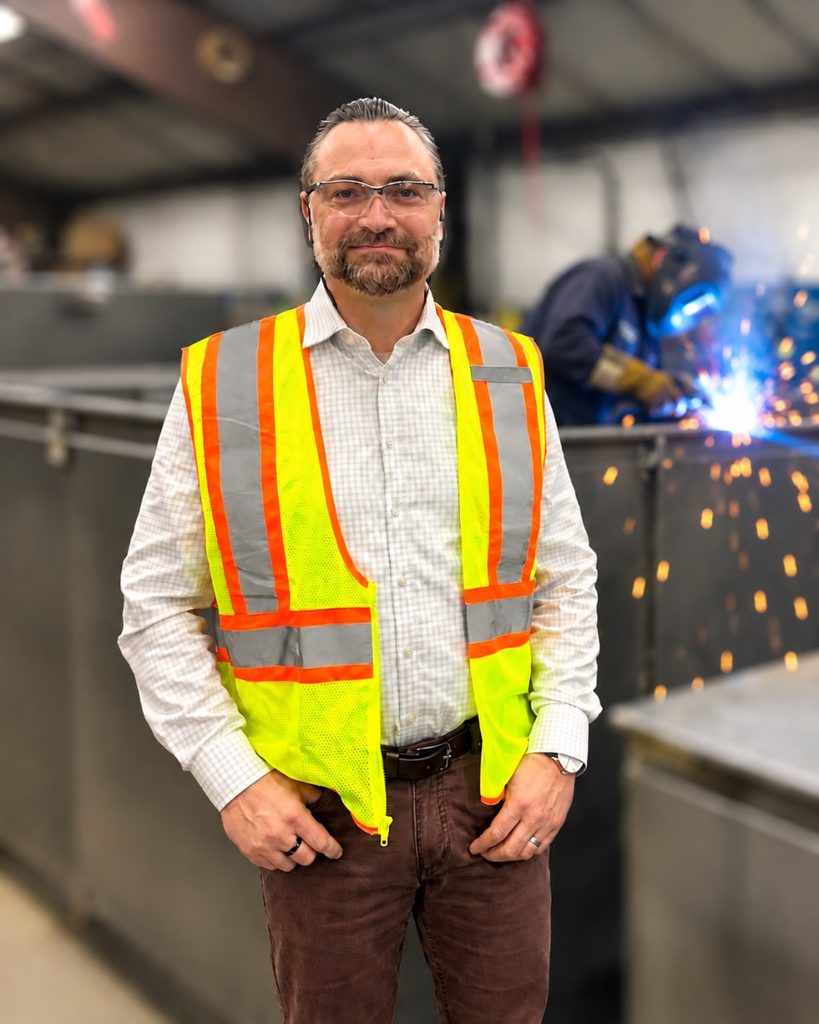
When asked about his professional background and experience building artificial intelligence companies, Beranek shared:
I’ve spent nearly 25 years building and scaling technology businesses, most of them in AI and computer vision. I started at Genetec, where I was part of the management team that took the company from zero to $30 million in revenue in five years. I then co-founded Viion Systems, a facial recognition company that we exited through an IP sale. For more than eleven years I led Nuance Communications’ Security and Biometrics business, building it into a global leader in AI-powered biometric authentication and fraud prevention. After Microsoft acquired Nuance, I served as General Manager of Security and Biometrics at Microsoft. I hold a Bachelor of Commerce from McGill University and completed executive programs at Harvard Business School and MIT Sloan.
How The Idea For Assembler AI Came Together
Discussing the origins of Assembler AI and how the founders identified an opportunity to modernize manual manufacturing processes, Beranek explained:
The idea came from my co-founder, Jonayed Islam. Before Assembler AI, Jo was a manufacturing consultant, and he and his team had the painful job of doing time studies by hand: standing beside a workstation with a stopwatch and a clipboard, timing a handful of cycles, and hoping they were representative. When we met at Diagram Ventures, we quickly realized that a problem he knew so intimately could be solved with computer vision. One camera could watch every cycle, time every step and flag every deviation from standard work, automatically and in real time. We founded Assembler AI in November 2025 to build exactly that.
Favorite Memory Working At Assembler AI
Reflecting on one of his favorite experiences since founding the company, Beranek recalled a customer interaction that demonstrated the practical benefits of its technology:
It was a call with one of our early customers, an injection molding manufacturer. Their Director of Production was outright giddy about the errors the system was catching in real time. He told us the live alerts had prevented two production issues that day alone, and you could hear the joy in his voice. That moment was deeply satisfying, not just for me but for our entire team. It’s proof that what we’ve built at Assembler AI makes a difference for manufacturers every single day.
Core Products And Features
Describing Assembler AI’s flagship Operator Vision platform, Beranek highlighted its automated time studies, real-time process monitoring, safety detection, and streamlined deployment:
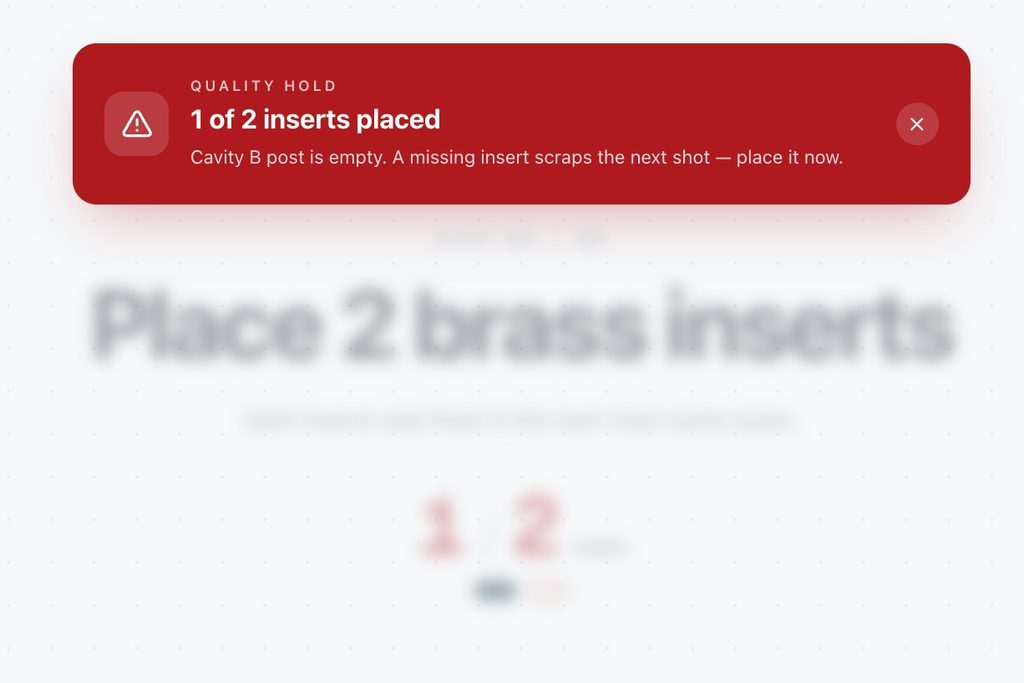
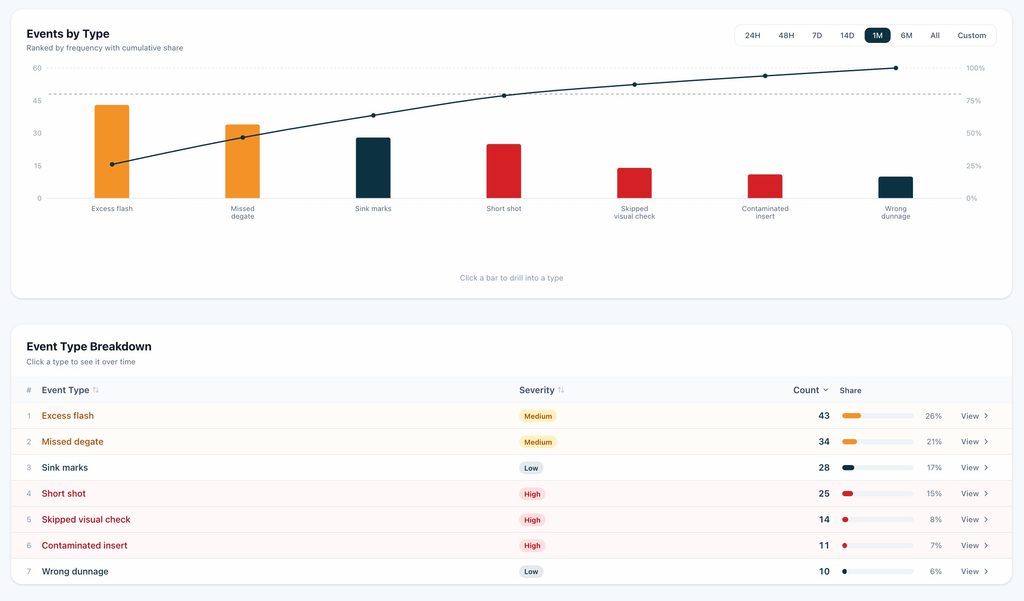
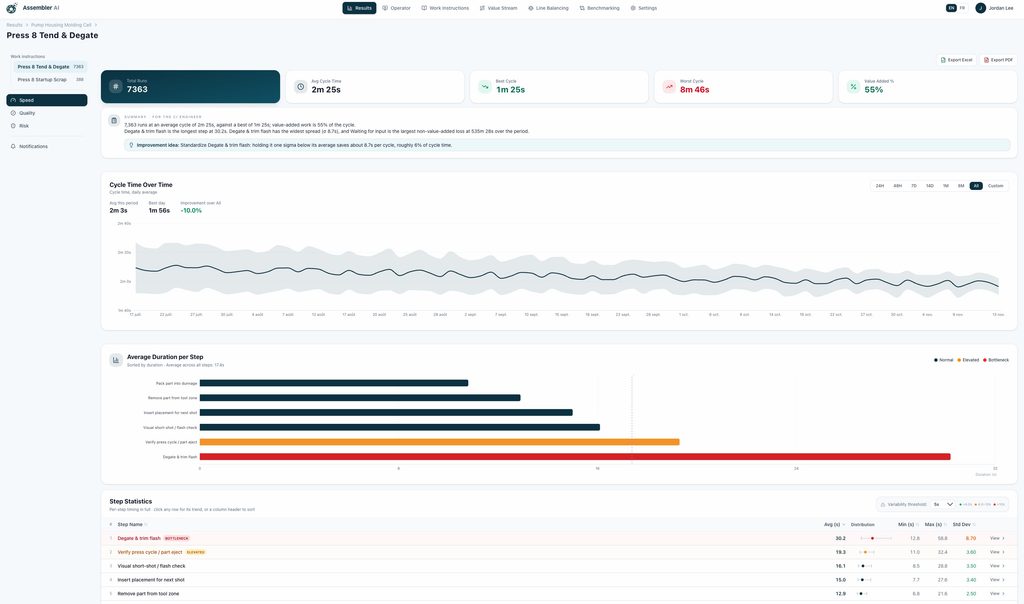
Our product is Operator Vision, a computer vision platform for manual work in manufacturing. A single camera at a workstation watches every production cycle. First, it automates time studies: it measures cycle time for every step, on every cycle, across every shift, and attaches video to the outliers so engineers can see exactly what happened. Second, it checks adherence to standard work in real time. When an operator misses a step, uses the wrong part or does steps out of sequence, supervisors and operations staff get an alert by email or SMS while there’s still time to fix it. Third, it flags unsafe or non-compliant actions as they happen, such as a step into a restricted zone. Customers simply upload their existing work instructions. There’s no expert demonstration to film, no data to label and no MES or ERP integration required, and a station typically goes live in about two weeks.
Challenges In The Manufacturing Technology Industry
Addressing the challenges of introducing new AI technology into manufacturing environments, Beranek emphasized the importance of building customer trust, navigating lengthy sales cycles, and protecting employee privacy:
The biggest challenge is the length of the sales cycle. Manufacturers build trust with new vendors over time. This isn’t a SaaS product where a customer clicks a button online and enters a credit card. We start by building a relationship: we visit the factory, learn the manufacturing process and understand their production challenges. Then we deploy cameras and run a 60-day pilot. In parallel, we work to earn acceptance from IT, legal and compliance, and to win the support of the workers and, where the plant is unionized, their union. We’ve leaned into that process rather than fighting it. We designed privacy into the product from day one, with faces blurred and no operator identities collected by default, and we treat every pilot as the beginning of a long-term partnership. That approach is what turns a careful buyer into a committed customer.
How Assembler AI’s Technology Has Evolved
Discussing how the company’s technology has developed since its initial prototype, Beranek described the decision to move away from general-purpose AI models and build proprietary algorithms specifically for manufacturing environments:
Our first prototype was built on frontier AI models, and it simply didn’t work. General-purpose models aren’t designed for the realities of a factory floor. So we made a fundamental decision to build all of our algorithms in-house. Today we have a technology stack designed specifically for manufacturing. It handles production cycles of any length, from a few seconds to several days, and any physical layout: from a workbench where small, delicate parts are carefully handled, to the welding of steel structures the size of a house. That breadth is what lets us serve such a wide range of manufacturers.
Significant Company Milestones
When asked about Assembler AI’s most important achievements, Beranek highlighted its rapid progression from founding to commercial deployments, fundraising, and team expansion:
We founded Assembler AI in November 2025, and our first plant went live just four months later, in March 2026. In July 2026 we closed a $4 million seed round led by Diagram ClimateTech Fund, which we announced in October. Today we work with more than a dozen manufacturers and onboard new customers every month. In November the team grew to 12 people. It’s been a remarkable first year!
Customer Success Stories
Highlighting the measurable impact of Operator Vision, Beranek discussed results from a North American steel fabricator and an injection molding manufacturer:
At a North American steel fabricator, we deployed Operator Vision on a single welding workstation. Within months, automated time studies and real-time standard work alerts had lifted output at that station by 12%. That puts the station on track for $62,000 in additional annual margin, a projected 620% net ROI in its first year. Just as meaningful are the day-to-day wins: at an injection molding customer, real-time alerts prevent quality issues at every shift. Multiply that across dozens of stations and the impact on scrap, rework and throughput becomes substantial.
Funding And Revenue Metrics
Discussing Assembler AI’s financing and commercial expansion, Beranek outlined the company’s seed funding round and the investors supporting its growth:
We closed a $4 million seed round in July 2026, announced in October, led by Diagram ClimateTech Fund with participation from Drive Capital, Fondaction, Developer Capital, Mavrik, Sprout Fund and Telegraph Ventures. We’re using the capital to accelerate growth with manufacturers across North America. We aren’t disclosing revenue at this stage, but we’re working with more than a dozen manufacturers today and onboarding new customers every month.
Total Addressable Market
Discussing the market opportunity for Operator Vision, Beranek identified the number of multi-site manufacturers across North America and the potential for expansion into international markets:
In North America alone, there are roughly 40,000 multi-site manufacturers across the United States and Canada, which represents a $4 billion market for Operator Vision. The need is urgent: factories run at about 76% of capacity even while order backlogs grow, and much of that gap comes down to manual work that nobody can measure consistently. We raise throughput without adding staff or machinery. North America is our starting point, and in the future when we expand into Europe, Japan and South Korea, the opportunity grows significantly.
What Differentiates Assembler AI From Its Competition
Explaining the company’s competitive advantages, Beranek emphasized how Operator Vision replaces traditional manual time studies with continuous monitoring and eliminates the need for specialized training demonstrations or labeled data:
Our number one competitor is the status quo. For more than a century, manufacturers have measured cycle times with a stopwatch and ensured process adherence with a supervisor walking the shop floor. It works, up to a point, but it captures only a handful of cycles, and it’s hard to imagine a different way of doing things when this is how it has always been done. We replace that sample with a complete picture: every cycle timed, every deviation caught as it happens. Compared with other AI approaches, we don’t need an expert to record a “golden” demonstration or engineers to label data. The system learns from the real work operators already do, and it was built from the ground up for manufacturing environments.
Future Company Goals
Outlining Assembler AI’s priorities over the next two years, Beranek discussed plans for additional financing, international expansion, and the development of an AI-powered assistant for manufacturing operators:
Over the next 24 months, our priority is to secure Series A financing and use it to take Assembler AI into every high-value manufacturing market, including Europe, Japan and South Korea. On the product side, we’re developing Teammate AI, which will guide operators step by step at the workstation. The goal is to go beyond flagging an error after it happens and help prevent it in the first place.
Using AI To Empower Manufacturing Workers
Discussing Assembler AI’s broader philosophy and its approach to artificial intelligence in manufacturing, Beranek emphasized the company’s focus on helping employees improve their performance rather than replacing them:
We’ve taken a contrarian view of AI. So much of the industry is focused on eliminating humans from the factory floor. We’re focused on helping humans be their best. We believe firmly that AI should serve the good of humanity, and that philosophy shapes our entire product strategy: Operator Vision exists to give skilled operators, supervisors and engineers better insight and earlier warnings, not to replace them. I’m pleased to say this approach has been warmly received across the manufacturing world. Manufacturers don’t want to replace their people. They want to help them succeed.
