

Atera provides an all-in-one, AI-powered IT management platform that combines Remote Monitoring and Management (RMM), helpdesk, and ticketing. Pulse 2.0 interviewed Atera Chief Product Officer Tal Dagan to learn more.
Tal Dagan’s Background
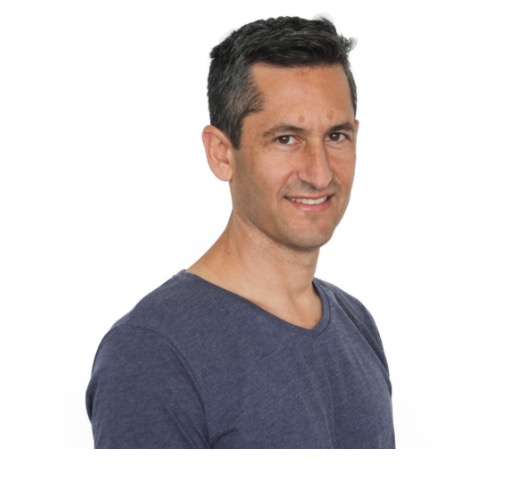
Could you tell me more about your background? Dagan said:
I’ve always had a passion for technology and its ability to completely transform the way people get work done. I started my career in algorithm development, primarily in the imaging space. Over time, I moved into senior product leadership roles at companies like Taptica and Redis Labs. Those experiences helped me develop a much deeper understanding of shaping product strategy for new technologies and the importance of designing with the end user in mind. And they have definitely influenced how I approach my role today at Atera as Chief Product Officer.
Role
What are your primary responsibilities? Dagan shared:
Every day looks a bit different. My role spans leading our product strategy, refining our current offerings while shaping what’s next, and guiding the Product and Business Intelligence leadership team to ensure we continuously foster a culture of innovation and experimentation. I spend a significant amount of time working hands-on with our product, talking with customers and industry leaders, and staying on top of industry news so we are always informed of the latest trends and shifts in the industry.
Favorite Memory
What has been your favorite memory working for the company so far? Dagan reflected:
My most memorable moment was when I first saw ChatGPT. I was traveling with Oshri Moyal, Atera’s CTO, and we immediately started writing scripts with it. Its capabilities, even then, were mind-blowing, and we both immediately understood the potential it unlocked for Atera and the kind of product we wanted to build.
Core Products
What are the company’s core products and features? Dagan explained:
Atera is the world’s first AI-powered IT management platform that brings helpdesk and ticketing together with remote monitoring and management in a single, unified experience. We also offer AI agents that work alongside IT technicians to resolve tier 1 tickets completely autonomously, eliminating up to 80% of routine tasks and enabling 10x greater efficiency for problem resolution.
For years, enterprise IT teams have been extremely bogged down with solving monotonous, lower-level tasks like password resets and computer reboots. Atera’s vision is to change that. Our technology is specifically designed to multiply the brainpower of IT technicians and enable unparalleled operational excellence for their organization and customers.
Challenges Faced
Have you faced any challenges in your sector of work recently? Dagan acknowledged:
The main challenge and opportunity is employing LLMs as part of our development processes to increase our productivity and deliver more value to our customers faster. We are working on new ways of uniting Product Management and Development, for lightning-fast ideation to the GA process.
Evolution Of The Company’s Technology
How has the company’s technology evolved since launching? Dagan noted:
We launched our first product in 2016. Our co-founders, Gil Pekelman and Oshri Moyal, had been experimenting in the IT space for some time, and they found that all their conversations with customers kept coming back to the same theme: IT teams wanted to do more meaningful work with better tools. So, we developed a platform that allowed IT technicians to do their job all within a single, unified interface.
As the platform evolved, especially after our integration with Microsoft Azure OpenAI in 2023, that idea grew into a much bigger vision. Today, we think about it as Autonomous IT — a model where AI doesn’t just assist but acts, handling repetitive operational work end-to-end and freeing IT pros to focus on the work that’s actually meaningful, like innovation, value creation, and long-term impact.
Significant Milestones
What have been some of the company’s most significant milestones? Dagan cited:
The launch of our autonomous AI agents in 2025 was a huge milestone for us. Even just a few years ago, the idea of an AI agent that could not only assist with tasks but complete them end-to-end, without any human intervention whatsoever, felt unimaginable.
The launch of our AI agents felt like the culmination of everything we’ve been working towards – a technology that learns, adapts, and acts on behalf of the IT technician in a way that truly transforms the IT role from handling mundane technical support issues to becoming drivers of innovation for their organizations.
Building on that foundation, the launch of Robin by Atera in March 2026 was our biggest milestone yet. We didn’t just improve on the AI agents we introduced in 2025, we moved past the idea of AI as an assistant altogether. Robin sits directly on the device and takes real action, without a human ever touching the ticket.
Customer Success Stories
Can you share any specific customer success stories? Dagan highlighted:
One example that particularly stands out is the testimony from Starlight Investments, a leading global real estate investment and asset management firm. The company’s Senior VP of Technology and Cybersecurity shared that in the first 8-9 weeks after adopting Atera’s autonomous AI agents, his team saw a 15% reduction in IT tickets and a 20% reduction in ticket response time. He also shared that our AI agents saved their IT technicians an average of 48 hours per week since deployment.
For me, these kinds of results are the embodiment of why we created this solution to begin with. It’s not just about incremental improvements, but real, quantifiable gains that actually give time back to IT teams and let them focus on higher-value work instead of being buried in tickets.
Differentiation From The Competition
What differentiates the company from its competition? Dagan affirmed:
Our biggest differentiator is that we don’t just offer AI that assists IT teams; we provide fully autonomous AI agents that take action and resolve issues from start to finish, without needing human intervention.
Most vendors in our space talk about autonomous AI agents, but what they’re actually offering are assistants or AI bots. Their AI might summarize a ticket, initiate a pre-configured workflow, or offer suggested next steps for a technician based on a knowledge base. But, at the end of the day, the IT technician is still the one taking action.
Atera’s mission is to remove the IT friction that obstructs productivity and slows down organizations. Every ticket prevented is time for technicians to perform strategic tasks. We do this by offering autonomous IT agents that function as digital colleagues that work in tandem with employees. So, when an employee starts a conversation, the AI doesn’t just respond with instructions. It runs diagnostics, performs tests across the device, network, and environment, identifies the root cause, and fixes the issue directly like any regular IT technician would.
This is why we describe what we’re building as Autonomous IT. We’re not stopping at helping humans work faster. We’re enabling AI to take full ownership of repetitive, operational work so IT teams can focus on higher-value problems, innovation, and impact. That end-to-end autonomy is what truly sets us apart.
Future Company Goals
What are some of the company’s future goals? Dagan concluded:
Our main goal has always been and will continue to be to serve IT teams with cutting-edge technology that genuinely makes their lives easier. For us, that means continuously upleveling our AI capabilities, keeping every part of the platform aligned with the latest security and compliance requirements, and evolving our product stack as technologies and customer needs change.
Working hand in hand with customers and gathering feedback on new products as early as possible has always been central to how we build. That partnership-driven approach will remain a core part of our strategy.
