

Authsnap is an AI-powered healthcare technology company focused on insurance denial management. The company combines AI-generated appeals with human clinical review to help healthcare organizations recover denied claims while reducing the time and clinical workload associated with the appeals process. Authsnap was co-founded by registered nurse Gretchen Heinen and Dr. Wael Khouli, MD, MBA. Pulse 2.0 interviewed Authsnap CEO and Founder Gretchen Heinen to learn more.
Gretchen Heinen’s Background

When asked about her background, Heinen shared:
I’m a registered nurse with nearly two decades of experience in utilization management, prior authorization, and hospital case management. My career has spanned trauma ICU, emergency departments, and system-wide care coordination, where I worked closely with physicians, social workers, and payers to determine medical necessity and manage patient flow.
That experience gave me a front-row view into how clinical decisions translate into reimbursement and, more importantly, where that system breaks down. I later worked as a utilization review nurse, directly handling prior authorizations and denials, which exposed the operational inefficiencies and clinical inconsistencies in how appeals are managed today.
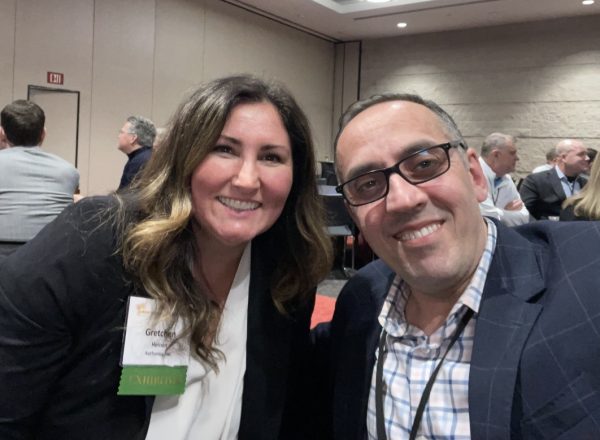
Gretchen Heinen and Dr. Wael Khouli
How Authsnap Started
When asked how the idea for the company came together, Heinen explained:
Authsnap was built from a very specific observation: denial appeals are clinically complex, operationally burdensome, and highly inconsistent.
While working in utilization management, I saw that:
- Appeals could take 1–2 hours per case.
- Outcomes varied based on clinician fatigue and time of day.
- Many valid claims were never appealed due to capacity constraints.
The idea was not to “automate everything,” but to solve one problem exceptionally well: retrospective denial recovery. The company was designed around a hybrid model where AI handles data synthesis and draft generation, while clinicians ensure accuracy and integrity.
Early Traction
When asked about her favorite memory working for the company so far, Heinen recalled:
Early traction moments stand out, particularly proving that:
- Healthcare sales cycles can be compressed to under a week.
- Systems can go live without IT lift.
- Denied claims that were previously written off can be recovered.
More broadly, participating in HFMA leadership forums and engaging with revenue cycle leaders who are actively holding systems together has been meaningful. It reinforces that this is not just a financial problem, but a care delivery issue.
Core Products And Features
When asked about Authsnap’s core products and features, Heinen detailed:
Authsnap offers a clinical AI-powered denial management platform with the following core capabilities:
- AI-Generated Appeals
- Automated synthesis of EMR data.
- Structured, payer-aligned appeal letter creation.
- Human-in-the-Loop Clinical Review
- Every appeal reviewed by an RN or MD.
- Ensures compliance, accuracy, and clinical defensibility.
- Workflow Acceleration
- Reduces appeal time from 1–2 hours to 5–10 minutes.
- Reduces clinical workload by up to 95%.
- System-Agnostic Integration
- Works alongside existing EHR and RCM systems.
- No IT overhaul required.
- Performance Model
- ~75–80%+ appeal success rate vs. 60–65% industry baseline.
- Contingency-based pricing: paid only on recovered revenue.
Clinical Labor Scarcity
When asked about challenges in the company’s sector, Heinen noted:
Yes. The most critical constraint is clinical labor scarcity, particularly appeals-trained nurses.
Operational challenges include:
- Backlogs due to limited skilled staff.
- Variability in clinical argumentation.
- Missed filing deadlines.
- Increasing payer policy complexity.
The approach to overcoming this has been:
- Augmenting clinicians with AI rather than replacing them.
- Standardizing evidence assembly and payer alignment.
- Creating scalable workflows that preserve clinical oversight.
This hybrid model addresses both capacity and quality constraints simultaneously.
Technology Evolution
When asked how Authsnap’s technology has evolved since launching, Heinen explained:
The platform has evolved from:
- Manual appeals + early MVP (sepsis-focused use case).
To:
- AI-assisted appeal generation with clinician validation.
To:
- Scalable, cloud-based platform with EMR ingestion and workflow automation.
Key advancements include:
- Patent-pending AI + clinician review model.
- Structured appeal generation aligned to payer policies.
- Expansion into multiple denial categories.
Major Company Milestones
When asked about some of Authsnap’s most significant milestones, Heinen highlighted:
- Patent filing for AI-driven appeals system.
- MVP development with real clinical use cases.
- First commercial clients.
- Speaking around the country.
- Winning the CORI pitch competition.
- Selection for Walleye Tank 2026 innovation showcase.
Customer Success
When asked to share specific customer success stories, Heinen said:
We are helping hospitals and clinics keep their doors open by digging denials out of the trash and getting them paid.
Funding
When asked about funding and revenue metrics, Heinen shared:
Yes, at a high level:
We are VC-backed and have raised 1.1M in grants and funding.
Market Opportunity
When discussing the total addressable market Authsnap is pursuing, Heinen said:
At the macro level:
- ~$262B in denied claims annually in the U.S.
Competitive Differentiation
When asked what differentiates Authsnap from its competition, Heinen emphasized:
- Clinical-first architecture
- Built by nurses and physicians, not retrofitted tech.
- Human-in-the-loop AI
- Combines automation with clinical accountability.
- Focused use case
- Denials only, avoiding platform sprawl.
- Speed and deployment
- Live in 48 hours with no IT lift.
- Economic alignment
- Contingency model reduces buyer risk.
- Workflow realism
- Designed around actual RCM and clinical operations.
Future Goals
When discussing Authsnap’s future goals, Heinen said:
Near-term:
- Lots of happy customers and patients getting what they need and providers not going out of business.
Mid-term:
- Scale to hundreds of hospitals.
- Expand channel partnerships.
Long-term:
- Become a category-defining platform for revenue integrity and denial prevention.
- Move upstream from recovery into predictive denial avoidance.
Revenue Cycle As Patient Care
When invited to discuss another topic, Heinen concluded:
One critical reframing:
Revenue cycle is not a back-office function. It is a patient care function.
Denied claims lead to:
- Delayed procedures.
- Medication abandonment.
- Financial toxicity for patients.
- Resource constraints for providers.
Solving denials is not just about margin. It is about:
- Preserving access to care.
- Aligning clinical truth with reimbursement.
- Reducing administrative waste across the system.
Actionable Takeaways for Healthcare Leaders:
- CFOs: Denials represent 1–3% of NPR leakage. Focus on recoverability, not just prevention.
- RCM Leaders: Standardization and clinician augmentation are key to scaling appeals.
- CMIOs: Documentation integrity and payer alignment must be embedded in workflows.
- CEOs: Denial management is a strategic lever for both margin and patient trust.
