Aware develops biometric identity technology through the Awareness Platform, a modular orchestration engine designed to support authentication and identification across deployment environments while defending against spoofing, deepfakes, and injection attacks. Pulse 2.0 interviewed Aware President and CEO Ajay K. Amlani to learn more.
Ajay Amlani’s Background
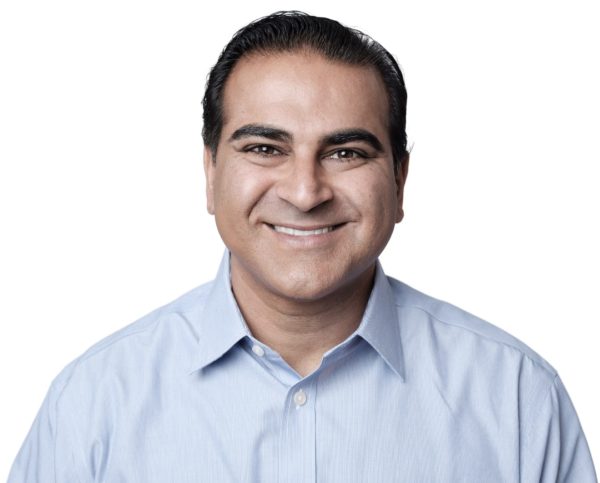

When asked about his background and the experiences that shaped his work in identity, biometrics, and national security, Amlani shared:
I’ve spent over two decades at the intersection of identity, biometrics, and national security, but my path really started much earlier. I began working at 12 years old after my father was laid off and started a business in our basement to compete. Watching him build something from nothing shaped my mindset around resilience, ownership, and solving hard problems.
I studied engineering at the University of Michigan and began my career at General Motors before moving into operations at CSX Transportation, where I managed a rail terminal and later worked on a system-wide simulation project modeling how an entire railroad network operates. That experience taught me how small variables can ripple across complex infrastructure, a lesson that translates directly to identity systems today.
After 9/11, I felt a strong pull toward public service. As a White House Fellow and Senior Policy Advisor at the Department of Homeland Security, I led early biometric security initiatives focused on strengthening border systems and improving how we screen and verify individuals entering the country.
I later helped launch the Department of Defense’s Defense Innovation Unit, working to accelerate the adoption of commercial technologies, particularly in AI and cybersecurity, into national defense. That was when I became deeply focused on the fundamental question: How do you know someone is who they say they are?
I later co-founded CLEAR, helping bring biometric identity into everyday consumer experiences at scale. I also founded YOU Technology, one of the first mobile-first digital wallet and loyalty platforms, which was acquired by Kroger.
Before becoming the CEO of Aware, I held leadership roles at companies like iProov and IDEMIA, continuing to work on advancing biometric authentication globally.
Across every chapter, public and private, my work centers on one core principle: Identity is foundational. Everything in the digital world ultimately comes down to confidence. Biometrics, when deployed responsibly, are the most natural way to anchor identity back to a real human being while minimizing unnecessary data exposure.
My focus has always been building scalable systems that strengthen security, reduce fraud, and preserve individual choice.
Orlando Biometric Exit Pilot
When asked about his favorite memory from working at Aware, Amlani recalled:
One of my favorite memories at Aware so far has been supporting the biometric exit pilot at Orlando International Airport with the Greater Orlando Aviation Authority and U.S. Customs and Border Protection.
The moment was especially meaningful because it represented a full-circle milestone for me. Nearly 20 years ago, I helped deploy one of the first CLEAR biometric gates at that same airport. Returning to Orlando two decades later, this time with Aware helping bring a new generation of biometric identity technology to the departure gate, was a powerful reminder of how far the industry has come and the role biometrics can play in improving both the traveler experience and national security.
What made the experience truly memorable for me was the collaboration behind it. Bringing a pilot like this to life requires close partnerships across many organizations, and it was inspiring to see our Aware team working side by side with forward-thinking leaders at the Greater Orlando Aviation Authority, U.S. Customs and Border Protection, and other industry partners.
Watching those teams align around a shared vision for faster, more secure travel reinforced why this work matters. It also reflected my deep enthusiasm for the growing role biometrics will play in the future of travel, and it was exciting to see that momentum building firsthand in this pilot.
The Awareness Platform
When describing Aware’s core products and features, Amlani detailed:
At Aware, we’ve moved beyond the era of fragmented biometric tools to focus on the Awareness Platform, our core orchestration engine designed to handle the heavy lifting of identity at scale.
We recognize that in today’s market, simply having a matching algorithm isn’t enough. You need a modular, interoperable framework that can plug into a business’s existing workflow without creating more friction.
The goal of the platform is to provide a unified architecture where authentication and identification don’t just happen, they happen reliably, regardless of the modality, vendor, or deployment environment.
The real reason behind the Awareness Platform, however, is the escalating arms race in digital security. We are hyper-focused on hardening the perimeter against high-stakes identity attacks.
It’s so much more than just capturing a simple photo.. We’re building defenses against sophisticated presentation and injection attacks, and the rising tide of deepfakes and other spoofing attempts that threaten to undermine trust in digital interactions.
By identifying and adapting to the latest advanced attacks and leveraging the best biometric algorithms available, we ensure that the person on the other side of the screen is exactly who they say they are and a live, present human.
It’s about creating a zero-trust environment for biometrics that stays two steps ahead of the fraudsters.
Combating AI-Driven Fraud
When asked about recent challenges in the biometric identity sector and how Aware has addressed them, Amlani noted:
The biggest challenge has been the rapid evolution of AI-driven fraud and spoofing attacks. There are instances, such as in fintech, where deepfake fraud attempts have increased 700% globally.
To address this, we’ve advanced our liveness detection capabilities, launching solutions like Intelligent Liveness, which improves fraud resistance while maintaining a seamless user experience, reducing false negatives and verification times significantly.
This proactive enhancement helps customers stay ahead of threat actors while preserving usability.
Technology Evolution
When discussing how Aware’s technology has evolved since the company launched, Amlani described:
Aware’s technology has evolved from foundational biometric algorithms to a comprehensive identity platform.
Early focus areas like fingerprint and facial recognition have expanded into multimodal biometrics, advanced liveness detection, cloud-enabled orchestration, and developer-friendly software development kits, enabling customers to build seamless and secure identity experiences across industries.
The result is a flexible, extensible platform that can scale from government and defense to enterprise digital identity use cases.
Major Company Milestones
When asked about Aware’s most significant milestones, Amlani said:
Aware was founded in 1986 and has spent nearly four decades shaping the biometric identity market. Early in its history, the company contributed to the FBI’s WSQ fingerprint compression standard, helping establish a global benchmark for biometric data.
Over time, Aware evolved from a fingerprint software innovator into a provider of a comprehensive, multimodal biometric platform serving government and commercial customers worldwide.
A major recent milestone was the 2025 launch of Aware’s Intelligent Liveness solution, designed to strengthen fraud prevention while reducing user friction. The solution improves detection accuracy while shortening verification times and lowering false rejections, allowing legitimate users to complete authentication faster and with fewer interruptions.
By combining passive and active liveness techniques, the solution improves accuracy and capture speeds while shortening model retraining cycles to address emerging threats such as deepfakes and injection attacks. This demonstrates Aware’s focus on pairing security with a seamless user experience.
In 2026, Aware further reinforced its leadership through industry-leading third-party evaluations and certifications validating the performance, fairness, and resilience of its biometric technologies.
Strong results in U.S. Department of Homeland Security remote identity testing and FIDO2 certification have underscored the company’s commitment to standards-based, phishing-resistant authentication.
Together, these milestones reflect Aware’s evolution into a trusted provider of intelligent, independently validated digital identity solutions for today’s security landscape.
Competitive Differentiation
When asked what differentiates Aware from its competition, Amlani emphasized:
Aware stands out for its depth of biometric expertise, flexible architecture, and focus on actionable intelligence rather than single-point solutions.
Unlike offerings that lock customers into rigid technologies, Aware’s modular Awareness Platform enables integration across environments, modalities, and use cases, from government identity systems to digital onboarding and authentication in commercial settings.
Its emphasis on science-backed, interoperable solutions helps organizations confidently verify identity while retaining control over their biometric strategy.
Future Goals
When discussing Aware’s future goals, Amlani concluded:
Looking ahead, at Aware we are focused on expanding the adoption of biometric identity verification across sectors such as financial services, healthcare, travel, and digital services, where secure and seamless digital interactions are becoming increasingly essential.
We’re continuing to innovate in areas like liveness detection and spoof resistance to stay ahead of rapidly evolving fraud tactics, while also enhancing our cloud-native deployment options and developer tools to make secure biometric authentication easier to implement.
Just as important to me is helping organizations and consumers better understand biometrics and move past the outdated perception that they are unsafe or unreliable.
When implemented responsibly, modern biometric technologies are designed with strong privacy protections and security safeguards. By supporting ecosystem standards like FIDO and verifiable credentials, and by continuing to educate the market, I believe we can help organizations move beyond passwords and static credentials while strengthening trust in digital interactions.

