

Axoft is developing ultra-soft, minimally invasive brain implants designed to capture high-resolution neural signals while more closely matching the mechanical properties of brain tissue. Its technology combines implants made with the company’s proprietary Fleuron™ material with AI software that decodes neural signals into clinical insights for diagnosis and closed-loop therapies. Axoft is initially focused on disorders of consciousness, including patients who are in comas, vegetative states, or minimally conscious states, with longer-term applications potentially extending into epilepsy, movement disorders, and other neurological conditions. Pulse 2.0 interviewed Axoft Co-Founder and CEO Paul Le Floch to learn more about the company’s origins, its bio-inspired implant technology, and its clinical development plans.
Paul Le Floch’s Background
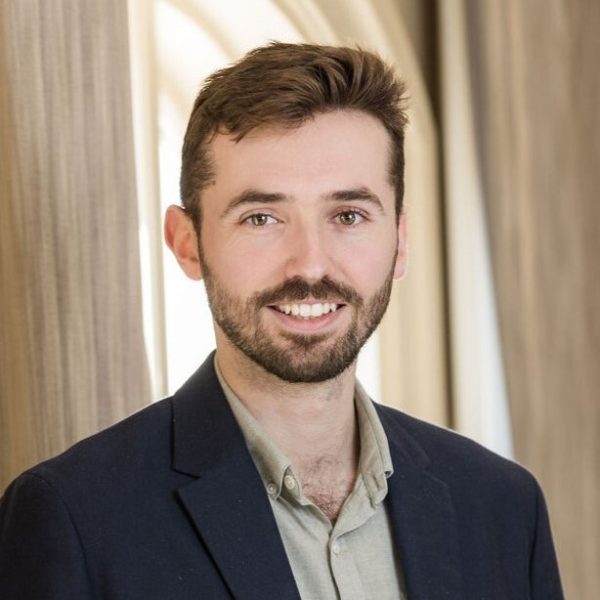
When asked about his background, Le Floch shared:
I’m originally from France and came to Harvard to do my PhD in materials science and mechanical engineering. It was there that I met my co-founders Jia Liu, who is Assistant Professor of Bioengineering at Harvard and now serves as an advisor at Axoft, and Tianyang Ye, who is CTO.
Dr. Liu and I were working in bioelectronics together for several years and always discussed the same goal: to create minimally invasive brain implants that integrate seamlessly with tissues by matching the mechanics of the tissue.
This is fundamental because rigid materials always cause an immune response in the brain, shift position over time relative to the brain tissues, creating irreversible scarring and affecting the integrity of the data collected by the implant.
We developed a new class of materials, named Fleuron, to solve this problem.
Toward the end of my Ph.D., we wanted to translate this innovation outside of the lab for clinical, real-world applications, and that’s when some local Boston investors, such as Engine Ventures, took notice of our project and helped us launch and fund Axoft.
Core Products And Features
When asked about Axoft’s core products and features, Le Floch explained:
At Axoft, we’ve developed ultra-soft, minimally invasive and long-lasting brain implants capable of capturing brain signals at the highest possible resolution, that of single neurons, and an AI software to decode these signals into clinical insights for diagnosis and closed-loop therapies.
We’re focused on recording, measuring and analyzing that data to help improve the diagnosis, prognosis, standard of care, and communication for patients in comas.
We’re starting with addressing disorders of consciousness and progressing toward unlocking answers to many complex neurological conditions like generalized epilepsy and movement disorders.
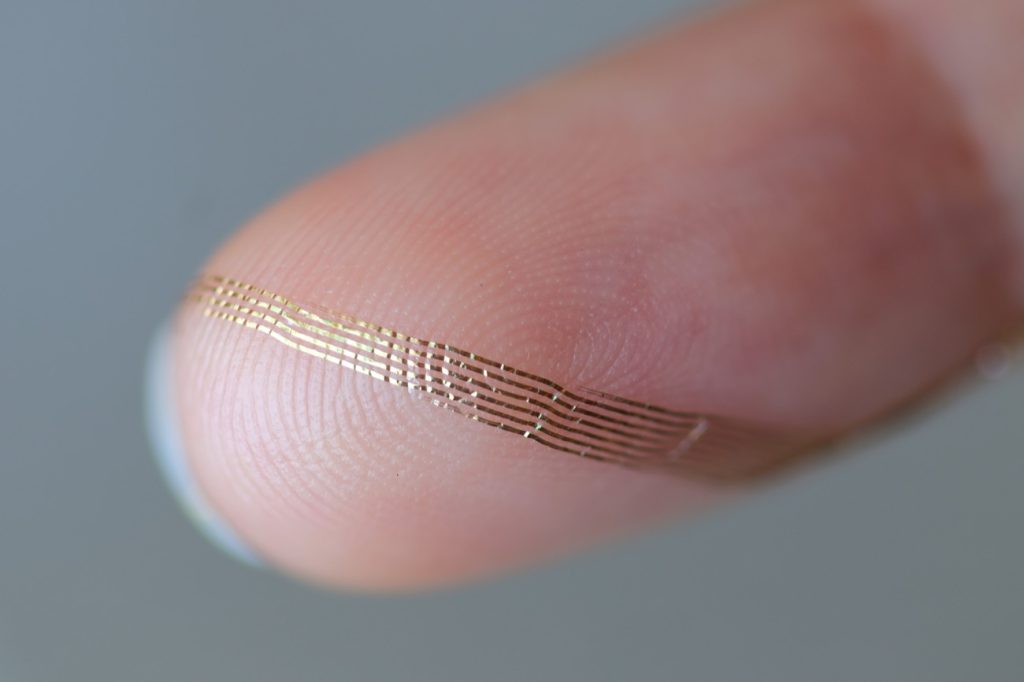
Axoft’s brain implant is made with our proprietary material called Fleuron.
This material is ultra-soft, similar to brain tissue. It’s up to 10,000 times softer than the state-of-the-art material, polyimide, used in other brain implants and 1 million times softer than silicon.
Fleuron has superior biocompatibility due to its softness and chemical inertness.
You can picture it as the chewing gum version of PTFE, or Teflon, that is used in other medical implants, and compatible with scalable semiconductor manufacturing so we can make the implant really small and contain a lot of sensors or stimulators for high-resolution interface with the brain.
Thanks to these properties, our brain implant can reach areas of the brain other high-resolution implants can’t.
It also enables us to identify and decode deep brain signals that can revolutionize how physicians assess, treat and improve the standard of care for a patient population with deep unmet needs, those in a coma, vegetative or minimally conscious state. Axoft’s brain computer interface was recently named to Fast Company’s “The Next Best Things in Tech” list.
Why Axoft Is Focused On Disorders Of Consciousness
When asked why Axoft is initially focused on disorders of consciousness, Le Floch explained:
We’re initially focused on disorders of consciousness because the current standard of care essentially amounts to a questionnaire that can miss signs of awareness.
As a result, almost half, 43% of neuro-ICU patients are misdiagnosed when it comes to their state of consciousness.
A recent study published in The New England Journal of Medicine showed that one quarter, 25%, of patients without reflexes show signs of cognition in MRI, meaning they have some level of consciousness, but are unable to respond.
This, quite simply, can become a matter of life and death: over 70% of neuro-ICU deaths are caused by withdrawing life-sustaining therapy.
Patients and their families deserve better.
Competitive Differentiation
When asked what differentiates Axoft from its competition, Le Floch explained:
Axoft is developing a minimally invasive brain implant that enables a seamless connection between the brain and electronics, allowing for measurement and stimulation at high resolution in any brain region.
Due to its superior biocompatibility, our proprietary Fleuron™ material enables stable, high-density neural recording for longer durations, capable of reaching the deep brain and, currently, with up to 32x more sensors per thread than current flexible probes, and over 60% less signal transmission loss than polyimide, the standard-of-care material in state-of-the-art high-resolution brain implants.
The quality of the neural data collected through Axoft brain implants allows us to capture continuous and stable information from the brain, help inform rehabilitation and improve patient care.
This data can also enable the use of AI-driven tools for the discovery of novel disease biomarkers, support more personalized treatments and may power a new generation of AI models for brain health.
How The Technology Has Evolved
When asked how Axoft’s technology has evolved since launching, Le Floch said:
Creating Fleuron has been game-changing, not only for brain implants, but also because it can be used for a wide range of applications where electronics is in contact with biological systems, including biohybrid devices, organ-on-a-chip, microfluidics and neural interfaces.
It can also be used in pacemakers and stents, opening up a new market opportunity for this novel material in medical devices.
We already sell many different versions of Fleuron™ materials and can create custom applications.
Our goal is for research and industry colleagues and patients to benefit from Fleuron by making it the new standard in biomedical engineering.
We’re currently building a good manufacturing practice, or GMP, facility to mass produce our medical implant and proprietary materials at our Cambridge, Massachusetts lab.
Key Company Milestones
When asked about some of Axoft’s most significant milestones, Le Floch highlighted:
We’re proud of the clinical achievements we’ve accomplished and there’s so much more on the horizon.
To date, Axoft’s Fleuron™ probes have been implanted in patients across several clinical sites.For example, last April, neurosurgeons at The Panama Clinic implanted Axoft’s implant into four patients in Axoft’s first-in-human clinical study.
The implants were tested during brain tumor surgeries, allowing researchers to evaluate the safety and neural recording in tissue already scheduled for removal.
We’re also advancing clinical research collaborations with Mass General Brigham.
Recently, we partnered on a clinical research study that involved using Fleuron-based neural interfaces for cortical mapping, seizure onset mapping around tumors and language recognition tasks.
On the company growth front, in April we secured $55 million in Series A financingand are working toward progressing U.S. regulatory approval of our iBCIs.
Axoft was named a MedTech Breakthrough Award winner and selected as a finalist for the Mid-State Grand Prize 2026 MedTech Innovator cohort, a group that represents the top 4% of 1,835 global applicants.
Funding
Axoft has raised more than $60 million in funding to date.
Total Addressable Market
When asked about the total addressable market Axoft is pursuing, Le Floch said:
The TAM for misdiagnoses in disorders of consciousness is $23 billion in the U.S. and UK alone.
The prevalence is 32 million to 160 million cases globally.
To further extrapolate, neurological disorders represent a $600 billion global burden.
Future Goals
When asked about Axoft’s future goals, Le Floch explained:
Our immediate plans include expanding our clinical studies to 100 patients, beginning in-house manufacturing and pursuing our first U.S. regulatory approval.
Our goal is to have Axoft Fleuron technology become a seamless part of existing clinical workflows so physicians can better treat and communicate with patients suffering from devastating neurological disorders like disorders of consciousness and improve the quality of care.
