

banse is a Düsseldorf-based management consultancy that helps SMEs strengthen their marketing, human resources, and organizational capabilities with practical, execution-driven strategies. The company works with businesses in sectors such as manufacturing, trading, and the public sector, with a strong focus on sustainable growth. Pulse 2.0 interviewed banse founder and Managing Consultant Julian Banse to learn more.
Julian Banse’s Background
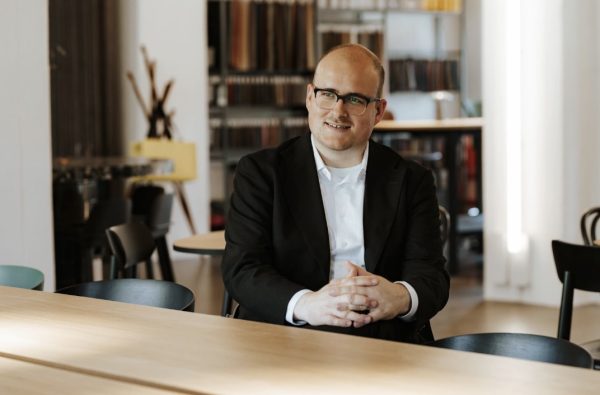
What is Julian Banse’s background? Banse said:
“I started my entrepreneurial journey in 2013 by founding an online news magazine focused on the emerging influencer industry, which I later sold. After that, I built an agency that became part of a larger agency group. I then moved into a management role and co-founded another agency together with parts of the former leadership team. In 2020, I decided to leave the traditional advertising agency business to start a consultancy focused on working more directly and sustainably with SMEs.”
Formation Of The Company
How did the idea for the company come together? Banse shared:
“The idea for banse came from seeing how many SMEs rely heavily on external agencies without building internal capabilities. We wanted to take a different approach by enabling companies to solve their marketing challenges themselves and become more independent over time. As we worked with more clients, we also built strong expertise in HR and internationalization, since both areas are closely linked to long-term growth.”
Favorite Memory
What has been your favorite memory working for the company so far? Banse reflected:
“One of the most defining experiences was being involved in the early phase of “funk,” the content network of Germany’s public broadcasters ARD and ZDF. It was the first time they created a structure focused primarily on digital publishing, with an annual budget of over 40 million euros. We were involved in building the organization from the ground up, including content structures, teams, and processes. It felt like building a startup within a public system. Being part of that phase and contributing to its foundation was a unique and very rewarding experience.”
Core Products
What are the company’s core products and features? Banse explained:
“banse focuses on two main areas: digital B2B marketing and talent assessment. In digital B2B marketing, especially in industries like manufacturing, success depends on precision. It is not about volume, but about understanding complex buyer journeys and creating the right touchpoints in a very focused environment where each conversion has a direct business impact. In talent assessment, we help SMEs improve hiring quality. Many companies either rely on basic interviews or overly complex assessment centers. We focus on a practical middle ground that leads to better hiring decisions without unnecessary overhead.”
Challenges Faced
Have you faced any challenges in your sector of work recently? Banse acknowledged:
“One of the biggest challenges right now is the effective use of AI. Many companies want to implement AI-driven workflows but lack the necessary data quality and internal structures. Our approach is to first build the right foundation, especially in terms of data and processes, before introducing AI. This ensures that technology creates real value instead of adding complexity.”
Significant Milestones
What have been some of the company’s most significant milestones? Banse cited
“banse is strongly milestone-driven. Our work is defined by achieving concrete results for our clients. This includes hiring key personnel, generating qualified leads in complex B2B environments, restructuring organizations, or supporting successful international market entries. These outcomes define progress in our daily work.”
Funding/Revenue
Are you able to discuss funding and/or revenue metrics? Banse revealed:
“As a consultancy, scaling comes with certain challenges, but our goal is to grow sustainably at around 30 to 40 percent per year. We reinvest a significant portion of our revenue to build a strong foundation for long-term growth, especially in economically challenging times.”
Total Addressable Market (TAM)
What total addressable market (TAM) size is the company pursuing? Banse assessed:
“We operate in the SME segment, which is a major part of the economy in all our core markets. In Germany, SMEs, also known as the Mittelstand, represent over 99 percent of all companies and employ the majority of the workforce. Similar structures exist in markets like the United States and Sweden, where SMEs also play a central economic role. This puts us in a large, multi-billion euro market with strong and ongoing demand for specialized consulting.”
Differentiation From The Competition
What differentiates the company from its competition? Banse affirmed:
“Our main differentiation is our hands-on approach combined with a long-term perspective. We do not focus on short-term projects. Instead, we work with clients on a retainer basis to create sustainable impact over time. Our pricing reflects a consultancy level, but unlike traditional consultancies, our work is strongly execution-driven, ensuring that strategies are actually implemented.”
Future Company Goals
What are some of the company’s future goals? Banse emphasized:
“One of our key goals is to expand our international presence by strengthening our network of partners in different markets. At the same time, we continue to refine our services to better support SMEs in building internal capabilities and achieving sustainable growth.”
Additional Thoughts
Any other topics you would like to discuss? Banse concluded:
“SMEs will continue to play a crucial role in the global economy, but they often lack access to consulting that is both practical and tailored to their needs. Our focus is to close that gap by providing solutions that are not only strategic, but also implementable and sustainable.”
