

Berry Fertility is a modern technology platform designed to elevate the fertility care experience. It equips patients with accessible, education-forward tools that guide them throughout their fertility journey. It supports clinicians with AI-enhanced workflows and smart automations that reduce administrative burden and streamline time-intensive tasks. Pulse 2.0 interviewed Berry Fertility co-founder and CEO Irene Alvarado to gain a deeper understanding of the company.
Irene Alvarado’s Background
Could you tell me more about your background? Alvarado said:
“For over a decade, I’ve built software and digital products at GitHub, Google, and several startups, partnering closely with AI research teams to turn emerging technologies into practical, intuitive products. I’m committed to the craft of building products that are both highly useful and delightful in their experience.””
Formation Of The Company
How did the idea for the company come together? Alvarado shared:
“The inspiration for Berry Fertility stemmed from my own experience with fertility treatments. The night before I started a treatment, a massive box of medications, full of needles and vials, arrived. It was overwhelming. From that day forward, I’d receive daily instructions in long, convoluted emails from my clinical team. In one instance, I had a mix-up with a crucial injection called the trigger shot, which you’re supposed to take exactly 36 hours before retrieval.”
“Even though I had a great clinic, great insurance benefits, and a strong support system, the whole process felt like having to maintain a demanding second job.”
“I quickly realized my story wasn’t unique; so many of my friends, family, and colleagues had similar stories about their fertility experiences, and the more I spoke about it and sought answers, the better I understood that this incredibly expensive and life altering process is often left for the patient to learn and manage on their own.”
“With my background in engineering and AI, and the firsthand patient insights I got navigating my own fertility treatments, I came up with the idea for Berry Fertility to provide access to a tool that patients have needed for far too long.”
Favorite Memory
What has been your favorite memory working for the company so far? Alvarado reflected:
“It’s hard to pick just one, but I have especially fond memories of all our ‘firsts.’ Our first public launch—the thrill of putting something real into the world. Our first app customer—the realization that someone outside our team saw value in what we built. Our first paid app customer—that feeling of validation that patients would even pay for this out of their own pocket. Our first clinical customer—the moment we stepped into the complexity of real-world care. Our first hire—seeing someone believe in our mission enough to join us. Each of those moments felt monumental at the time.”
Core Products
What are the company’s core products and features? Alvarado explained:
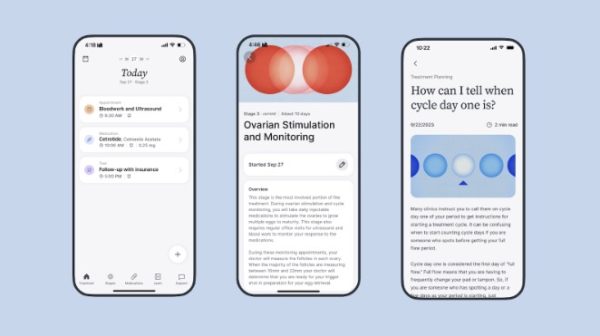
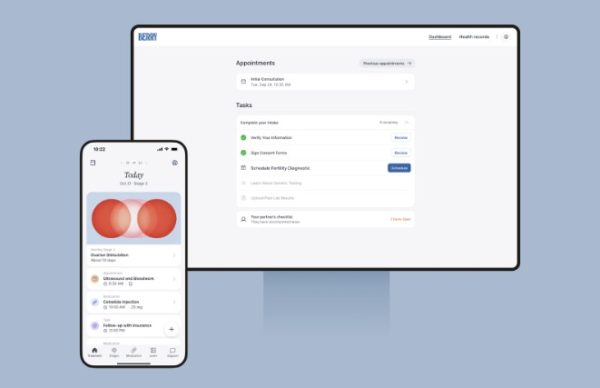
“Berry is a modern fertility care company that works with both patients and clinics. On the patient side, our product is an app — the only app specifically designed for people considering or going through fertility treatments like IVF, IUI, egg freezing, embryo transfers, and more. With the Berry app, you can track meds, appointments, hormones, and symptoms all in one place — plus get step-by-step guides and videos that make managing your treatment feel easier and less stressful.”
“The app is loaded with super helpful content: dozens of injection tutorial videos, more than 100 articles, and 200 FAQs — and the Berry team is just a tap away on chat if you have additional questions. We also have a feature called ‘Treatment sharing’ that allows patients to share their journeys with their support network, like a partner, friend, or family member.”
“On the clinic side, Berry provides an all-in-one, automated fertility care platform that streamlines every step of patient intake, treatment coordination, and communication. We have three core offerings for clinics: Smart Intake, Treatment App and Custom AI solutions, all of which are HIPAA compliant, can integrate with clinic EMRs and CRMs and are brandable and customizable. Smart Intake helps onboard patients faster by automating much of the staff admin work and providing one place for all patient tasks. Our Treatment App helps streamline communications, keeps patients informed and engaged with their personal journeys. We also build Custom AI solutions for clinics. An example of one we built for a large network is called Smart Compose, which is an AI chat model that helps equip clinic care teams with better, faster responses to patient chat inquiries. Since my background is in AI software, we really excel in developing helping clinics streamline their workflows with automations.”
Challenges Faced
Have you faced any challenges in your sector of work recently? Alvarado acknowledged:
“The fertility industry, though it’s growing at a rapid rate due to increased demand, is a relatively small sector within the broader healthcare industry. There are only about 500 clinics in the U.S., and when entering the market as a newcomer, you’re up against some skepticism. This is not unique to fertility of course; it’s a broader challenge in healthcare where change can be slow and often new tech solutions have to be 10x better to merit switching to. It’s understandable given the risk and livelihood of patients at stake. The hardest part of working in healthcare is the long sales cycle and learning how to build trust over a long time with your customers.”
Evolution Of The Company’s Technology
How has the company’s technology evolved since launching? Alvarado noted:
“We started out with the fertility treatment mobile app, but our customers pushed us to focus on the patient experience earlier in the process: when they first interact and have to onboard with a clinic. We launched two products to help with patient prescreening and intake. We went from being a one-product company to being a multi-product company. We have a single data layer that powers all our products, which means that our products work well together but can also be used separately.”
“We’ve also launched an agentic service called Smart Compose. Built specifically for fertility care teams, Smart Compose integrates directly with a clinic’s EMR to analyze patient messages, reference history, and draft tailored responses for clinical support staff to review and refine quickly. The system uses what’s called human-in-the-loop, which means support staff are fully in control and can review, edit, or discard all drafts before they’re sent to patients. With Smart Compose, clinic staff can focus more on care they provide to patients, and less on the time-consuming administrative tasks.”
Significant Milestones
What have been some of the company’s most significant milestones? Alvarado cited:
“Berry has been able to partner with some of the largest fertility clinic networks in the U.S. Our customers have pushed us from being a one-product company to building additional products that cover the whole patient journey.”
“On the patient side, we know we’ve created something that a lot of people find value in. 9.1/10 patients recommend Berry to other patients. Berry also has a 5-star rating on the app store for our mobile app, whereas other fertility treatment apps have an average of less than 2.4 stars. We’ve been able to support over 200k treatment reminders and 20K calendar events.”
Customer Success Stories
Can you share any specific customer success stories? Alvarado highlighted:
“It was a Saturday evening when one of our mobile app members reached out, clearly upset. She had just started a new fertility treatment and couldn’t access data from her previous one—something we hadn’t yet built into the app, since it was still early days. I was stunned she had already used Berry for more than one procedure. The problem was that the feature was on our roadmap, but not yet live.”
“I chatted with her that evening and, with her consent, manually pulled her data from our database and sent it over on Sunday. She was incredibly grateful—and surprised by the quick response. What started as a frustrated customer turned into a 5-star review. The bar is so low for customer service: if you genuinely care, people are often willing to grow with you—even when the product isn’t perfect yet. And we added that feature to the app shortly after that person reached out.”
Total Addressable Market
What total addressable market (TAM) size is the company pursuing? Alvarado assessed:
“The global fertility market has a TAM of about $35–45 billion and projected growth of about ~6–10% annually. Worldwide about 1 in 6 people experience infertility.”
“In the US there are about 430,00 assisted reproductive technology (ART) cycles performed annually. But some types of procedures within that are growing quickly. Egg freezing, for example, grew 39% according to the latest reports from the Society of Assisted Reproductive Technology (SART).”
Differentiation From The Competition
What differentiates the company from its competition? Alvarado affirmed:
“In most industries, users expect products to feel effortless and high-quality. Healthcare has been the stubborn exception: portals that look ten years old, PDF calendars, and apps that straight up don’t work—especially in the fertility space. The first thing that sets us apart is a relentless focus on quality and great UX, both for patients and clinical staff. We want to prove it’s possible to have a great experience with a digital healthcare product.”
“Second, we partner closely with our customers to build genuinely helpful products that fit into their workflows. We go above and beyond to turn around new feature requests quickly, integrate their ideas, and understand what drives ROI.”
Future Company Goals
What are some of the company’s future goals? Alvarado emphasized:
“IVF costs in the U.S. range from $12,000 to $30,000 for a single cycle—a cost that is out of reach for 24% of women. Without broader insurance coverage, technologies that lower the cost of providing treatment, and a wider geographic availability of fertility services, fertility care will remain inaccessible. At Berry we represent a small but growing group of industry leaders trying to make these services more accessible and affordable. We’re building towards a future where anyone that wants to or needs to obtain a fertility procedure can do so.”
