BioLongevity Labs is a company that manufactures and supplies high-purity research peptides and bioregulator compounds. Pulse 2.0 interviewed BioLongevity Labs co-founder and Chief Strategy Officer Jay Campbell, who is also an international best-selling author, to learn more.
Jay Campbell’s Background
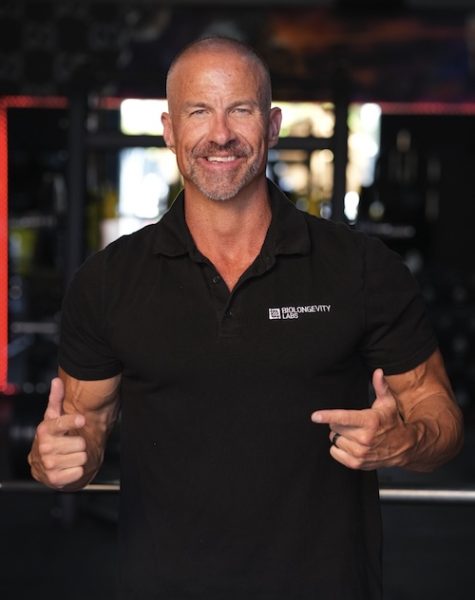

Could you tell me more about your background? Campbell said:
I’ve been an athlete my entire life.
Since childhood, I was obsessed with the human physique: running faster, jumping higher, getting stronger.
In my late twenties, a sports injury changed everything.
My doctor prescribed testosterone therapy as part of my recovery.
That was a game-changing moment that sent me down a 25-year rabbit hole of personal experimentation with hormones, peptides, and therapeutic compounds.
The more I learned, the more I understood what was actually possible, and the more excited I got.
So I started documenting everything: bloodwork, body composition, cognitive function, sleep, recovery, training, and supplement stacks.
I shared what I was learning through my blog and, eventually, my podcast.
Six internationally bestselling books came out of that work, including The Testosterone Optimization Therapy Bible and my most recent, Metabolic Awakening with GLP-1 Peptides.
These endeavors helped me build an audience of hundreds of thousands of people who, like me, were done accepting a healthcare model that profits from their decline.
Working with thousands of people who had been failed by substandard health protocols is what led me to co-found BioLongevity Labs, a manufacturer of research-grade peptides and bioregulators.
I’m 55 years old.
By every biomarker I track, my body is functioning like someone considerably younger.
That is the proof of concept behind everything I teach.
Men’s Health Issues That Get Overlooked

What are some of the biggest men’s health issues that tend to get overlooked, especially around metabolic health, testosterone decline, and long-term performance? Campbell shared:
Here’s the one that underpins almost everything else:
Testosterone decline is treated as inevitable rather than addressable.
Published research has documented a significant population-level decline in testosterone over the past several decades, independent of age.
The average man today is running lower testosterone than his father did at the same age.
And in most clinical settings, this gets missed or ignored entirely.
Why?
Because reference ranges are built from aging, often sedentary, and metabolically compromised populations.
When a physician tells you you’re “normal,” he’s telling you you’re statistically average — NOT that you’re anywhere near optimal.
The downstream effects of this industrial-scale decline are difficult to truly quantify.
For millions of people, these include fatigue, cognitive fog, fat accumulation, muscle loss, low libido, and mood disruption.
These are the clinical footprints of an addressable hormonal problem.
Another major gap I see is sarcopenia, or the progressive loss of muscle mass with age.
Muscle is not cosmetic.
It’s the primary driver of metabolic rate, insulin sensitivity, and long-term physical resilience, and the medical system has almost nothing meaningful to offer on this front.
Interest In Peptide Therapies
Why do you think more men are becoming interested in testosterone therapy and peptide therapies right now? Campbell noted:
Two forces are converging, and both matter.
First, the GLP peptide moment.
Ozempic and Semaglutide put peptide science on the front page for the first time, creating an entirely new consumer who arrived through weight loss and started asking what else these compounds could do.
That conversation opened a door into a much larger category.
Second, the information gatekeeping model broke down just as institutional trust collapsed in the wake of COVID.
People are no longer settling for a broken “sick-care” model.
They’re reading primary research, comparing outcomes, and discovering a MASSIVE gap between what conventional medicine offers and what’s actually available.
When they close that gap by engaging with testosterone optimization and peptides, the results are dramatic enough to generate serious word of mouth.
That word of mouth is now unstoppable.
Misconceptions Men Have About Testosterone Levels
What are some common misconceptions men have about testosterone levels, aging, energy, and physical performance? Campbell pointed out:
The most persistent one: that hormonal decline is just normal aging you have to accept.
This is FALSE.
Yes, testosterone declines with age, but that decline is substantially driven by lifestyle factors that are addressable.
Poor sleep, chronic stress, excess visceral fat, sedentary behavior, endocrine-disrupting chemical exposures.
The decline is real, but it is NOT as fixed as the conventional narrative suggests.
Second misconception: that testosterone therapy means you’ll become huge and aggressive.
This conflates therapeutic hormone restoration with bodybuilder-level abuse at supraphysiologic doses.
These are CATEGORICALLY different protocols with categorically different goals.
Third: that once you start, you can never stop.
Rather than asking whether you could theoretically return to a low-T baseline, the more important question is what kind of life you could build by optimizing your hormones.
And finally, that energy and performance decline is primarily a fitness problem solvable with the right training program.
For most men over 40, it’s a HORMONAL problem.
You cannot out-train a broken hormonal foundation.
Difference Between Optimizing Health And Short-Term Performance Gains
How should men think about the difference between optimizing health and chasing short-term performance gains? Campbell explained:
It’s like building a system versus extracting from one.
Chasing short-term performance emphasizes the output without maintaining the infrastructure.
You get a result, pay a biological price, and potentially end up worse off than if you’d done nothing.
Real health development COMPOUNDS.
The man who commits to genuine hormonal health at 40 is not just feeling better at 40, he’s programming his biology for what 60 and 70 look like.
Those investments are not fungible with shortcuts.
The goal is to be FULLY functional and vital into your 90s. And beyond.
Build your protocols around that timeframe, and everything changes.
Where Medical Conversations Around Peptides Fall Short
Where do you think the medical conversation around testosterone and peptides is falling short? Campbell described:
Almost everywhere.
The reference range problem is the most urgent failure.
When a physician looks at your testosterone result and says “you’re normal,” he is communicating something statistically true and clinically useless.
Normal is not optimal.
The second failure is the siloed approach.
Most physicians treat testosterone in isolation — disconnected from thyroid function, insulin sensitivity, cortisol, sleep quality, and body composition.
These systems are NOT separate.
With respect to peptides, most physicians have zero training in peptide therapeutics.
They’re not equipped to guide patients, they frequently mischaracterize the evidence, and the result is that patients are forced outside the medical system entirely.
That’s a failure of medical education, not of the patients or the compounds.
The conversation that needs to happen is about OPTIMAL health rather than the mere absence of disease.
The current system was built to diagnose and treat illness, not to help people thrive.
Role Of Peptide Therapies In Men’s Health
What role can peptide therapies play in men’s health, recovery, longevity, and metabolic function? Campbell detailed:
An enormous one, and we’re only beginning to understand the full scope.
For healing and recovery, BPC-157 and TB-500 are the most compelling tools I’ve worked with personally.
The evidence on BPC-157 for tendon, ligament, and soft tissue repair is extraordinary, and elite athletes are already using it quietly.
For metabolic function, GLP peptides have changed the conversation entirely.
But beyond GLPs, compounds like Tesamorelin and Ipamorelin are doing meaningful work on body composition and growth hormone optimization as natural GH secretion declines with age.
For longevity, the frontier that gets almost NO mainstream attention is bioregulators.
These are organ-specific peptides that target biological systems with a level of precision conventional medicine has never achieved.
Compounds like Epitalon and Thymalin, which I use personally, represent an entirely different paradigm of aging intervention.
And for cognitive function — which is a men’s health crisis nobody is talking about loudly enough — compounds like Cerebrolysin and Semax are doing real work on neuroplasticity and brain resilience.
The common thread is they work WITH your body’s existing biology rather than overriding it.
That’s what makes them fundamentally different from most of what conventional medicine offers.
What To Consider Before Considering These Treatments
What should men know before considering testosterone therapy or peptide-based treatments? Campbell emphasized:
Three things, and none of them are optional.
First, get COMPREHENSIVE labs before you do anything.
Total and free testosterone, sensitive estradiol, SHBG, LH, FSH, thyroid panel, insulin, fasting glucose, and a full metabolic panel.
Any physician who wants to put you on testosterone without running this panel is not someone you should be working with.
Second, understand that these are tools, not shortcuts.
Testosterone therapy and peptides AMPLIFY a healthy foundation, they don’t substitute for one.
The men who skip the foundation and chase the intervention almost always end up disappointed.
Third, source quality is non-negotiable.
The quality problem in this market is REAL.
Contaminated or misdosed compounds can actively harm you and make it impossible to assess whether the compound itself is working.
Independent, third-party certificates of analysis from accredited laboratories are the minimum standard.
This is precisely why we built BioLongevity Labs the way we did.
Practical Steps To Improve Health Before Advanced Therapies
What are some practical steps men can take to improve their health before turning to more advanced therapies? Campbell outlined:
The foundation comes first because no molecule replaces it.
Build and preserve muscle.
Resistance training three to four times per week, progressive overload, sufficient protein — this is the foundation of metabolic health, insulin sensitivity, and long-term physical resilience.
Everything else builds on top of this.
Fix your sleep.
Seven-plus hours, quality architecture, consistent schedule.
If sleep is broken, everything else is compromised, full stop.
Get objective data.
Most men make health decisions based entirely on how they feel, which is UNRELIABLE.
Comprehensive labs give you a real baseline and make it possible to measure what’s actually working.
Address the obvious metabolic drags like excess visceral fat, sedentary patterns, ultra-processed food, and chronic stress.
These directly suppress testosterone and drive the systemic inflammation that accelerates biological aging.
Once the foundation is genuinely in place, targeted interventions can do the work they’re designed to do.
Remember, amplifiers require something worth amplifying.
Additional Thoughts
Any other topics you would like to discuss? Campbell concluded:
The regulatory environment is changing, and anyone tracking this space needs to understand exactly what that means.
In April 2026, the FDA formally removed 12 peptides from Category 2 of the 503A bulk drug substances list.
That’s the category that had effectively prohibited their compounding since 2023 on the basis of “significant safety concerns” that, in my view, were never scientifically justified.
The FDA simultaneously announced that the Pharmacy Compounding Advisory Committee will convene July 23-24, 2026, to evaluate whether seven of those peptides, including BPC-157, TB-500, Semax, and Epitalon, should be formally added to the 503A authorized compounding list.
Here’s what that means in practical terms.
The July meeting is advisory only.
The committee’s recommendation is non-binding.
Even if the PCAC votes in favor and the FDA agrees, formal notice-and-comment rulemaking is STILL required, a process that can take a year or more under standard timelines.
This matters because these are compounds that hundreds of thousands of people are already using to heal faster, think more clearly, and age better.
The 2023 restrictions were driven by pharmaceutical industry pressure, not legitimate safety evidence.
What’s happening now is the result of years of advocacy finally moving the needle.
The direction is right.
But the finish line isn’t July 2026, so plan accordingly.
What I can say with confidence: with over 40 million Americans having already used a GLP drug, the patient population demanding access to this broader category of therapeutics is now too large and too visible to suppress.
The dam is breaking.

