

BrandShield is a cybersecurity company that protects organizations and their customers from external digital threats, including phishing websites, social media scams, executive and brand impersonation, counterfeit goods, fraudulent advertisements, fake mobile apps, and emerging generative AI threats. The company combines proprietary AI, built to identify connected threat networks rather than isolated incidents, with human intellectual property and cybersecurity expertise. Pulse 2.0 interviewed BrandShield CEO Yoav Keren to learn more about his background, the company’s origins, the evolution of its technology, customer results, and the changing digital threat landscape.
Yoav Keren’s Background
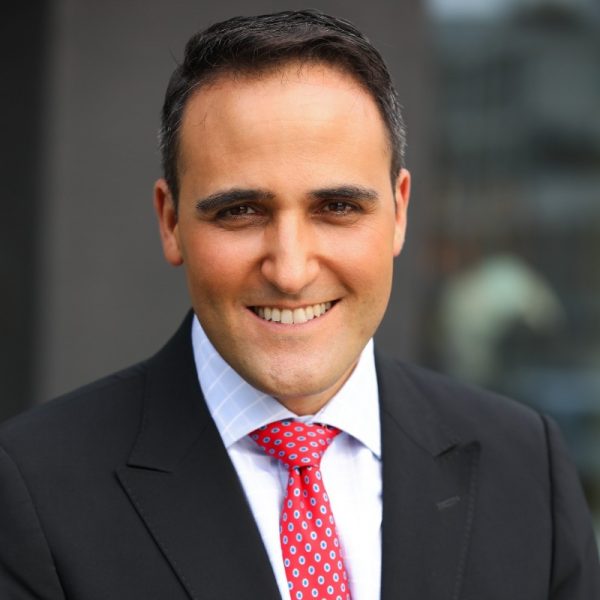
When asked about his background, Keren explained:
“I have over 25 years of experience in financial management, marketing, and business development. I hold a B.A. in Physics and Economics from Tel Aviv University and an MBA from the Kellogg & Recanati Business School, a joint program between Northwestern University and Tel Aviv University.
My first company, Domain The Net, which I co-founded in 2000, became the largest domain name registrar in Israel. Before that, I served as senior advisor to a minister in the Israeli government and headed the technology branch of the Israeli military’s Information Security Department. I’m also actively involved in the International Trademark Association’s anti-counterfeiting committee, and I’m a former council member at ICANN.”
The Origin Of BrandShield
When asked how the idea for BrandShield came together, Keren said:
“The idea came directly from what I saw running Domain The Net. We were registering tens of thousands of domains, and it was impossible to ignore how many were being used to impersonate brands, run phishing operations, or sell counterfeits.
Traditional cybersecurity firewalls and endpoint protection do nothing about those threats because they live entirely outside the corporate perimeter. I co-founded BrandShield in 2013 with Yuval Zantkeren and David Fridman, driven by a simple conviction: brands needed a new category of protection specifically designed for the external digital world.”
A Favorite Memory At BrandShield
When asked about his favorite memory working at BrandShield, Keren reflected:
“There have been so many good memories so far that it’s hard to single one out. There have been great moments with employees who have shared their love of working at BrandShield, customers who shared their satisfaction from our solution and the results we provided them, moments of significant exposure of our research in the media, and more.
If I had to single out one, it was during COVID, when we worked with the Pharmaceutical Security Institute and the major pharma companies to stop scams and counterfeit sales of COVID vaccines. The results of that work were significant. We detected and took down hundreds of online scams and counterfeits. Our intelligence also helped the pharma companies and law enforcement carry out on-the-ground seizures in some cases. That work we did definitely saved lives. There is nothing more fulfilling than that.”
BrandShield’s Core Products And Features
When asked about the company’s core products and capabilities, Keren explained:
“BrandShield is a cybersecurity company that leverages both AI and human-led intellectual property expertise to protect brands, their users, and their customers from digital threats. Our platform proactively uncovers and eliminates phishing websites, social media scams, executive and brand impersonation attempts, paid ad scams, counterfeit goods and sellers, fake mobile apps, and even scams being promoted by generative AI.
Our core products, BrandShield Vanguard (Online Brand Protection) and BrandShield Resolve (External Cybersecurity), both cover the main aspects of Digital Risk Protection, but focus and workflows are optimized for different user types and use cases. Both products are supported by proprietary technologies such as our AI.ClusterX predictive threat clustering engine, which shifts the focus from isolated incidents to multi-pronged threat networks in order to efficiently scale our clients’ digital risk programs.”
How BrandShield’s Technology Has Evolved
When asked how BrandShield’s technology has changed since its founding, Keren said:
“Back in 2013, when BrandShield was founded, the security industry was in its second generation, focused on protecting endpoints and the cloud. What BrandShield saw before others did was that a third generation was emerging, one where threat actors exploit things you can’t protect because you don’t even know they’re a threat. Social engineering, phishing, scams, all of it targets blind spots rather than known systems. That’s why BrandShield built its approach around detection as much as remediation. You can’t remediate what you never detected in the first place.
Crypto scams surged around 2019 and were an early signal of where security was headed. Phishing stopped being generic mass emails and became far more targeted and convincing, growing in sophistication and scale as attackers followed the money into channels with little oversight.
From there, the most meaningful evolution has been the shift from flagging individual threats to acting on coordinated networks. AI.ClusterX maps relationships between threats, identifies shared infrastructure behind campaigns, and helps teams act on broader attack networks rather than isolated incidents. AI.ClusterX does this by predicting where a threat is likely to surface next, mapping the shared infrastructure and relationships behind a campaign instead of just grouping similar threats like most tools do. It also learns as it’s used. Every interaction from users trains the model behind it, so it gets sharper with every detection rather than staying static.
AI Platforms Protection is the latest chapter, following consumers into AI discovery tools, where the next wave of abuse is already taking shape. BrandShield’s AI Platforms Protection follows consumers into AI discovery tools, where the next wave of abuse is already taking shape, much like phishing and crypto scams once did.”
Major BrandShield Milestones
When asked about some of BrandShield’s most significant milestones, Keren highlighted several stages of the company’s development:
“A major inflection point came in 2017, when BrandShield evolved into a comprehensive Online Brand Protection solution, expanding from brand abuse detection into broader protection across websites, marketplaces, social media, paid ads, mobile apps, and other digital channels.
By 2019, crypto scams had become a significant threat vector, with fraudulent token schemes, fake exchanges, and impersonation of crypto brands accelerating in both volume and sophistication. BrandShield moved to protect this space directly, work that would later include partnerships with companies like The Sandbox, where BrandShield neutralized 120 phishing sites and 58 fake social media accounts impersonating the platform within the first two months, and with a crypto company dealing with repeated CEO impersonation, where over 230 fake profiles were removed across Twitter, Instagram, and LinkedIn in the first month alone.
The COVID years were also a major accelerator. As the vaccine rollout began, BrandShield tracked a more than 4,200% increase in potentially fraudulent COVID-19 vaccine websites between January 2020 and the end of February 2021, alongside over 20,000 fraudulent posts and handles scanned across platforms like Instagram, Twitter, and Facebook. I warned at the time that these fake sites weren’t just selling counterfeit vaccines; they were also being used to steal credentials and plant malware on both personal and work devices. This period drove a major acceleration in market adoption and growth, as commerce and customer engagement moved online and demand for this kind of protection spiked across the board.
From there, BrandShield expanded further into cybersecurity, enhancing its capabilities to cover immediate external threats such as phishing sites, fraudulent domains, executive impersonation, social scams, rogue apps, and dark web exposure. The launch of AI.ClusterX marked the next major step, using proprietary AI to identify connected threat networks, prioritize critical risks, and help teams act faster at scale.
AI Platforms Protection is the newest chapter, following consumers into AI discovery tools, where the next wave of abuse is already taking shape, much like phishing and crypto scams once did.”
Customer Success Stories
When asked to share specific examples of BrandShield’s work with customers, Keren explained:
“In consumer goods, Scrub Daddy faced widespread abuse from fake websites, counterfeit listings, and unauthorized sellers using the brand’s popularity to mislead customers. BrandShield helped the company gain visibility across marketplaces, websites, and social platforms, prioritize the highest-risk threats, and take enforcement action at scale to protect customers and revenue.
In retail, La Vie en Rose, one of Canada’s leading sleepwear, lingerie, and swimwear retailers, faced a surge of fake ads and impersonation scams across its markets. BrandShield achieved a 100% removal rate for fake ads on platforms like Facebook and Instagram, as well as for unauthorized listings across marketplaces.
In luxury goods, Bang & Olufsen dealt with counterfeit products, fake e-commerce sites, unauthorized sales, and IP violations across global digital channels. BrandShield helped remove more than 11,000 counterfeit listings, protecting both the company’s brand equity and the customers being targeted by fraudulent sellers.
In pharmaceuticals, our work with the Pharmaceutical Security Institute shows how high the stakes can get. Together, we identified and removed more than 6,900 fraudulent drug listings and over 1,600 rogue online pharmacies in 2023 alone. These included fake medicines promoted for serious conditions, often targeting vulnerable patients through social media platforms and online marketplaces.
These examples show why digital risk protection is no longer limited to one sector. Whether the threat is a counterfeit product, a fake storefront, a phishing domain, or a fraudulent ad, the impact is the same: customers are deceived, revenue is lost, and trust in the brand is damaged.”
What Differentiates BrandShield
When asked what differentiates BrandShield from competitors, Keren said:
“At the core of BrandShield is a simple belief: the internet should be safer for brands and for the people who trust them. When scammers impersonate a company, the damage is not only reputational. Customers can lose money, personal data, and confidence in the brands they rely on.
What sets us apart is how we combine technology, data, and human expertise. Our platform was built natively for this category, with AI capabilities developed specifically for online brand protection and external digital risk. That AI is powered by 13 years of accumulated threat data, giving us a deep understanding of how scammers operate, connect, and evolve.
This foundation supports predictive and agentic AI capabilities that help detect threats earlier, group related activity, prioritize the most critical risks, and accelerate action across domains, social media, marketplaces, paid ads, mobile apps, and the dark web.
But technology alone is not enough. BrandShield keeps expert enforcement managers and threat hunters in the loop. These specialists bring legal, IP, and cybersecurity expertise to validate threats, guide enforcement, and make sure action is taken with the precision and context required to remove real risks at scale.”
BrandShield’s Future Goals
When asked about the company’s future goals, Keren explained:
“As threats evolve, so do the programs brands need to fight them. One of our core goals is to help organizations build and scale external threat protection programs that can keep pace with an increasingly complex landscape. Most companies are still reacting to threats after the damage is done. We want to change that.
The broader goal is to make sure that no matter where the digital landscape goes next, brands are not left scrambling to catch up.”
The Growing Connection Between Cybersecurity And Revenue
When asked about additional issues security and brand leaders should be thinking about, Keren concluded:
“Most organizations have no idea how much revenue they are losing to attacks that never show up in their security stack. A customer searches for your product, clicks on what looks like your site, gets defrauded, and never comes back. That loss never gets attributed to a cyberattack, even though that is exactly what it was.
AI has made this worse in a way that I do not think the industry has fully reckoned with yet. We are not talking about slightly more convincing phishing emails. We are talking about scammers who can spin up entire brand ecosystems overnight. Fake storefronts, fake executives, fake apps, fake ads, all generated and deployed faster than any human team can respond to manually. The economics of fraud have completely shifted.
What I want security leaders and brand leaders to understand is that this is now a revenue problem as much as a risk problem. Your security posture directly affects your conversion rate, your customer retention, and your brand reputation. Every dollar a scammer steals from someone using your name is a customer relationship you will likely never recover. The companies that understand that connection and act on it are the ones that will come out ahead.”
