

The BSV Association is a non-profit organization that acts as the global advocate for the BSV blockchain. It supports developers, enterprises, and governments in utilizing the network by providing technical standards, educational resources, and regulatory guidance to promote real-world blockchain adoption. Pulse 2.0 interviewed BSV Association Managing Director Ásgeir Óskarsson to learn more.
Ásgeir Óskarsson’s Background
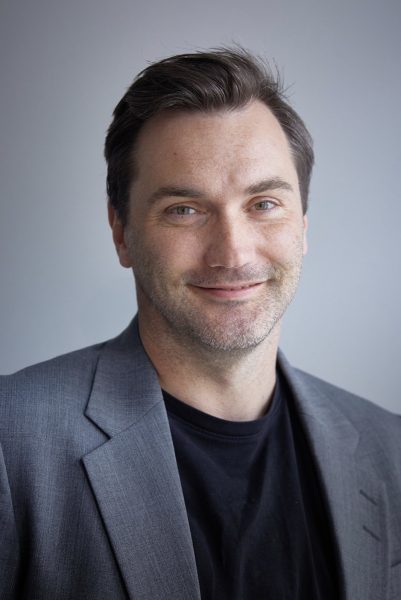
Could you tell me more about your background? Óskarsson said:
“My background is in engineering and financial services. I’ve spent more than a decade working across banking, insurance, and technology, including leadership roles at UBS and CSS, as well as time with early-stage companies. Much of that work involved large, regulated systems where reliability, auditability, and scale are essential.”
“I later became a teacher because I wanted to have a positive impact on the world. Over time, I saw that through my work at BSV Association (BSVA) I could have a bigger impact than I could in education alone, which led me to move there.”
“Before becoming Managing Director, I was involved across all aspects of BSVA, including Stewardship, Public Policy, and Technology. That breadth of involvement gave me a clear understanding of the organization as a whole, where we want to be, and how we can best support organizations going forward.”
Formation Of The Company
How did the idea for the company come together? Óskarsson shared:
“The BSVA was established to support adoption of BSV blockchain, a scalable, stable, and secure public blockchain. We act as global advocates for the technology, helping businesses, developers, and institutions understand how it can be used and how to adopt it in practice.”
“That role has remained consistent over time, but the focus has evolved. Last year, much of the emphasis was on technology, including the release of the long-anticipated Teranode node software and the distributed application stack built on top of it. This year, the focus is more on working directly with businesses, supporting them as they integrate BSV blockchain into their day-to-day operations and move from experimentation into production use.”
Favorite Memory
What has been your favorite memory working for the company so far? Óskarsson reflected:
“The public launch of Teranode in October 2025 stands out. I was personally involved in the project in 2024 before taking on the role of Managing Director, so I saw firsthand how much effort and complexity went into building it.”
“My brother Siggi, CTO at the company and part of our joint leadership setup, has been leading the Teranode project for nearly three years. Much of its success is down to his leadership and the exceptional work of his team. It is the closest thing to rocket science I have encountered in my career.”
“Teranode required a fundamental rethink of blockchain node architecture, rather than continuing to optimize around existing constraints. Once it went live, the conversation changed. Instead of debating whether blockchain could handle scale, organizations began focusing on how it could be applied within their existing systems.”
“In many ways, Teranode is like an F1 engine. The technology is there, built for extreme performance. The priority now is making sure real business activity follows, which is why our focus has shifted toward working directly with organizations to support adoption in day-to-day operations.”
Core Products
What are the company’s core products and features? Óskarsson explained:
“The BSV blockchain is a public network designed for high-volume data and transaction processing, with a focus on low transaction costs and predictable behavior as usage grows.”
“Teranode is a core component of that system. It is the node software that enables the network to scale horizontally and operate at very high throughput without introducing performance bottlenecks. Its role is to ensure the underlying infrastructure can scale reliably as demand increases.”
“On top of that sits the distributed applications stack, which is what developers and businesses interact with directly. This stack enables real-world applications across sectors. In retail, it supports transactions and inventory updates. In finance, it supports reporting and settlement workflows. In healthcare, it enables secure and auditable data exchange. Across all use cases, the common requirement is dependable performance at scale.”
“The software, developed by BSVA, is fully open source and available to the ecosystem. We do not sell products. Our focus is on making blockchain easier for businesses to adopt through open-source tools and implementation guidance.”
Challenges Faced
Have you faced any challenges in your sector of work recently? Óskarsson acknowledged:
“One of the biggest challenges we face is that many people do not understand blockchain. In some cases, they associate it primarily with speculation or scams, which makes it harder to have a productive conversation about its real value.”
“A large part of our role is to simplify the technology and make it relevant to how organizations actually operate. We focus on positioning blockchain as infrastructure that works in the background, integrated into existing systems and daily business processes, rather than something organizations need to manage or think about explicitly.”
“When blockchain is approached this way, the conversation shifts from hype to practical questions about efficiency, data integrity, and accountability, which is where it delivers real value.”
Evolution Of The Company’s Technology
How has the company’s technology evolved since launching? Óskarsson noted:
“Since launch, the technology has evolved with a clear separation between core infrastructure and how it is used in practice. A major step in that evolution was the development of Teranode, the node software designed to enable effectively unlimited scalability. Extensive testing was carried out to demonstrate that this level of scale is possible, something many considered unachievable for a public blockchain.”
“Teranode addresses the infrastructure layer by ensuring the network can scale reliably without introducing cost or performance constraints. On top of that sits the distributed applications stack, which is what developers and businesses actually build on and interact with.”
“The distributed applications stack is open source, reusable, and designed to scale alongside the network. Our focus has increasingly been on supporting businesses in using this stack to integrate blockchain into their existing systems and daily operations, moving beyond technical capability into real-world deployment.”
Significant Milestones
What have been some of the company’s most significant milestones? Óskarsson cited:
“In 2025, a key milestone was the first public release of Teranode alongside the distributed applications stack. Together, they marked the point at which the technology was ready to support real-world use at scale, rather than remaining limited to pilots or experimentation.”
“Another important milestone has been becoming part of a broader ecosystem through memberships and partnerships. This work has focused on building awareness of blockchain as infrastructure, particularly for non-financial use cases.”
“That has included use cases centered on data integrity and traceability, such as supply chains where organizations need to verify the origin, movement, and handling of data or products across multiple parties. These milestones reflect a shift from proving technology to supporting practical, production-level adoption.”
Customer Success Stories
Can you share any specific customer success stories? Óskarsson highlighted:
“We see organizations using blockchain to create verifiable records across multiple parties. In supply chain and retail contexts, that often involves tracking products from origin through distribution and capturing each handoff along the way.”
“A recent example is our work with Binarii Labs, which has selected the BSV blockchain as part of its secure data exchange platform. Binarii provides encrypted file sharing and data resilience for enterprise and institutional users, with all file actions immutably recorded on-chain as verifiable Proof of Record. This allows organisations to exchange sensitive information while retaining clear, tamper-proof audit trails across participants.”
“What is important about this use case is that blockchain is not being used as a standalone product. It is embedded into an existing workflow, supporting secure communications, regulatory readiness, and operational transparency at scale. This is exactly where we see the strongest adoption, when blockchain operates in the background as infrastructure, rather than something users need to interact with directly.”
“Similar approaches are being explored in healthcare, financial services and other regulated environments where organisations need shared records that can be trusted across systems while preserving privacy and control. While the use cases differ, the underlying requirement is the same: shared records that can be trusted across organizations.”
Total Addressable Market (TAM)
What total addressable market (TAM) size is the company pursuing? Óskarsson assessed:
“We believe blockchain can play a role in almost any business because of its core capabilities. Rather than putting a fixed number on the addressable market, we look at it through the lens of impact.”
“At BSVA, our focus is on use cases where blockchain clearly adds value, particularly around data integrity and traceability, while continuing to support the broader ecosystem.”
“That includes supply chains, retail, and agriculture. In supply chains, companies need to trace goods and data across many participants and systems. In retail, provenance and transparency help businesses stand behind the products they sell. In agriculture, traceability supports food safety, sustainability claims, and regulatory requirements.”
“These are data-heavy, multi-party environments. As more organizations look for ways to make data verifiable rather than just available, the potential impact of blockchain in these areas is substantial.”
Future Company Goals
What are some of the company’s future goals? Óskarsson emphasized:
“Our goal is for blockchain, and in particular BSV, to be understood and used by businesses as practical infrastructure.”
“That means supporting organizations as they use blockchain to make data verifiable, processes more transparent, and accountability clearer across their operations. The focus is on applying the technology in real business environments, where it can support long-term trust rather than short-term experimentation.”
“Over time, this leads to more reliable systems, better collaboration across organizations, and greater confidence in the data that underpins everyday decisions. The broader ambition is to help build a better world based on trust and transparency.”
Additional Thoughts
Any other topics you would like to discuss? Óskarsson concluded:
“Across industries, there is a growing gap between the amount of data organizations generate and how confidently they can stand behind that data. As systems become more interconnected, proving what is true, when it happened, and who is accountable becomes harder, not easier.”
“Blockchain represents a fundamental shift in how trust can be established. When designed to scale and governed properly, it allows organizations to move away from fragmented records and assumptions, toward shared, verifiable sources of truth that work across companies, systems, and borders.”
“This is more than a technical change. It requires a different way of thinking about business models, collaboration, and accountability. When blockchain is treated as infrastructure rather than a financial instrument, it has the potential to support more transparent, reliable, and trustworthy systems across the economy. That is the broader change we are working toward.”
