Bystro AI is a Boston-based genomics platform that allows researchers, clinicians, and individuals to search and interpret genetic data using conversational AI, making complex genomic information accessible and actionable so users can query DNA data as easily as they would search the web. The company is led by Founder Alex Kotlar, PhD. Pulse 2.0 interviewed Bystro AI Founder Alex Kotlar to learn more.
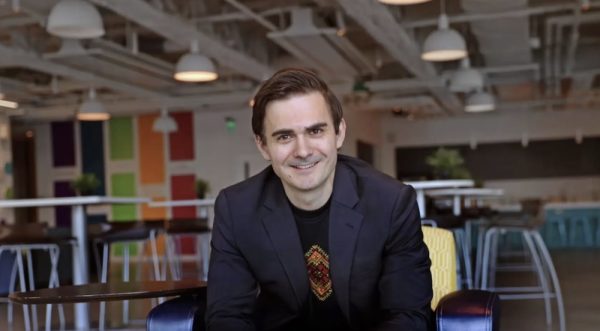

Background and Path to Genetics
Asked about his background and what led him to create Bystro, Kotlar shared:
The origin of Bystro really starts with my birth. I was born in Kyiv, Ukraine, about a month and a half before the Chornobyl nuclear disaster. The Soviet government initially covered up the explosion, so people in the region were unknowingly exposed to radiation for some time before they understood what had happened.
Because of that exposure, my family and I carried an elevated cancer risk. My mother eventually lost trust in the Soviet system, and with the country collapsing, she decided to emigrate. We came to the United States as refugees with about $500 to our name and settled in the Boston area.
Fast forward about 15 years, and we started seeing a cluster of cancers in my family. I also became seriously ill while I was studying at Boston University. I had to take a medical leave, and during that time we had no clear answers about what was happening to us. That experience completely changed my direction. I switched from studying business to genetics research because I wanted to understand what was happening and ultimately help other families avoid that uncertainty.
I joined the pre-med program at BU, then went on to pursue a PhD in genetics at Emory University. My mission became very simple: figure out how to fight diseases like cancer in a way that helps ordinary people, not just a small group of specialists.
The “Aha Moment”
Asked what the “aha moment” was that led to Bystro, Kotlar explained:
When I entered my PhD program, I expected that scientific research was a very efficient process. I imagined brilliant scientists asking questions, running experiments, analyzing data, and discovering answers.
What I found instead was a massive bottleneck in data analysis. Modern biological research generates enormous amounts of data, especially from DNA sequencing. But many scientists don’t have the computational training to analyze that information efficiently. We had only taken one bioinformatics class during my entire PhD program.
Thus researchers end up generating huge datasets and then spending years trying to interpret them, often forming massive collaborative teams just to analyze the results. That’s when it became clear to me that the real problem wasn’t generating data. It was making that data understandable.
So I started building the first natural language search engine for genetics — something that would allow scientists to ask questions in plain English and have the system perform the analysis automatically. That project eventually became Bystro.
How the Company Came Together
Asked how the company itself came together, Kotlar described:
At first, it didn’t look like a company at all. When I began working on this idea around 2013 or 2014, most people thought it was unrealistic. The idea of creating a “Google for genetics” that could answer complex biological questions sounded far-fetched to many researchers.
So initially I just worked on it myself.
As the system started to show real results, people began taking the idea more seriously. The first person who really engaged with it was Thomas Wingo, who had worked on related technologies with me early in my PhD. He later suggested we formally turn the project into a company.
Another key early team member was Cristina Trevino, a computational biologist. She was actually one of the first users of Bystro. She used it during her PhD research and found it incredibly useful for analyzing complex genetic data. Later, when she was considering career options, she decided to join the company and help build it.
From there, the team grew organically. People joined because they believed in the mission and saw the potential of the technology.
A Favorite Moment
Asked about his favorite moment building Bystro so far, Kotlar reflected:
One of my favorite moments actually happened very recently.
A scientist who was involved in the early days of the Whitehead Institute and played a role in the formation of the Broad Institute emailed me to say that Bystro was “special” and that he was using it regularly because it was saving him an enormous amount of time.
That meant a lot coming from someone with that background.
But some of the most meaningful moments have been seeing ordinary people use the platform to understand their own health. We’ve had users discover genetic predispositions to conditions like gout or hearing loss that explained symptoms they were experiencing. Watching people make those discoveries themselves is incredibly powerful.
Technology Evolution
Asked how the technology has evolved over the past few years, Kotlar outlined:
It has evolved quite a bit. Originally, Bystro focused on building the foundational algorithms needed for analyzing genetic data. We also developed the natural language search engine that allowed researchers to quickly identify disease-causing mutations.
But genetics is rarely about a single mutation. Most diseases are influenced by many small genetic effects acting together. So we started building algorithms capable of analyzing those complex interactions.
More recently, we connected those systems with large language models and developed what is essentially an agentic AI platform. The AI can now call genetic analysis algorithms automatically, run statistical tests, and even generate new analyses depending on the question being asked.
In some cases, the system can now answer extremely complex biological questions with a level of accuracy that researchers don’t expect from AI.

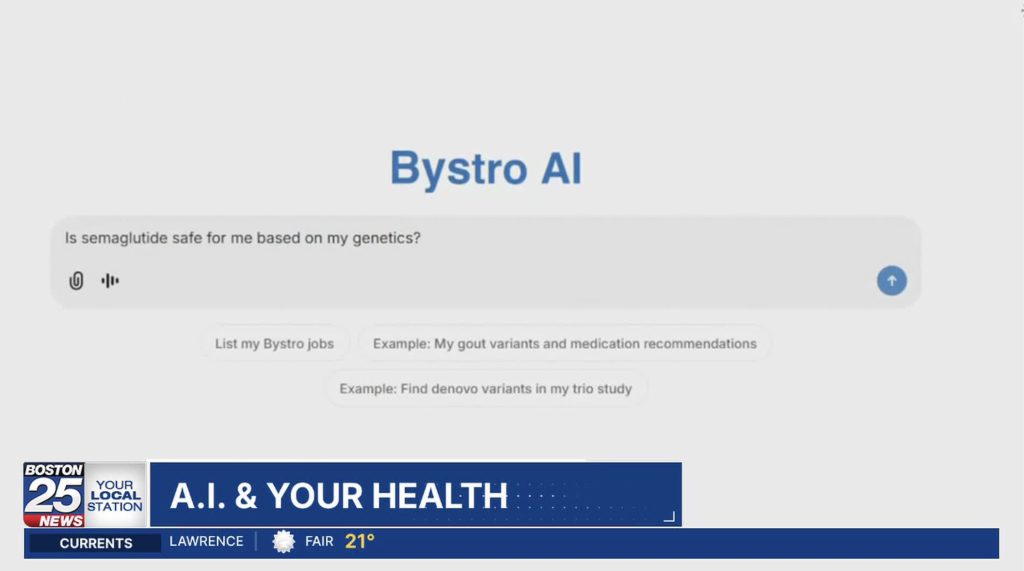
Screenshot
Future Direction
Asked where he wants to take Bystro over the next few years, Kotlar noted:
Our long-term vision is to bring genetics to everyone.
Right now most of our users are researchers at major scientific institutions. But we want to expand that reach significantly. We’re already exploring partnerships with pharmaceutical companies because the platform can dramatically speed up discovery.
But personally, my biggest passion is making this technology accessible to ordinary people.
If someone wants to understand their genetic health risks, optimize their lifestyle, or conduct their own research, they should have the tools to do that. Ultimately we want Bystro to reach hundreds of millions of people.
AI’s Role in Healthcare
Asked what role he believes AI will play in the future of healthcare, Kotlar observed:
Historically, science has been accessible only to a very small group of people — typically those with funding, institutional support, or specialized training. AI has the potential to change that.
For centuries, knowledge in fields like medicine and science has been concentrated among a small group of experts. But tools like AI can democratize that knowledge and make it accessible to everyone. Some scientists worry about that. They believe the information could be misused or misunderstood. But I believe people deserve access to information about their own health.
When someone is trying to help a family member fight cancer, for example, they often become incredibly knowledgeable about the disease because they have to. With the right tools, they can make meaningful discoveries themselves. AI can empower people to participate directly in scientific discovery.
Market Opportunity
Asked about the market opportunity for Bystro, Kotlar concluded:
On the consumer side, the closest markets are personal genetics and longevity. The personal genetics market, including sequencing services, is already approaching $100 billion. The longevity market is even larger, estimated at around $1 trillion. There’s a tremendous opportunity to provide accurate, data-driven insights in those areas.
On the enterprise side, the opportunities include accelerating drug discovery, improving clinical trial selection, and enabling more personalized medicine.
One area I’m particularly excited about is rare diseases. Many diseases affect relatively small populations and therefore receive less research funding. With a platform like Bystro, a small team — or even citizen scientists — could analyze genetic data and develop insights much faster.
Ultimately, medicine is moving toward hyper-personalization. Even when people share the same diagnosis, their genetic profiles can be very different. Our goal is to make it possible to develop treatments tailored to those individual differences.

