

Celona provides an integrated, cloud-native private 5G networking platform designed to help enterprises easily deploy and manage secure, high-performance wireless connectivity for mission-critical applications. Pulse 2.0 interviewed Celona co-founder and CEO Rajeev Shah to learn more.
Rajeev Shah’s Background

Could you tell me more about your background? Shah said:
“I grew up in India at a time when personal computing was starting to make its way into homes and schools, and that early exposure sparked my interest in large-scale systems. I came to the United States to earn my master’s degree in computer science at the University of Southern California, which provided a solid foundation in software engineering and distributed systems. My early career was spent building routing protocol software, an ideal introduction to networking, as the problems were complex, the constraints were real, and the expectations for uptime were absolute.”
“I later joined Aruba Networks early in its journey, moving from engineering into product roles and developing what became the company’s cloud Wi-Fi and SD-WAN offerings. Working directly with enterprise customers during the transition from wired to wireless networks showed me how operational realities influence technology adoption.”
“After Aruba was acquired by Hewlett-Packard (HP), I later joined Federated Wireless as Vice President of Products and Marketing. There, I worked on commercializing CBRS and helped launch the first spectrum access system, which manages real-time spectrum assignments to enable different users to operate without interference. That period exposed me to a wide range of enterprise and carrier use cases, and it’s where I began to see a clear divide between what telco-focused solutions were designed to do and what enterprises actually needed.”
Formation Of The Company
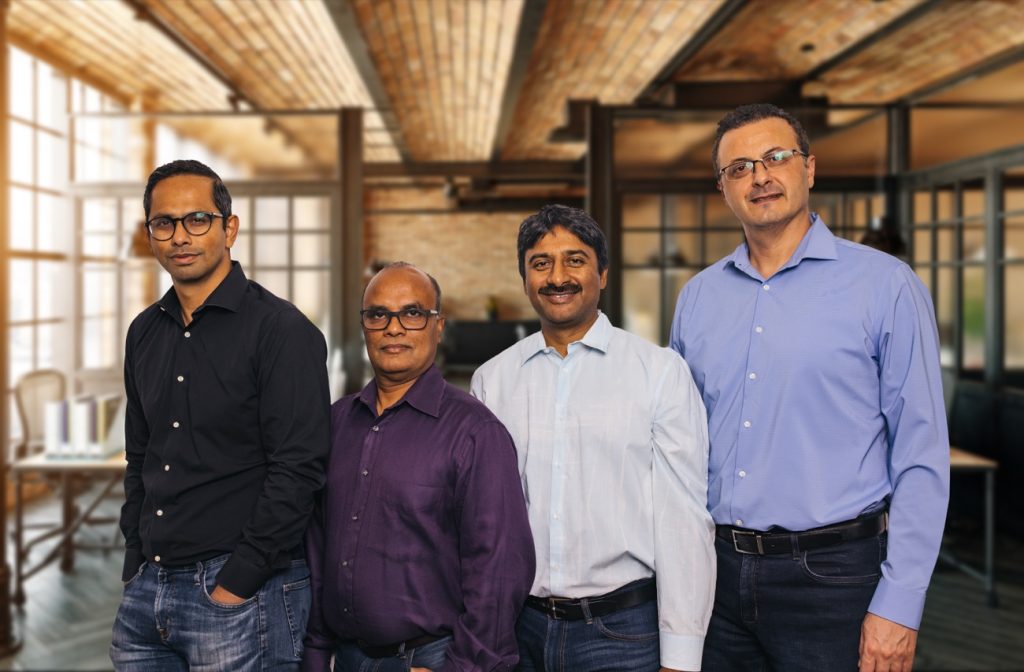
How did the idea for the company come together? Shah shared:
“The idea for Celona took shape over several years as I observed a clear gap emerging within the enterprise. In our personal lives, we rely on cellular networks for reliable, predictable connectivity. Yet inside businesses, especially in industrial environments, Wi-Fi was still the only option, even when its limitations were slowing down operations. At Federated Wireless, I had a front row seat to how shared spectrum was finally opening the door for enterprises to use cellular technology on their own terms. However, public cellular still had its limitations. What was missing was a platform built specifically for enterprise IT, rather than one adapted from the consumer carrier world.”
“The moment that confirmed the opportunity happened at Mobile World Congress. My co-founder, Mehmet Yavuz presented our concept for a private 5G solution to a large logistics enterprise, and their reaction was immediate. They brought back roughly twenty people from their team to continue the conversation – clear evidence that the need was real, broad, and urgent. Around that same time, a trusted advisor offered to invest after a single whiteboard session. That combination of direct customer pull and early investor conviction made the timing unmistakable. It’s what led us to found Celona in 2019 with a focused mission: to bring the reliability of 5G together with the simplicity, control, and security enterprises expect from their IT infrastructure.”
Favorite Memory
What has been your favorite memory working for the company so far? Shah reflected:
“The journey at Celona has been peppered with so many memorable moments. One of my favorite memories is putting together the company’s first “public” presentations and demos at Mobility Field Day in our tiny office. The founders and execs spent the night before the event buying a TV, assembling furniture to put together our first “briefing center.” It was our coming out party, we were barely ready but we loved every minute of it and after 7 years, I still run into customers and partners who remember their first view of Celona from that live cast.”
Core Products
What are the company’s core products and features? Shah explained:
“Celona delivers a private 5G platform purpose-built for the enterprise. Our core products and technologies include:
- Celona 5G LAN: an end-to-end private wireless solution combining cellular reliability with Wi-Fi simplicity.
- Celona Edge: a microservices-based private 5G cloud platform delivering converged 4G/5G core services, advanced networking, and intelligent spectrum management.
- Celona Orchestrator: a cloud-based management platform coordinating deployment, optimization, subscriber management, and QoS policy automation.
- Celona Access Points: indoor and outdoor 4G/5G radios that pair directly with Celona Edge and Orchestrator and support both traditional architectures and our AP-only AerFlex architecture.
- CelonaOS: A unified software fabric spanning radios, core, and cloud. It ensures consistent policy enforcement, unified updates, and built-in intelligence across the full system.
- Celona AerFlex: the industry’s first AP-only, cloud-controlled private 5G architecture for distributed, remote, or lightly staffed facilities.
- Celona AerLoc: a SIM-based zero-trust framework providing secure device identity and agentless authentication.
- MicroSlicing: deterministic QoS technology that assigns performance guarantees per device, application, or flow across both the RAN and LAN, supporting robotics, computer vision, safety systems, and other mission-critical workloads.”
Challenges Faced
Have you faced any challenges in your sector of work recently? Shah acknowledged:
“One of the biggest challenges we’ve faced has been the perception that private 5G is too complex. For many enterprises, cellular technology has historically been viewed as something owned and operated by mobile operators – not a system an enterprise IT team would deploy and manage. Traditional telco-based private wireless offerings involved racks of equipment, complex integrations, and a level of cellular expertise that most enterprises lack. Our response was to design private 5G as an enterprise solution that seamlessly integrates with existing IT infrastructure and policies, delivering deterministic, high-performance wireless with the control, simplicity, and security enterprises demand. “
“Another perception challenge is that private 5G is expensive. That belief stems from telco-based solutions that feature large core systems, specialized hardware, and operationally heavy deployments that drive up both capital and operational costs. By rethinking the architecture around enterprise requirements, Celona 5G LAN eliminates that heavy infrastructure burden, making private 5G more affordable, scalable, and simpler to deploy and operate.”
“A third challenge is the current macroeconomic climate. Tariff uncertainty, elevated interest rates, and broader geopolitical volatility are forcing enterprises to tighten budgets and look harder at where every dollar goes. As a result, we’ve seen delayed deployments, or rollouts scaling at a much slower pace. As macroeconomic conditions are stabilizing, customers are leveraging Celona 5G LAN to move from pilot projects to broad, multi-site adoption. This momentum will only grow as organizations shift from cost containment to investing in infrastructure that delivers measurable operational efficiency. Celona is well positioned to become the default private wireless platform for organizations modernizing their connectivity stack.”
Evolution Of The Company’s Technology
How has the company’s technology evolved since launching? Shah noted:
“Since launching, Celona has continuously advanced its unified private 5G platform to ensure it remains adaptable, automated, and enterprise-ready as industrial connectivity demands evolve:
- Platform Innovation: Celona continues to introduce new platform capabilities that address enterprise-scale performance and security requirements. MicroSlicing enables granular quality of service (QoS) at the device and application level, allowing organizations to prioritize traffic based on performance, latency, and reliability requirements. This ensures that critical workloads can operate alongside less time-sensitive applications on a shared private 5G network without compromise. AerLoc adds an additional layer of security by providing precise, SIM-based location awareness, helping enterprises enforce access policies, protect sensitive operations, and strengthen zero-trust architectures across industrial environments.
- Industry and Ecosystem Expansion: Building on the proven success of Celona 5G LAN, the evolution to AerFlex enables broader industry expansion across manufacturing, logistics, mining, and other high-demand environments. Future updates will ensure AerFlex remains adaptable to challenging deployment conditions, including oil and gas and large-scale manufacturing plants.
- AI-Driven Autonomy: Celona’s technology has also progressed toward deeper automation and intelligence. Celona Orion, an agentic AI-powered autonomous network solution, will enhance Celona Assistant, the company’s ML-based network management platform, by enabling proactive monitoring, root-cause analysis and remediation, and autonomous control.”
Significant Milestones
What have been some of the company’s most significant milestones? Shah cited:
“Since the launch of Celona in 2019, the company has experienced a number of important milestones, including:
- 2019: Completed Series A funding
- 2020: Introduced of Celona 5G LAN, the industry’s first and only end-to-end private 5G solution purpose-built for enterprises
- 2023: Surpassed 100 customers, with over 30% from the Fortune 1000 and Forbes Global 2000
- 2024: Rolled out Celona Neutral Host, the industry’s first end-to-end neutral host service operating over CBRS shared spectrum
- 2024: Unveiled AerLoc, a major milestone bringing zero-trust SIM-based security and
IT/OT air-gapping to private 5G for industrial IoT
- 2025: Launched AerFlex, our AP-only, cloud-controlled architecture designed to make private 5G accessible for organizations of all sizes, including those in remote locations
Industry recognition has followed, most notably the Fierce Network Innovation Award in 2024, but the real milestone is what these developments collectively represent. Private 5G has become an integral part of the operational fabric for organizations running large, complex, and connected environments. Our trajectory has closely tracked that shift, and in many ways, helped accelerate it.”
Customer Success Stories
Can you share any specific customer success stories? Shah highlighted:
“A major U.S. steel manufacturer was experiencing more than 260 wireless disruptions per year on a legacy Wi-Fi network across its 1.4-square-mile manufacturing site. After deploying Celona 5G LAN, the company was able to support its industrial workflows with 5–6 times fewer access points than Wi-Fi, which significantly reduced infrastructure and installation overhead.”
“Network-related downtime dropped by roughly 70%, resulting in annual savings of more than $2 million, and the company achieved ROI payback in under five months. Over three years, the total cost of ownership for Celona’s indoor 5G LAN was 39% lower than Wi-Fi, and 31% lower outdoors.”
“Cargill, a global manufacturing leader in food and agriculture, operates more than one thousand facilities worldwide, many of them in harsh industrial environments where traditional Wi-Fi had become expensive and difficult to maintain. Facing recurring Wi-Fi refresh cycles that required more access points and extensive cabling, Cargill evaluated private 5G as a more scalable alternative and adopted a foundation-first approach. Using Celona 5G LAN solutions—including AerFlex, an access-point-only, cloud-controlled architecture—Cargill replaced a planned Wi-Fi upgrade in one major warehouse program, delivering approximately $1.3 million in cost savings—more than a 50% reduction—while improving coverage, simplifying deployment, and extending network lifecycle. Cargill continues to bring additional sites live within standard maintenance windows using a small internal team, operating a centrally managed private wireless network that supports mobile workflows at scale and positions the company to expand OT connectivity, automation, and industrial AI across its global footprint.”
Funding/Revenue
Are you able to discuss funding and/or revenue metrics? Shah revealed:
“Celona has raised $135 million to date from investors including Norwest Venture Partners, Lightspeed Venture Partners, NTT Ventures, Cervin Ventures, Qualcomm Ventures, Prosperity7 VC and DigitalBridge Ventures. That level of backing has allowed us to build a complete product stack and a global go-to-market strategy in a category that requires significant technical depth, sustained R&D investment, and the ability to support enterprise-scale deployments.”
Total Addressable Market (TAM)
What total addressable market (TAM) size is the company pursuing? Shah assessed:
“We see private 5G as a multi-billion-dollar opportunity that spans many industry sectors, including warehousing and logistics, manufacturing, petrochemicals, data centers, and more. These industries are under pressure to increase automation, deploy robotics, bring AI closer to the edge, and improve worker safety. Many of these environments were never designed for Wi-Fi and are now hitting the limits of what traditional networks can support.”
“When you consider the scale of industrial and large enterprise operations globally, along with the ongoing investment in connectivity, automation, and AI, the total addressable market reaches tens of billions of dollars, with a significant runway as more operations become intelligent and data-driven. Our goal is to deliver the platform that underpins the next wave of connected intelligence.”
Differentiation From The Competition
What differentiates the company from its competition? Shah affirmed:
“Celona 5G LAN remains the only end-to-end private wireless platform designed specifically for the enterprise. We didn’t adapt a carrier solution or strip down a telco core; we engineered an architecture that behaves like an extension of the enterprise network from day one.”
“Our differentiation comes from three foundational choices. First, the solution integrates seamlessly with existing IT and security frameworks. Policies, segmentation, identity, and access control flow through the same tools enterprise teams already use, allowing private 5G to sit directly within established IT and OT trust boundaries rather than creating a separate, parallel stack.”
“Second, the platform is engineered for deterministic performance and real-time operational insight. Industrial workflows – from robotics and AMRs to computer vision and safety systems – depend on predictable behavior under load and the ability to move high-volume machine and sensor data without introducing new infrastructure. Our unified software layer enables us to consistently enforce those guarantees across the radios, core, and cloud.”
“Third, we’ve focused relentlessly on operational simplicity. With cloud-first coordination, zero-touch setup, and access–point–centric architectures for distributed sites, customers can quickly deploy and scale private 5G, even in remote or lightly staffed environments. For many organizations, the ability to get reliable mobility, coverage, and security with minimal onsite infrastructure is the deciding factor.”
Future Company Goals
What are some of the company’s future goals? Shah emphasized:
“Our focus is on expanding what private wireless can unlock inside complex industrial and enterprise environments. In the near term, that means scaling our private 5G solutions into more geographies and more operational settings, including those that are remote, space-constrained, or lack local IT resources. We’re also pushing our orchestration and analytics layers toward far greater autonomy. The goal is to develop a system that can recognize patterns, isolate root causes, and apply corrective actions before anyone feels the impact.”
“In the longer term, we envision Celona 5G LAN becoming the wireless foundation for “physical AI” – environments where machines, sensors, and people collaborate in real time on factory floors, in warehouses, in refineries, and across large enterprise campus environments. The evolution to physical AI will place even greater demands on wireless infrastructure, demands that Celona 5G LAN was designed for.”
Additional Thoughts
Any other topics you would like to discuss? Shah concluded:
“One topic that is very important to me is how our work impacts the people who will live and work in the environments we are connecting. It is easy to discuss automation and AI in abstract terms and forget that behind every data center or plant, some teams spend long hours in sometimes challenging conditions. Our most impactful deployments are those where deterministic connectivity not only makes machines more efficient but also makes work safer and more efficient.”
“Private 5G, edge computing, and AI are converging to transform how industries operate. Celona’s role is to provide the secure, deterministic wireless foundation that makes real-time automation and physical AI possible. When that foundation is simple, reliable, and built for scale, organizations can unlock what’s truly next.”
