

CERo Therapeutics is a clinical-stage immunotherapy company developing next-generation engineered T cell therapies (CER-T) that combine innate and adaptive immunity to enhance the body’s ability to eliminate solid and hematological tumors. Pulse 2.0 interviewed CERo Therapeutics CEO Chris Ehrlich to learn more.
Chris Ehrlich’s Background
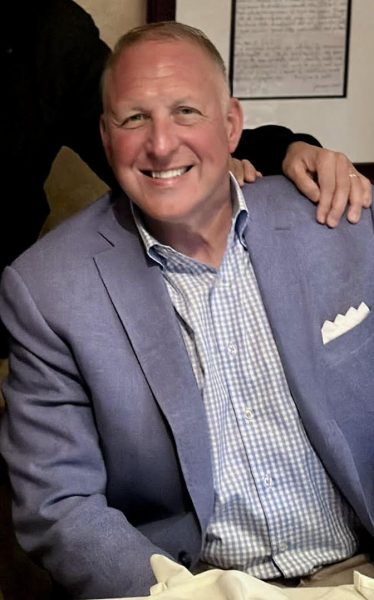
Could you tell me more about your background? Ehrlich said:
“My career has always centered on finding ways to turn strong science into real medicines. I started on the investment side of that equation, working closely with founders and scientific teams that were trying to solve challenging biological problems, and find the funding to get it done. Over time, I became deeply involved in biotech company building, business development, and capital formation. I have served as CEO of several publicly traded acquisition companies and spent years helping emerging therapeutic companies secure partnerships, raise capital, and, when appropriate, pursue M&A transactions.”
“Before joining CERo, I was a Senior Managing Director at Locust Walk Partners, where I had the privilege of leading transactions for multiple biopharma clients. Projects ranged from complex strategic collaborations to full company sales. Two examples that stand out include the sale of Xyphos Biosciences to Astellas and the sale of Thar Pharmaceuticals to Grunenthal. Before that, I spent time as a Managing Director at InterWest Partners, a respected venture capital firm focused on healthcare innovation.”
“Across all of these roles, I learned how to identify technologies that can truly shift the standard of care and how to build a company that can bring those technologies from an idea to the patient. When I first encountered CERo’s platform, it struck me as one of the rare opportunities where the science had the potential to fundamentally reshape an entire field of medicine. That was the motivation that led me to join the board and then eventually take on the position of CEO.”
Formation Of The Company
How did the idea for the company come together? Ehrlich shared:
“CERo began with a simple but ambitious question. What if we could redesign T cells so that they not only kill cancer cells, but also engage the immune system in a deeper, more coordinated way?”
“Traditional CAR T therapies have shown that cell therapy can work, but they also have clear limitations. They rely heavily on a single receptor target, they struggle with solid tumors, and they often lose their effectiveness as cancer evolves. The founding scientists behind CERo believed there was a better way. Instead of making incremental adjustments to existing CAR T designs, they envisioned a completely new therapeutic construct that would combine the natural cell-killing ability of T cells with the engulfing and antigen-presenting power of macrophages.”
“That concept became the basis of CERo’s Chimeric Engulfment Receptor T cell platform. The idea was not to slightly improve on the past, but to rewire immune cells so that they could activate a wider immune response and create a more durable anti-tumor effect. Over time, those early scientific insights turned into robust preclinical data and now the promising phase 1 clinical program that has now successfully cleared its initial safety cohorts.”
Core Products
What are the company’s core products and features? Ehrlich explained:
“Our lead program is based on what we call our CeroCell platform, a foundational technology that allows us to engineer immune cells capable of performing multiple coordinated functions simultaneously. Instead of relying on a single mechanism to recognize and destroy tumor cells, our cells are designed to activate and recruit the broader immune system, creating a more robust and sustained anti-tumor response.”
“One of the programs we are especially excited about is CER-1236. This candidate is a prime example of the multi-functional approach we take. CER-1236 is engineered not only to directly target cancer cells, but also to influence the surrounding immune environment in ways that help overcome some of the resistance mechanisms that tumors often rely on. That includes modulating cytokine signaling and enhancing the recruitment of other immune cells that can amplify the therapy’s impact. Although CER-1236 approaches tumor cell killing in a new way, the manufacturing is very similar to traditional CAR-T manufacturing, so we have a novel approach without having to reinvent the production process.”
“Across our pipeline, the goal is to build therapies that act more like conductors of an immune response rather than single instruments. We focus heavily on durability, safety, and the ability to deliver consistent responses across different patient populations. The flexibility of the platform means we can iterate quickly, refine specific functional modules, and apply the technology to a wide range of cancers.”
“These product features are all tied back to a simple idea: patients deserve therapies that meet the complexity of their disease with equal sophistication.”
Challenges Faced
Have you faced any challenges in your sector of work recently? Ehrlich acknowledged:
“Working in cell therapy always comes with scientific and operational challenges. One ongoing difficulty is scaling manufacturing in a way that is reliable enough for clinical studies, and it is an advantage that we are able to leverage traditional CAR-T manufacturing processes. Creating a living therapy requires precise control over every step of the process, and we spend a significant amount of time strengthening those systems.”
“Another challenge is the high bar for differentiation in oncology. Physicians and regulators have seen many cell therapy attempts over the past decade. To stand out, a new therapy has to show a clear scientific rationale and compelling preclinical data. We are fortunate that the mechanism of CER T cells is truly novel and has consistently shown tumor-killing capabilities across multiple cancers, but we still take nothing for granted as we are in the initial stages of clinical testing. We’ve also provided clear instructions on bridging therapy, thanks in large part to our Chief Medical Officer Bob Sikorski, to help manage the patients’ care during the interim few weeks while the drugs are being manufactured. The principal investigators of our trial and the patients enrolled have really appreciated that.”
“The financial climate has also been challenging for many biotech companies. Our focus has been on staying disciplined, prioritizing scientific progress, and ensuring that we are building a sustainable path to clinical development. These headwinds affect every company in the field, but they also sharpen the focus on programs that have the potential to be transformative.”
Significant Milestones
What have been some of the company’s most significant milestones? Ehrlich cited:
“A major milestone was generating strong preclinical data that demonstrated tumor-killing capabilities across both liquid and solid cancers. Seeing complete elimination of certain tumor models with a single infusion gave us confidence that the platform could translate into meaningful clinical activity.”
“A major recent milestone was the successful completion of the safety assessment for our second dose cohort in the CERTAIN-T trial. With zero cases of CRS or neurotoxicity reported, we are now escalating to our third dose level. The fact that we are using an adaptive trial design in relapsed and refractory AML means that we have a pathway that could potentially accelerate development, if early signals are strong.”
“We also built a management team with deep expertise in biotechnology development and capital markets. Strong science is essential, but experienced leadership is what turns potential into execution.”
Differentiation From The Competition
What differentiates the company from its competition? Ehrlich affirmed:
“The biggest differentiator is that our platform is fundamentally different from every other cell therapy currently in development. Rather than modifying a T cell with a single targeting receptor, we create a multi-modal therapeutic that can kill tumors directly and perform engulfment and antigen presentation. This dual action gives us two potential paths to tumor eradication and may reduce the need to rely on a single cancer marker.”
“Our ability to target multiple tumor types within one platform is another key distinction. Current cell therapies are mostly limited to specific antigens in blood cancers. CERo’s approach opens the door to potentially treating a range of both liquid and solid tumors.”
“We are not trying to slightly improve the status quo. We are trying to redefine what cell therapy can be.”
Future Company Goals
What are some of the company’s future goals? Ehrlich concluded:
“Our immediate goal is to complete our phase 1 trial of CER-1236, which we have expanded beyond AML to include patients with Myelodysplastic Syndrome (MDS) and Myelofibrosis (MF). We want to understand how CER-1236 behaves in patients and whether the unique biology of the platform translates into meaningful clinical outcomes.”
“Looking ahead, we are focused on expanding the platform into additional cancer types and exploring new combinations that take advantage of its antigen-presenting capabilities. We also see significant potential for long-term partnerships with academic groups and industry collaborators who are working on complementary technologies.”
“Ultimately, our goal is to bring a completely new class of cell therapy to patients who currently have limited options and to establish CERo as the company that helped push immuno-oncology forward in a meaningful way.”
