

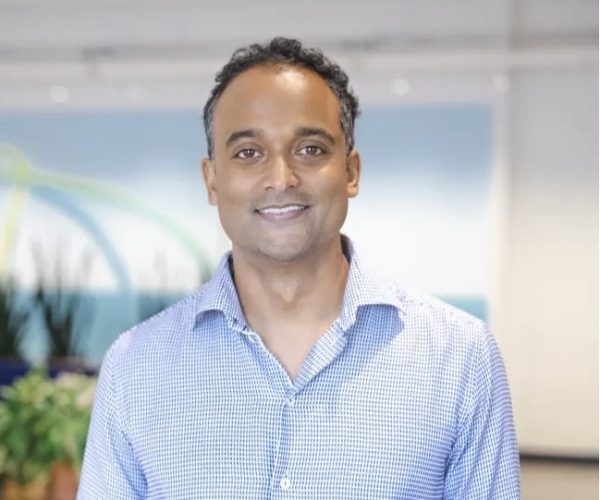
Clarity RCM is a company that provides outsourced medical billing, credentialing, and revenue cycle management services exclusively for independent dermatology practices. Pulse 2.0 interviewed Clarity RCM co-founder and CEO Ashwin Krishnan to learn more.
Formation Of The Company
Tell me more about why you founded Clarity RCM. Krishnan said:
“I had a front-row seat. My wife, Lavanya, is a practicing dermatologist. Watching her build her own practice gave me a clear view of how much an independent physician’s day gets pulled into documentation burden, payer friction, and a billing layer that has been run as a back-office afterthought for decades.
A bigger pattern showed up alongside that — independent dermatology is being squeezed from two directions at once. Private equity is rolling up practices at a pace that is changing the specialty. And insurers are tightening documentation rules faster than most practices can keep up. The billing partner you choose either accelerates that pressure or eliminates it on your behalf.
I kept looking at the existing options and seeing the same thing: vendors filing claims, chasing payments, and stopping there. Nobody was treating the financial side of running a practice like a partnership. The product discipline I built at Apple and Airbnb hadn’t shown up in this category, and dermatologists needed it.
We started Clarity in 2017 to be that partner: a services company at our heart, with technology layered on top, built exclusively for independent dermatology. This thesis hasn’t changed in eight years.”
Problems Being Solved For Independent Dermatologists
What specific problems do you solve for independent dermatologists? Krishnan shared:
“We close three structural gaps that show up in almost every dermatology practice we meet.
The first is an expertise gap. Generalist RCM vendors miss the patterns that matter in dermatology, from Mohs coding to the cosmetic and self-pay mix that most billing companies don’t know how to handle. We are 100% dermatology, with scrub rules (or rules that are used when checking claims for errors prior to submitting to payers) that check for errors in claims before submitting them to payers, tuned across $1.13 billion in annual charges.
The second is a control gap. Owners want to see the financial side of their business clearly without staffing a back office to do it. We give them visibility at the CEO level: clean claims, denials fixed at the root, and a 23-day average accounts-receivable cycle compared to the industry’s 45-day average.
The third is a partnership gap. Most billing companies stop at filing claims. We take on aged accounts receivable (AR) from day one at no separate charge and help owners read the data on how the practice is performing, and we are the people they call when something doesn’t add up.
Most billing companies do less and ask the practice to do more. We run our business the opposite way. The financial proof is a 98% net collection rate against an industry benchmark closer to 90%. On a $5 million practice, that gap is several hundred thousand dollars a year that stays with the business.”
Background In Working In Tech
How did your background working in fast-paced high tech help you start Clarity? Krishnan pointed out:
“At Apple, I learned how design discipline scales. The lesson wasn’t about products. It was about building systems that make the right decision, the easy decision, over and over, for thousands of people who never see each other’s work. That’s how you run an RCM operation that handles a billion dollars in dermatology revenue without sacrificing quality or scale.
At Airbnb, I was taught what a customer-first culture actually looks like. There’s a story from the company’s early days that has always stuck with me. A customer service team member discovered that a child had left behind a beloved stuffed giraffe after a stay. Rather than simply mailing it back, they went far above and beyond — documenting the giraffe’s ‘adventures’ on its journey home, turning what could have been a frustrating moment into something genuinely memorable for that family.
Today, a giraffe statue sits in an Airbnb office as a permanent reminder of that ethos: to ‘giraffe someone’ means to deliver the kind of care that people don’t just appreciate, they remember. That commitment to the customer above all else is, without question, the most important cultural principle I’ve carried with me.
Most healthcare services companies are organized around process compliance. We built Clarity around customer outcomes and feedback loops. That orientation is how we got to more than 200 practices and 1,246 providers across 42 states, all largely on word of mouth.”
Core Products
What are Clarity’s core products, and how are they unique in comparison to other RCM platforms in the market today? Krishnan explained:
“There are three core products.
The foundation is RCM services: full revenue cycle for independent dermatology, with derm-specific scrub rules, full AR takeover at no separate charge, and a 24- to 48-hour charge submission turnaround. This is the part that compounds: $1.13 billion in annual charges and $589 million in annual collections give us a corpus most platforms can’t match because they aren’t specialized.
ClarityPay is our patient payments product, live since January 2026. It handles statements, digital pay flows, and reconciliation, with a current statement-to-payment conversion rate of 32.7%.
ClarityOS is the practice operating system we are building. We introduced it publicly at AAD this past March. The first phase is a claims engine on top of our services. The next phase is a companion product for practices on other EHRs. Longer term, it gives independent practices a true alternative to incumbent platforms.
What separates this from the way RCM platforms usually get described is the order by which we prioritize what we offer. We are a services company first, with technology layered on top of work we already know how to do. That order matters because it determines who is accountable when something breaks. In our model, the answer is always us.
Evolution Of The Company’s Technology
How have Clarity’s technology and services evolved since launch? Krishnan noted:
“We started in 2017 as a services company. We are still services-first, and the technology layer underneath has gotten stronger and more scalable each year.
Early on the work was about earning the right to scale. We built deep dermatology coding expertise, our own scrub-rule library, and the operational discipline to handle clients across 42 states without losing the personal feel that makes practices stay.
The bigger arc is that doing the services well taught us where technology actually creates leverage. ClarityPay was the first product that came out of that learning. ClarityOS is the next. The pattern is the same: We earned the right to build platform-level technology by first proving we could deliver the services it would automate. And that’s why Inc. 5000 ranked us as one of the fastest growing companies three years running.”
Customer Success Stories
Can you share a specific customer success story you’re most proud of? Krishnan highlighted:
“The one I think about most is a phone call we got from a practice owner we work with. She told our team that if we ever reassigned her account manager, there would be ‘consequences.’ She was joking, mostly. The part underneath the joke is what I’m proud of. She didn’t think of her account manager as a vendor contact. She thought of her as part of how the practice runs.
That’s what shows up in retention. We have a 98% net retention rate, and out of more than 200 practices, we have lost four. That count includes practices that closed because they were acquired by PE consolidators. We’ve never had a practice leave us for another billing partner.
The numbers I trust most are the ones that get harder to fake the longer time goes on — word of mouth, eight years in, with the same account managers still on the same accounts.”
Being Privately Owned
How have you been able to remain privately owned? Krishnan revealed:
“The same logic that drives an independent dermatologist to stay independent drives our capital structure. We want the long-horizon decisions made on the merits, not against someone else’s exit clock. Our clients are owner-operators, and so are we. That alignment shapes how we make decisions.
It has been operationally possible because the business has been healthy from early on. Net client retention is 98%. We have grown 30% to 50% year over year for several years running. There hasn’t been an operational need to take dilutive capital, so we haven’t.
I want to be clear that this isn’t a values judgment about other companies’ choices. There are good reasons founders raise. For us, in this market, with the kind of clients we serve, owning the company outright lets us make decisions our customers can actually rely on. We are not closing the door on outside capital forever, and when we evaluate it, alignment with the practices we serve comes first.”
Future Goals
What can we expect next from Clarity? Krishnan emphasized:
“The biggest thing in flight is ClarityOS. We are building it in phases. The first phase is a claims engine that runs on top of our services. The next is a companion product for practices that are on EHRs we don’t replace, giving them dashboards, communications, and ClarityPay. The longer-term phase is a system of record that gives independent practices a real alternative to the incumbent platforms.
ClarityPay continues to mature. The current 32.7% statement-to-payment conversion is well above the industry baseline, and we have specific work underway to push it higher.
We are also extending the go-to-market beyond word of mouth for the first time. A small sales team is coming online this year, layered on top of the founder-led work that got us to 200 practices.
The frame I’d put on all of it is that the vehicle is changing but the commitment isn’t. We are still a services company at our heart, and the technology we are building is meant to make those services better.”
Use Of AI
How are you approaching the use of AI to help independent dermatologists? Krishnan described:
“We use AI thoughtfully, in the parts of the work where it earns its place.
Today that means pattern detection across our $1.13 billion claims corpus and denial triage. This empowers us to surface trends earlier than a human team alone could. That kind of AI is doing real work for our clients now.
We are more careful about anywhere AI takes action without a clear human in the loop. Our head of engineering, Cliff Rogers, runs every AI workflow through four design questions before it ships: whether the system acts or recommends, what confidence threshold is required, whether the decision is traceable, and where human oversight lives. If we can’t answer those, we don’t ship it.
There are a lot of AI-first healthcare companies in the market right now. We are a human-first company that leverages AI to provide better RCM service and support to independent dermatologists. That’s deliberate. We’ve seen this movie before with the EHR rollout, where the technology wasn’t wrong but the implementation was rushed, poorly designed, and optimized for the wrong outcomes. We’d rather get it right.”
Places To Not Use AI
Where does AI NOT belong in dermatology? Krishnan concluded:
“Anywhere the relationship is the product, AI is a poor substitute.
That’s a short list. Patient communication when something has gone wrong, including a claim denial they don’t understand or a balance they weren’t expecting; clinical judgment at the edges, where atypical presentations need an experienced clinician, not a model trained on common cases; denial appeals that hinge on payer relationship and judgment under ambiguity, not on template language; the customer service moments that determine whether a practice trusts you with the financial side of their business for the next 10 years.
AI is good at throughput and pattern detection. Trust building and judgment sit on the other side of that line, and healthcare is a category where getting it wrong costs more than a bad user experience. The result is eroded trust between a patient and their clinician or between a practice and their partner, and that trust is hard to earn back once it’s gone.
We are building AI features into ClarityOS. The question we ask isn’t whether to use AI. It’s where the human is, what the human is accountable for, and what we lose if we automate the relationship away.”
