CloudBees provides an enterprise DevOps and CI/CD platform built around Jenkins that helps software teams automate, govern, and accelerate application delivery across cloud and on-prem environments. Pulse 2.0 interviewed CloudBees Chief Product Officer Shawn Ahmed to gain a deeper understanding of the company.
Shawn Ahmed’s Background


Could you tell me more about your background? Ahmed said:
“I’ve been interested in software’s ability to address so many of the world’s most challenging problems since my early days studying executive management at UCLA. I’ve spent my career at the intersection of product, marketing, and customer success, particularly in the enterprise software space. Before joining CloudBees, I held leadership roles at companies like Splunk and SAP where I focused on building and scaling platforms that drive real business outcomes. I’ve also had the privilege of serving as a two-time CEO, which gave me a deep appreciation for how product, go-to-market, and customer success need to work together to create real value, and how important it is to stay obsessively focused on the customer. What’s always driven me is helping organizations unlock impact, not just through great technology, but through thoughtful design and experience. That’s what brought me to CloudBees: the opportunity to help redefine how software delivery gets done in a complex, fast-moving enterprise world.”
“As CPO, I lead the product and engineering organizations here at CloudBees. That includes setting the product vision and roadmap for our platform, working closely with engineering and go-to-market teams, and – most importantly – staying close to our customers. I spend a lot of time listening: to CIOs, developers, platform engineers, CISOs, understanding where they’re trying to go, and making sure our products help them get there with clarity, confidence, and speed.”
Favorite Memory
What has been your favorite memory working for the company so far? Ahmed reflected:
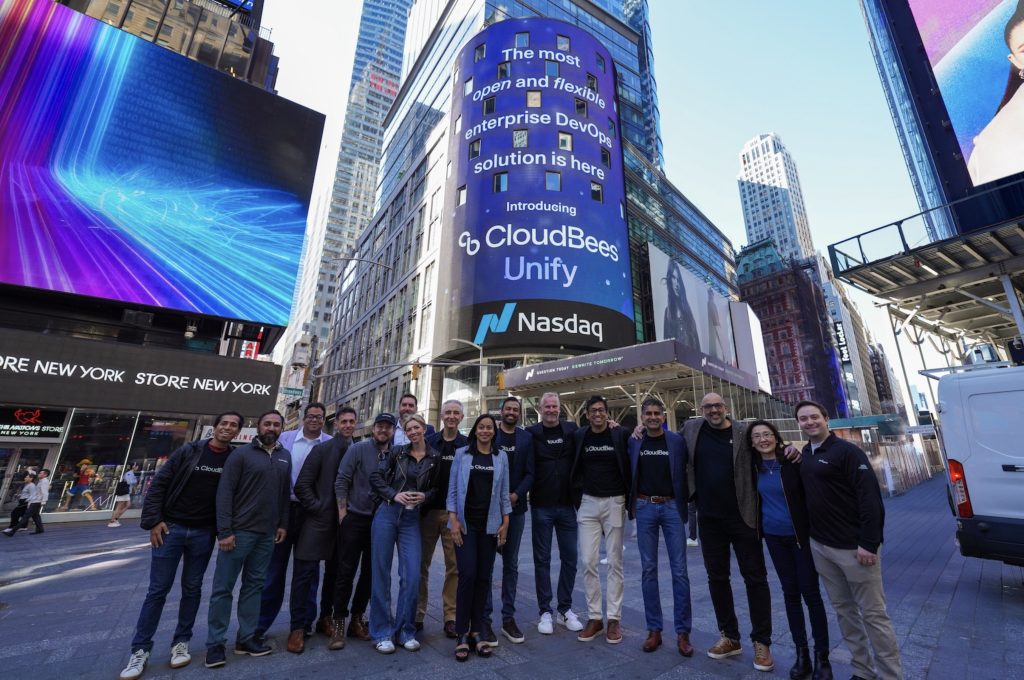
“There’s been a lot, but I’d say launching CloudBees Unify has been a real highlight. It was more than just a product launch. It was a moment where we brought together years of engineering, customer feedback, and deep market insight to deliver something bold: a truly unique, unified, modular solution for enterprise DevSecOps. Seeing how our teams rallied around that mission, and the response from customers, was incredibly rewarding. During an early demo, one of our customers actually said “I could cry right now” because it was the first time she saw a solution to some of their most pressing challenges that was clearly implementable without an overwhelming migration process. That’s when we knew we were onto something really special.”

Core Products
What are the company’s core products and features? Ahmed explained:
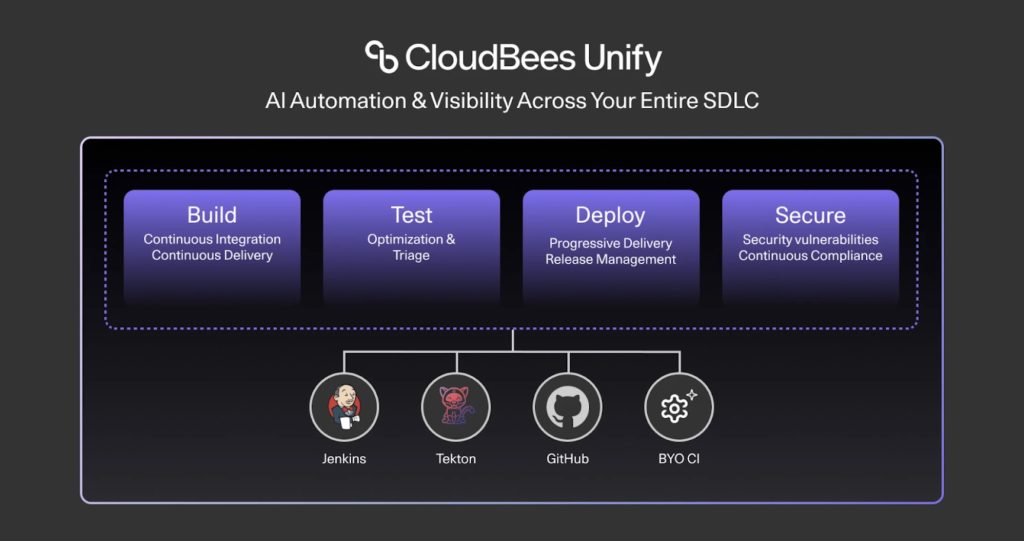
“Our flagship solution is CloudBees Unify – the most open and flexible enterprise DevOps solution on the market. It bundles all of our capabilities together, functioning as an operating layer that centralizes control across Jenkins, GitHub, and all major CI/CD tools to unify analytics, standardize governance, and secure workflows. Its modular design allows for incremental adoption, making it easy to implement at any stage of your DevOps journey. Unify gives users:
- Continuous Security: Built-in, automated security scans and compliance enforcement embedded in the SDLC, reducing risk without interrupting developers.
- AI-Driven Testing and Optimization: Smart Tests optimize test coverage per commit, and AI-enhanced workflows reduce triage time and accelerate delivery.
- Artifact Traceability and Unified Releases: Provide full transparency and governance across every deployment, critical for teams managing at scale.
- GitHub Actions and Config-as-Code Integrations: Streamline developer workflows while enabling policy enforcement and traceability by default.”
Challenges Faced
What are the biggest challenges in DevSecOps today? Ahmed acknowledged:
“AI and cloud-native technologies are undeniably reshaping how software gets built and delivered, and this is just the tip of the iceberg. These major technological advances are coming faster and faster, and have unique implications for enterprises, which is where we focus.”
“To keep up with the pace of innovation, today’s largest organizations face mounting complexity and security risks in modernizing their critical infrastructure. Here’s the real challenge – at this scale, organizations aren’t starting from a clean slate. They’re running a mix of on-prem and cloud-based CI/CD tools, often across different teams, business units, or applications.”
“When these organizations seek solutions to modernize their SLDC, they’re often met with a false choice: trade autonomy for control, speed for compliance, innovation for governance. The proposed solution? A monolithic, “one platform to rule them all” approach. This is a vendor fantasy – one that doesn’t reflect enterprise reality. We saw a different path. That’s why we built CloudBees Unify.”

Evolution Of The Company’s Technology
How has the company’s technology evolved since launching? Ahmed noted
“It’s a little-known fact that CloudBees was actually one of the first PaaS companies in the DevOps space. Back in 2010, you could register on cloudbees.com, store your code in our cloud repositories, and continuously build, test, and deploy applications – all in the cloud. This was years before Docker even existed. In many ways, we were ahead of our time.”
“As the market evolved, our focus shifted to enterprise Jenkins, which is what many still associate CloudBees with today. We remain deeply committed to the Jenkins ecosystem: we’re the largest corporate contributor to the project, and its creator, Kohsuke Kawaguchi, continues to play an important role in our leadership team. But over time, as we worked closely with large organizations using Jenkins at scale and integrating with cloud-native architectures, we saw the need for more: tools for release orchestration, compliance, governance, and cross-team visibility. That insight led us to expand beyond CI/CD.”
“Today, CloudBees Unify represents the next stage in our evolution, from a trusted tool provider to a strategic partner. It brings together everything we’ve learned about enterprise software delivery into a modular, extensible solution built for the complexity, scale, and speed of modern DevSecOps.”
Significant Milestones
What have been some of the company’s most significant milestones? Ahmed cited:
“We recently shared that we surpassed $150 million in global ARR, an achievement that few companies reach in their lifetimes. We’re a trusted partner to over 500 of the world’s largest organizations, and CloudBees is used by over 500,000 developers today. We’ve made strategic acquisitions including ReleaseIQ in 2022 and Launchable in 2024. There are a lot of big moments behind us, but the best is definitely yet to come.”
Customer Success Stories
Can you share any specific customer success stories? Ahmed highlighted:
“We have many, but one customer I love to talk about is Acquia. They’ve been with us for over a decade and CloudBees is deeply embedded in their software delivery process. Before CloudBees, Acquia’s CI/CD was a complex and fragmented ecosystem – the exact type of environment we get excited about. They’re a Digital Experience Platform used by household names all over the world, including Nestle, Crayola, and Mars. They were managing 16+ Jenkins instances across 30+ engineering teams, plus a sprawling disparate tool stack. Their maintenance burden was staggering and the lack of consistent control and visibility opened them up to security vulnerabilities and compliance risks. Partnering with CloudBees to centralize and unify their stack means that they now focus on what matters most: delivering great features to their customers. We have a case study with them published on our website alongside many other customer success stories.”
Funding/Revenue
Are you able to discuss funding and/or revenue metrics? Ahmed revealed:
“While we don’t publicly disclose detailed revenue figures outside of what I’ve already shared, I can say that CloudBees is in a strong position. We’re well-funded by top-tier investors, including Goldman Sachs, Matrix Partners, and Lightspeed. We’ve continued to grow our enterprise customer base and expand globally, and we’re focused on long-term, sustainable growth – not just chasing top-line numbers.”
Total Addressable Market
What total addressable market (TAM) size is the company pursuing? Ahmed assessed:
“We operate in the global DevOps and software delivery market, which is projected to exceed $25 billion in the next few years [source]. But with the rise of AI and the increasing demand for compliance automation, that number is growing rapidly. We believe CloudBees has a massive opportunity – especially in the enterprise segment where complexity, scale, and regulation intersect.”
Differentiation From The Competition
What differentiates the company from its competition? Ahmed affirmed:
“CloudBees Unify was designed to be the most open and flexible enterprise DevOps solution, because that’s what enterprises today need. Enterprise software development is deeply complex, and many traditional platforms see this as a problem to be eliminated. We take a different stance. We believe a diverse stack is not a problem to be replaced, it’s an advantage to be unlocked. Developers should work with the tools they love. Using Jenkins? GitHub Actions? Homegrown scripts? Bring it on. We’re not here to tell you to replace your stack, we’re here to bring it together. No lock-in. No “one-stack-fits-all.” No big-bang migrations.”
Future Company Goals
What are some of the company’s future goals? Ahmed emphasized:
“Our vision is to redefine what’s possible through software – and that means helping the world’s largest organizations deliver it better, faster, and safer. As AI and cloud transformation accelerate, they’re fundamentally reshaping how software gets built and delivered. We intend to stay at the forefront of that shift, especially for enterprises navigating complexity at scale.”
“We’re all in on AI, both in how we build our platform and how we help customers use it. We’re particularly excited about the potential of agentic AI that acts as a companion – not replacement – to developers.”
“Looking ahead, CloudBees Unify naturally evolves into the context and control plane for agentic AI across the entire software delivery lifecycle. By unifying signals from tools, pipelines, policies, and teams, Unify provides the shared context AI agents need to reason effectively, and the control mechanisms enterprises require to operate safely. From governance and compliance to predictive insights and intelligent automation, our goal is to ensure AI-driven delivery remains observable, auditable, and aligned with business intent.”

