

ContractPodAi is an agentic AI-powered enterprise and contract lifecycle management (CLM) platform that helps organizations create, manage, and analyze legal agreements across departments. Pulse 2.0 interviewed ContractPodAi President and CTO Anurag Malik to gain a deeper understanding of the company.
Anurag Malik’s Background

Could you tell me more about your background? Malik said:
“I’ve spent more than two decades building and scaling technology products across industries, from education to finance and now enterprise and legal services. Throughout my career, I’ve been drawn to solving complex problems with practical, scalable solutions that deliver real-world impact.”
“Before joining ContractPodAi, I served as CIO at Zovio Inc. and CEO of Learn@Forbes, leading digital transformation efforts in education. Earlier, I held leadership roles at Tesla (SolarCity), Esurance, and Deloitte Consulting, focusing on enterprise-scale technology initiatives. I hold an MBA in Finance from The Wharton School and a Bachelor of Technology from the Indian Institute of Technology, Delhi.”
“At ContractPodAi, I serve as both President and CTO, where I lead our global technology organization and oversee product strategy and development. In my role, I work closely with our clients, engineers, and partners to build cutting-edge AI-driven enterprise, CLM and legal technology solutions.”
“We’re constantly pushing the boundaries of what’s possible with enterprise and legal tech, and I work with our teams to ensure we’re delivering solutions that are not only technically innovative, but also deeply intuitive for users across business functions like sales, legal, procurement, HR and finance. My role requires balancing innovation with scalability, and ensuring that every product decision contributes to our mission: making ContractPodAi the market leader in AI-first enterprise and CLM solutions.”
Favorite Memory
What has been your favorite memory working for the company so far? Malik reflected:
“One of my favorite things about working here is the incredible energy the team brings in every day. It’s inspiring to see how we collaborate so seamlessly even though the teams are distributed across the globe and we’re consistently delivering amazing work together. I also love our holiday parties and celebrations, they really capture the spirit and connection that make this company such a special place to work.”
Core Products
What are the company’s core products and features? Malik explained:
“Many companies still rely on legacy contract systems that act more like storage repositories than intelligent tools. That’s a huge drain on time and productivity—legal teams spend 25 to 40 percent of their time on routine tasks, which costs enterprises an estimated 2.7 million dollars annually (Gartner).”
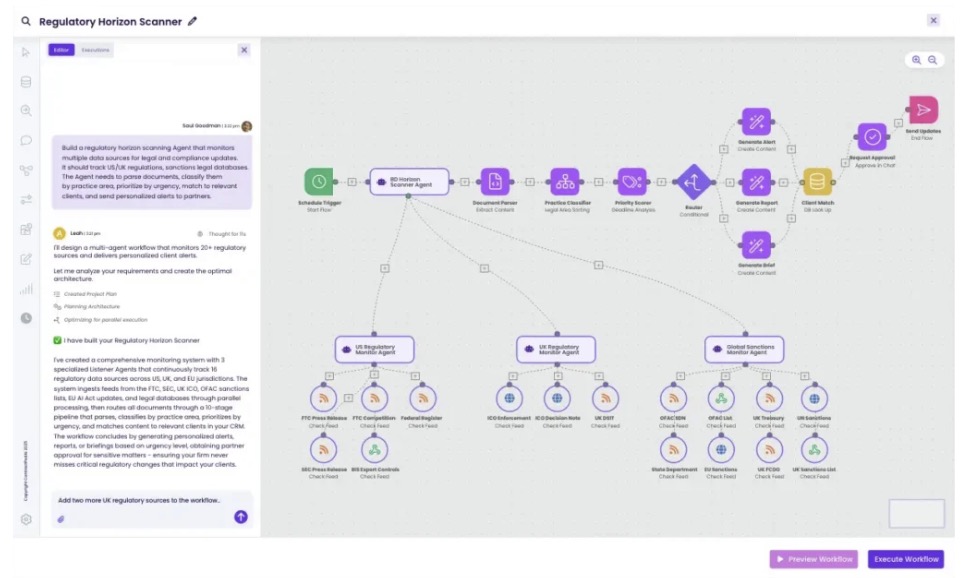
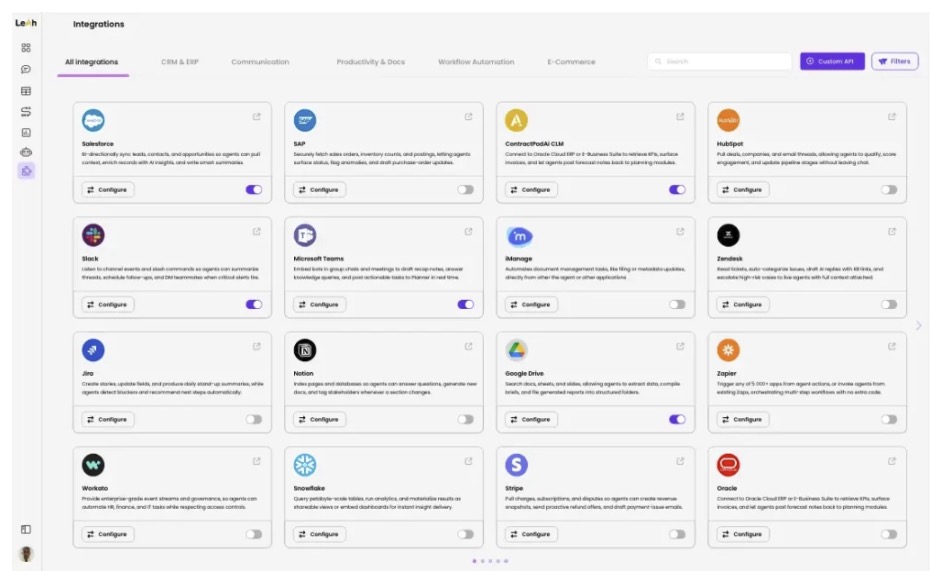
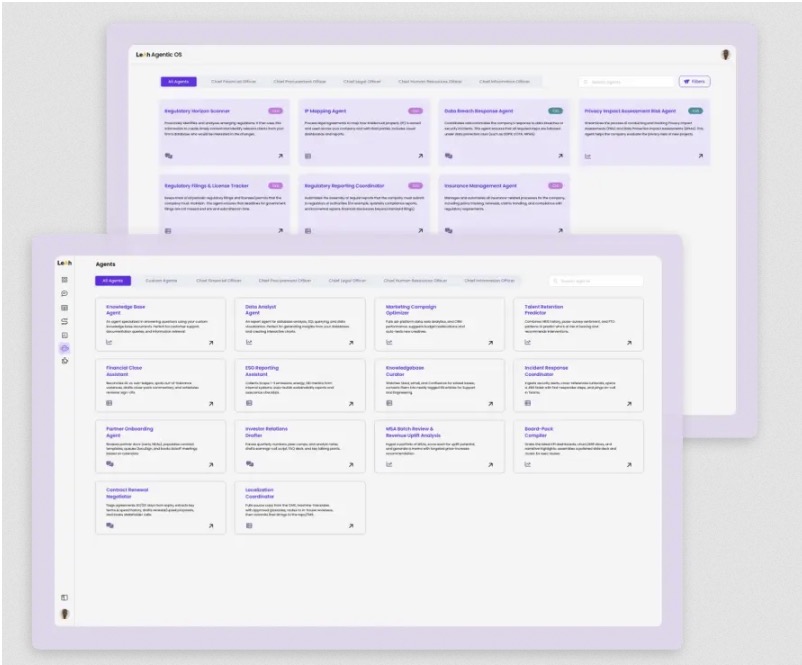
“We built Leah, our agentic AI platform, to address this. Leah uses specialized AI agents to handle everything from contract drafting to compliance reviews, while keeping humans in control for oversight and approvals. The platform integrates seamlessly across departments like sales, procurement, HR, and finance, giving entire organizations faster answers, better visibility, and fewer bottlenecks.”
“Unlike traditional AI tools that rely on a single model, Leah uses a multi-LLM architecture to deliver deep legal understanding, regulatory alignment, and explainability. This flexibility lets us continuously improve accuracy and adapt Leah to each customer’s policies and workflows.”
Challenges Faced
Have you faced any challenges in your sector of work recently? Malik acknowledged:
“Bringing technology into areas where it hasn’t yet had an impact yet has always been my motto. However, the biggest challenge with that is driving behavior change and encouraging technology adoption. This is a challenge for sectors across the board but it’s especially true when you’re a pioneer introducing innovation in spaces that are just beginning their digital journey.”
Evolution Of The Company’s Technology
How has the company’s technology evolved since launching? Malik noted:
“We started as a CLM provider, but it quickly became clear that traditional CLM systems were not enough for today’s enterprises. Over the past year, we have evolved into a pioneer of agentic legal and enterprise infrastructure, positioning Leah as a full AI operating system for law and business. This transformation included moving beyond static automation to an agentic design, where AI agents collaborate, learn, and proactively surface insights to legal and business teams. We built Leah as a modular, enterprise-grade platform that integrates seamlessly with existing tech stacks and meets rigorous regulatory standards. The impact has been significant, with customers reporting up to 80 percent efficiency gains, 90 percent faster contract cycles, and millions of dollars in recovered revenue. Leah is also embedded in offerings from leading partners like PwC, KPMG, Integreon, and Epiq, and integrates with major AI ecosystems including Microsoft, Google, and OpenAI. This evolution reflects our belief that legal technology should no longer be a siloed system but a critical layer of intelligence that drives strategy and execution across the enterprise.”
Significant Milestones
What have been some of the company’s most significant milestones? Malik cited:
“ContractPodAi has reached a series of milestones that reflect both our growth and our role in redefining the future of legal technology. We have introduced agentic legal infrastructure, creating a new category of enterprise technology that moves beyond traditional contract lifecycle management systems to position legal as a strategic decision-making function for the entire business. This shift has been reinforced by strategic partnerships with global leaders such as PwC and KPMG, who are embedding Leah into enterprise-grade legal and compliance services, with PwC preparing to launch a new consulting service powered by Leah. These partnerships demonstrate market confidence in Leah’s ability to deliver measurable impact at scale. Industry recognition from Gartner, Forrester, and IDC has further validated our leadership in legal AI, while adoption by enterprises worldwide shows how our platform is helping organizations use legal not just as a support function, but as a central driver of intelligence, agility, and growth.”
Customer Success Stories
Can you share any specific customer success stories? Malik highlighted:
“Over the past year, Leah has delivered measurable, cross-industry business impact. Companies leveraging Leah have cut costs, accelerated legal workflows, and uncovered new revenue opportunities by making legal operations faster, smarter, and more scalable.
Transformative results of Leah consists of:
- A global SaaS provider reduced contract processing time by 90 percent, saving 100,000 dollars per month and cutting external legal costs by 59 percent.
- A multinational bank shortened compliance reviews from three days to four hours.
- A tech services company halved review times while improving contract accuracy.
- A global electrical distributor headquartered in the United Kingdom conducted an efficiency study across M&A diligence, risk analysis, redlining, and insurance policy reviews. Tasks that previously took 25 hours now take 5, achieving 80 percent efficiency gains and hundreds of thousands of dollars in annual savings.
These outcomes demonstrate Leah’s ability to scale expertise, reduce risk, and unlock new value streams for enterprises.”
Differentiation From The Competition
What differentiates the company from its competition? Malik affirmed:
“ContractPodAi differentiates itself by combining deep legal expertise with advanced AI technology to deliver solutions enterprises can trust for complex, high-stakes work across departments. Leah was designed in collaboration with seasoned lawyers, legal engineers, and compliance specialists, ensuring the platform reflects the realities of modern enterprise operations rather than generic AI use cases. Its multi-LLM architecture provides context-aware, legally accurate insights, while its scalability allows organizations to extend legal intelligence across procurement, HR, sales, finance, and beyond. Unlike many tools that focus only on automation, Leah gives enterprises control over their AI agent ecosystems, embedding governance and explainability at every step. This blend of technical sophistication, domain expertise, and measurable ROI sets ContractPodAi apart, helping organizations streamline legal tasks while positioning legal as a strategic driver of growth and risk management.”
“With Leah, ContractPodAi has created a new category of technology—agentic legal infrastructure—that moves beyond traditional CLM tools to deliver an AI-first platform trusted by enterprises worldwide. Supported by partnerships with PwC, KPMG, Integreon, and Epiq, along with integrations with Microsoft, Google, OpenAI, and Anthropic, and recognition from Gartner, Forrester, and IDC, ContractPodAi is leading the transformation of legal from a cost center into a business-critical layer of intelligence that drives value across the enterprise.”
Future Company Goals
What are some of the company’s future company goals? Malik emphasized:
“Looking ahead, my goal is to continue fostering a culture of customer obsession, striving to be the best at what we do and to be the best possible partner to our customers. I want to ensure our technology creates meaningful impact by helping enterprises unlock new value. Ultimately, our aim is to use technology to elevate our customers, empowering them to focus on more exciting and strategic work that pushes their businesses forward.”
Future Of CLM
What’s the future of CLM in your opinion? Malik noted:
“The future of CLM lies in shifting from passive systems of record to dynamic systems of action. Traditional CLM platforms were largely built to store and track contracts, but that’s no longer enough. Enterprises today need contract management solutions that are deeply integrated into their operational fabric, capable of adapting to evolving business needs and delivering measurable value across departments.”
“We’re moving toward a world where contracts aren’t just managed, they’re activated. That means applying AI agents, multi-model intelligence, and automation to support team members. In this new age of CLM, contracts become live assets that can inform decisions, trigger actions, and unlock new efficiencies at scale.”
“We at ContractPodAi see the CLM platform becoming more like an operating system for legal and business operations: flexible, intelligent, and integrated universally in enterprise workflows. That’s where we’re investing: not in building another repository, but in building infrastructure that can drive successful outcomes.”
Challenges Faced
What challenges do organizations face in building a next-gen CLM ecosystem? Malik concluded:
“The future of CLM lies in its evolution from a static system of record to a dynamic, AI-orchestrated operating system for the business. Historically, CLM platforms were focused on documentation and storage, but that model no longer serves the needs of enterprise departments navigating growing workloads, tighter budgets, and greater risk exposure. Modern organizations require systems that not only manage contracts but also understand and act on them.”
“By 2030, CLM will be fully embedded into the digital fabric of the enterprise. Intelligent agents will automate everything from drafting and redlining to compliance workflows and negotiation prep, working across legal, procurement, sales, and operations. These systems will use predictive analytics to anticipate risks, suggest optimal contract strategies, and guide users in real time, transforming contracts into proactive tools of business value.”
