

Corbel is an AI-powered operating system that modernizes how industrial equipment is sold by providing an intelligent Configure, Price, Quote (CPQ) platform with embedded financing. Pulse 2.0 interviewed Corbel co-founder and CEO Le’ora Lichtenstein to learn more.
Le’ora Lichtenstein’s Background
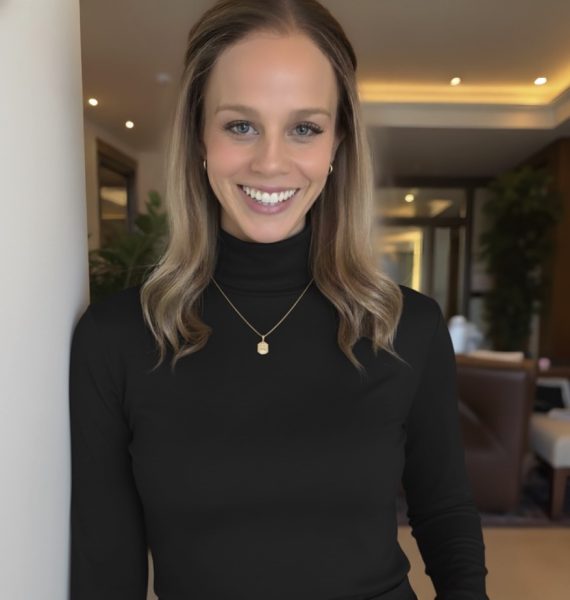
Could you tell me more about your background? Lichtenstein said:
“I started my career in investing, focused on structured credit and technology-enabled financial products. Over the years, I worked across venture capital, private credit, and hedge fund investing, often at the intersection of capital markets and real-world assets like equipment and small businesses.”
“I’m also a CFA charterholder, which I earned while working full-time roles in private equity and becoming a mother to my two oldest children. Those were some of the most intense years of my career, and they laid the foundation for how I think about discipline, resilience, and long-term execution.”
“Across my investing career, what stood out consistently was how much friction existed around complex, high-value transactions, especially when financing was involved. I spent years underwriting risk and evaluating businesses that relied on outdated processes, which ultimately shaped how and why I built Corbel.”
Formation Of The Company
How did the idea for the company come together? Lichtenstein shared:
“After spending about seven years investing in technology companies, I got the itch to build something of my own. I used to joke that I was tired of giving other people money to solve interesting problems and wanted to solve a real one myself.”
“Given my background in structured credit, I knew the company would sit at the intersection of finance and technology. I started asking which of the largest areas of finance had seen the least innovation.”
“The answer came back to a moment I couldn’t shake. Years earlier, I was sitting with an equipment finance lender we were diligencing for a warehouse line. As we talked, I kept hearing a loud whirring sound in the background. It turned out to be a fax machine printing pen-and-paper financing applications.”
“That disconnect stuck with me. This industry finances some of the most sophisticated machines in the world, yet the sales and financing process itself was still entirely analog.”
“Corbel was founded to change that. We help manufacturers and distributors make financing – and especially monthly payments – a superpower in the sales process, bringing speed, clarity, and momentum to how complex equipment gets sold.”
Favorite Memory
What has been your favorite memory working for the company so far? Lichtenstein reflected:
“Walking into my first industrial equipment trade show.”
“The machines were enormous, the crowd was overwhelmingly male, and I remember thinking, what the hell am I doing here?”
“A few days and dozens of real conversations later, that feeling flipped. Being different wasn’t a disadvantage – it was an advantage. It made me memorable, opened doors, and led to more honest conversations. That experience stuck with me and shaped how I think about building Corbel in an industry that values substance over stereotypes.”
Core Products
What are the company’s core products and features? Lichtenstein explained:
“Corbel is a modern sales and CPQ platform built specifically for industrial equipment.”
“We help manufacturers and distributors guide buyers through configuration, pricing, and quoting while embedding financing directly into the workflow. The platform supports inside sales, hybrid, and self-serve journeys, giving teams a single system to manage complex deals without losing the human element that’s critical in this industry.”
Challenges Faced
Have you faced any challenges in your sector of work recently? Lichtenstein acknowledged:
“One of the biggest challenges in industrial sales is the industry’s long-standing reliance on tribal knowledge. That’s how these businesses have operated for decades.”
“Deep understanding of a machine’s technical specifications and real-world performance often lives with individual sales reps rather than in any formal system. It’s typically shared informally and rarely recorded, which creates real risk for vendors as experienced reps retire or move on.”
“At the heart of most purchasing decisions is confidence – confidence that the machine will actually perform the job it’s being bought for. AI can be a powerful tool in helping guide buyers through that decision-making process. But training AI sales assistance in this industry isn’t trivial. The underlying data is often fragmented or incomplete, which makes knowledge capture and structuring a core challenge we’ve had to solve from day one.”
Evolution Of The Company’s Technology
How has the company’s technology evolved since launching? Lichtenstein noted:
“Corbel started as a purely embedded fintech product, focused on bringing monthly payments into the point of sale so buyers could understand affordability upfront.”
“As we worked more closely with customers, we realized financing wasn’t the root problem – it was a symptom. The real bottleneck was how decisions get made in equipment sales: configuration, pricing, approvals, and the back-and-forth that slows deals down before financing is ever discussed.”
“Today, Corbel is a full sales platform. We use AI-powered configuration, pricing, and quoting to help sales teams run the entire deal flow from first conversation to close. By simplifying how decisions happen earlier in the process, we unlock value across every transaction – whether the buyer pays cash or finances the purchase.”
Significant Milestones
What have been some of the company’s most significant milestones? Lichtenstein cited:
“Key milestones include onboarding anchor OEM customers, rolling Corbel out across dealer and distributor networks, and driving meaningful quoted and funded volume through the platform.”
“Internally, raising our seed round and assembling a team with deep experience across product, credit, and industrial workflows helped set the foundation for where we’re headed next.”
Customer Success Stories
Can you share any specific customer success stories? Lichtenstein highlighted:
“One of our most recent OEM launches is a great example. Within three months of going live, they saw a 92% increase in request-a-quote conversion and more than $1.5 million in funded transactions through the platform.”
“More importantly, the sales team saw a clear shift in buyer behavior. By introducing configuration and decisioning earlier, they were able to engage more qualified buyers and move deals forward with far less friction.”
Funding/Revenue
Are you able to discuss funding and/or revenue metrics? Lichtenstein revealed:
“We’ve raised institutional seed capital from investors focused on fintech, vertical software, and industrial technology.”
“On the business side, revenue has grown over 200% year over year, driven by strong customer adoption and expanded usage as more OEMs and distributors roll Corbel out across their sales organizations.”
Total Addressable Market (TAM)
What total addressable market (TAM) size is the company pursuing? Lichtenstein assessed:
“We focus on small- to mid-ticket equipment vendors – generally those selling equipment priced at $500,000 or less.”
“In the U.S. alone, that represents roughly 40,000 merchants and approximately $450 billion in financed equipment transactions each year. To put that in perspective, the U.S. equipment finance market is roughly 50% larger than the auto finance industry, yet remains far less digitized.”
“Globally, the opportunity is even larger. Industrial equipment sales and financing underpin nearly every physical economy, and we believe the long-term potential extends well beyond the U.S.”
Differentiation From The Competition
What differentiates the company from its competition? Lichtenstein affirmed:
“Most tools in this space solve only part of the problem. Traditional CPQ platforms focus on quoting but ignore financing, while financing tools are detached from the sales process altogether. That separation means manufacturers often underutilize financing as a sales lever, leaving money on the table in deals where upfront price may be a concern.”
“Corbel was built around how these deals actually happen. We bring configuration, pricing, decisioning, and financing together into a single system, grounded in real-world sales behavior rather than theoretical workflows. That integration allows financing to support the sales process instead of interrupting it, and it’s difficult to replicate without deep experience on both the software and credit sides.”
Future Company Goals
What are some of the company’s future goals? Lichtenstein emphasized:
“We’re doubling down on momentum with existing customers by expanding Corbel across their distributor networks, while continuing to onboard additional OEMs across the U.S.”
“At the product level, we’re pushing hard on AI to meaningfully change how equipment gets sold. Our focus is on eliminating the manual, repetitive work that slows deals down today and shifting that effort back to where it belongs – helping sales teams build trust, apply their expertise, and close more deals. The goal isn’t to automate salespeople out of the process, but to make them dramatically more effective.”
Additional Thoughts
Any other topics you would like to discuss? Lichtenstein concluded:
“One theme I care deeply about is the role of humans in a more automated world.”
“Industrial sales are built on trust, expertise, and long-term relationships. Technology should amplify those qualities, not replace them. That belief guides everything we build at Corbel.”
