

Dakarai Larriett is a Birmingham, Alabama native whose career has included corporate supply chain work, community service, and a campaign for the U.S. Senate. His advocacy has increasingly focused on interactions between motorists and law enforcement, including a proposed Motorist Bill of Rights calling for standardized rules during traffic stops and faster access to police video evidence. Larriett says that advocacy was shaped by his own April 2024 encounter with the Michigan State Police, allegations that he has subsequently pursued through legal and civil rights channels. He has also written about the experience in his book Don’t Flush!. Pulse 2.0 interviewed Larriett to learn more about his background, his conversations with voters, his proposed Motorist Bill of Rights, and the experiences that shaped his current advocacy.
Dakarai Larriett’s Background And Inspiration
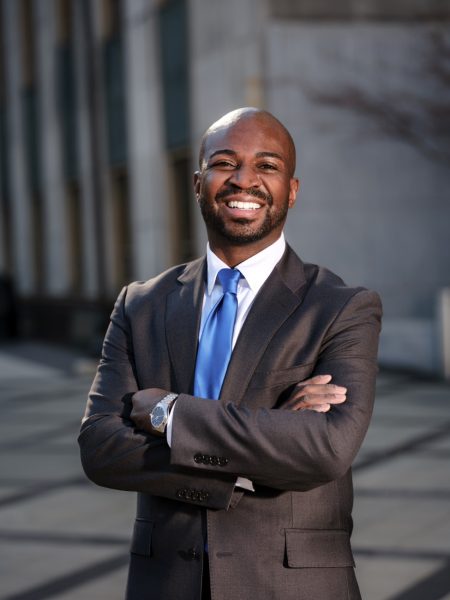
When asked about his background and what inspired his political involvement, Larriett shared:
I was born and raised in Birmingham, Alabama.
After a career in corporate supply chain in New York, I returned to Alabama during the pandemic to focus on community service.
My run for the U.S. Senate was inspired by a desire to address systemic issues in education, healthcare, and criminal justice.
Earning nearly 100,000 votes in the primary and 45% of the vote in the primary runoff demonstrated that a message focused on these “kitchen table” issues resonates deeply with Alabamians.
Memorable Conversations Across Alabama
When asked about memorable conversations from his campaign, Larriett said:
Traveling 25,000 miles across the state allowed me to connect with voters in cities like Mobile, Huntsville, and Montgomery.
I heard consistent concerns regarding the rising cost of living, rural healthcare “deserts,” and the need for investment in our schools.
I specifically recall a senior citizen who had to drive 90 minutes each way for cardiovascular care, facing even longer commutes as local facilities faced closure.
The Motorist Bill Of Rights
When asked about his proposed Motorist Bill of Rights, Larriett explained:
This proposal became a central pillar of my campaign to ensure transparency and safety during traffic stops.
Key elements include federal rules of engagement for every stop and a requirement that evidence, such as bodycam or dashcam footage, be provided to the motorist within 24 hours at no cost.
Experience With The Michigan State Police
When asked about the personal experience behind his advocacy, Larriett said:
My advocacy is rooted in a personal experience from April 2024, when I was wrongfully arrested by the Michigan State Police.
Despite passing seven sobriety tests, I was subjected to racist and homophobic language and was forced to relieve myself in full view of the jail booking area.
It took five months of FOIA requests to access bodycam footage, which revealed troopers attempting to plant drugs in my vehicle.
Lawsuit And Continuing Advocacy
When asked about his subsequent legal action and advocacy, Larriett explained:
I filed a $10 million lawsuit against the Michigan State Police to seek accountability.
While a district court and the U.S. 6th Circuit Court of Appeals dismissed the case due to qualified immunity, on October 2nd I served a criminal referral and special investigative demand to Michigan Governor Gretchen Whitmer, Attorney General Dana Nessel, the Berrien County Prosecutor, the U.S. DOJ Civil Rights Division, the FBI, the U.S. Attorney’s Office, and the Drug Enforcement Administration (DEA).
My goal remains to ensure these abuses do not continue.
Writing Don’t Flush!
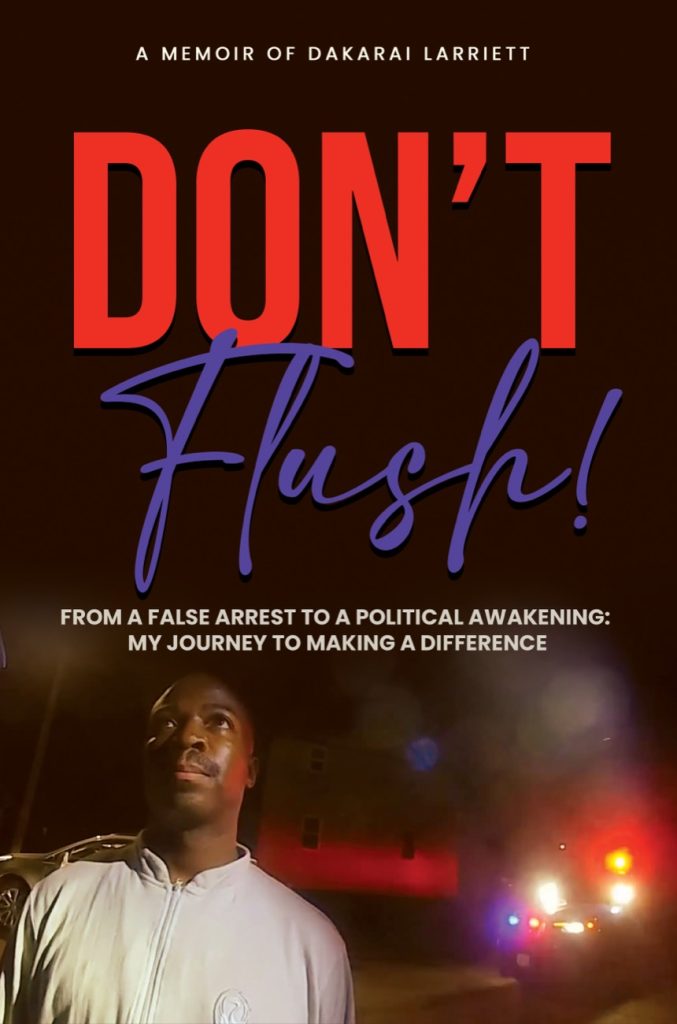
Larriett also discussed turning his experience into a book:
I have also written a book about this experience titled Don’t Flush!, which is available in print, e-book, and audio formats.
