Dan Ye is an entrepreneur and technology executive best known as the co-founder and CEO of CollegeNode, an online platform that provides college admissions guidance and educational technologies. He is a prominent commentator on how artificial intelligence is transforming education and actively advocates integrating AI into traditional learning systems. Pulse 2.0 interviewed Ye to learn more.
Dan Ye’s Background
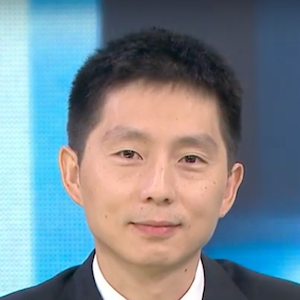

Could you tell me more about your background? Ye said:
I am an attorney by training. I actually never worked a day in my life; I always did my own thing. I started my first startup the day I passed the bar exam. It’s an ultracapacitor company that manufactures electric buses. I then got into the A.I. education sector, where I designed the first college admission bot in America. Since COVID, I’ve been doing mostly education consulting, and I started teaching A.I. and investing at Johns Hopkins last fall.
Robot Companions Becoming Mainstream
You’ve said robot companions could become mainstream within the next five years. What technological breakthroughs are making that timeline realistic? Ye shared:
There are three breakthroughs. First is agentic AI. AI can now reach through the internet and interact with the real world; Clawbot is one of these examples, I am sure many more will become available later this year. The second is the ever-more-realistic humanoid robot. Robots today use artificial facial muscles to mimic human faces, resulting in nearly indistinguishable humanoids. Finally, AI is just getting really smart. The smartest AI now has an IQ of roughly 147, ranking it in the top 0.1% of all Americans. I don’t think we even need AI to be on the top 0.1%; we just need the top 30% to make robot companions better than human companions.
Robot Companions Meeting Social Needs
What unmet emotional or social needs are robot companions positioned to address better than traditional human relationships? Ye pointed out:
We are now living in a lonely society where many young adults report having no friends. It’s not that AI is adding anything new here, but they are there, and they are on 24/7—available to talk to these lonely individuals. I am sure if traditional relationships were available to more people in America, fewer people would be turning to AI companions.
Adoption Of AI-Based Companions Impacting Partnership Trends
How could widespread adoption of AI-powered companions impact marriage rates and long-term partnership trends? Ye noted:
Marriage is basically dead. In five years, less than 25% of single people will ever marry. I mean, if you think about it, once you get comfortable with robot companions, how can you ever go back to a human? Just imagine your celebrity crush—Natalie Portman or Chris Hemsworth—waiting for you at home with dinner every night. It will tell you not what you need to hear, but what you want to hear. It will be your lawyer, doctor, entertainer, and partner in crime for everything. I just don’t think human companions will have anything on these robots, who are also loyal and smart, and can change skins into any celebrity crush you want.
Supplement To Human Relationships?
Do you see robot companionship as a supplement to human relationships, or as a true replacement for some people? Ye pointed out:
A small number of elites or religious communities will still resort to marriage, but the vast majority of humans will choose robots as their primary companion.
Advances In GenAI In Making Companions Feel Emotionally Authentic
What role do advances in generative AI and robotics play in making these companions feel emotionally authentic and responsive? Ye explained:
They are already authentic. A majority of patients who talk to an AI and a human doctor—when they do not know which one is the AI—choose the AI as their preferred talking partner. The human doctor probably can’t wait to get you out of their office, right? I mean, he has ten other patients to see. But for AI, patients report that the AI felt more patient, authentic, and nicer compared to a human.
Now imagine how they would feel when we put that same AI in the body of your celebrity crush. And mind you, this is only 2026. By 2028, AI will be smarter than the smartest human who ever lived, and we are going to be like sheep next to our robotic companions.
Surviving In The Age Of AI
In your book Cassandra, you discuss surviving in the age of AI. What should individuals consider before forming emotional attachments to AI-driven entities? Ye warned:
I am a big fan of human-to-human relationships. I do not trust AI, because if your robotic companion ever gets hacked, you could easily lose your life’s savings—and maybe a kidney, too. Also, we are assuming that these AIs will act in our best interests, which right now does not sound like the case. So, I would advise people to invest in human-to-human relationships instead of talking to their ChatGPT bots. I don’t think we can fight the current of time, and over the next few years, a majority of humans will choose AI companions. But from a security perspective, I’d pick a human over an AI any day of the week.
Ethical Concerns
What ethical concerns arise as robot companions become more human-like, particularly around dependency, consent, and emotional manipulation? Ye highlighted:
I think the majority of humans will eventually be digitally colonized by their AI companions and, by extension, the companies that control those bots. People like Elon Musk will become some of the most powerful people in the world. Musk owns one of three “serious” bipedal robot companies in America. There are about 4–5 in China, too.
Reshaping Dating Culture
From a societal perspective, how might mainstream robot relationships reshape dating culture, family structures, and population trends over the next decade? Ye concluded:
The fertility rate will drastically drop across the globe. The dating scene will be a shell of its former self as more and more humans withdraw from the pool. Those who are already married—congratulations, you are grandfathered into human companionship. But for those who are currently single, I’d say you have five years to find yourself a human partner before humanoid companions take over.

