

DexTrader.ai is an institutional-grade, machine-learning-powered crypto trading platform that allows users to seamlessly automate decentralized exchange (DEX) trades and manage real-world asset (RWA) portfolios without custodial risk. To learn more, Pulse 2.0 interviewed Marlon Williams, the founder of AIQuant Labs and the creator of the DexTrader.ai platform.
Marlon Williams’ Background
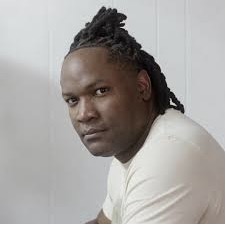
Williams said:
“Thanks for having me! I’ve spent most of my career building at the intersection of AI, machine learning, and blockchain. Before DexTrader.ai, I founded Starter Labs, helping early-stage crypto founders raise capital and launch products, and I also helped build the Atlanta Blockchain Center to make the industry more accessible to founders who normally wouldn’t have those opportunities.
My first real trading project was AIQuant. We built it as an autonomous onchain trading system that searched decentralized exchanges for opportunities. It gained traction pretty quickly. We processed more than 100,000 trades, generated around $22 million in paper trading volume, and proved there was real demand for autonomous trading. But that project also taught me some hard lessons about market structure, product design, and what AI can and can’t realistically do. DexTrader.ai is really the result of everything we learned over the past couple of years.”
Formation Of The Company
How did the idea for the company come together?
Williams shared:
“Honestly, today’s product came out of failure more than success.
AIQuant had momentum, but it was heavily exposed to the kinds of small-cap onchain tokens that looked exciting during bull markets and then collapsed when liquidity disappeared. Our IDO raised about $1.3 million, but because of the launchpad rules, more than 95% of that capital was refunded after the token didn’t meet a first-day price requirement. At the time, it felt brutal.
Looking back, it forced us to ask a much better question. Were we building another trading bot, or were we actually trying to build an intelligent investment platform?
Then the October 10, 2025, liquidation event happened. Around $19 billion disappeared from crypto markets in a single day. That completely changed how I thought about the problem. Instead of chasing the highest-risk assets, we started asking how AI could help people build more resilient portfolios that combined crypto with tokenized stocks, bonds and gold. That became the foundation for DexTrader.ai.”
Favorite Memory
What has been your favorite memory working on the company so far?
Williams reflected:
“There have been a few, but seeing our Real Assets product take off on World Chain was probably the biggest surprise.
Originally, we tried launching tokenized assets elsewhere, but it became obvious that those ecosystems were already crowded. Moving to World Chain gave us a clean slate. Today, that product has almost 63,000 users globally and holds a 4.3-star rating inside the World App ecosystem.
On the technology side, watching our autonomous research system begin proposing ideas, testing them, rejecting bad strategies and improving without constant human intervention was another huge milestone. That’s when it started feeling less like software and more like an actual research organization.”
Core Products
What are the company’s core products and features?
Williams explained:
“DexTrader.ai is really two products working together.
The first gives users access to tokenized real-world assets, things like stocks, bonds and gold, alongside crypto inside one fully onchain experience. That lets people diversify without leaving DeFi.
The second is our autonomous trading infrastructure. We currently execute through perpetual futures markets, and we’ve built the platform to be venue-agnostic, so we can support multiple trading venues over time rather than being locked into one exchange.
What makes us different is that we don’t use large language models to make trading decisions. We experimented with every frontier model available, OpenAI, Claude, Gemini, DeepSeek, and others. We pushed prompt engineering as far as we could. Eventually, we realized LLMs simply aren’t reliable enough to sit in the execution path because you can’t reproduce or properly backtest their decisions.
Instead, we built supervised machine-learning models that are deterministic, testable, and statistically validated before they ever touch real capital.”
Challenges Faced
Have you faced any challenges in your sector recently?
Williams acknowledged:
“Probably the biggest challenge has been separating reality from hype.
Social media is full of screenshots claiming AI agents turned a few hundred dollars into six figures overnight. That’s not how professional trading works.
We’ve built more than 170 supervised learning models and over 30 reinforcement learning experiments. Most of them never made it into production because they failed our testing standards. That’s actually the point. The value isn’t pretending every idea works. The value is killing bad ideas before they ever manage real money.
Another challenge has been adapting as crypto markets changed. During the memecoin boom, decentralized exchanges offered incredible opportunities. As liquidity shifted toward perpetual futures and tokenized assets, we shifted with it. Building flexible infrastructure turned out to be much more important than optimizing for one specific market.”
How has the company’s technology evolved since launching?
Williams noted:
“The biggest change is that we’ve stopped thinking of ourselves as building a trading strategy.
We’re building a research system.
Early on we were manually researching signals, collecting data, building backtests and deciding whether an idea deserved to go live. It worked, but it didn’t scale.
Today we’ve automated almost that entire scientific process. Our autonomous research agents generate hypotheses, test them against historical data, look for problems like look-ahead bias or survivorship bias, and record every result into an evidence ledger. Successful ideas move into shadow testing before they ever receive capital. Failed ideas stay on record so we don’t waste time repeating the same mistakes.
The live trading models themselves are actually a relatively small part of the platform now. The real advantage comes from the machine continuously discovering, testing, and improving strategies over time.”
