

Ditto builds a mobile database with built-in peer-to-peer sync that keeps apps running and data consistent even without Wi-Fi, servers, or cloud connectivity. Pulse 2.0 interviewed Ditto co-founder and CEO Adam Fish to gain a deeper understanding of the company.
Adam Fish’s Background

Could you tell me more about your background? Fish said:
“I’ve always gravitated toward the intersection of technology and human experience, especially where infrastructure decisions impact how people actually use software. Early in my career, I launched a company focused on mobile apps. That was an exciting time, but I found myself constantly running into the same backend problem: keeping data consistent across devices, especially when connectivity was unreliable or intermittent.”
“That frustration eventually led me to Realm, where I became VP of Product. Realm was pioneering a developer-friendly mobile database and sync solution. It was a huge leap from traditional client-server models. We gave developers tools to build rich, interactive apps without writing boilerplate code or manually managing networking. It was a deeply rewarding experience. I got to work with an incredibly smart team and engage with developers around the world who were pushing the boundaries of what mobile apps could do. Realm gave me a front-row seat to how critical data sync was becoming, and just how hard it was to get right.”
Formation Of The Company
How did the idea for the company come together? Fish shared:
“The concept for Ditto emerged from the realization that modern devices are powerful enough to handle data processing and synchronization without constant reliance on cloud infrastructure. Realm was a great product, but the system relied heavily on a centralized server model. If the internet went down, or a device lost signal, the system would be able to function, but it wouldn’t be able to sync any data until internet returned. That was a serious limitation that kept nagging at me during my time at Realm.”
“The deeper I got into the space, the more I realized the industry had accepted a flawed premise: that edge devices are dumb clients, dependent on the cloud for coordination. But the reality is, modern phones, tablets, and laptops are incredibly capable. They don’t need to wait for permission from a distant server to collaborate with one another.”
“By 2018, I became convinced there was a better way. What if we could create a database that was truly peer-to-peer and offline-first? One that treated every device, whether it’s a phone, kiosk, airplane tablet, or IoT sensor, as an active participant in the network? That was the spark that led to Ditto. I set out to build a platform where devices could sync data directly and intelligently, without depending on the cloud to hold everything together.”
Favorite Memory
What has been your favorite memory working for the company so far? Fish reflected:
“One of the most meaningful moments in my career—and a deeply validating one—came full circle last year. Years ago, my interest in data synchronization led me to join Realm, where we built a mobile sync product that was eventually acquired by MongoDB. After that acquisition, I chose not to follow the product into MongoDB. I felt the larger opportunity wasn’t in making the cloud better—it was in making apps work without it. That decision ultimately led me to co-found Ditto.”
“Fast-forward to 2024, and MongoDB reached out to us. They had decided to deprecate Realm and were looking for a true edge-native solution. We ended up partnering to build an integration between Ditto and MongoDB Atlas, allowing MongoDB customers to sync data directly at the edge using our platform.”
“For me and the team, it was an incredible full-circle moment. A major database company was now embracing the exact vision we had been working toward for years, that devices should be able to sync and collaborate without relying on a central server. It felt like closing the loop on a journey that started with a fundamental question about how apps could work better, and ended with our answer becoming part of the mainstream.”
Core Products
What are the company’s core products and features? Fish explained:
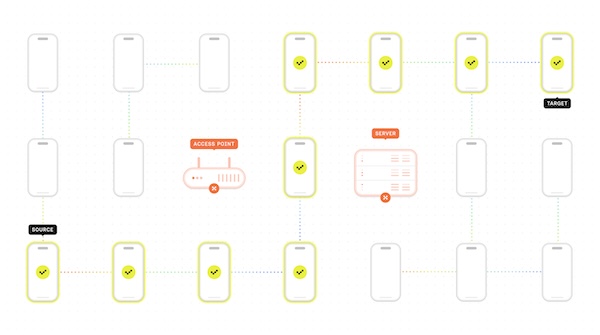
“Ditto is a mobile database with built-in connectivity. At its core, Ditto enables edge devices to sync data directly with each other peer-to-peer, without needing to rely on a constant connection to the cloud or even a local server. This makes it ideal for environments where connectivity is poor, intermittent, or intentionally air-gapped.”
“Our platform includes a CRDT-based, offline-first database, which ensures that data stays consistent across devices even when updates happen offline or simultaneously. It automatically handles conflict resolution without requiring developers to write custom merge logic.”
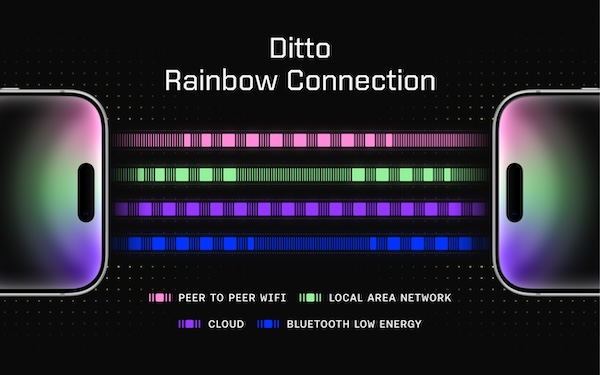
“What makes Ditto truly unique is our transport-agnostic approach to connectivity. Devices can sync over Bluetooth, Wi-Fi, Peer-to-Peer WiFi (think AirDrop), WiFi Aware, LAN, or the cloud—whatever is available at the moment. Developers don’t have to manage or configure these connections manually; Ditto handles peer discovery, transport selection, and retry logic under the hood.”
“We provide SDKs for mobile (iOS, Android, Flutter), desktop, and embedded systems, making it easy to build edge-native apps across many form factors. And for organizations that do want to connect to a central system, Ditto can sync opportunistically with the cloud when a connection is available—bridging edge environments with traditional infrastructure.”
“In short, Ditto combines the power of a local-first database with a smart sync engine, giving developers the tools to build reliable, collaborative apps that keep working regardless of network conditions.”
Challenges Faced
Have you faced any challenges in your sector of work recently? Fish acknowledged:
“A significant challenge has been educating the market about the importance and benefits of edge-native architectures, and that it is even an option to begin with! Many organizations are accustomed to cloud-dependent systems and may not immediately see the value in transitioning to edge-centric solutions. We’ve addressed this by showcasing the real-world use cases where Ditto’s technology provides tangible benefits.”
“Once teams see real-world deployments that handle mission-critical scenarios smoothly, adoption naturally accelerates. We are fortunate to include companies like Chick-fil-A, Delta, Lufthansa, the US Air Force, and more as real-world examples of how our technology makes a difference for them every day.”
Evolution Of The Company’s Technology
How has the company’s technology evolved since launching? Fish noted:
“Since our inception, Ditto has expanded its capabilities to support a wider range of devices, such as drones and Apple TV’s, platforms such as Flutter, React Native, Java Server, and have built integrations with top database companies like MongoDB to enable seamless customer onboarding. We’ve enhanced our synchronization engine, improved conflict resolution mechanisms, and integrated with various transport protocols to ensure seamless data synchronization across diverse environments. These advancements have enabled us to serve a wide variety of industries with critical needs for reliable, offline-capable application – and enable them to deploy them quickly.”
Significant Milestones
What have been some of the company’s most significant milestones? Fish cited:
“Securing major partnerships and deployments has been pivotal. For example, our collaboration with the U.S. Air Force demonstrated Ditto’s capability to provide reliable data synchronization in mission-critical scenarios. Additionally, our technology has been adopted by leading airlines to enhance in-flight operations, showcasing the versatility and robustness of our platform.”
Customer Success Stories
Can you share any specific customer success stories? Fish highlighted:
“Yes, we have many public studies on organizations that have successfully implemented Ditto’s technology. To name a few:
U.S. Air Force: Ditto is enabling real-time mission feedback loops and reducing processing time between system/mission data updates.
Delta Air Lines: Ditto enables in-flight collaboration for flight attendants, ensuring seamless operations even without internet connectivity.
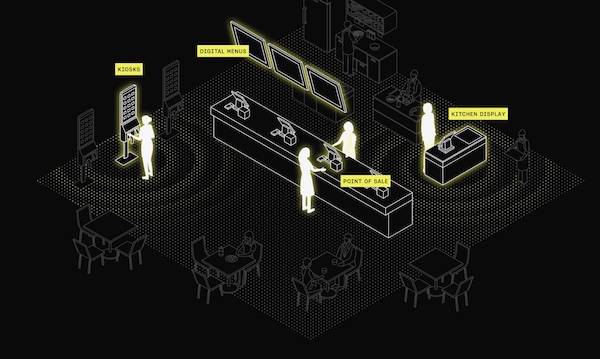
Chick-fil-A: Ditto powers their entire point-of-sale system, allowing uninterrupted service regardless of connectivity issues by enabling edge devices to communicate directly.
One of our core goals at Ditto is bridging the digital divide for those in areas with limited or no connectivity, and this applies to small companies as well as enterprises. To help achieve this goal, we partner with organizations that are tackling real-world and humanitarian challenges, including:
ShareMyHealth: A company improving childhood nutrition around the globe. By leveraging Ditto’s peer-to-peer sync, their healthcare data and resources can reach remote communities even when internet access is spotty.
Ignis Technologies: We’re enabling better communication for firefighters in challenging, often disconnected environments — especially critical given the growing concern about wildfires in the Western U.S.”
Funding/Revenue
Are you able to discuss funding and/or revenue metrics? Fish revealed:
“As of March 2025, Ditto has raised a total of $136 million over several funding rounds, with the latest being an $82 million Series B. Investors include Top Tier Capital Partners, Acrew Capital, and others. We don’t publish specific revenue metrics but grew over 3x in the past year and operate in the tens of millions.”
Total Addressable Market
What total addressable market (TAM) size is the company pursuing? Fish assessed:
“We view our TAM as being hundreds of billions of dollars, spread across Point of Sale, Restaurant, Travel and Hospitality, Oil & Gas, Shipping & Logistics, Retail & Grocery, Food & Beverage, Manufacturing, and Entertainment.”
Differentiation From The Competition
What differentiates the company from its competition? Fish affirmed:
“Currently, there is no competitor offering a solution that works in the same way that ours does. Other mobile database products can operate in offline scenarios, but none can sync device-to-device without network hardware like ours can. Because of this, our main competition comes from organizations either doing nothing (paper and pens works great when the internet is out!), sticking with the status quo of traditional cloud-based systems, or attempting to build their own hybrid solution in-house. Developing a reliable peer-to-peer database that synchronizes data in partially connected environments is complex, it’s something we’ve been building for over 8 years now. And yes, we have had a number of customers come back to us after trying to build it themselves without success. Ditto provides a ready-to-use platform that addresses these challenges effectively.”
Future Company Goals
What are some of the company’s future goals? Fish emphasized:
“Our goal is to become the default platform for developers building edge applications. We aim to continue expanding our technology’s capabilities, support more platforms, and serve a broader range of industries that require resilient, offline-capable solutions.”
Additional Thoughts
Any other topics you would like to discuss? Fish concluded:
“I would emphasize the importance of culture in building a successful company. At Ditto, we’ve learned that values like communication, trust, and continual improvement are as crucial as technological innovation. These principles guide our hiring decisions and shape our collaborative environment, ensuring that we not only build great products but also foster a team that’s aligned and motivated.”
