

The Dr. Z Functional Medicine Academy is an integrated ecosystem of accredited functional medicine training, clinical decision-support technology, lab interpretation software, practice-building systems, live mentorship, and consumer tools. Pulse 2.0 interviewed The Dr. Z Functional Medicine Academy Founder and CEO Dr. Brandy Zachary to learn more.
Dr. Zachary’s Background
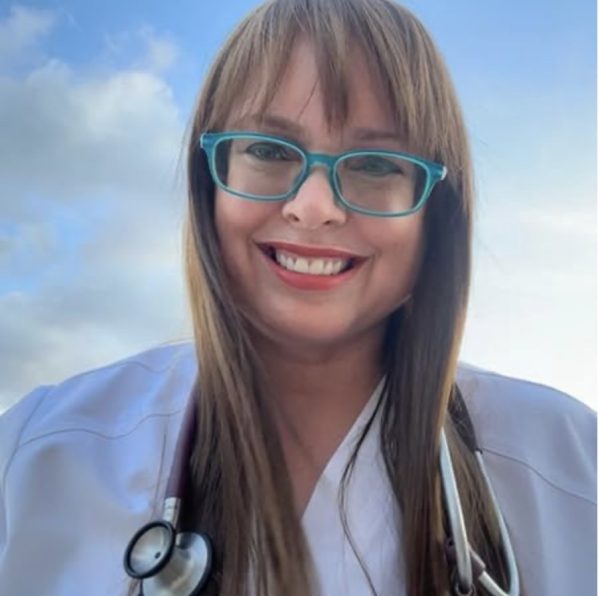
When asked about her background and what ultimately led her to build these companies, Dr. Zachary shared:
I know what it’s like to live with a misdiagnosis. My brain was electrocuted 20 times for what ultimately turned out to be an infection.
For more than two decades, I collected diagnoses: IBS. Anxiety. Depression. Hashimoto’s. Chronic infections. Insomnia. Every appointment added another diagnosis. Every diagnosis came with another treatment plan.
But I eventually realized not all diagnoses are created equal.
Some diagnoses describe what you’re experiencing. Others explain why you’re experiencing it.
That distinction changed my life.
The labels I collected named symptoms, syndromes, or patterns of illness, but they never explained why one person was experiencing all of them at the same time. I wasn’t looking for another name. I was looking for the mechanism that connected the dots.
That experience fundamentally changed the way I think about healthcare.
Diagnosis is one of the most important things we do in medicine. But the work shouldn’t stop once we’ve given something a name. The next question should be, “Why is this happening?”
I became obsessed with that question.
Not, “What do we call this?”
But, “What biological mechanism could explain everything I was experiencing?”
That question eventually changed my life.
It also became the foundation for everything I’ve built since.
How The Company Started
When discussing how The Dr. Z Functional Medicine Academy came together, Dr. Zachary explained:
I did not start by trying to build a company. I started by trying to answer a question I could not stop thinking about.
If a patient has five labels, who is responsible for asking whether they are connected?
The healthcare system is organized around specialties, which makes sense. Every specialty develops deep expertise in a particular organ system or area of medicine. The problem is that biology does not divide itself into departments.
The immune system talks to the nervous system. The gut influences the brain. Hormones affect both. The body is one integrated system, even when healthcare is not.
I realized we had become incredibly good at collecting information, but much less effective at integrating it into a coherent explanation for the person sitting in front of us.
That is what led me to functional medicine.
It was not about rejecting conventional medicine. It was about restoring something I believed had been lost: clinical reasoning that asks not only, “What is this?” but, “Why is this happening in this person?”
That became the foundation of TDZ Functional Medicine Academy.
Everything we teach, every tool we have built, and every platform we have created is designed to help clinicians understand the biology connecting a patient’s symptoms, history, laboratory findings, and lived experience.
Helping Practitioners Find The “Why”
When asked about her favorite memory from building the company, Dr. Zachary recalled:
People assume my favorite memories are the big milestones.
They are not.
They are the moments when a practitioner realizes they are finally practicing the way they always wanted to.
One clinician told me, “For the first time, I feel like I’m actually getting to the ‘why’ instead of just managing another diagnosis. I use the Care Plan Builder every day. I honestly can’t imagine practicing without it.”
That meant more to me than any award because it confirmed something I had believed for years.
The problem was never that clinicians lacked knowledge. The problem was expecting them to synthesize hundreds of data points, years of research, complex physiology, laboratory findings, and a patient’s entire history from scratch, over and over again, for every patient.
You cannot solve that by telling people to work harder.
You solve it by building systems, workflows, and tools that make individualized reasoning practical within the realities of modern practice.
Our goal was simple: make every clinician feel like they had the time to think about each patient as if that patient were the only one they were seeing that day.
That is still one of the clearest ways I can describe what we are building.
Core Products And Services
When asked about the company’s core products and services, Dr. Zachary detailed:
People sometimes look at what we have built and see a training company, clinical software, business systems, live mentorship, and a consumer platform.
I see one mission expressed through different tools.
Our education teaches clinicians how to reason through complex chronic illness instead of simply memorizing protocols.
LabDX organizes laboratory and diagnostic findings into a structured clinical framework. Today, it supports more than 75 types of laboratory and specialty testing, including standard blood chemistry, genomics, stool testing, hormone testing, organic acids, mycotoxins, SIBO breath testing, advanced cardiac markers, autoimmune brain testing, pediatric testing, and more.
It brings together conventional reference ranges, functionally optimized ranges, clinical context, red flags, referral considerations, and potential therapeutic interventions in one place.
Care Plan Builder combines a patient’s intake, health history, laboratory findings, symptoms, goals, lifestyle factors, and clinical priorities to help the practitioner create a phased, individualized plan in minutes rather than hours.
The Dr. Z Way gives practitioners 24-hour access to more than 50 proprietary tools covering clinical reasoning, practice strategy, marketing, sales, finance, compliance, operations, consults, patient communication, revenue planning, and implementation.
TDZ Functional Medicine Academy brings the clinical and business sides together so practitioners not only understand complex cases but also know what to do with the patient at 9 a.m. on Monday morning, and how to build a sustainable practice around that care.
DiagnoseThis extends the mission to consumers. It helps people organize their health stories, prepare better questions, and have more productive conversations with qualified practitioners.
DiagnoseThis does not rely on generic artificial intelligence to make health decisions. It uses a proprietary hybrid reasoning engine designed by clinicians to organize complexity and surface meaningful patterns.
Together, these products form an integrated ecosystem built around one idea: better information is only useful when people can interpret it, apply it, and act on it.
Building A Bootstrapped Company
When asked about the biggest challenges she has faced while building the company, Dr. Zachary noted:
There have been plenty of business challenges, but the central one has always been the same: we had to earn the money before we could spend it.
There was no venture capital. No outside investor. No family fund waiting in the background.
I was a woman founder rebuilding my life after permanent Social Security disability, and every time we wanted to hire another person, build another tool, improve the technology, or take the next risk, we had to go serve enough practitioners to earn the money first.
Then we reinvested it.
In a strange way, it was like living paycheck to paycheck, except the checks had more zeros behind them and the obligations kept getting bigger.
That forced discipline into the company from the beginning. Every major investment had to matter. Every new product had to solve a real problem. Every expansion had to be supported by the value we had already created.
At the same time, I was still living with my own health challenges. I did not build this company after my health journey ended. I built it in the middle of it.
I got off permanent Social Security disability not because I was suddenly healthy, but because I decided I wanted a different life.
That meant I could not build a business that depended on me working 18-hour days. I had to build systems. I had to build workflows. I had to build tools. The company had to be sustainable for the people we served and for the people building it.
I was not building a business despite those constraints.
I was building it because of them.
That philosophy shaped our team too. Along the way, I have collected people whose own experiences made them exceptional at solving complex problems. Some stepped away from full-time patient care because of health challenges of their own. Others became relentless students because they refused to stop asking why.
Their lived experience did not lower the standard.
It raised it.
One of the biggest lessons I have learned is that constraints force better design.
We did not build this company by pretending those constraints did not exist. We built around them.
That is also the philosophy behind what we teach practitioners: do not ignore reality. Understand it. Then build a better system.
Technology Evolution
When discussing how the company’s technology has evolved, Dr. Zachary described:
Our technology did not begin with a product roadmap.
It began with one bottleneck after another.
My first deep dive into a functional medicine case took more than 10 hours. There was a full intake, physical examination, and multiple laboratory panels with hundreds of data points to interpret.
I looked up every marker, every interaction, every contraindication, and every possible connection.
It was an extraordinary learning experience.
It was also the moment I realized there was no way to build a sustainable practice if every patient required that much manual synthesis.
I did not want to lower the quality of care. I wanted to make that level of thinking repeatable.
That is why we built the earliest version of LabDX.
As the platform evolved, it expanded into what is still a rare kind of clinical system: a single environment capable of organizing more than 75 categories of laboratory and specialty testing while helping practitioners interpret not only whether a result is high or low, but what it may mean in the context of the whole patient.
Then another bottleneck appeared.
Laboratory interpretation had become faster, but practitioners still had to combine those findings with a patient’s intake, medical history, symptoms, lifestyle, medications, goals, and priorities.
Many were charting until midnight.
So we built Care Plan Builder to help transform all of that complexity into a phased, individualized plan. It can identify red flags, help triage priorities, address diet, sleep, movement, stress, and mindset, and even suggest the questions a practitioner may need to ask at future visits.
The same pattern appeared in education.
I had completed some of the most respected functional medicine training available, and I valued it. But I also watched talented practitioners finish those programs and still wonder what to do with the patient sitting in front of them on Monday morning.
So we built an academy focused on practical clinical reasoning, not just information.
Then we realized clinical expertise alone was not enough.
Practitioners also needed systems for compliance, hiring, marketing, sales, finance, operations, fulfillment, and growth so they could build businesses that made this kind of care economically sustainable.
The Dr. Z Way grew from that need. I wanted practitioners to have access to our frameworks, calculations, scripts, clinical deep dives, Character Codes, consult tools, revenue planners, webinar systems, and decision-making processes even when I was not personally standing beside them.
Finally, we realized patients needed support too.
They were overwhelmed. Many were experiencing medical gaslighting. They were walking into appointments unprepared, unsure what to ask, and unable to explain years of disconnected symptoms in a way that could be understood quickly.
That is what led to DiagnoseThis.
Every time we solved one bottleneck, the next one revealed itself.
Today, we do not have an information problem.
We have an interpretation problem.
That is why we have never positioned ourselves as simply an AI company.
Beyond AI. Built by clinicians, engineered to do what AI alone cannot.
Our technology was never designed to replace clinical judgment. It was designed to organize complexity so clinicians can apply their judgment with greater precision, consistency, and confidence.
The Future Of Personalized Medicine
When asked what is next for the company, Dr. Zachary explained:
I do not think the future of healthcare belongs to clinicians or technology.
I think it belongs to clinicians who know how to use technology well.
Healthcare is generating more information than any individual clinician can reasonably synthesize alone. The challenge is no longer access to information. It is transforming that information into better decisions without losing the human judgment medicine depends on.
That is where we are focused.
Today, our ecosystem includes clinician education, clinical decision-support technology, business systems, live mentorship, and consumer tools designed to make highly individualized care more practical.
We will continue expanding each of those areas because we believe the future is not a single product.
It is an integrated clinical ecosystem.
One of our biggest investments reflects that philosophy.
DiagnoseThis was not built with venture capital or outside investors. There was no funding round and no check waiting to arrive.
Every dollar that funded its development had to be earned first.
Month after month, we served practitioners, generated the resources to build the next piece, and reinvested those resources into the platform. Over time, that commitment grew into more than $1 million in development funded entirely by the business we had built.
That accomplishment still feels a little unbelievable to me.
We did not raise the money to build the company.
We built the company to earn the money to fund the next innovation.
At the same time, we are continuing to invest in patient education. Better outcomes are more likely when clinicians and patients share a clearer understanding of what is happening and why.
We want patients to arrive informed, engaged, organized, and prepared to have better conversations with their healthcare team.
Our long-term vision has never changed.
We want to make individualized, systems-based care available to far more people.
Not by replacing clinicians. By giving them the tools to think at their very best.
Major Achievements And Milestones
When asked which achievements she is most proud of, Dr. Zachary said:
It has honestly been one of the most surreal seasons of my career.
For years, we quietly focused on building, improving the education, creating better technology, growing our team, and serving practitioners.
Then, within about six weeks, it felt like the outside world suddenly started noticing.
It began at the 24th Annual American Business Awards, where we received four Stevie Awards, including the inaugural Gold Stevie Award for Best Female Entrepreneur.
Standing in Times Square with members of our leadership team and watching them experience that recognition was a moment none of us will ever forget.
Just a couple of weeks later, we learned we had made the Inc. 5000 list after achieving 2,095% three-year growth. That one was deeply personal.
I had followed that list for years and wondered what it would feel like to build a company worthy of being included. Seeing our name there was one of those rare moments when a long-held goal becomes real and you quietly think, “We actually did it.”
Only weeks after that, we learned we had received five International Technology Awards recognizing innovations across our clinical ecosystem and taking our team to Paris to celebrate on an international stage.
In roughly six weeks, we moved from Times Square to the Inc. 5000 to international technology recognition.
It was wild.
It was exciting.
And it felt like validation for years of work that happened before anyone was paying attention.
Behind those awards is a company that has grown rapidly while remaining completely self-funded.
In just the past three years, we have trained more than 70,000 healthcare professionals.
More than 4,200 practitioners have joined our paid educational community.
Our team grew from 25 people to more than 60 in a single year.
What began as one practitioner searching for better answers has become an integrated ecosystem of education, clinical software, decision-support tools, business systems, live mentorship, and consumer technology.
And we built every bit of it without venture capital or outside investors.
One of the accomplishments I am proudest of is the fact that we became capable of funding something as ambitious as DiagnoseThis ourselves.
Every course we sold, every membership we earned, and every practitioner we served helped generate the resources to build the next piece.
There was no reserve of money sitting somewhere waiting to be deployed. We had to earn it month by month, then make the decision to put it back into the mission.
Over time, those decisions became more than $1 million in self-funded development.
That still feels crazy to say.
As exciting as the awards, growth, and recognition have been, the accomplishment I am proudest of has not changed.
It is hearing a practitioner say, “I finally feel like I’m practicing the way I always hoped I would.”
Awards recognize what you have built.
Helping practitioners deliver better care, and giving patients a better chance at finding answers, reminds you why you built it.
What Continues To Drive Dr. Zachary
When asked what continues to drive her after everything the company has accomplished, Dr. Zachary concluded:
People sometimes assume that once you’ve built successful companies or received industry recognition, the mission changes.
For me, it hasn’t.
In many ways, this year reminded me exactly why we started.
While all of these incredible milestones were happening, I was also navigating one of the most difficult health seasons I’d experienced in years. After developing a post-viral syndrome, there were many days when I was leading the company from bed.
The irony wasn’t lost on me.
I found myself relying on the very systems we’d spent years building. I was organizing laboratory data, looking for patterns, asking better questions, and working through medical complexity just as our practitioners do every day.
It reminded me that these were never just technology projects.
They were built because healthcare is complex, patients are overwhelmed, and even experienced clinicians can struggle when information is fragmented across dozens of appointments, specialists, and test results.
Eventually, I learned I was living with a primary immunodeficiency that connected many of the seemingly unrelated health problems I’d experienced for years.
Looking back, I realized something that has become central to everything we build.
The labels weren’t explanations. They were descriptions. They named symptoms, syndromes, and patterns of illness, but they never explained the biology connecting them.
They never answered the question that mattered most:
Why?
That realization continues to drive everything we do.
The awards have been incredible. The growth has been exciting. The recognition has been deeply meaningful.
But those things aren’t the mission.
The mission is helping clinicians think more clearly, helping patients ask better questions, and making highly individualized, systems-based care more accessible to the people who need it most.
More than 20 years ago, I started asking one question that no one seemed able to answer.
Why was this happening?
Everything we’ve built, from the Academy to LabDX, Care Plan Builder, The Dr. Z Way, and DiagnoseThis, is our attempt to help more clinicians and more patients answer that same question.
Because a diagnosis should never be the end of the conversation.
Sometimes it’s only the beginning.
