Earlyasset is a company that is building the infrastructure layer and digital transaction engine for the venture secondary market, helping to provide liquidity for employee and investor shares in growth-stage companies through algorithmic pricing and streamlined, compliant, and lower-cost transaction workflows. Pulse 2.0 interviewed Earlyasset CEO Shawn Bercuson to learn more.
Shawn Bercuson’s Background
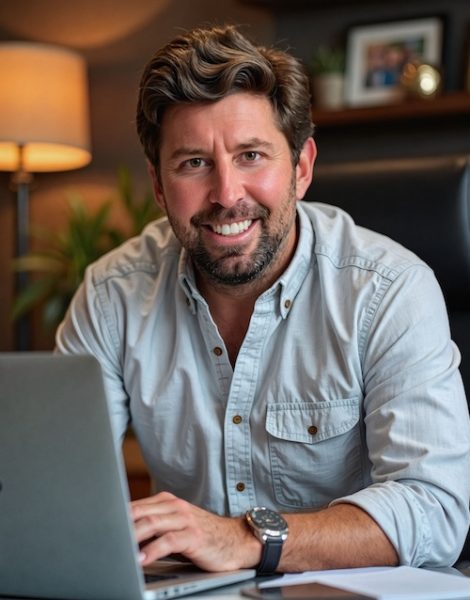

Could you tell me more about your background? Bercuson said:
“I unintentionally ended up with a career at the intersection of capital markets and tech startups. My first job was at the Chicago Board of Trade, where I traded fixed income futures. From there I went to work at a hedge fund and private equity shop in the Chicago suburbs. I was commuting by train every day, and ended up starting my first company, a peer-to-peer lending company focused on student loans.”
“I sold it before taking it to market, which landed me at a venture studio in Chicago. When the market crashed in 2008, I ended up joining one of our portfolio companies – a social networking startup called ThePoint.com. When I joined, the platform wasn’t working and my job was to help figure out how to monetize it and teach people how to use it. We started a side project focused on group buying that was contingent upon reaching a “tipping point” in order to unlock a discount – we called it Groupon.”
“Forbes named us the fastest-growing startup ever. By the time I left – just shy of three years in – we were generating a billion dollars in revenue, had 2,500 employees, and were live in 16 countries. That experience defined my career in tech – and it’s also what first opened my eyes to the secondary market.”
“I left Groupon after just a few years and moved to the center of gravity in San Francisco to continue to build, invest in, and advise technology startups.”
Formation Of The Company
How did the idea for the company come together? Bercuson shared:
“For 15 years, I watched solutions promise to ‘democratize private markets’ without actually solving the problem for the most critical stakeholders – the seller and the company. As these companies grew, so did the friction.”
“As the investment period for the secondary fund I started in 2021 was coming to an end last year, I stopped waiting for someone else to solve the problem and I realized I was uniquely positioned to build something better. That meant building a solution that works for everyone at the table – the employee, the founder, and the company – and removing the friction that has been stunting the growth of this opportunity.”
Problem In Private Markets
What problem in private markets were you seeing that others may have been overlooking? Bercuson pointed out:
“The public markets have fundamentally changed for venture-backed companies, and the entire venture ecosystem is still pretending they haven’t.”
“The venture industry was built around a 7-to-9-year exit timeline. That promise is long gone. The average time from founding to exit, if an exit happens at all, is now north of 15 years. The IPO window itself has become far less reliable for venture backed assets and certainly gone for companies generating less than $500M in annual revenue.”
“This is creating a cascade of problems. Employees who were granted options with 10-year expiration windows are facing expiration – not because the company failed, but because the company is still private. Venture funds structured around 10-year fund lives are seeing the end of their term before their portfolio companies are in a position to exit. And LPs who committed capital expecting returns within that window are getting impatient in ways that are starting to create real pressure for the ecosystem.”
“The secondary market is the structural fix for this misalignment. It’s not a niche product for unusual situations but the plumbing the venture ecosystem needs to work properly given how the world functions.”
Core Products
What are the company’s core products and services? Bercuson explained:
“Removing friction to allow this asset class to scale is our North Star. Everything we build is in service of that. We have three core products:
- Earlyasset is built for shareholders who want to manage their private assets. It handles price discovery, portfolio management, and access to company-friendly liquidity solutions – giving founders, employees, and early investors real visibility into what they hold and a clear path to do something about it.
- SecondaryOS is built for the companies themselves. It streamlines the approval process for secondary transactions, reduces the time and cost involved, and helps companies maintain control over their cap table while keeping transactions discrete. Companies have historically been either excluded from or burdened by secondaries – SecondaryOS changes that.
- Earlyasset Capital is our venture secondary fund. It provides direct liquidity to shareholders while giving investors a way to access the private markets without the operational complexity of sourcing and executing secondary transactions on their own. The fund, the platform, and SecondaryOS are designed to reinforce each other – they share deal flow, data, and infrastructure.”
How It Works
How does the platform work in practice — can you walk through a real user example? Bercuson noted:
“Say you joined a startup five years ago and have equity or options. The company is doing well but there’s no exit in sight and you just had a life event and need some cash. You have no idea what your shares are actually worth, and no idea how to sell them.”
“You log into Earlyasset and answer a few questions about your company and your ownership. The platform shows you what your specific share class would realistically fetch in a transaction today – not the headline number from the last funding round, but a real price based on your share class, the size of your transaction and how quickly you want to transact.”
“If your company has set up a liquidity program through SecondaryOS, you can request a transaction right there. The company already knows about it, and has already approved the process. No awkward HR conversation, no stranger on the cap table, no six-month legal ordeal. You get cash, the company keeps control, and everybody knows what is happening. That’s what this should have looked like all along.”
Differentiation From The Competition
What differentiates the company from its competition? Bercuson affirmed:
“We’re not a brokered marketplace and we’re not just a fund. We are building a vertically integrated platform – and that’s what lets us scale in a way neither of those traditional models can.”
“Marketplaces are limited by the friction they create for companies: unknown buyers, cap table chaos, lost trust. Funds can’t fix the underlying transaction problems. We have the platform, SecondaryOS, and the fund working together – each feeding the others with data, deal flow, and infrastructure. That’s a compounding system, not a single point of leverage.”
“We also provide value to the ecosystem even when we aren’t the buyer. This space has a real bad actor problem – people who erode trust on all sides and make every future transaction harder. We want to be the source of truth: accurate pricing, transparent process, and the institutional credibility this market is currently lacking. The goal is to make the whole ecosystem work better, not just to close our own deals.”
“And we focus where others don’t. Right now, 87% of secondary volume is concentrated in the top 10 companies. That means the other 13% is spread across tens of thousands of shareholders who own great assets and have almost no good options. Those are the people the current market doesn’t serve – and that’s exactly who we’re building for.”
Challenges Faced
What challenges have you faced building in this space, and how have you navigated them? Bercuson acknowledged:
“This market has a history of bad actors and misaligned incentives – shareholders who’ve been misled about pricing, companies who’ve been blindsided by cap table changes, brokers who prioritize commission over outcomes. When you’re trying to build a different kind of company in a space with that history, you spend a lot of time earning credibility that others have burned.”
“Building a product that works within the limitations of an industry is genuinely harder than building one that goes around them, but we believe it is a sustainable way to build a scalable model. We aim to build a company that solves a real problem, in a huge industry and one that we’re proud of. We’re still in the early innings, but we’re confident that this is the right way to navigate the challenges of the venture secondary industry.”
Concentration In The Secondary Market
The secondary market today is highly concentrated in a small number of companies — why is that, and how do you see that changing? Bercuson described:
“Volume concentrates at the top because that’s where everything is easiest – buyers already know Stripe and SpaceX, pricing is relatively straightforward, and there is plenty of opportunity to go around so less deal risk. Brokers and funds go where the path of least resistance is. That’s rational behavior, but it leaves the rest of the market chronically underserved.”
“The deeper issue is structural. This is a $4 trillion-plus investable asset class, but unlocking it requires institutional capital – and institutions with large funds don’t want to write small checks. The diligence required to close a $500K secondary transaction is essentially the same as a $50M one. So large funds naturally gravitate toward the top of the market where they can deploy meaningful capital in a single transaction. The 99% of shareholders outside the top tier get ignored not because the assets are bad, but because the economics don’t work for the funds that exist today.”
“What changes this is infrastructure that makes smaller, more distributed transactions economically viable – pricing tools that reduce diligence time, company relationships that reduce friction, and a fund specifically built to operate in this segment rather than forcing a large-fund model onto a market it wasn’t designed for. As that infrastructure matures, the 87% concentration at the top starts to shift.”
Biggest Risks
What are the biggest risks or misconceptions around unlocking liquidity in private markets? Bercuson acknowledged:
“The biggest misconception is that anything outside the top 10 private companies isn’t worth investing in. We don’t share that view.”
“There are hundreds of companies in the private markets with real revenue, real growth, and real staying power. A decade ago, many of them would have gone public. But the public markets have changed – the IPO window is narrow, the regulatory burden is heavier, and companies are staying private longer. So these businesses exist in a kind of limbo. They’ve matured past the venture stage but they’re not welcome in the public markets. They have no home.”
“The real risk people should be asking about is exits – how do these companies eventually provide returns? That question isn’t fully answered yet. But we believe the answer comes from the wealth channel. As private markets mature, retail and high-net-worth investors are finding more ways to access this asset class – and that demand creates its own exit liquidity. More importantly, by the time a company like SpaceX goes public, there’s no juice left to squeeze. The appreciation has already happened. If you want to participate in real value creation, like generations prior, you have to find a way into the asset class before the IPO. That’s the window secondaries provide – and it’s why we think the opportunity is bigger than most people realize.”
Future Company Goals
What are some of the company’s future goals? Bercuson emphasized:
“The short-term goal is to become the “first mile” for shareholders of private assets and owning the infrastructure layer that the venture secondary market runs on. The long-term goal is to own the entire journey for private market shareholders all the way through a personal liquidity event.”
Evolution Of The Private Market
How do you see the private market evolving over the next 5–10 years if liquidity improves? Bercuson predicted:
“Because of liquidity, smaller funds and emerging managers will have an opportunity again. The concentration of returns flowing to large venture funds lessens, and the incentives between companies, shareholders, VCs, and LPs – which are often in conflict today – come into better alignment. I believe this will be a net positive for the startup ecosystem.”
“And more institutional and retail capital moves into venture via secondary transitions allowing more people to have an appropriate level of exposure to private markets.”
Favorite Memory
What has been your favorite memory working on the company so far? Bercuson reflected:
“Our journey has just begun, so there’s more ahead of us than behind us – but the late nights jamming on an idea and building product in what feels like a blue ocean is hard to beat. It’s a level of excitement I can’t fully describe. We’re innovating in an otherwise antiquated industry, building tools that didn’t exist before, in a market that genuinely needs them. The idea that what we’re building will change the financial lives of a lot of people – founders, employees, early investors who never had a good option before – that’s what makes the grind worth it.”
Parting Words
Is there anything else you think investors, employees, or founders should better understand about this space? Bercuson concluded:
“This space is evolving fast and a better future with liquidity is around the corner!”

