

Ecolab serves data center, semiconductor, and broader industrial technology customers with cooling fluids, monitoring technologies, analytical services, and programs designed to improve thermal efficiency. Its Global High-Tech portfolio includes 3D TRASAR Technology for Direct-to-Chip Liquid Cooling and Cooling-as-a-Service, while the addition of CoolIT Systems combines direct-to-chip cooling hardware with Ecolab’s fluid chemistry, digital monitoring, and global service capabilities. Pulse 2.0 interviewed Ecolab Senior Vice President & General Manager, Global High-Tech Division Mukul Girotra to learn more.
Mukul Girotra’s Background
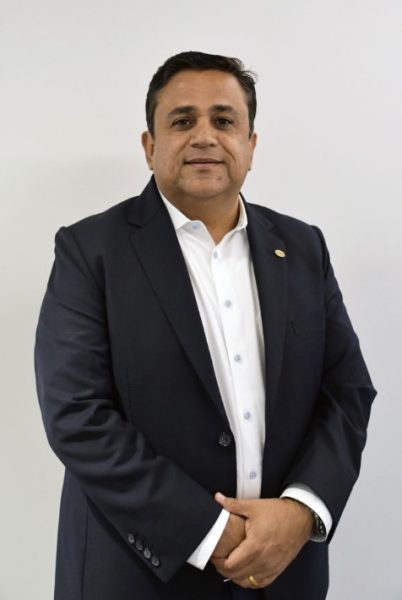
When asked about his background at Ecolab, Girotra shared:
I’ve been with Ecolab for eight years, and thermal efficiency has been the thread running through my entire tenure. I started in Ecolab’s Mining business as Global Marketing executive, then advanced to lead our Water Purity Solutions and Textile Care businesses. Today, I lead our Data Centers and Microelectronics business, which is one of Ecolab’s fastest-growing businesses.
Primary Responsibilities
When asked about his primary responsibilities at Ecolab, Girotra explained:
I lead the teams that serve our data center, semiconductor, and broader industrial technology customers around the world. That means P&L ownership for the business and setting our growth and innovation strategy.
It’s an exciting time to be in Global High Tech at Ecolab. In July, CoolIT, a global leader in direct-to-chip liquid cooling hardware, joined Ecolab, pairing CoolIT’s direct-to-chip hardware engineering with Ecolab’s fluid chemistry, digital monitoring and global service network into one integrated offering.
Core Products And Features
When asked about Ecolab’s core products and features, Girotra detailed:
Our portfolio starts with the fluid itself, proven coolants like our propylene glycol, paired with programs like our Cooling-as-a-Service model, which gives operators an easier path to adopt and maintain liquid cooling without owning all of that complexity themselves.
On the monitoring side, we give customers real-time monitoring and control of their cooling towers and direct-evaporative systems. We’ve extended that same intelligence to the chip level with 3D TRASAR Technology for Direct-to-Chip Liquid Cooling, which tracks coolant concentration, temperature, pH, flow rate and other coolant health parameters to help protect the servers themselves.
And we back all of it with analytical and lab services available to customers around the globe.
Technology Evolution In Data Centers
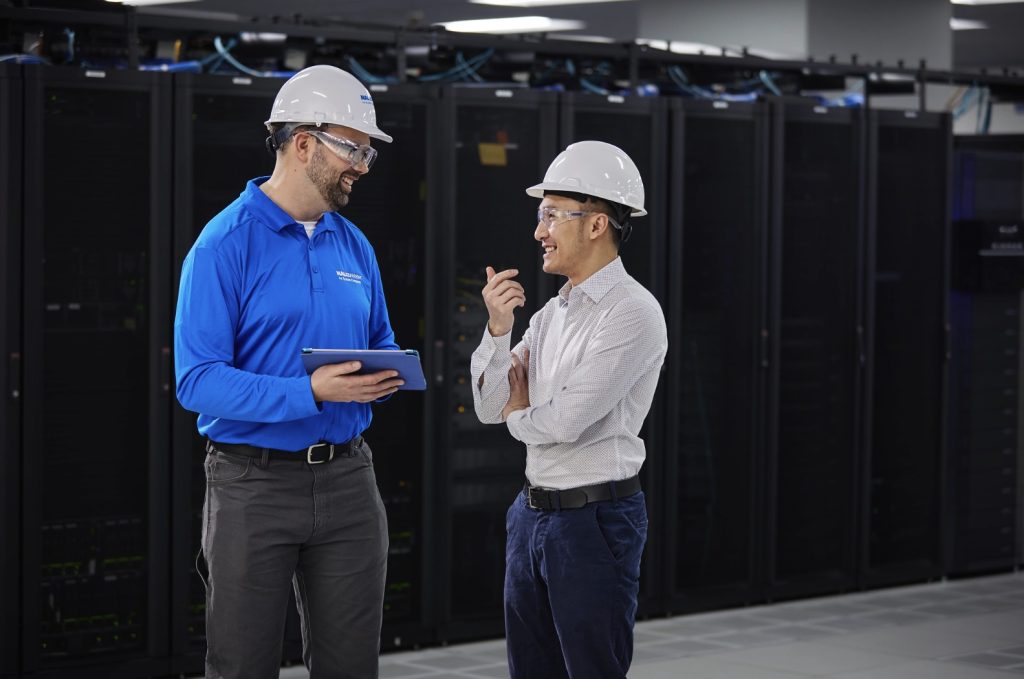
When asked specifically how Ecolab’s technology has evolved in recent years in the data center space, Girotra said:
Our evolution has really tracked with our customers’ evolution. Five years ago, most of our data center conversations were about the facility side, cooling towers, chillers, adiabatic systems, and we built 3D TRASAR for Adiabatic Cooling because operators told us they needed continuous, real-time visibility into those systems, not periodic manual checks.
As AI workloads pushed rack densities past 100 kilowatts, we saw a new need emerge: customers were moving to direct-to-chip liquid cooling and needed the same real-time confidence at the chip level that they’d come to rely on at the facility level.
That’s exactly why we built 3D TRASAR for Direct-to-Chip Liquid Cooling. We didn’t wait for the market to fully mature. We built it alongside data center operators and IT equipment manufacturers so it would meet the problem as they were actually experiencing it.
Cooling-as-a-Service is another good example of that same instinct. We recognized that operators were being asked to manage a growing web of vendors, systems, and knowledge gaps just to keep their cooling infrastructure running, so we built a program to take that complexity off their plate and protect the investment they’d made in their IT and cooling assets.
That’s the pattern across all of this: we stay close enough to our customers to anticipate where the need is heading next, and we build the technology and programs to meet them there.
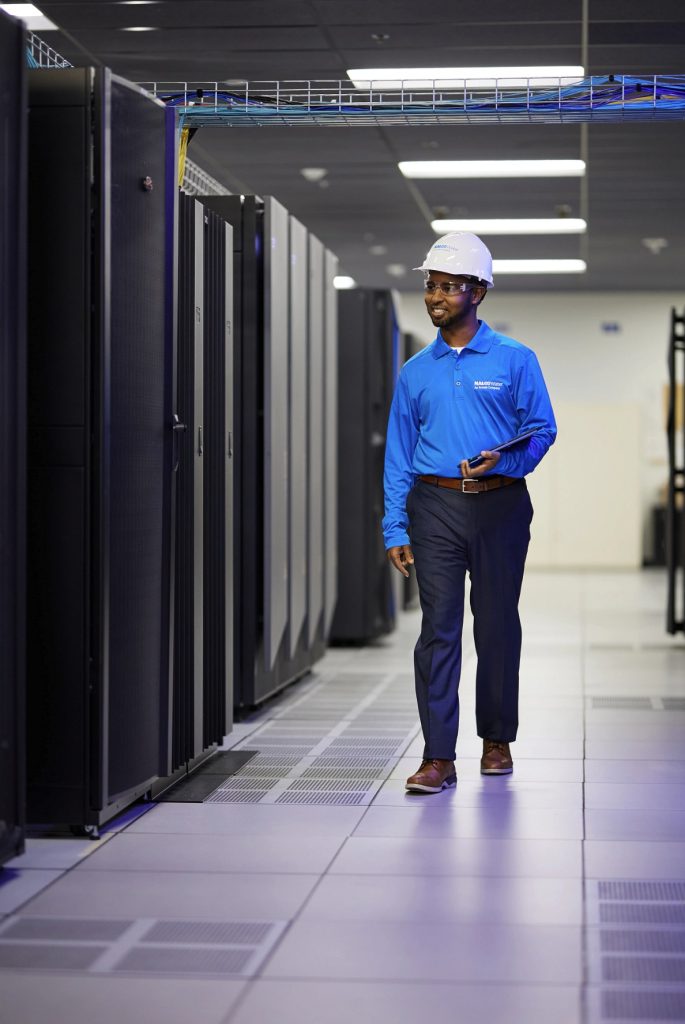
Screenshot
Major Company Milestones
When asked about some of Ecolab’s most significant milestones, Girotra highlighted:
The launch of 3D TRASAR technology for direct-to-chip liquid cooling was a significant step. It was purpose-built for next-generation server environments and developed with direct input from data center operators and IT equipment manufacturers, not to mention it went from concept to commercial launch in about nine months.
But the biggest milestone by far is our acquisition of CoolIT Systems, the largest acquisition in Ecolab’s history.
It pairs CoolIT’s 25-plus years of direct-to-chip engineering and its deployments across 300-plus data centers, including work with NVIDIA and AMD, with Ecolab’s century of science-based fluid expertise and our global service footprint of roughly 48,000 associates across more than 170 countries.
Together, that gives customers a single, trusted partner for the full cooling stack, which just hasn’t existed before.
Our propylene glycol coolant adds another proof point here too. It’s validated to meet NVIDIA’s technical requirements, giving operators one more layer of confidence as they build out direct-to-chip systems.
Customer Success Stories
When asked to share specific customer success stories or case studies, Girotra explained:
A good example is a large global hyperscale operator we worked with on one of their direct-to-chip liquid cooling systems. Over a five-month period, 3D TRASAR Technology for Direct-to-Chip Liquid Cooling picked up on a steady rise in differential pressure and flagged that flow had dropped below spec, even though every other parameter in the loop looked stable.
When we pulled a sample, we found corrosive particulate. It turned out to be flaking chrome-plated material inside the system that had gone completely undetected by the customer’s own filtration monitoring. Because we caught it early, the customer was able to address the source of the fouling before it damaged their cold plates.
We saw something similar during the commissioning of a direct-to-chip loop for a Tier 1 colocation provider. Residual water had been inadvertently left in the system after the final flush, and when the coolant was loaded, our platform instantly detected that the concentration had been diluted well outside spec.
Our team was able to drain and rebalance the loop in real time, restoring it to the correct specification without halting operations, so the facility hit its commissioning milestones on schedule instead of facing a costly startup delay.
Both examples point to the same thing: the risk in these systems is often invisible until it becomes a failure, and continuous, real-time fluid intelligence is what turns that risk into something operators can see and act on before it costs them uptime.
Competitive Differentiation
When asked what differentiates Ecolab from its competitors, Girotra emphasized:
Most of the companies we get compared to are hardware specialists. They build strong thermal and precision-cooling equipment, but don’t bring deep water chemistry, coolant lifecycle management or a global field-service organization to the table.
What makes the combination of Ecolab and CoolIT different is that we’re the only provider that combines direct-to-chip system engineering with science-based fluid chemistry, digital monitoring and a genuinely global service network in a single relationship.
Hardware alone can’t solve for reliability, coolant alone can’t solve for efficiency and service alone can’t solve for performance. You need all three, and that’s exactly where we sit.
At the end of the day, that’s the real differentiator: we’re derisking our customers’ operations by taking on more of that value chain ourselves, end-to-end, so they’re not left stitching it together across vendors.
Future Goals
When discussing some of Ecolab’s future goals, Girotra said:
Our conviction is simple: AI growth is inevitable, but resource waste isn’t.
Our goal is to help data center operators scale compute without scaling their water and energy footprint, so we’re focused on deepening the integration between CoolIT’s hardware and our chemistry and digital monitoring to create true closed-loop operations.
We also want to keep extending our reach with the hyperscale and colocation operators building the next generation of AI infrastructure, and to keep pushing the industry conversation toward efficiency and water stewardship, not just raw cooling capacity.
What Is On The Horizon
When asked what is on the horizon for Ecolab, Girotra concluded:
You’ll see us showing up in a much bigger way at the major data center industry events this year, Data Centre World Asia, the OCP Global Summit and Supercomputing 2026 among them, highlighting what an integrated, site-to-chip cooling platform looks like in practice.
The reality is that this industry has grown faster than standards have been able to keep up with. Everyone’s racing to deploy direct-to-chip cooling, but there’s still no universal, consistent way to define what “healthy” fluid or a well-run loop looks like across vendors and sites.
That’s where we’re putting our energy, working through bodies like the Open Compute Project, to help identify what’s working across the hundreds of deployments we support, and scaling those best practices so the industry can move toward real standardization instead of every operator solving the same problem on their own.
Longer term, as rack densities keep climbing, I think the operators who come out ahead are going to be the ones who treat cooling as a single, well-governed system rather than a collection of separate vendors making separate decisions.
That’s really the promise of what Ecolab and CoolIT are building together now: helping customers maximize AI compute with optimal chip cooling and the confidence to scale, at every site.
