

Efekta Education is an artificial intelligence-powered education technology company providing personalized instruction, teacher support, and learning analytics to governments and employers, with approximately 5 million students using its platform across 17 countries. Pulse 2.0 interviewed Efekta Education CEO Dr. Stephen Hodges to learn more about the company’s origins, AI tutoring technology, international expansion, educational outcomes, revenue growth, and plans to reach 100 million students by 2030.
Dr. Stephen Hodges’ Background
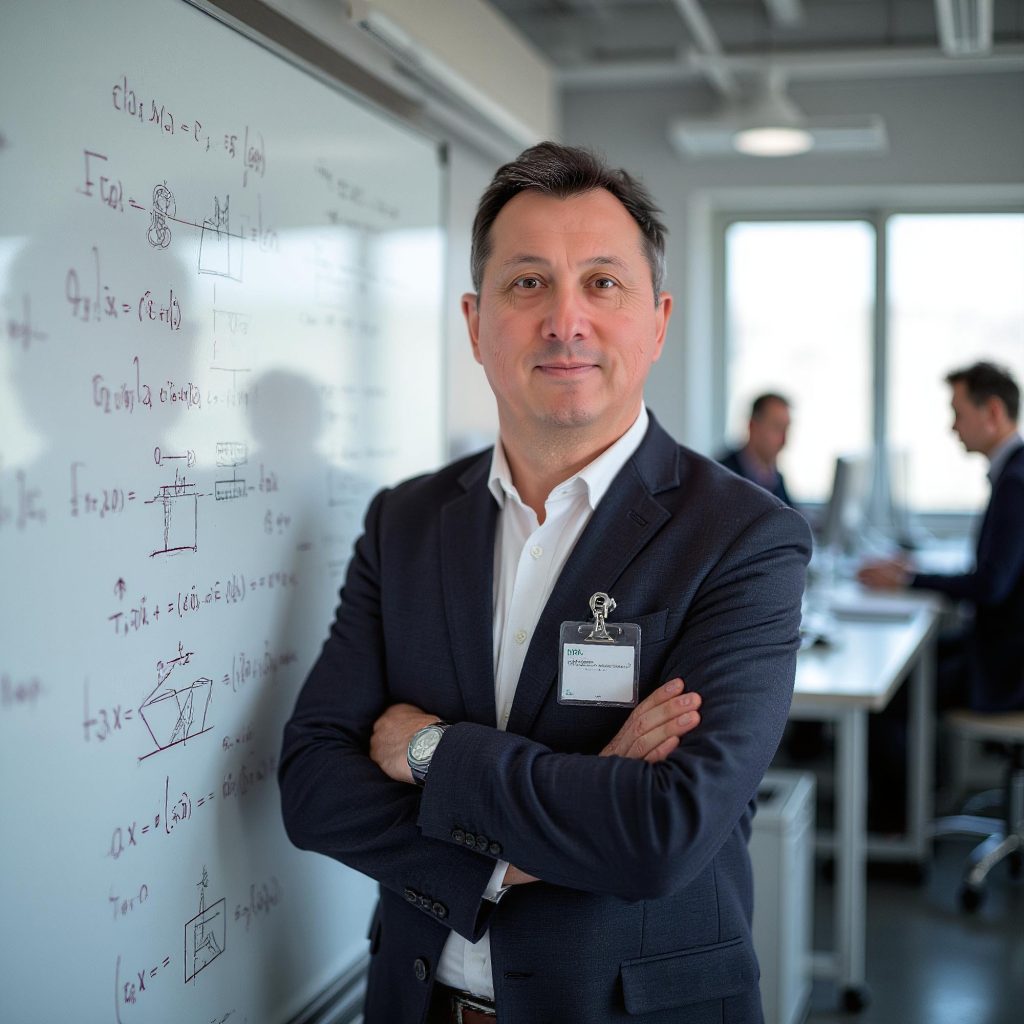
When asked about his background, Hodges shared:
I started out as a computer scientist. After a PhD, I spent the first part of my career building technology companies around proprietary, research-grade technology.
I then spent 16 years building Hult International Business School into a global institution with campuses around the world. That taught me two things that shaped Efekta: exceptional teaching changes lives, and it is extraordinarily hard to scale.
Efekta is where those two careers meet, using AI to give every learner the kind of personal attention that until now only the privileged few could afford.
How The Idea For Efekta Education Came Together
When asked how the idea for Efekta originated and about his primary responsibilities, Hodges explained:
Education has known for forty years that one-to-one tutoring is the most effective way to learn. Bloom’s 2 Sigma Problem showed tutored students outperform classroom students by two standard deviations. But the problem was you cannot afford to give every child a tutor. Generative AI finally changes that.
Our technology was originally built to power the online language schools of EF Education First, the world’s largest private education company. Efekta was born when the Brazilian government asked us to help solve an acute shortage of qualified English teachers across its public schools.
That gave us something no startup gets: the chance to prove the model at national scale from day one.
Governments everywhere are facing teacher shortages. UNESCO estimates the world needs 31 million more teachers by 2030, and they are making decisions right now about which AI platforms will sit inside their school systems.
Seventy-two countries have taken national action on AI in schools, most of it in the last two years. Those decisions are being made once, and we intend to be the engine behind them.
As CEO, my job is to set that strategy, make sure learning outcomes stay measurable and real, and build the government and corporate partnerships that get us into classrooms at national scale.
Favorite Memory Working At Efekta Education
When asked about his favorite memory working at the company, Hodges recalled:
Visiting a school in Mongolia where we were piloting the platform and finding a crowd of parents waiting outside to talk to me.
They had watched what Efekta was doing for the older students and wanted to know how soon it would reach their younger children, and when it would cover more subjects.
Parents everywhere want the same thing for their kids. Seeing that demand firsthand, in a place most education technology never reaches, was the moment I knew this was really working.
Core Products And Features
When asked about Efekta’s core products and features, Hodges explained:
Efekta is a single AI platform that provides instruction, automates administration, and keeps the record.
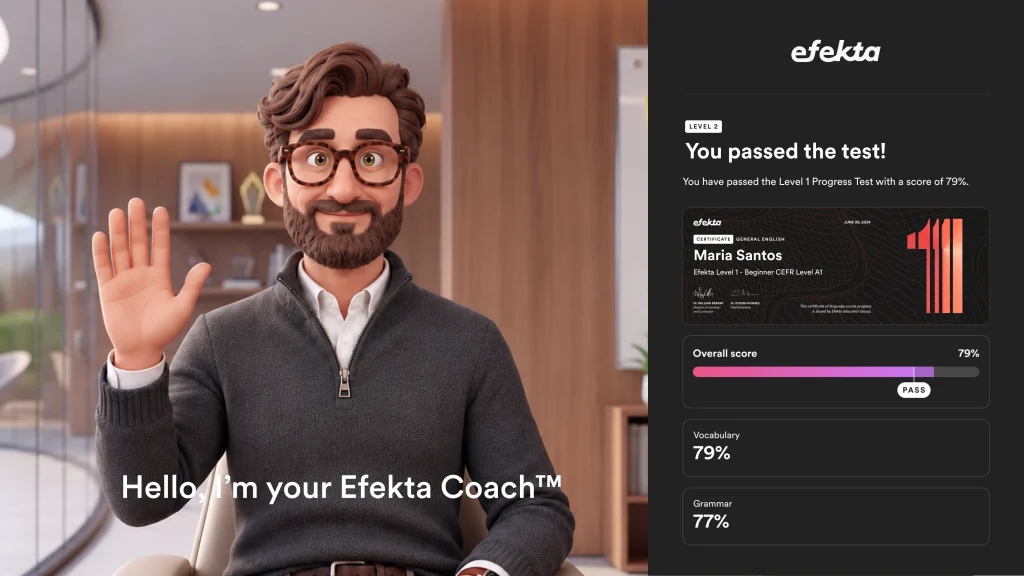
- AI Classroom. Every student gets a personal AI coach that teaches one-to-one, in the national curriculum and in their own language. It guides active practice and critical thinking rather than handing out answers, and at the top end it runs as an immersive classroom with an AI avatar that mirrors a human tutor.
- Teacher tools. An AI assistant handles lesson planning, grading and feedback, surfaces each student’s learning gaps, and lets a teacher differentiate across a class of forty as if it were a class of four.
- System of record. Every interaction is stored, giving ministries and employers insight and analytics across a learner’s lifetime.
- Flexible delivery. From offline, low-connectivity modes for rural schools up to fully immersive AI classrooms, so cost and infrastructure never block access.
Today we are strongest in English and world languages. Sciences launch at the end of 2026 and a future-skills curriculum, including AI literacy, follows in early 2027.
Challenges In AI Adoption Across Education
When asked about recent challenges in the education and AI sectors and how Efekta has addressed them, Hodges pointed out:
The biggest lesson is that deploying AI in schools is a change-management problem. If teachers experience it as a threat, it fails, however good the technology. If they experience it as the thing that gives them their evenings back, it spreads on its own.
So, we invest heavily in the unglamorous parts: practical onboarding, written guides, peer-to-peer support, and keeping educators in control of how AI is used in their classrooms.
The payoff shows in the numbers. We have never lost a client, and our contracts grow after signing as governments add more schools, more age groups and more subjects.
How Efekta’s Technology Has Evolved
When asked how the company’s technology has evolved since launching, Hodges explained:
Like every AI application, the core is moving fast. Going from online language schools to national public-school systems forced three big changes: mapping to national curricula, making the core learning experience work offline, and building serious teacher-facing tools.
Our teaching assistant now takes on most of the administrative load, grading, lesson planning, feedback, that used to eat into a teacher’s week.
The student side has changed just as much. Early on, we offered AI help as an optional feature, and almost nobody used it. Students engage when the AI is the dialogue, not a button beside it.
Today the AI coach is both smarter and more human in its presentation, including an avatar-led classroom experience that feels like one-to-one tutoring.
And the data loop has become our biggest technical asset. Every lesson we deliver feeds back into understanding where students struggle and which explanations work. The model gets better with every country we add.
Significant Company Milestones
When asked about Efekta’s most significant milestones, Hodges highlighted the company’s international expansion, independence, and industry recognition:
2026 has been the year everything accelerated.
- Scale. We now have five million students learning on the platform across 17 countries, which makes Efekta the largest AI deployment in education anywhere in the world.
- Growth. We went from two countries to 17 in a single year, with 15 new markets signed in 2026.
- Independence. We completed our spin-out from EF Education First as a standalone company.
- Recognition. Efekta was named a TIME100 Most Influential Company.
Customer Success Stories And Educational Outcomes
When asked about specific customer success stories, Hodges highlighted the company’s deployment in Paraná, Brazil:
Paraná, in Brazil, is the clearest. The state’s public school system uses Efekta alongside classroom teaching to give every student individualized English practice.
A joint analysis of official state exam results covering 750,000 students showed average scores rising from 39% to 52% after two years on the platform, roughly a 30% improvement!
Two findings from that work matter beyond Brazil. First, practice matters: students who use the platform four or more days a week gain much more than those who only use it occasionally.
Second, and this is what ministries care about most, an unqualified teacher supported by Efekta reaches the outcomes of a fully qualified one at roughly half the cost. For a country facing a teacher shortage, that is the whole argument.
These are real-world results from state exams rather than randomized controlled trials, so we are careful not to attribute every point of improvement to us alone. But the direction and the scale are consistent everywhere we deploy.
Funding And Revenue Metrics
When asked about Efekta’s funding, revenue, and financial performance, Hodges shared:
Efekta has annual recurring revenue of around $50 million, growing well over 100% a year and no client ever lost. We are already cash-flow breakeven. That is unheard of for an AI application company.
We may seek financing to accelerate growth, but we will make that decision in 2027.
Total Addressable Market
When asked about the total addressable market Efekta is pursuing, Hodges assessed:
AI will transform every form of education, and we are built to be the engine behind that at institutional scale. We sell to the organizations that educate the world, governments and employers, not to consumers.
We see the market arriving in three waves, all running on the same platform.
- Public school systems in the Global South. Where teacher shortages are acute and ministries are the buyer. This is where we are today: a $14.5 billion annual market covering 246 million students across our 50 target countries, before counting India and China.
- Employers. Where the driver is the cost of training. Companies spend $150–300 per employee per year on learning, and most of it is poorly measured. Our technology turns any company’s own documents into AI-led training with full visibility of results for the buyer. This is now being piloted with several major employers.
- Schools in the Global North. Where teachers are qualified and the driver is teacher productivity. It is a $14.3 billion market with 72 million students, but buyers are fragmented, so we reach them through partners who already sell into every district. We have pilots launching in Japan, Italy and the United States.
Taken together, anchoring the platform inside national systems and major employers positions Efekta to serve well over 100 million learners.
What Differentiates Efekta From Its Competition
When asked what distinguishes Efekta from competing AI education platforms, Hodges explained:
The moat is not the model. Anyone can rent intelligence from a foundation-model provider. What no one can rent, scrape or buy is knowing how to teach.
A great tutor knows three things: where a particular student will struggle, how to explain a hard concept so it lands, and how long to let someone wrestle with a problem before stepping in.
None of that is written down anywhere on the internet. It only exists in the record of real teachers teaching real students and we have the largest such record in the world: 24 million hours of one-to-one human tutoring, 168 million proficiency test results, and 3.5 million students tracked over time.
That data allows our AI coach to act like a great personal tutor when it matters most.
The second advantage is distribution. Our parent company, EF, is well known globally in education, has operations in 100 countries, 10,000 staff on the ground, 2,000 corporate relationships, and publishes the English Proficiency Index (EPI), the global standard that ministries measure themselves against.
That is a head start no startup can buy, and it is why we can sign 15 countries in a year.
Future Company Goals
When asked about Efekta’s future goals, Hodges outlined plans to expand the company’s global presence and educational offerings:
Our goal is to reach 100 million students by 2030, which means roughly doubling every year from here.
The path is clear. First, keep winning national school systems while governments are still choosing. We have a pipeline of 75 target countries.
Second, expand inside each country we win: from upper secondary into lower secondary and higher education, and from English into sciences at the end of this year and future skills early next. Each country we sign gives us years of headroom.
Third, bring the same engine to employers and to Global North schools through partnerships.
The company we are building is the infrastructure layer for how countries and companies teach, one platform that teaches every learner personally, builds the course to local requirements, and keeps the record.
Supporting Teachers And Expanding Government Partnerships
Hodges concluded by discussing the role of teachers and the company’s approach to government partnerships:
Two things.
First, on teachers. Our technology is not designed to replace them, and it never will be. Teachers provide the motivation, the judgment and the human connection that make education work.
What we change is their day: the AI takes on basic instruction, practice and the administrative load, and the teacher is freed to do what only a person can do: motivate, inspire and bring a subject to life.
Better data and personalized practice for every child, built to support the teacher-student relationship rather than displace it.
Second, who is doing this. Selling to governments is not a normal startup go-to-market, so we have built a specialist team for it.
Supporting our sales efforts are several former senior politicians: Stefania Giannini, former Italian Minister of Education; José Manuel Barroso, former President of the European Commission; Sir Nick Clegg, former Deputy Prime Minister of the UK; and Mari Kiviniemi, former Prime Minister of Finland.
