

Eightfold AI is an AI-native talent intelligence platform that helps organizations make skills-based decisions across hiring, employee development, internal mobility, and workforce planning. The company is expanding its platform with agentic AI capabilities, including AI-powered interviewing, workforce readiness assessment, and tools for building custom talent applications. Pulse 2.0 interviewed Eightfold AI Chief Product Officer Sachit Kamat to learn more about the company’s product strategy, its approach to enterprise AI, and how agentic technology is changing the future of talent management.
Sachit Kamat’s Background
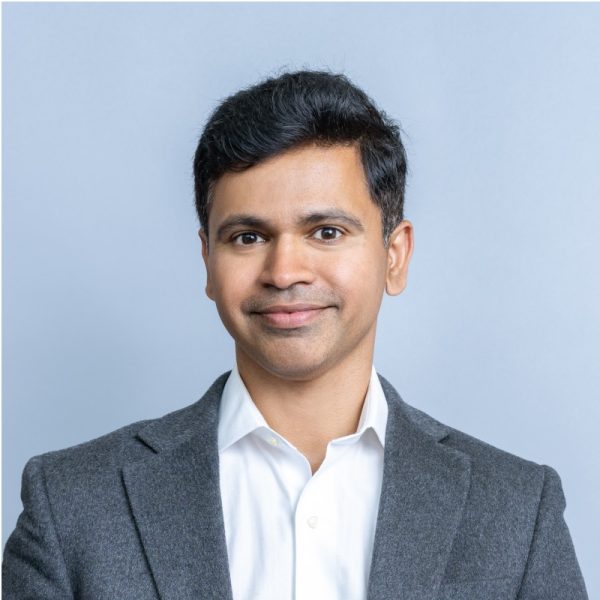
When asked about his background, Kamat shared:
I’m the Chief Product Officer at Eightfold AI, where I lead product strategy, roadmap, and execution across our talent intelligence platform and growing portfolio of AI-powered experiences and agents. My career has been focused on building products that solve complex enterprise challenges through technology, data, and intelligent systems.
Today, my role sits at the intersection of customer needs, market evolution, and technological innovation. I spend much of my time working with customers, understanding emerging workforce challenges, and helping shape how AI can create better outcomes for organizations and individuals alike.
I’m also an INSEAD alumnus, and that experience continues to influence how I think about leadership, innovation, and building products for global enterprises.
How Eightfold AI Started And Kamat’s Responsibilities
When asked how the idea for Eightfold AI came together and about his primary responsibilities, Kamat explained:
Eightfold was founded in 2016 on a simple but powerful idea: organizations should be able to understand talent based on skills and potential, not just keywords, job titles, or traditional proxies.
The founding team recognized that millions of qualified people were being overlooked because existing systems lacked the intelligence to identify capabilities beyond what was explicitly listed on a résumé.
Today, that vision has evolved into a comprehensive talent intelligence platform that helps organizations make better talent decisions across hiring, development, and workforce planning.
As Chief Product Officer, my responsibility is to translate that vision into product strategy and execution, ensuring we continue to deliver innovative capabilities while helping customers navigate the shift from traditional, human-scale workflows to more intelligent and increasingly agentic ways of working.
Favorite Memory
When asked about his favorite memory working for the company so far, Kamat recalled:
One moment that stands out is our Cultivate 2026 event in Napa. It wasn’t just about launching new products. It was about bringing together a clear point of view on where work and enterprise AI are heading.
We introduced innovations including TalentForge, 360 Interview, and Workforce Readiness, but what made the moment memorable was seeing customers connect those launches to larger workforce challenges they were actively trying to solve.
It felt like an inflection point where the industry conversation moved beyond automation toward a more agentic future for work.
Core Products And Features
When asked about Eightfold AI’s core products and features, Kamat detailed:
Eightfold is an AI-native Talent Intelligence platform that helps organizations understand skills and potential, and then act on that intelligence across hiring, internal mobility, development, and workforce planning.
The key difference is that every product is powered by the same Talent Intelligence foundation, allowing organizations to make more connected, skills-based decisions across the talent lifecycle.
I often describe our approach as helping enterprises move from systems of record to systems of action. Historically, HR systems have been very good at storing information. Our focus is on helping organizations use intelligence to make better decisions and take action faster.
At the heart of the platform is our Talent Intelligence foundation, which analyzes skills, experience, potential, and career trajectories to create a dynamic understanding of talent. That foundation powers our Talent Acquisition, Talent Management, and workforce planning capabilities.
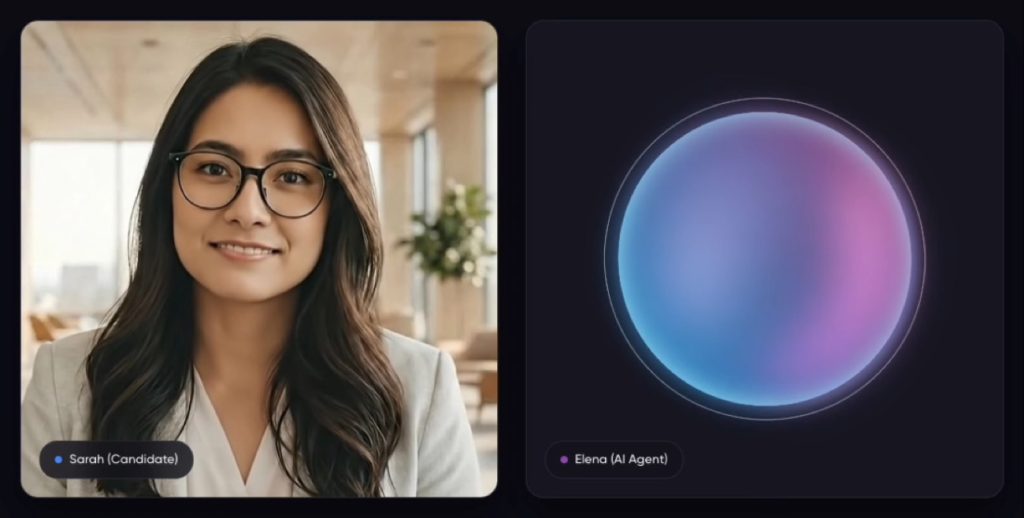
On the hiring side, we’ve expanded our AI-powered interviewing capabilities through AI Interviewer and AI Interview Companion. AI Interviewer helps organizations conduct structured, skills-based candidate evaluation at scale, while AI Interview Companion supports human-led interviews with guidance and consistent evaluation frameworks.
More recently, we introduced 360 Interview, which brings multiple interview types, including screening, functional, and coding interviews, into a single adaptive conversation, helping organizations move faster while maintaining transparency and human oversight.
Beyond hiring, our Talent Management capabilities help employees discover career opportunities, develop new skills, and navigate internal mobility pathways.
We’ve also introduced Workforce Readiness, which helps leaders measure AI adoption, identify capability gaps, and connect those insights to personalized development and coaching.
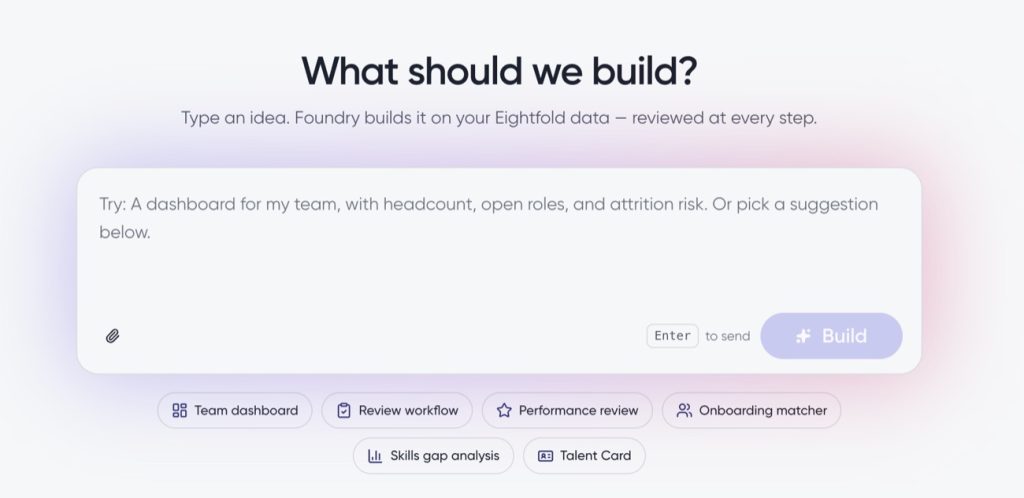
And through TalentForge, organizations can build custom talent applications and workflows on top of our Talent Intelligence foundation, giving them the flexibility to adapt workforce experiences to their specific business needs.
Across all of these products, the goal is the same: helping organizations make faster, more informed talent decisions with the trust, governance, and explainability required for enterprise-scale adoption.
Screenshot
How The Technology Has Evolved
When asked how Eightfold AI’s technology has evolved since launching, Kamat explained:
When Eightfold was founded, most HR technology relied heavily on rules, keywords, and static data. Our goal was to build a Talent Intelligence foundation that could understand skills, potential, and career trajectories at a much deeper level.
Early on, that meant applying AI to help organizations identify talent opportunities and workforce insights that traditional systems simply couldn’t see.
As the platform matured, we expanded beyond intelligence and recommendations into experiences that support candidates, recruiters, managers, and employees throughout the talent lifecycle.
The same intelligence foundation now powers everything from talent acquisition and internal mobility to workforce planning and development, creating a more connected view of talent across the enterprise.
Today, we’re entering a new phase where AI can do more than surface insights. It can help execute work.
Through capabilities such as AI Interviewer, AI Interview Companion, and other AI-powered workflows, we’re applying agentic AI to automate repeatable, high-volume tasks while maintaining transparency, governance, and human oversight.
I see that as the next evolution of enterprise software: moving from systems that store information, to systems that generate intelligence, to systems that help organizations take action.
Key Company Milestones
When asked about some of Eightfold AI’s most significant milestones, Kamat highlighted:
Several milestones stand out. The first was establishing one of the industry’s earliest AI-native Talent Intelligence platforms built around skills and potential rather than traditional proxies like job titles, degrees, or keywords.
That foundation fundamentally changed how organizations could identify, develop, and deploy talent.
Another important milestone was expanding our platform beyond talent intelligence into end-to-end talent experiences.
Over time, we extended the same intelligence foundation across hiring, internal mobility, workforce planning, and talent development, helping organizations make more connected and skills-based workforce decisions.
More recently, we’ve entered a new phase focused on turning intelligence into action.
The launch of AI Interviewer introduced AI-powered candidate evaluation at scale, while innovations such as AI Interview Companion, 360 Interview, Workforce Readiness, and TalentForge have expanded how organizations can operationalize AI across hiring and workforce transformation.
These innovations reflect a broader industry shift from AI that simply generates recommendations to AI that can help execute work while maintaining transparency, governance, and human oversight.
We’ve also seen strong validation of that vision from both customers and the market.
In 2025, Eightfold AI Recruiter was named one of HR Executive’s Top HR Products of the Year.
More recently, Eightfold was positioned as a Strategic Leader in the 2026 Fosway 9-Grid for Talent Acquisition for the fourth consecutive year, reflecting growing demand for skills intelligence, governed AI, and agentic talent acquisition at enterprise scale.
Strategic partnerships, including our collaboration with Oracle, have further reinforced the market’s movement toward AI-native approaches to workforce transformation.
Customer Success Stories
When asked to share specific customer success stories, Kamat said:
What excites me most is seeing organizations use talent intelligence to solve workforce challenges that would have been difficult to address with traditional systems.
One example is Eaton, which transformed a fragmented global recruiting environment into a more intelligent, skills-based hiring operation.
Using Eightfold, the company reduced time-to-offer by nine days, achieved $2.4 million in cost savings, increased candidate velocity by 40%, and expanded its talent network from one million to four million candidates.
Recruiters gained better visibility into skills and potential, while candidates benefited from a more streamlined and engaging experience.
Another great example is Amdocs, which was looking to become more agile in finding talent while creating better career opportunities for employees.
By using Eightfold across both talent acquisition and talent management, the company improved time-to-source by 40%, reduced time-to-hire by 20%, increased internal mobility from 38% to 48%, and now fills more than 40% of positions internally.
What I find most interesting is that these organizations are solving very different problems, yet the underlying shift is the same.
They’re moving from static, process-driven talent systems toward intelligence-driven decision-making.
Whether the goal is hiring effectiveness, workforce agility, or internal mobility, the common thread is helping organizations see talent more clearly and act on that intelligence with greater speed, consistency, and confidence.
Competitive Differentiation
When asked what differentiates Eightfold AI from its competition, Kamat explained:
The biggest differentiator is that we built Eightfold as an AI-native Talent Intelligence platform from the beginning.
Many vendors have added AI onto existing workflows, but our foundation is a deep understanding of skills, potential, and career trajectories.
That intelligence layer powers everything we do across hiring, internal mobility, workforce planning, and development, creating a more connected view of talent than traditional systems can provide.
The second differentiator is our focus on turning intelligence into action.
A lot of AI in enterprise software today is designed to assist users or generate recommendations. Our approach is increasingly centered on agentic AI that can help execute meaningful work, from candidate evaluation to workforce planning, while keeping humans responsible for judgment, accountability, and final decisions.
We believe the future belongs to systems that do more than surface insights. They should help organizations act on them.
Finally, enterprise trust is fundamental to our approach.
Talent decisions are among the most important decisions organizations make, and they require explainability, governance, transparency, and security.
We’ve invested heavily in responsible AI, auditability, and enterprise-grade controls because we believe trust is what ultimately enables organizations to scale AI adoption with confidence.
Taken together, it’s the combination of deep Talent Intelligence, agentic execution, and enterprise-grade trust that sets Eightfold apart.
The intelligence makes the agents more effective, and the governance makes them deployable in real-world enterprise environments.
Future Goals
When asked about Eightfold AI’s future goals, Kamat concluded:
Our long-term goal is to help organizations make talent decisions that are constrained by human judgment, not human bandwidth.
Today, too many decisions are limited by the amount of time recruiters, managers, and leaders have available.
We believe AI can help organizations evaluate more talent, uncover more opportunity, and make better decisions without sacrificing quality, trust, or accountability.
One of the biggest shifts we’re working toward is moving from filtering talent to discovering potential at scale.
Historically, organizations could only evaluate a small percentage of applicants or employees in depth.
Our vision is to help organizations identify qualified candidates, internal talent, and growth opportunities more consistently, so great people aren’t overlooked simply because the volume is too large for humans to process alone.
We’re also helping enterprises move from human-scale execution to agent-scale execution.
We see AI increasingly handling high-volume, repeatable work while humans focus on judgment, calibration, and final decision-making.
That requires more than automation. It requires systems that can understand context, take action, and operate within clear governance and oversight frameworks.
Looking ahead, we’re continuing to invest in innovations such as TalentForge, Workforce Readiness, and AI-powered talent workflows because we believe the next generation of enterprise software will be built around systems of action, not just systems of record.
Our goal is to help organizations see, decide, and act on talent with a level of speed, consistency, and intelligence that wasn’t previously possible.
Ultimately, all of this supports our broader mission: helping create the right career for everyone in the world.
We believe AI can expand opportunity, improve workforce agility, and help organizations unlock the full potential of their people while keeping humans firmly at the center of the decisions that matter most.
