

EPIC Microsystems develops semiconductor technology and power solutions for AI infrastructure, focusing on Vertical Power Delivery and Hybrid Switch Cap architectures. The company is addressing the power-conversion challenges created by increasingly demanding GPUs, ASICs, and AI racks, including efficiency, current density, Z-height, thermal performance, and responsiveness to changing workloads. Pulse 2.0 interviewed EPIC Microsystems Chief Business Officer Aashish Malhotra to learn more about the company’s origins, its semiconductor technology, and the evolving power requirements of AI infrastructure.
Aashish Malhotra’s Background
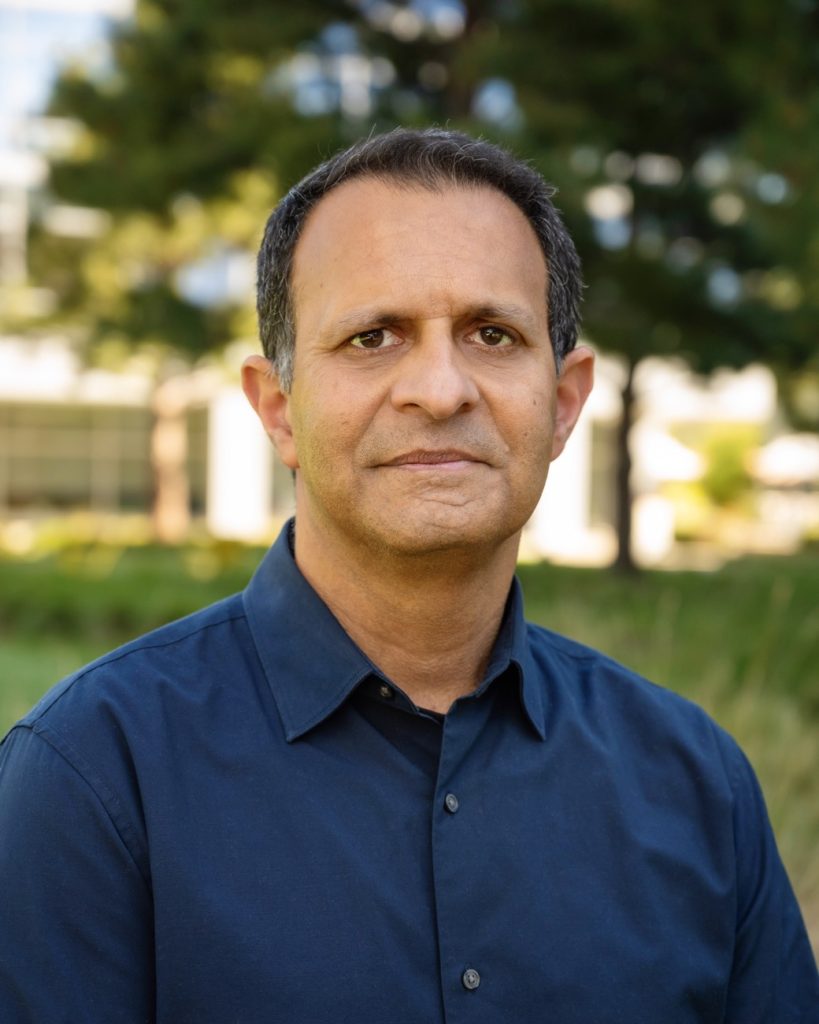
When asked about his background, Malhotra shared:
Prior to my role as the Chief Business Officer at EPIC Microsystems, I spent nearly seven years leading various supply chain organizations at Meta Infra.
Before that, I was at GlobalFoundries, where I was responsible for a range of initiatives, including leading due diligence to acquire the ASIC group as part of the IBM Microelectronics acquisition and subsequently running that business.
Earlier in my career, I spent several years in ASIC engineering and product management roles across both emerging startups and established public companies.
How EPIC Microsystems Started
When asked how the idea for EPIC Microsystems came together, Malhotra explained:
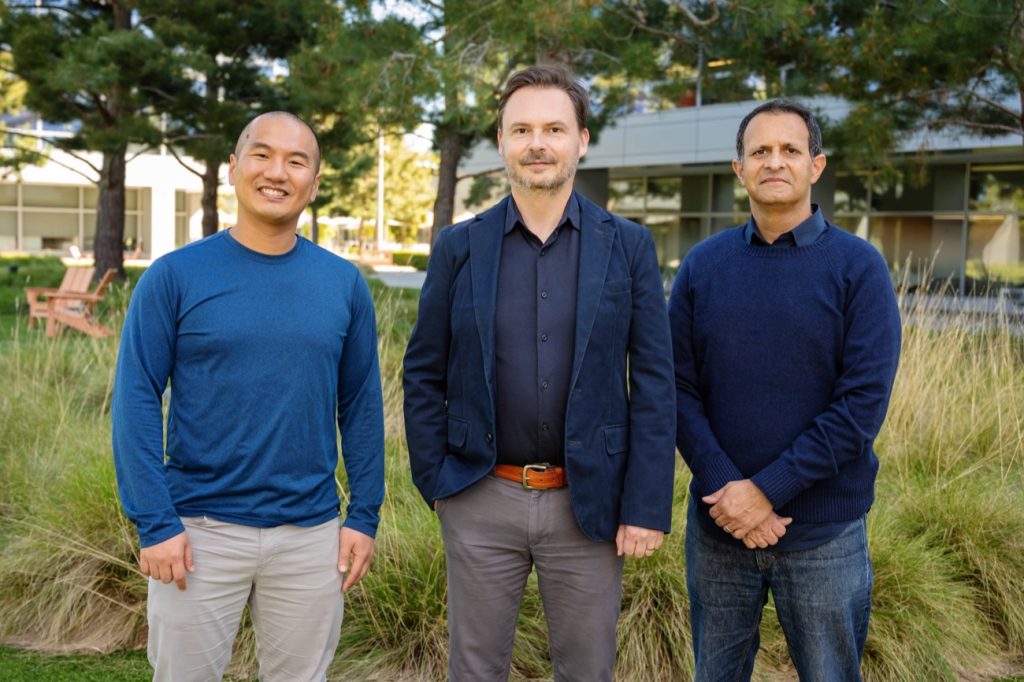
One of our co-founders and CEO, Sabin Eftimie, realized that a key bottleneck preventing hyperscalers from maximizing performance-per-watt and performance-per-dollar from their AI infrastructure capex.
Traditional within-the-rack DC-DC power delivery solutions were hitting a ceiling and forcing hyperscalers to make significant tradeoffs around efficiency, current density, Z-height, thermals, and responsiveness to AI workloads.
The industry needed a breakthrough architecture, and one that didn’t force this multi-vector tradeoff and provided a risk-mitigated path to the AI rack infra build-out.
Almost simultaneously, another co-founder and our current COO, Wonyoung Kim, was thinking about his next adventure following the successful exit of his previous company, Lion Semi, which was acquired by Cirrus Logic.
He was thinking through the very same problem. The two decided to collaborate on their next mission, and EPIC Microsystems was born.
Favorite Memory
When asked about his favorite memory working for EPIC Microsystems, Malhotra recalled:
One of the greatest achievements for any semiconductor company is getting silicon to work.
In 2025, we did exactly that, and our chips performed across the different KPIs we had set, a tremendous milestone.
Seeing the joy on the faces of our entire team that summer was proof that we were on the right track.
Core Products And Features
When asked about EPIC Microsystems’ core products and features, Malhotra explained:
The input voltage to an AI rack today is 48V DC, while the GPU or ASIC performing training or inference functions operates at around 0.75V DC.
We design the chips and solutions that enable Vertical Power Delivery (VPD) for this power conversion chain.
We firmly believe that the Hybrid Switch Cap (HSC) architecture offers the most effective path to solving the multi-vector challenge of balancing efficiency, current density, Z-height, thermals, and response to AI workloads.
Navigating Rapid AI Hardware Innovation
When asked about challenges in the sector, Malhotra said:
The velocity of innovation in AI hardware is extraordinarily high.
That pushes us every day to ensure we are designing the right products, developing differentiated silicon, and creating win-win partnerships.
It’s a demanding environment, but also an incredibly exciting one.
How The Technology Has Evolved
When asked how EPIC Microsystems’ technology has evolved, Malhotra explained:
As I mentioned earlier, our first goal after company formation was to prove that Hybrid Switch Cap technology could work for AI applications, and we achieved that with our 2025 silicon.
Now we are focused on increased productization and driving our chips and solutions to mass production.
Key Company Milestones
When asked about EPIC Microsystems’ most significant milestones, Malhotra highlighted:
Our two most significant milestones are closely related: achieving working silicon and completing proof-of-concept engagements with key customers/partners.
One validated our technology, while the other validated our market fit.
Customer And Partner Engagements
When asked to share specific customer success stories, Malhotra said:
It’s difficult to share specific customer details without divulging confidential information.
What I can say is that each of the hyperscalers and XPU providers is pushing the technology in many different ways.
It is fascinating to be a part of this journey and address the distinct use cases across different customers. It is one of the most rewarding aspects of what we do.
Funding And Revenue Outlook
When asked about funding and revenue metrics, Malhotra shared:
Between Seed and Series A rounds, we have raised $26 million in total.
Our Seed round was $5 million, and our Series A, which was oversubscribed, closed in Q1 2026 at $21 million.
Lip-Bu Tan and Amarjit Gill have been investors since the Seed round and then extended their participation in the Series A.
Umesh Padval from Seligman Ventures led the Series A, which was rounded out by Intel Capital, AICONIC Ventures, and Cambium Capital.
We expect our revenue ramp to be in late 2027 to early 2028.
Total Addressable Market
When asked about the total addressable market EPIC Microsystems is pursuing, Malhotra said:
The market estimates for our TAM vary depending on assumptions around the pace of AI infrastructure build-out, but it’s safe to say that the 2030 TAM for our solutions is $5 billion or greater.
Competitive Differentiation
When asked what differentiates EPIC Microsystems from its competition, Malhotra identified four areas:
- Technology and the Level of Integration: Bringing Hybrid Switch Cap technology to market requires a very high level of integration and innovation. Our team is among the most experienced in developing Hybrid Switch Cap solutions, having previously brought multiple products to high-volume production.
- People: For a large company, getting a new complex architecture to working silicon typically takes two to three years. We’re proud that our team achieved first silicon across all power stages in roughly nine to twelve months since company formation.
- Partnerships: As a lean company, having clarity around core competency is essential. We recognized this early and built supply chain partnerships to complete our solutions.
- Investors: We are fortunate to have Lip-Bu Tan, Andrew Tan, Amarjit Gill, and Umesh Padval alongside Intel Capital, AICONIC, and Cambium as seasoned investors who provide valuable guidance throughout our journey.
Future Goals
When asked about EPIC Microsystems’ future goals, Malhotra explained:
Right now, we are heads-down on driving the increased productization of our solutions.
Down the road, we see a wide range of opportunities where our architecture scales very well, including the evolution of DC power to +/-400V or 800V, increased current density, even lower Z-height, and deeper integration within ASICs and GPUs, among other areas.
Advancing AI Infrastructure
When invited to discuss another topic, Malhotra concluded:
It is a remarkable time to be building innovative products that impact the AI infrastructure.
With our first working silicon behind us, we are well on our way.
With a complete product portfolio just around the corner, we look forward to continuing to advance our mission.
