

ESO Fund provides funding to help startup employees exercise their stock options. Pulse 2.0 interviewed ESO Fund CEO Scott Chou to gain a deeper understanding of the company.
Scott Chou’s Background
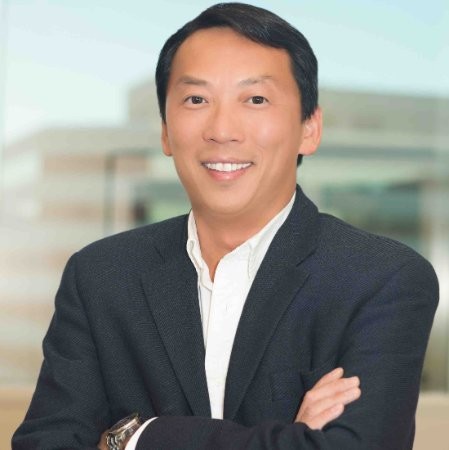
Could you tell me more about your background? Chou said:
“I’ve been in venture capital since 1997, and over the years, I noticed a recurring phenomena at startup companies. At the start of nearly every board meeting, we began with the routine task of granting stock options to new employees and reclaiming unexercised ones from departed employees. I was shocked at just how many options were being forfeited even when the company was known to be doing well. This raised a question in my mind: why were so many employees walking away from something potentially so valuable? The answer was quite simple: they didn’t have the money and/or the risk appetite. What started as a one-off transaction helping out a friend who could not afford to exercise after leaving a company, became a formalized business of providing financial assistance to startup employees for exercising their options. Since then, my co-founders and I have had the opportunity to help thousands of employees across hundreds of companies unlock the value of their options.”
Evolution Of The Firm’s Thesis
How has your firm’s thesis evolved over time? Chou noted:
“Over time, our model has developed from a simple transactional solution to a more holistic one that encompasses all aspects of understanding employee equity. We’ve expanded our view to include tax-optimization strategies, proactive option management, education around equity compensation, and assistance in selling decisions either pre-IPO or after a formal exit. We’re with our clients on their entire employee equity journey.”
Favorite Memory
What has been your favorite memory working for your firm so far? Chou reflected:
“One of the most rewarding aspects of this work is hearing the excitement from clients when a transaction leads to life-changing financial outcomes. Those moments never get old. I occasionally receive holiday cards or thank-you notes, which are always meaningful reminders of the impact we’ve had.”
“Internally, some of my favorite memories come from shared successes as a team. While we’ve had many moments worth celebrating, 2021 stands out as a particularly gratifying year for everyone involved.”
“A story I often share is how I met my co-founder, Stephen Roberts, at the cocktail reception of the NVCA annual conference. At the time, he and our other co-founder, Jimmy Lackie, were creating special purpose vehicles to lead venture rounds, often winning deals by paying high share prices. I introduced them to the concept behind the Employee Stock Option Fund and explained how it could provide access to equity positions in numerous companies without engaging in competitive bidding. Stephen immediately saw the potential, and shortly after, his team became early investors in our first fund. That was 14 years ago, and we’ve been partners ever since.”
Significant Milestones
What have been some of your firm’s most significant milestones? Chou cited:
“Our earliest success stories were the 2 deals that became the inspiration for the ESO Fund. We stumbled across opportunities at LifeLock and NextG Networks where close acquaintances were planning to let their options expire worthless simply because they couldn’t afford to exercise them. We made ad hoc arrangements to provide the financing in exchange for sharing the future proceeds. When those investments proved to be valuable, we decided to form the ESO Fund to pursue the opportunity broadly.”
“Like many firms in our space, raising successive funds has marked key milestones along our journey. We’re currently investing out of our fifth fund, but several earlier moments stand out.”
“Raising our first fund was certainly a pivotal achievement. However, raising Fund 3—shortly after reaching profitability for the first time—was arguably an even more significant milestone. There’s a common rule of thumb in our industry: Fund 1 is often raised on the strength of an idea, and Fund 2 on demonstrated progress. Fund 3, however, typically requires a track record of tangible financial results. Crossing that threshold is a strong indicator that a firm is built to last, much like the transition from Series A to Series C in venture funding.”
“Another major moment came in 2021, when both Fund 2 and Fund 3 entered the carry. In our world, that means they had returned all paid-in capital to limited partners—unlocking carried interest and true alignment between investors and fund managers. It was not only a validation of our strategy but also a deeply rewarding milestone for the entire team.”
Investment Success Stories
Would you like to share any specific investment success stories? Chou highlighted:
“One success story that immediately comes to mind is iWatt. I remember it vividly because it was our first exit at the ESO Fund, and it happened within our very first year. It was a sizable win, but more importantly, it validated our model right out of the gate, giving us tremendous confidence.”
“One of our most memorable success stories involves a client with a low five‑figure cost to exercise stock options in CrowdStrike. The catch was that they had lost money at prior startups and were hesitant to take on more risk. ESO stepped in and provided the funds, making the option exercise possible without them having to put their own capital on the line. After the IPO lockup expired, those shares were worth several million dollars. Whether or not they sold their shares at that time, the outcome was life changing. And if they held rather than sold, then those shares would be worth 10 times as much today. It’s a powerful example of how stock options can create real wealth, and how partnering with ESO can unlock that potential, even when ESO shares in the upside.”
Metrics
Can you discuss total AUM or any other notable metrics? Chou highlighted:
“We’ve raised $500 million over 5 funds, and since its inception, ESO Fund has generated more than $2 billion in wealth for our clients and investors. We’ve worked with thousands of employees from more than 700 different startup companies.”
Industry Focus
What are some of the industries that your firm is focused on? Chou highlighted:
“Our firm focuses on venture-backed companies, so while we are industry-agnostic, we largely work with employees at startups in the SaaS, fintech, and AI spaces as that is where venture funding is focused currently. When we evaluate a company for a client, we focus less on the industry that company operates within, and more on key success factors that are measurable across any industry.”
Differentiation From The Competition
What differentiates your company from other firms? Chou emphasized:
“The main differentiator is that we will invest in the long tail of the industry. In other words, we will make small investments spread over many different companies. Most of the industry prefers to do large transactions into fewer companies because it is a more economical use of time. Moreover, most investors require significant operational due diligence which only executives can provide. This means that most startup employees are not served by our industry because they are not executives, nor do they hold vast amounts of equity. In order to serve the long tail involving numerous clients at companies we’ve never heard of, ESO had to develop proprietary methods for rapid due diligence and efficient contract workflow. As our success grows and we have greater assets under management, we can always pursue larger deals very easily, but it is quite difficult for competitors to pursue small deals at unknown companies.”
Challenges Faced
What are some of the challenges you faced while working at the firm? Chou acknowledged:
“It wasn’t easy in the beginning to convince strangers to engage in complex financial transactions with someone they’ve never heard of or met. Many of our prospects weren’t even aware that they had to pay money and a lot of tax in order to exercise. So we had to educate the market as well as convince them to do business with us. As we gradually closed deals, we slowly started to build up a snowball effect as our referral network and brand grew. Even when the value proposition of our ESO Fund became clear, the execution still wasn’t so straightforward. Our prospective clients were individuals working at thousands of different companies all over the country. Not only did we have to find them, we had to catch them within their 90-day expiration windows after leaving their companies. Moreover, the large volume of small transactions is also something we were not used to handling in the venture business. In summary, we had to become a full fledged technology e-commerce company in order to execute the ESO Fund idea.”
Future Goals
What are some of your firm’s future goals? Chou concluded:
“We’re still just scratching the surface of this opportunity. Even as many people become aware that exercising stock options is costly and risky, they still don’t know about tax optimization strategies. There are just so many ways that we can be helpful, but we have to continue to get the word out there. Our goal is to be the most trusted brand when it comes to this kind of financial service. As we get there, we would also like to provide related products.”
