

The facilities management landscape is evolving faster than ever. What was once a back-office function confined to spreadsheets and siloed CMMS tools is now emerging as a strategic lever for operational excellence, sustainability, and tenant experience. Facilio, led by Co-Founder & CEO Prabhu Ramachandran, is at the forefront of this transformation – building a connected, AI-powered platform that unifies building operations across continents. From CBRE Pacific in Australia to Brookfield, British Land, Investa, and Dubai World Trade Centre, the world’s leading property operators are embracing Facilio to modernize operations, reduce inefficiencies, and future-proof their portfolios. Pulse 2.0 interviewed Ramachandran to gain a deeper understanding of the company.
Prabhu Ramachandran’s Background
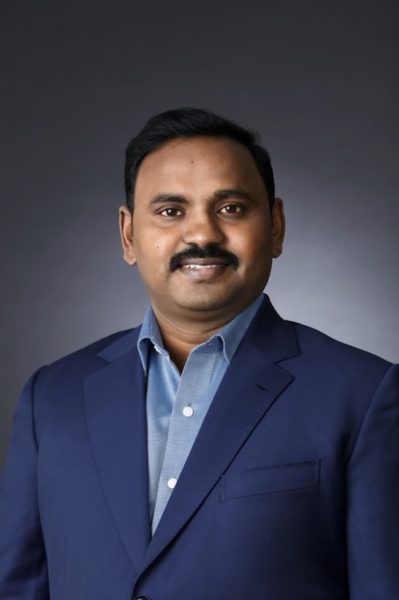
Could you tell us more about your background and how your experience shaped Facilio’s growth in PropTech? Ramachandran said:
“I’ve spent nearly 20 years architecting enterprise-grade SaaS and IoT platforms across telecom, network services, and sustainability sectors. These experiences taught me the importance of speed, reliability, and actionable intelligence. When I entered real estate, I saw buildings operating in silos, without real-time insights or predictive intelligence. Facilio was born to close that gap. Transforming FM from reactive maintenance into proactive, AI-driven operations. Our mission has always been to bring telecom-level operational intelligence to building portfolios worldwide.”
“We’re not just building software; we’re redefining how the world runs its buildings.”
Formation Of The Company
How did the idea for Facilio come together, and what market opportunity did you see? Ramachandran shared:
“Real estate operations were fragmented, manual, and inefficient. Every facility juggled disconnected systems: BMS, HVAC, CAFM, spreadsheets; none of which spoke to each other. ‘The built environment was ripe for disruption.’”
“We saw the need for a unified, data-driven platform to retrofit intelligence onto existing infrastructure. IoT and AI now enable FM teams to gain real-time visibility, predictive insights, and automated workflows; turning operations from a cost center into a strategic growth lever.”
Impact Milestone
What has been your most impactful milestone in building Facilio so far? Ramachandran cited:
“Scale validates vision.”
“Today, Facilio powers operations across four continents, enabling smarter management of thousands of buildings, from offices and hospitals to education campuses and data centers. This is proof that a connected operations platform works across regions, verticals, and legacy systems. Recent wins like CBRE Pacific in Australia demonstrate that even the largest FM operators are embracing connected intelligence. Global clients like Brookfield, British Land, Investa, and Dubai World Trade Centre reinforce that the market is ready for a new paradigm in facilities management.”
Core Products
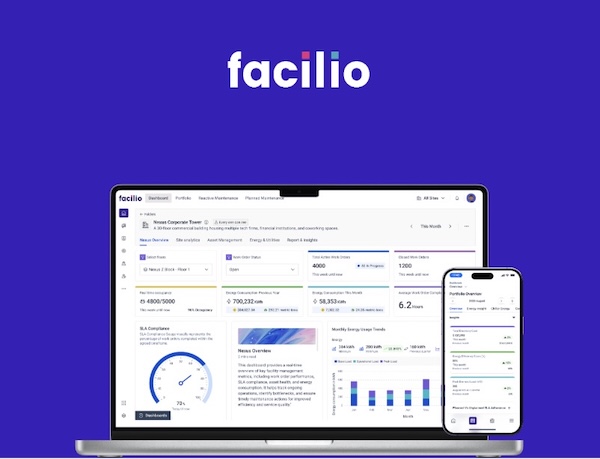
Can you describe Facilio’s core products and their significance for today’s real estate operations? Ramachandran explained:
“Facilio is a cloud-native, AI-powered Connected CMMS platform that unifies maintenance, energy, sustainability, compliance, and tenant experience into a single, real-time interface. By connecting operational data with spatial context through a digital twin, operators can monitor entire portfolios or drill down to a single asset. AI agents automate compliance, predictive maintenance, and workflows, making FM proactive, efficient, and strategic. Unlike legacy systems that only track work orders, our platform transforms operations into actionable, data-driven intelligence.”
“We’re building the operating system for real estate.”
Challenges Faced
What challenges did you face in scaling Facilio? Ramachandran acknowledged:
“FM has historically been seen as a cost center. ‘Changing perceptions was harder than building technology.’”
“We needed to demonstrate its potential as a strategic growth lever. By quantifying predictive maintenance, SLA compliance, and energy savings, we showed connected operations’ tangible value. Successes in the Middle East and the U.K. paved the way for U.S. adoption, proving that FM technology can deliver global impact.”
Evolution Of The Company’s Technology
How has Facilio’s technology evolved with AI, IoT, and predictive analytics? Ramachandran noted:
“AI in FM shouldn’t just report on performance – it should drive it.”
“Facilio has evolved from dashboards and data aggregation into a fully intelligent operations layer powered by Agentic AI. Our high-stakes AI agents optimize three critical areas:
- Customer Experience – AI-driven helpdesk and technician routing automates service triage, ensuring fast, predictable response without bottlenecks.
- Cash Flow Management – Automated invoice validation and reconciliation accelerates approvals and builds confidence in compliance.
- Leadership Decisioning – AI Copilot answers natural-language questions across portfolios (“Where are my top five risk assets?”) to provide actionable insights instantly.”
“This intelligent layer transforms operations software into a decision engine that anticipates issues, self-optimizes processes, and maintains compliance across global portfolios.”
Examples Of Operational Success
Can you share examples of global operational successes relevant to U.S. operators? Ramachandran highlighted:
“Global proof points show universal impact.”
“Musanadah in the Middle East implemented Facilio across 40 sites, achieving 96% ticket completion, 99.99% corrective maintenance completion, and 50% staff cost savings while reducing rework and audit times. CBRE Pacific’s adoption in Australia demonstrates that even top-tier FM providers are embracing connected intelligence. Large office building owners like Brookfield, British Land, and Investa similarly leverage Facilio to optimize energy, maintenance, and compliance, illustrating that connected FM operations are now a global standard.”
Funding Journey & Traction
Overview of Facilio’s funding journey and traction? Ramachandran revealed:
“Investors are backing a vision, not just a platform.”
“We have raised more than $40m from leading global VC investors including Accel, Tiger Global and Dragoneer. Funding has enabled rapid innovation, global scaling, and 400% YoY growth across 10,000+ buildings. Investors see connected FM as a strategic cornerstone, not a niche product.”
Total Addressable Market (TAM)
What is the TAM, and why is the U.S. market strategic? Ramachandran assessed:
“The opportunity is enormous.”
“Our global TAM spans CRE, healthcare, retail, education, and hospitality. The U.S. is critical due to regulatory scrutiny, ESG mandates, and demand for portfolio-wide intelligence. Lessons from the Middle East, where connected operations transformed FM, now apply at scale in the U.S., unlocking operational and sustainability impact.”
Differentiation From The Competition
How does Facilio differentiate from competitors? Ramachandran affirmed:
“We don’t rip and replace – we connect and unify.”
“Facilio overlays existing systems, unifying operations under one intelligent platform. Competitors focus on isolated modules; we deliver an operational layer powering predictive maintenance, energy optimization, compliance, and workforce efficiency. FM is no longer a cost center; it’s a strategic growth lever.”
Future Company Goals
Future goals, in the U.S. and globally? Ramachandran emphasized:
“Scale, influence, and innovation.”
“In the U.S., we aim to expand across CRE, healthcare, and retail portfolios, helping operators adopt connected operations at scale. Globally, our FutureProof summit series reaches New York, Dubai, London, and Sydney. Product priorities include refrigeration compliance, ESG tracking, and adaptive field service models, extending connected intelligence to every vertical.”
Emerging Industry Trends
Emerging industry trends? Ramachandran concluded:
“FM is moving from back-office to boardroom.”
“AI and IoT are core to real-time decisions, preventing breakdowns, optimizing energy, and automating compliance. FM technology has shifted from nice-to-have to a high-leverage strategic asset, signalling both operational and investment potential.”
