

Fanlight Global develops wireless LED products and technology designed to transform concerts, sporting events, and other live experiences into synchronized, immersive environments. Its technology can be integrated into lightsticks, wristbands, badge holders, beach balls, and other accessories that become reusable fan collectibles while also creating additional revenue opportunities for artists, teams, and brands. Pulse 2.0 interviewed Fanlight’s US CEO, Lynn Bartsch, to learn more about her background, Fanlight’s origins, its synchronization technology, and the company’s vision for expanding immersive fan experiences globally.
Lynn Bartsch’s Background

When asked about her background, Bartsch shared:
My entire personal and professional life has been tangled up with superfandoms in one way or another, and I think that gives me a unique vantage point for bringing Fanlight’s technology, products, and services to a wider global market.
I’ve also never been satisfied with “good enough.” When I believe in something the way I believe in Fanlight, I want to optimize it and grow it so as many people as possible can feel the joy I know it can bring them.
When I was very young, my family was deeply into Star Trek and anything Disney. The time we spent together watching TV and movies, and then arguing about the issues those stories raised, gave me a lasting love for how rich and deep a fandom-centered life can be.
Then, when I was 11, the first Star Wars film changed my world entirely. I knew I had to do something with my life that made the world feel that magical for other people too.
Music was always a key part of that magic for me. I understood early on its power to unlock imagination and emotion, which is why my first career was as an assistant audio engineer.
This was the late 1980s, not an easy era to be a woman in that field, and I dealt with plenty of what you’d expect.
After working on records with amazing artists like Lou Reed, Ozzy Osbourne, and Dion DiMucci, I decided to go to law school so I could approach the industry from a position of greater authority and stop having to deal with the nonsense.
While in law school, I landed a paid internship at 30 Rock working on Saturday Night Live, Conan O’Brien, Dateline, and similar shows.
It was an incredible experience, and it showed me I could work at the intersection of music and narrative content, so that’s the direction I took.
After law school, I spent a relatively short stint at entertainment firms before moving in-house at Disney.
Being part of the company that had shaped me so deeply, and that sparked imagination in fans around the world, felt like coming full circle.
From there, I went on to work for some of my biggest heroes, including George Lucas and Steven Spielberg.
Bartsch’s introduction to Fanlight came through K-pop:
Years later, my older daughter introduced me to K-pop, and I recognized something immediately familiar in it: extraordinary creativity, dazzling visuals, emotionally resonant music, and above all community.
When I took her to a BTS concert in April 2017, I encountered Fanlight for the first time.
Back then, BTS’s lightsticks, called ARMY Bombs, didn’t change color or sync to each other or to the show onstage. Even so, I could see how powerfully they connected fans to the performance.
By the time I went to my second BTS concert in 2018, ARMY Bombs had incorporated more of Fanlight’s technology: they changed color, synced with the show in real time, and completely transformed the live concert experience.
That was the moment I knew I had to help bring this kind of emotionally immersive experience to artists and fans across the U.S. and the world.
How Fanlight Started
When asked how the idea for Fanlight came together, Bartsch explained:
Ashton Choi is the founder and CEO of Fanlight in Korea, which is Fanlight Global’s parent company, as well as an owner of Pikabon, Fanlight’s entity in Japan.
CEO Choi’s path to building a global technology company is wonderfully unconventional, which makes sense, given the imagination it took to create Fanlight and bring it to life.
He was once a professional gamer with a strong interest in fashion and design before moving to the United States for university.
He arrived speaking very little English, but he brought an outsized appetite for learning and a real talent for seeing possibilities others had missed.
That independent perspective, combined with ambitious drive and a passion for innovation, became the foundation of Fanlight’s identity and its competitive edge.
The idea that would change live entertainment forever came to CEO Choi at Disneyland in 2011.
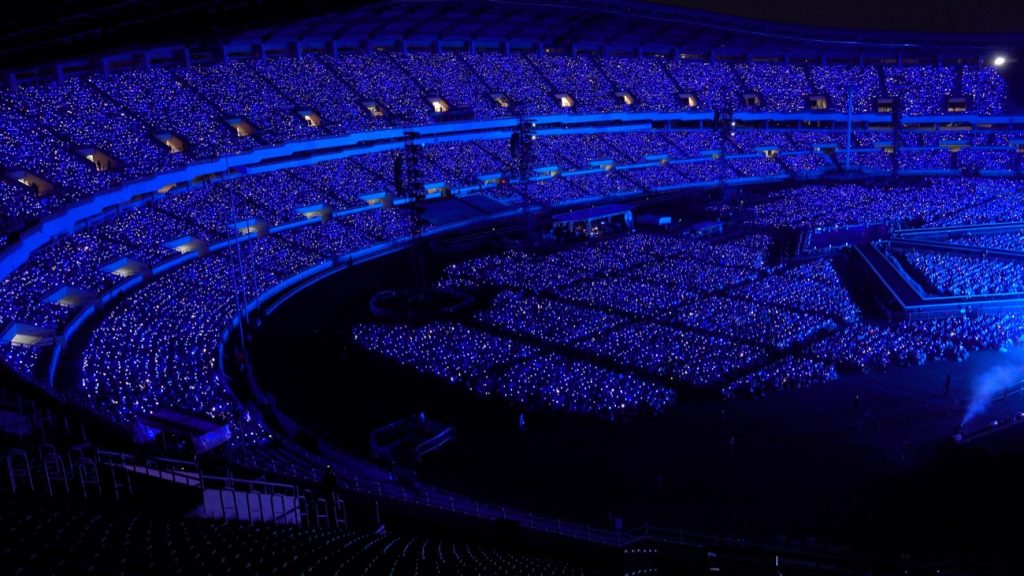
Watching the crowd passively observe the parade, he envisioned something no one had built yet: every fan’s lighted accessory moving in concert, forming a single, massive, synchronized wireless LED canvas.
Driven by the belief that technology could break down the barrier between artists and their audiences, he launched Fanlight in 2012 to make that vision real.
The results were industry-defining.
The 2015 SHINee Tokyo Dome concert marked Fanlight’s arrival on the global stage, followed in 2016 by the launch of the first wirelessly controlled K-pop lightstick, the product that permanently transformed the language of fan culture.
Since then, CEO Choi has grown Fanlight into the trusted partner for wireless LED devices, including lightsticks, wristbands, and other revenue-driving immersive production technology, for artists and sports and e-sports brands around the world.
Favorite Memories
When asked about her favorite memories working with Fanlight, Bartsch said:
Every show, game, or tournament where our product is in the hands of nearly every audience member is a favorite memory.
It becomes an extension of the artist’s stage and connects every fan to the event itself, literally and figuratively.
But once in a while, I’ll spot a fan who has put real care and effort into decorating and customizing their lightstick to make it their own.
I’ll ask if I can take a picture of them with it, and when they ask why, I tell them I work for the company that makes the lightsticks.
There’s always a spark in their eyes and a smile that blooms across their face.
Those are my favorite memories, because they remind me that we’re not just creating creative and economic opportunities for our clients.
We’re creating genuinely happy memories for their best customers and fans too.
Core Products And Features
When asked about Fanlight’s core products and features, Bartsch explained:
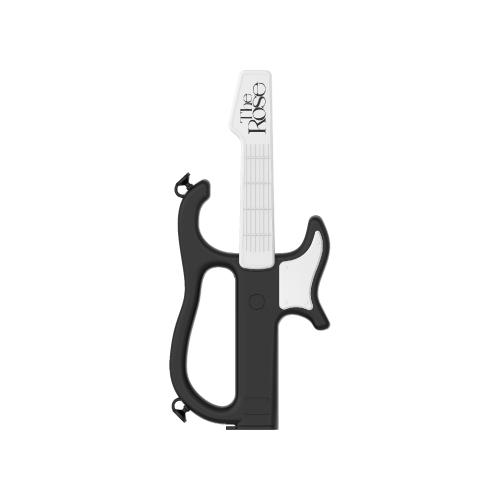
Our core business is designing, manufacturing, and operating wireless LED devices on-site to transform live events into immersive experiences.
Our devices are built to be collectibles and essential pieces of fan identity, which also makes them an additional revenue stream for our clients.
We can put our technology into almost anything. Lightsticks and wristbands are only two of the products we make.
We’ve also produced badge holders, beach balls, and all kinds of accessories, so our products can serve multiple uses.
All of our devices are reusable, run on AAA batteries, including rechargeable ones, and work at every show a fan brings them back to.
They also integrate with our app, which functions as an all-in-one fan platform: it lets us collect data for our clients about their fans and gives clients a direct line of communication with their biggest supporters.
On top of all that, our system is extremely fast.
We can set up in the largest stadiums in the world in about 90 minutes and operate with almost no latency.
Expanding Fanlight Beyond Asia
When asked about challenges in bringing Fanlight’s technology to artists, brands, and teams outside of Asia, Bartsch highlighted timing and fan education:
Bringing Fanlight’s production-boosting, revenue-generating products to artists, brands, and teams outside of Asia comes with a couple of recurring challenges.
The first is timing: customized products take time to produce, and major artists will sometimes come to us wanting something ready for a show in two weeks.
We can offer one of our standard product forms customized with printing on a short timeline, but a fully customized lightstick or wristband takes anywhere from four to six months to build.
The second challenge is helping artists, teams, and brands understand that this is a long game.
Creating an essential piece of fan identity, something that becomes a collectible symbol of the artist or team, takes fan education and marketing effort, since the concept isn’t as embedded in Western culture as it is in Korea and Japan.
Fanlight helps with that too.
We co-create and often support marketing efforts that make our products part of the creative story and help fans understand why they’re a must-have.
No one wants to be the one unlit section of the crowd.
Once an artist or team unlocks that connection for their fans, it becomes a sustainable, self-renewing revenue source through new versions, multi-purpose products, and special drops, and those hold far more appeal than yet another T-shirt or poster.
How Fanlight’s Technology Has Evolved
When asked how Fanlight’s technology has evolved since launching, Bartsch explained:
When Fanlight first launched, our proprietary synchronization technology hadn’t yet been built.
Its launch in 2016 was a massive game changer.
Today, we’re pushing the technology forward again in a few different directions.
Integrating our devices with our app extends their use beyond the event itself into a comprehensive fan platform, giving fans a place to gather while letting us collect valuable data for our clients.
We are looking at integrating additional technologies like NFC chips to make our devices more than beautiful, connected lights.
Now they can potentially unlock exclusive content, function as tap-to-pay devices, or grant entry into a designated VIP area.
We’ve even created accessories that make our devices useful at home, as bedside lamps, nightlights, or even Bluetooth speakers.
Every day, the possibilities expand, and nothing makes us happier than making real whatever our clients can dream up for their fans.
Key Company Milestones
When asked about Fanlight’s most significant milestones, Bartsch said:
Many of our contracts have strict confidentiality clauses so I’m limited in what I can say here.
However, SHINee’s 2015 Tokyo Dome concert was a defining milestone, showcasing what we could do in a major venue with an iconic band very early on.
After that, manufacturing the lightsticks and accessories for one of the biggest bands on Earth, who I can’t expressly name, as and after they rose to global superstardom has been a ride!
During the pandemic we even made set pieces and props incorporating our technology for their online concerts and that really showed us that we can apply our products and services to transform live events in an endless number of ways.
It also proved we could scale as large as needed on demand and confirmed our thesis that the connection Fanlight creates is truly universal.
Opening our U.S. office in 2024 was a further milestone, reflecting our commitment to leading immersive live event technology across the globe.
Customer Success
When asked about customer success stories, Bartsch explained:
Our contracts carry strict confidentiality provisions, so we can’t tell our clients’ stories on their behalf.
What we can say is that we only succeed when our clients succeed, so we work hard to make sure every collaboration is a major success.
Funding
When asked about funding, Bartsch said:
Fanlight is a privately held, family-run company.
We are fully self-funded.
Competitive Differentiation
When asked what differentiates Fanlight from its competition, Bartsch explained:
Honestly, I don’t see us as having any real competition, because no other company does exactly what we do.
No one else creates customized collectibles meant to be cherished and reused, generating ongoing revenue opportunities for clients rather than just adding to production costs.
Our technology is also exceptionally fast and easy to set up in venues, which isn’t typically true of comparable systems.
So while other companies might create devices that light up a crowd, we create products that build and cement superfandom while creating additional revenue and elevating live production.
Future Goals
When asked about Fanlight’s future goals, Bartsch said:
Our only goal is to bring the irreplaceable connection our products and services create to artists, brands, and fans all over the world, while generating meaningful additional revenue streams for our clients.
Expanding The Fanlight Experience
When invited to discuss another topic, Bartsch shared her personal vision for Fanlight Global:
My personal dream for Fanlight Global is to partner with artists and teams who have a strong vision for integrating Fanlight into their creative narrative and aren’t afraid to use everything our products and technology can do.
Artists and teams who want to extend their stages and fields of play into every single person in the audience.
I also see an opportunity to create deeper connections at events like collegiate sports games and large-scale university graduations, unlocking core memories for audience members and making those moments unforgettable.
I want to find clients for Fanlight who recognize the opportunity to create moments so beautiful and magical that they inspire everyone who is part of them.
