

Ferric is a company that develops thin-film magnetic inductor technology that enables highly efficient, integrated power management solutions for semiconductors used in AI, data center, automotive, and consumer electronics applications. Pulse 2.0 interviewed Ferric founder and CEO Noah Sturcken to learn more.
Noah Sturcken’s Background
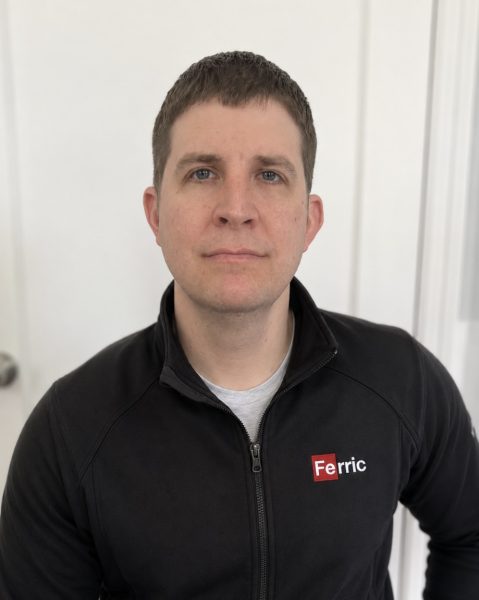
Could you tell me more about your background? Sturcken said:
“My grandfather worked at Bell labs, and later built and sold mainframes at IBM. He received his masters in electrical engineering from Columbia on the GI bill, about 60 years later I was working in the same department. My father developed space grade processors for NASA. With zero arm-twisting from either of them I developed a passion for engineering, high-performance processors in particular. I received a BS from Cornell in ECE and after a stint at AMD I went to Columbia to earn my PHD. At Columbia I developed novel magnetic materials and high-frequency, CMOS integrated switch-mode power converters. The goal was to miniaturize and integrate power conversion closer to the processor, a concept that evolved into “Integrated Voltage Regulation (IVR)”. I spent another stint at AMD where I led IVR development and then started Ferric upon completion of my PhD.”
Formation Of The Company
How did the idea for the company come together? Sturcken shared:
“I focused on IVR development in grad school and at the time I figured the project would end with my PhD, or perhaps be something I could work on in an industry research lab. However, after presenting some results at ISSCC I received very strong interest in collaboration and essentially had people asking me to sell them an IVR chiplet. It was apparent that this was an important technology and that there was a commercial opportunity here, so I started putting the pieces together to launch Ferric.”
Favorite Memory
What has been your favorite memory working for the company so far? Sturcken reflected:
“A standout memory for me was witnessing our first customer boot Linux on a processor powered by Ferric’s Integrated Voltage Regulators (IVRs) for the first time. This specific achievement represented a major milestone for the company and served as a profound personal career highlight. After dedicating so many years to the research and development of IVR systems, seeing the hardware function seamlessly in a real-world computing environment provided the ultimate validation of both the core concept and the underlying technology we built.”
Core Products
What are the company’s core products and features? Sturcken explained:
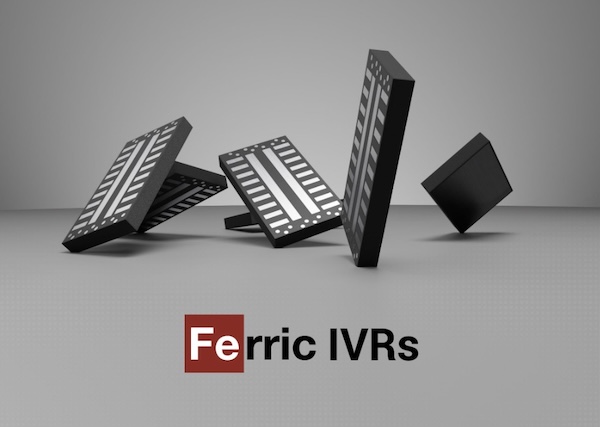
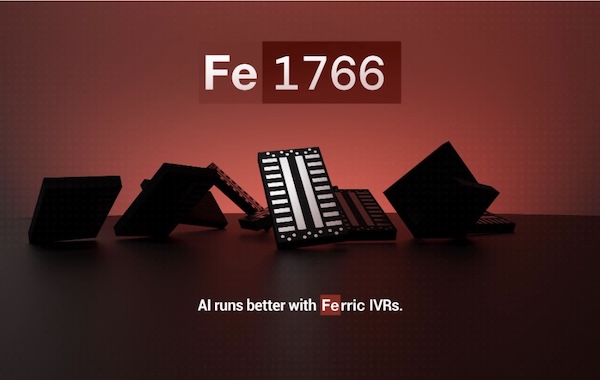
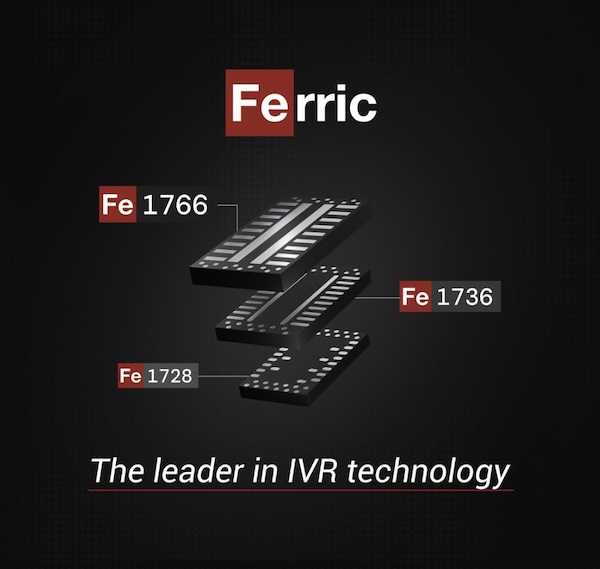
“Ferric’s core products are centered around our Thin-Film Magnetic Inductors enabling our ultra dense integrated power converter products. Ferric’s IVRs, such as the Fe1766, deliver unprecedented power density—providing up to 160A in a tiny 35.5 mm² footprint with conversion efficiency greater than 90%. The standout features include a regulation bandwidth that is roughly 100x faster than conventional power solutions, allowing the system to adjust voltage in nanoseconds to match the rapid workload spikes of AI and high-performance computing chips. By integrating these components onto a single chip, Ferric eliminates the need for dozens of bulky external components, drastically reducing the overall system size.”
Challenges Faced
Have you faced any challenges in your sector of work recently? Sturcken acknowledged:
“The major challenge the industry has run into is the “Power Wall,” in AI data centers especially, where processors now require over 1,000A of current, making traditional power delivery through the motherboard inefficient due to massive heat and voltage loss. Ferric’s solutions address this by integrating power conversion directly into the package of the microprocessor, allowing for power delivery at higher current levels and lower voltage levels.”
Evolution Of The Company’s Technology
How has the company’s technology evolved since launching? Sturcken noted:
“The company’s technology has evolved from a foundational material science breakthrough into a complete integrated power solution. We started with the development of ferromagnetic composite materials for high-frequency power-switching applications. We then developed inductors, then switched inductor powertrains. We ultimately have developed and integrated all of the pieces needed to develop a complete chip-scale power converter with breakthrough density and efficiency. We have iterated on our design and manufacturing process for years, incrementally improving density, efficiency, and functionality to ultimately create a product that meets the ever increasing power demands of high-performance processors.”
Significant Milestones
What have been some of the company’s most significant milestones? Sturcken cited:
“Ferric has achieved several significant milestones, beginning with the development of our first IVR prototype. This was followed by a strategic partnership with TSMC, which led to the creation of the first turn-key IVR from their foundry. A major validation of our technology occurred when we witnessed the first boot of Linux on a customer processor powered by our regulators. More recently, we have achieved breakthrough results from our 3rd generation IVR and successfully validated a full power tree for a kilowatt scale processor.”
Customer Success Stories
Can you share any specific customer success stories? Sturcken highlighted:
“All of our customer relationships are covered by NDA and we absolutely maintain our commitment to customer confidentiality. But generically, the recurring success story for customers that adopt Ferric IVRs is the major improvement in power delivery efficiency, reduction in supply voltage margins, improvement in peak computational performance and reduction of solution volume. We have had customers with exceptionally high power density where Ferric IVRs are the only power solution that can fit the available space. We have had other customers with such severe load-current-transients that Ferric IVRs are the only solution that can regulate to an acceptable voltage droop level, with their only alternative being an immediate reduction in computational performance. Overall, our customers are realizing the benefits they expect, that’s success.”
Funding/Revenue
Are you able to discuss funding and/or revenue metrics? Sturcken revealed:
“Ferric is a venture backed startup that realizes revenue from IVR product sales and technology licensing. Our products are being adopted into numerous high-performance computing systems now. These adoptions are driving significant growth in our product and licensing revenue that will continue through the end of this decade.”
Total Addressable Market
What total addressable market (TAM) size is the company pursuing? Sturcken assessed:
“Ferric is pursuing a $10 billion Total Addressable Market (TAM). This market encompasses the power management needs of AI accelerators, hyperscale data center CPUs, FPGAs, and high-end mobile application processors. As traditional power delivery methods reach their physical limits, the demand for Ferric’s integrated solutions is expected to capture a larger share of the global semiconductor power management market, which is expanding rapidly as AI becomes a central part of global infrastructure.”
Differentiation From The Competition
What differentiates the company from its competition? Sturcken affirmed:
“We have an excellent product all-around with exceptional feedback control and all of the features you expect from an advanced power management system. What makes our products really stand out is their exceptional density and conversion efficiency, which is enabled by our proprietary integrated ferromagnetic power inductors. These devices have been developed over the course of almost 2 decades for the specific purpose of integrated power conversion, and now they are being used to power some of the most advanced processors ever made.”
Future Company Goals
What are some of the company’s future goals? Sturcken emphasized:
“Ferric’s near-term goal is to continue scaling adoption of our Integrated Voltage Regulators across the highest-performance AI, data center, and advanced computing platforms. As processors move toward kilowatt-scale power levels and increasingly demanding transient requirements, we want Ferric IVRs to become a core part of how next-generation compute systems are powered, by placing them closer to the processor, with higher density, faster response, and better system-level efficiency.”
“Longer term, our ambition is to help redefine power delivery as a strategic enabler of compute performance, not just a supporting component. We are focused on expanding our product portfolio, deepening partnerships across the semiconductor and foundry ecosystem, and enabling customers to build more efficient, compact, and scalable AI infrastructure. As the industry continues to run into the limits of conventional power delivery, Ferric’s goal is to make integrated power conversion a standard building block for advanced processors.”
