Fistula Foundation is focused on connecting women with life-changing surgical treatment for obstetric fistula and severe childbirth injuries, working through local partners across Africa and Asia to expand access to care and strengthen surgical capacity. Pam Lowney became CEO after spending seven years with the organization in various roles and seeing firsthand how focused investment in treatment could help more women regain their health and lives. Pulse 2.0 interviewed Fistula Foundation CEO Pam Lowney to learn more about the organization’s growth, global health strategy, local partnerships, and approach to leadership.
Pam Lowney’s Background
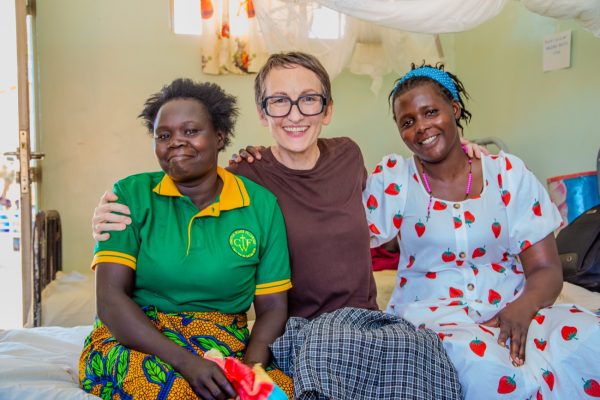

When asked about her background, Lowney shared:
My career has taken me from running a free HIV clinic in San Francisco at the height of the AIDS crisis, to working with migrant farmworkers in Arizona, to leading web strategy at Stanford Medicine.
Different roles, same thread: closing the gap between life-changing care and the people who need it.
When the opportunity arose to join the Fistula Foundation, that thread pulled hard. I had learned about obstetric fistula while at Stanford.
It is a devastating childbirth injury that leaves women incontinent and too often cast out from their communities.
Despite a curative surgery that has existed since the mid-1800s, women across Africa and Asia continue to suffer in isolation simply because they cannot access treatment.
Connecting women to that care is what Fistula Foundation exists to do. I recognized my life’s work in that mission immediately.
Becoming CEO
When asked what inspired her to become CEO of Fistula Foundation, Lowney explained:
Before becoming CEO, I spent seven years at the Foundation in various roles and had a front-row view of what is possible when an organization stays relentlessly focused on solving one problem: thousands more women receiving treatment each year, local surgical capacity growing, and women who had suffered for years getting their lives back.
With up to one million women still in need, every decision comes back to one question: Will this help more women get treated?
I’m equally inspired by how we pursue that mission.
Rooted in poverty and gender inequality, fistula can feel like an intractable problem, but we know how to make progress: stay focused on treatment, work through trusted local partners, measure results so we can continually improve, and hold ourselves to the highest standards of ethics and transparency.
When I was asked to lead the Foundation, I felt a profound responsibility to carry this mission forward, and was incredibly fortunate to do so alongside extraordinary colleagues in the U.S. and across Africa.
First-Year Priorities
When asked about her top priorities during her first year as CEO, Lowney said:
The organization has grown impressively over 20 years to become the global leader in funding treatment for childbirth injuries.
Since it was led by founding CEO Kate Grant for 20 years, my top priority was to sustain and improve upon that growth. While leadership changed, our focus on providing life-changing surgeries has not.
My second priority has been strengthening how we work. I wanted to carry forward what was working while preparing the organization for its next chapter.
We reorganized and refocused roles to remove friction and help people spend more time on the work that actually moves the mission.
Finally, we’ve been working to turn a remarkable few years into something durable.
In 2023, MacKenzie Scott, known for making large, unrestricted gifts to high-impact organizations, gave Fistula Foundation $15 million.
In 2024, Pulitzer Prize-winning New York Times journalist Nicholas Kristof selected us as one of three recipients of his annual Holiday Impact Prize, chosen from among two million U.S. nonprofits.
Together, these brought us visibility and support we’d never had before.
The result: our surgical partners across Africa and Asia delivered 83% more surgeries in 2025 compared to 2022.
The job now is to make that the new normal by deepening relationships with supporters, growing our community, and building funding that lasts.
Balancing Growth And Mission
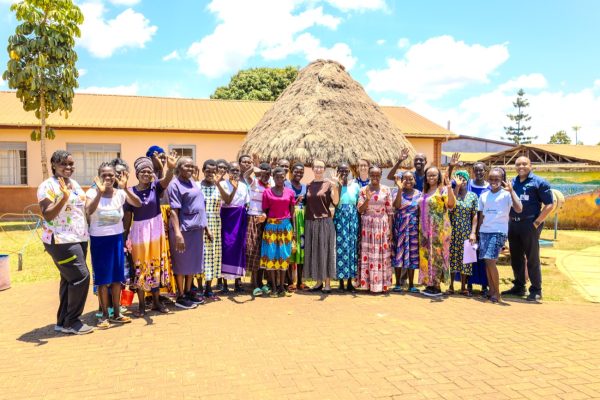
When asked how Fistula Foundation balances growth with staying true to its mission, Lowney explained:
Our mission is the discipline that guides our growth.
Fistula Foundation does not try to solve every problem surrounding maternal health, poverty, or gender inequality.
We fill one vital gap in the maternal healthcare landscape: repair surgery for women injured in childbirth.
We support only those activities that directly enable the treatment of fistula and severe perineal tears, an injury similar in consequence to fistula.
Because surgery is the only cure for these injuries, we know the faster we expand access to care, the sooner we can restore women’s health and futures.
But growth can’t cost us the quality, ethics, and transparency that made us effective in the first place.
Our focus on one measurable outcome, the number of women we treat, allows us to closely track patient outcomes, assess partner performance, identify bottlenecks, and expand only where trusted local teams can provide safe, cost-effective care.
Leading Through Organizational Transitions
When asked what she has learned about leading through organizational transitions, Lowney said:
A framework I often fall back on is the “three Ps”: people, process, and product.
All three matter, but during a transition, people must come first.
Transitions create uncertainty. Roles shift, workflows change, and routine issues can become charged.
I came to see my role as catching the “hot potato” of reactivity rather than passing it along.
That starts with listening for the concern beneath the reaction.
What looks like resistance may reflect a need for clarity, stability, recognition, or reassurance. People cannot fully engage with a new structure or strategy while they feel unheard.
The central lesson is simple: before asking people to trust you, you must show that you are trustworthy.
Listen carefully. Follow through. Respond rather than react. Own your mistakes.
Leadership is relational. It means giving credit freely, accepting responsibility, and absorbing pressure when things get hard.
I ask many questions because, while I am clear about where we are going, I do not pretend to have every answer about how we will get there.
The question I return to is not, “Who is right?” but, “What is right?”
Measuring Success
When asked how Fistula Foundation measures success, Lowney explained:
We begin with the women we exist to serve. Everything else follows from that.
We track how many women receive surgery and the safety, quality, and effectiveness of that care.
Our goal is to maintain a surgical success rate of at least 85%; in 2025, more than 88% of fistula repair surgeries across our global network restored women’s continence.
Every partner reports patient-level data quarterly. Regular site visits, medical oversight, and network-wide performance reviews help us identify problems early and continuously improve care.
Beyond surgery, we track whether access to care is actually expanding, surgeons and health workers trained, people reached through community outreach, referral networks strengthened.
And critically, whether the time women live with fistula before getting treated is going down.
Finally, we measure value and cost-effectiveness.
A repair surgery costs, on average, $624, yet its impact can last a lifetime.
We track each partner’s cost per surgery against that benchmark, while accounting for differences in costs across countries and operating environments.
Ultimately, success means more than performing more surgeries. It means women healed for good, and local systems strong enough to reach the next woman sooner.
Empowering Local Partners
When asked why empowering local partners is so important to achieving sustainable change, Lowney explained:
For us, it starts with recognizing that local partners already have what it takes, the skill, the drive, the standing in their own communities.
Our role is to listen, invest in their work, and help remove the barriers preventing them from reaching more women.
We support specialized vaginal surgeries, often in rural hospitals across more than 35 countries.
Local surgeons and community organizations understand their realities best, where women live, what keeps them from care, and how conflict, disease outbreaks, or seasonal weather affect treatment.
Their knowledge guides where and how we invest.
Our job is to be the talent scout: find skilled teams already serving areas of high need and help them expand.
Today, more than 95% of the surgeries we support are performed by providers from the regions they serve.
The fullest expression of this approach is the Fistula Foundation Treatment Network, first launched in Kenya and now operating in six countries.
Rather than creating parallel systems, these networks connect the hospitals, surgeons, and community organizations already on the ground, so a woman can be identified, referred, treated, and followed up with, without falling through the cracks.
Philanthropy fills in the missing pieces, training surgeons, reaching women who need care, and connecting them to treatment, while local hospitals and governments provide the foundation we build on.
The long-term goal is for more of this care to be integrated into and financed through national health systems.
We’re already seeing that cost-sharing model take hold in Kenya, Nigeria, and Zambia.
It’s a simple idea, really: start with the people closest to the problem, and let their expertise shape the solution.
Challenges And Opportunities In Global Health
When asked about the challenges and opportunities she sees in global health, Lowney said:
One of global health’s biggest missed opportunities is surgery, especially maternal surgery.
Global health has gotten much better at prenatal care, vaccines, and getting women to a skilled birth attendant.
But getting her to a birth attendant isn’t the same as getting her surgery when labor becomes obstructed, or when she suffers a severe childbirth injury. That gap is still wide open.
The 2015 Lancet Commission on Global Surgery showed the scale of the problem: conditions requiring surgical care account for nearly one-third of the global disease burden, yet five billion people lack access to safe, affordable surgery.
Part of the challenge is that surgery does not fit the traditional global health model.
It cannot be stockpiled like a vaccine or bed net. It requires trained surgeons and anesthesiologists, operating rooms, transportation, and financing that doesn’t dry up.
But complexity does not mean poor value.
A 2024 peer-reviewed study of more than 13,000 surgeries supported by Fistula Foundation found a cost of about $58 per disability-adjusted life year (DALY) averted, a standard measure for comparing the value of health interventions.
That puts it in the same range as vaccines, one of the most cost-effective interventions in all of global health.
Surgery’s dependence on people and institutions is also part of its opportunity.
Where a foundation of local surgical capacity already exists, investing thoughtfully in treatment can help strengthen the workforce, referral systems, facilities, and data needed to reach more patients over time.
The challenge, and the opportunity, is to stop treating surgery as a luxury.
It is essential care, and when delivered well, it can also help build stronger health systems.
Advice For Nonprofit Leaders
When asked what advice she would offer other nonprofit leaders, Lowney concluded:
Integrity above all else.
Like a drop of ink in water, one ethical lapse can cloud confidence in your organization.
Nonprofits ask people to place enormous trust in them. Leaders earn that trust by being transparent, speaking honestly, even when it’s uncomfortable, and owning their mistakes.
This was the advice given to me by the Foundation’s founding CEO, and I work to live it every day.
Second, build the organization behind the mission.
Passion is not an operating model. You need the right people in the right roles, doing work that’s clearly theirs to own.
Efficiency should mean removing friction, not endlessly asking fewer people to do more.
The same principle applies to partners. Put real safeguards in place without burying them in reporting that distracts from the work.
Accountability and trust can reinforce each other.
Finally, remember that your organization is not the hero.
In our case, the heroes are the surgeons serving women in communities with enormous unmet need, the women who show remarkable courage in seeking care, and the supporters who help people they may never meet reclaim their lives.
Our role is to connect those people and resources so miracles of healing can happen.

