

Flip is a customer service platform that uses voice AI to handle customer phone calls at scale, replacing traditional interactive voice response systems with AI that can understand natural speech, apply brand-specific workflows, and execute actions through integrations. The company focuses on transportation, retail and eCommerce, and healthcare. Pulse 2.0 interviewed Flip CEO and Co-Founder Brian Schiff to learn more.
Brian Schiff’s Background
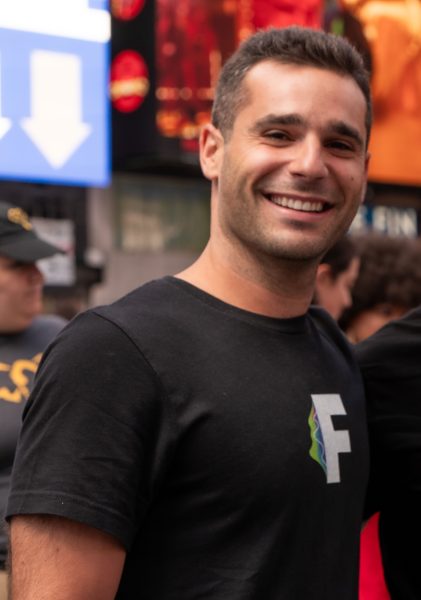
When asked about his background, Schiff shared:
I met my co-founder Sam during our freshman year at Cornell. We both had this itch to build something from day one. We launched a ride-sharing startup on campus, essentially an Uber for Cornell, partnering with local taxi companies to fulfill trips in a market where Uber was still regulatorily banned.
That went through Cornell’s eLab accelerator program and was genuinely successful; thousands of students were using it at one point. By senior year, we were standing at a crossroads: do we use this as a resume booster and go get jobs, or do we pivot and go all in?
We chose the latter, and that decision set everything in motion. We’ve been building Flip ever since.
How Flip Started
When asked how the idea for the company came together, Schiff explained:
It came out of a very practical observation. We were working with a taxi company that was fielding a massive volume of phone calls into their dispatch center.
At the same time, the last generation of voice AI was starting to emerge (Alexa, Google Home) and we thought, “could we use this technology to automate all of these calls?”
We built a scrappy prototype, walked into our taxi company partner’s office, and pitched him on it. He laughed and said we were crazy, but he also trusted us, because we’d delivered for him before. So he gave us a shot.
Those first automated calls in Ithaca in 2018 were essentially the seedlings of everything Flip has become.
Favorite Memories
When asked about his favorite memory working for the company so far, Schiff recalled:
One of the beauties of building a startup is new memories are made near-daily. Looking back through the things that get me sentimental are the first time playing with your own product, hearing the way clients speak about it, watching your team represent and take ownership of the brand.
It’s been and continues to be the ride of a lifetime.
Core Products And Features
When asked about Flip’s core products and features, Schiff detailed:
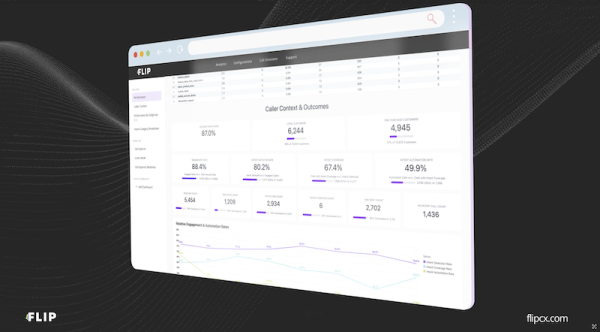
At its core, Flip is a customer service platform that uses voice AI to handle customer phone calls for brands at scale, replacing the outdated, frustrating interactive voice response (IVR) “press 1, press 2” systems that consumers have come to dread when calling a business.
The platform is built around three key components: an AI understanding layer that genuinely comprehends natural human speech and intent; a workflow engine that applies each brand’s specific policies to customer requests; and deep integrations that execute real actions (like canceling orders, processing returns, modifying shipments, scheduling appointments, etc.) rather than just answering FAQs.
We operate deeply across three specialized industries: retail and eCommerce, healthcare, and transportation.
The simplest way I describe it to anyone is: we’re replacing that bad automated voice experience with something that feels like ChatGPT picked up the phone.
Overcoming The IVR Reputation
When asked about challenges in the sector and how Flip has addressed them, Schiff noted:
The product challenge that defined our early existence was the IVR reputation problem. The old generation of automated phone systems created an entire population of people who hear a non-human voice and immediately feel their stomach drop. They were built to trap people, not help them.
So before we could even prove what Flip could do, we had to psychologically re-engineer that first interaction. We spent an enormous amount of time experimenting on how to open a call: what do you say in the first five to ten seconds that signals to a skeptical caller that this is genuinely different?
What we landed on is leading with understanding: personalize quickly, establish credibility, and then ask a simple yes-or-no question to dramatically lower the cognitive load of that first exchange. Once you get that first “yes,” you’re in the game.
The other major challenge was COVID. We had built a strong business in transportation, and overnight, that market essentially froze.
But rather than viewing it as an existential threat, we treated it as the forcing function we needed to expand. It accelerated a move we knew we’d have to make eventually, a move into other industries to really scale Flip.
Today, we’re purpose-built for transportation, retail/eCommerce, and healthcare, where we service hundreds of brands across hundreds of millions of calls around the globe.
Technology Evolution
When asked how Flip’s technology has evolved since launching, Schiff explained:
When we started, the core question was purely: can AI handle this call at a quality level equal to or better than a human? We’ve emphatically answered that. We have customers receiving millions of calls a month where we’re automating 90% of them.
But the technology has evolved well beyond that. The foundational models have taken ten steps forward since our first prototype on Alexa-era voice AI, and so has everything we’ve built on top of them.
The frontier we’re pushing into now is using the data and intelligence from those millions of conversations to drive real business outcomes: sales, retention, loyalty, product trend insights.
We recently visited a customer, Rally House, one of the fastest-growing sports retailers in the country, and they’re using Flip to understand what products customers are asking for by region, in real time, tied to live cultural moments like which teams are in the playoffs.
That kind of capability didn’t exist in phase one of this technology.
Major Company Milestones
When asked about some of Flip’s most significant milestones, Schiff said:
Automating our first calls ever for the local Ithaca taxi company while we were still seniors in college was a major milestone, and it was the proof of concept that everything else is built on.
Proving out the full business model in transportation through 2020, to the point where if you call a large taxi company anywhere in the world today, there’s a strong chance you’re talking to Flip.
Navigating COVID and making the strategic decision to expand into retail and healthcare – that was the pivot that set us up to be the company we are today.
From there, the milestones have compounded. Surpassing 300 million calls processed. Crossing 250 enterprise customers. Building out 100+ native integrations with platforms like Shopify, Salesforce, and Zendesk. Reaching eight-figure ARR and growing 3x year over year.
Most recently, we closed a $20 million Series A co-led by Next Coast Ventures and Ridge Ventures in January 2026, bringing our total funding to $31 million, and used that momentum to invest back into the team that builds and advances the product and partners with our clients every day.
Customer Success Stories
When asked to share specific customer success stories, Schiff highlighted:
We have plenty! One of the things that Flip prides itself on is the idea of a reference list as long as our customer list; it’s the #1 thing we orient the team around. Our “Flippin Legends,” as we like to call them, are often eager to discuss what we’ve accomplished together.
Liquid IV activated Flip as part of their Super Bowl campaign strategy, not just to handle the spike in call volume, but to carry the energy of that moment through their customer experience for the days and weeks that followed.
FTD Flowers relies on us through their highest-stakes windows of the year, Valentine’s Day and Mother’s Day, when their call volume goes completely off the charts.
The NFL is also a client, and the chaos around the start of football season is something we help absorb every year.
On the healthcare side, we help customers with appointment scheduling or prescription follow-up, which underscores just how much reliability and accuracy matter in what we do.
Competitive Differentiation
When asked what differentiates Flip from its competition, Schiff emphasized:
When you look at the landscape, vendors typically fall into two camps: generic horizontal platforms that go after large enterprises in any industry, doing expensive bespoke builds from scratch, or industry-specialized solutions that go deep.
Our conviction is that the domain-specific approach wins, and the data is backing that up.
The depth we’ve built in transportation, retail, and healthcare isn’t just a product differentiator; it’s a compounding advantage. The deeper you go, the greater that advantage becomes.
A brand like Tory Burch or Under Armor isn’t just buying AI tooling to create their experience. They’re buying “version 201” of something that’s been stress-tested across their entire industry, versus spending five years building “version 1” themselves.
There’s a real business case and a real safety case for that distinction.
Beyond strategy, our three core technical differentiators are the AI understanding layer, the workflow engine, and the depth of our integrations to actually resolve the customer query or problem.
Future Goals
When discussing Flip’s future goals, Schiff said:
The next 12 to 24 months are about winning where we already are and expanding into even more larger enterprises.
There is an enormous amount of room to run in retail and healthcare, and thousands of brands that are going to begin their AI customer service journey in the coming years.
Our opportunity, and our obligation, is to scale and improve so we can meet that moment.
A Consumer Story At Its Core
When invited to discuss another topic, Schiff concluded:
One thing I’d want people to understand is that this goes far beyond a technology story. At its core, it’s a consumer story.
Everybody on the planet has had a bad experience calling customer service. That universal frustration is what we’re going after.
In a world of B2B software that can feel totally disconnected from real life, we get to work on something that is genuinely, ubiquitously relatable.
That’s not something every founder gets to say, and it’s a big part of what drives us.
