

FlyFocus is a Polish defense technology company specializing in unmanned aerial systems (UAS), avionics, and customized UAV subsystems for military and dual-use applications. Founded in 2017, the company designs and manufactures complete UAV platforms and high-end avionics in-house, with an emphasis on modularity, technology sovereignty, and resilience in rapidly evolving battlefield conditions. Pulse 2.0 interviewed FlyFocus CEO and Co-Founder Igor Skawiński to learn more.
Igor Skawiński’s Background
When asked about his background, Skawiński shared:
I got into aeromodelling when I was around 10 or 11, building and flying RC aircraft, competing nationally and internationally. That’s actually how I met my co-founder, Julian Żyromski, so it goes back a long way.
From there, I studied aerospace engineering at the Warsaw University of Technology. While I was there I was part of a UAV team, we competed in SAE AeroDesign in the U.S. The whole idea is to build the most efficient aircraft possible. We did that for three years and won each time, which felt like a pretty strong signal early on.
Before FlyFocus, I was working in the UAV industry here in Poland, mostly on systems for the military market. At some point, we decided it made more sense to build something ourselves.
We knew it would take years, and it might not pay off straight away, but that kind of risk is easier to take when you’re in your early 20s. So that’s how it started.
How FlyFocus Started
When asked how the idea for the company came together, Skawiński explained:
We started FlyFocus in 2017 with quite a specific problem we wanted to solve: tethered drones. At the time, they were pretty limited. You could stay in the air indefinitely, but only within a small radius because of the cable.
We developed a system that could detach mid-flight, complete a mission on battery, and then reconnect. That became our first product, and we patented it.
From the start, we weren’t thinking about the military, and we deliberately avoided the consumer market too. Competing with DJI in Europe just doesn’t make sense, so we went after professional and institutional use cases instead.
The shift toward defense happened gradually, and importantly, it was before the war in Ukraine. Around 2020, after taking part in a military exercise, we started working with the Polish Armed Forces. It evolved from there into full UAV systems and avionics.
That early approach, building our own technology and staying close to end users, still defines how we work.
Real-World Validation
When asked about his favorite memory working for the company so far, Skawiński reflected:
Honestly, it’s hard to pick one moment. For me the most meaningful thing is seeing the full loop work in practice. We design systems in-house, test them in demanding conditions, and then we get feedback from operators who are actually using them in the field.
When something works outside a controlled environment, that’s when you really know.
One thing that stands out as a decision, rather than a single moment, is our approach to supply chains. From the beginning we chose not to use Chinese components.
We design and manufacture internally; around 70% of our avionics are produced in-house, all non-radio avionics components are manufactured in Poland, and we source from NATO countries wherever we can. It’s harder and more expensive, but it gives us full control. Today that matters more than ever.
Core Products And Features
When asked about FlyFocus’ core products and features, Skawiński detailed:
The focus has always been on systems that work in real conditions, not just concepts. Our portfolio covers three main areas: ISR platforms, loitering and strike systems, and counter-drone technologies.
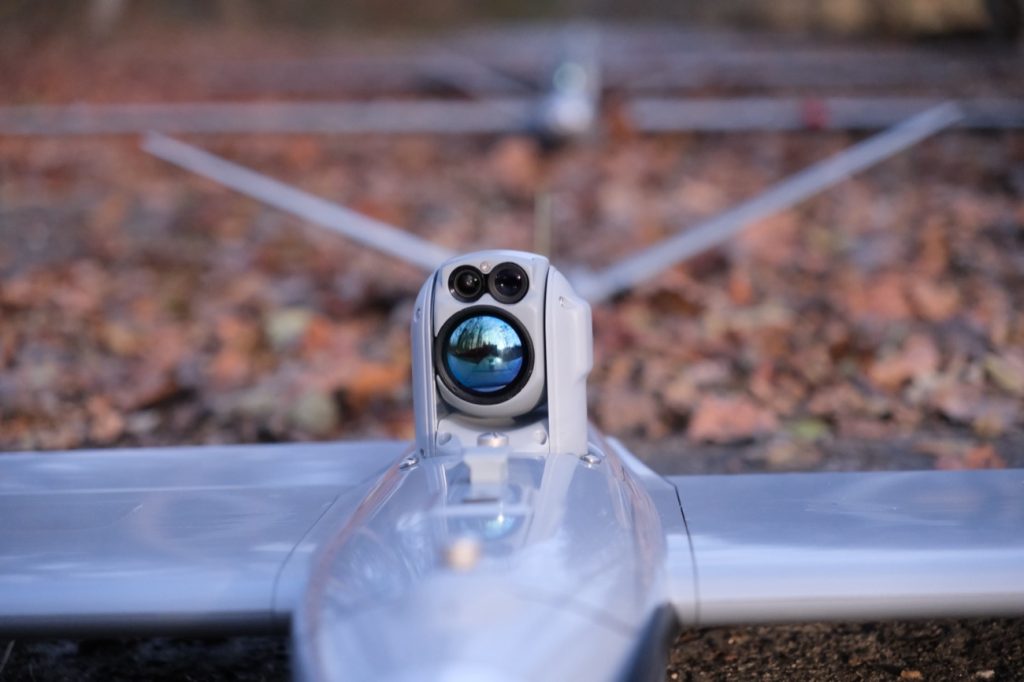
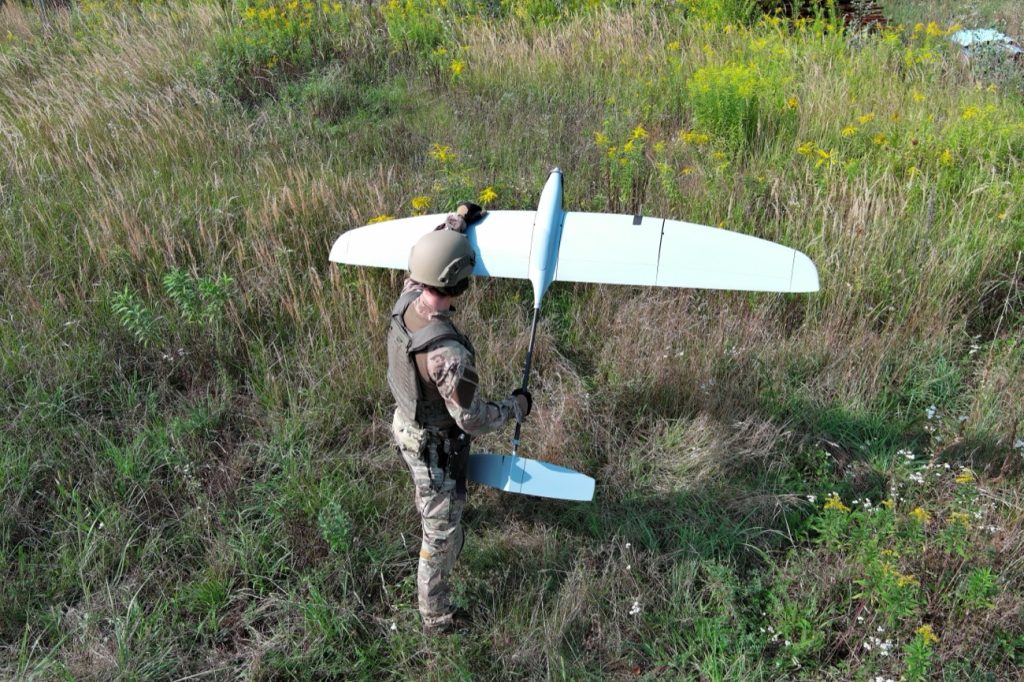
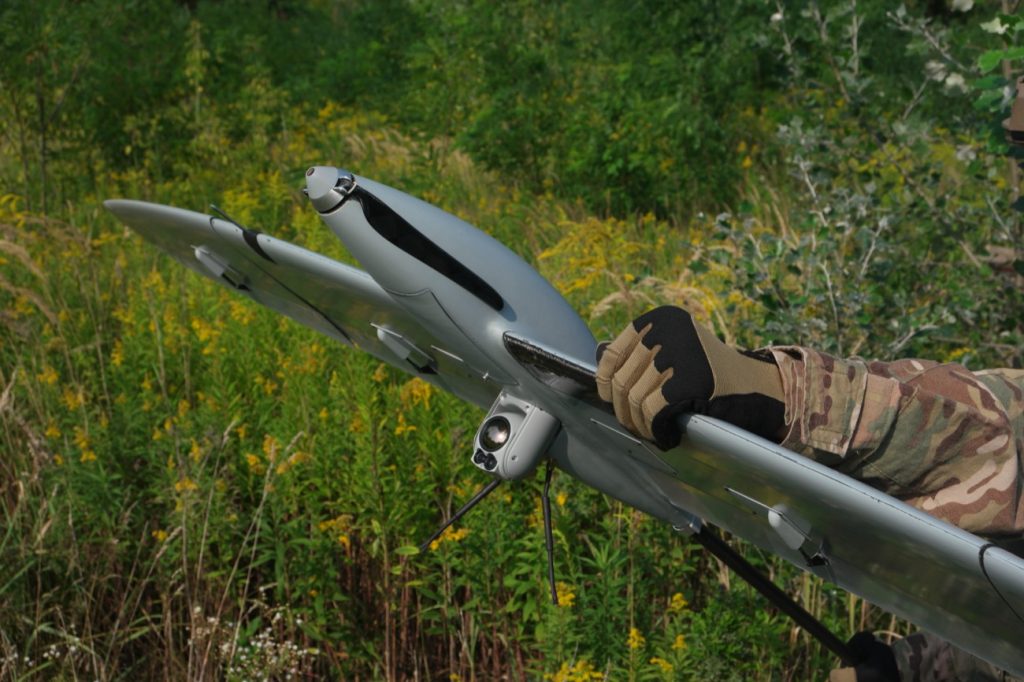
On the ISR side, one of the main platforms is Polaris. It weighs 4.5 kilograms, is backpack-portable, is a fixed-wing, has up to 4.5 hours of endurance, and is designed for a single operator.
At the other end of the spectrum, there’s Striker, which is a deep-strike loitering platform. Range exceeds 1,000 kilometers, payload up to 40 kilograms, designed for contested electronic warfare environments. It’s already been deployed in active conflict.
We also have CableGuard, our patented tethered UAV system for persistent surveillance.
Across the whole portfolio, modularity is a key feature. You can swap out individual subsystems like navigation, comms, or payloads without redesigning the whole platform. In an environment where requirements change fast, that’s essential.
default
SAMSUNG CSC
Building Trust In Defense
When asked about challenges in the sector and how FlyFocus has addressed them, Skawiński noted:
Defense sales cycles are very long, and for a private company without a track record, it’s extremely hard to break in. Trust takes years.
We’re where we are because we started working with the military back in 2019, and if you were starting today, it would still be very difficult. Things are changing, but slowly.
There’s no shortcut. You just have to deliver consistently and build credibility over time.
Technology Evolution
When asked how the company’s technology has evolved since launching, Skawiński explained:
Everything we do is driven by working closely with end users, and that hasn’t changed; it’s just got broader.
We don’t develop in isolation or just in a lab. We validate and improve continuously through direct collaboration with Polish, Ukrainian, American, and other operators. That’s what lets us actually optimize for real needs rather than assumed ones.
Major Company Milestones
When asked about some of FlyFocus’ most significant milestones, Skawiński said:
For us, milestones are always about moving from concept to real capability. That’s the measure that matters.
A recent example is KURIER. It’s a 600-kilogram-class unmanned helicopter designed for logistics, capable of carrying over 200 kilograms of cargo in contested environments.
It’s backed by the Polish Ministry of Defence, developed with FusionCopter and the Polish Academy of Sciences. We presented it publicly at Drone World Expo in Warsaw, and it’s now approaching Technology Readiness Level 6 after successful flight tests.
Customer Success And Deployment
When asked to share specific customer success stories, Skawiński explained:
It really depends on the type of customer. On one side we have government and military customers who procure complete UAV systems. On the other, we work with private defense companies that need specific components like avionics, radios, or power systems, which they integrate into their own platforms.
In concrete terms, we work directly with both the Polish and Ukrainian Ministries of Defence. Our systems have been deployed in real operations in Ukraine, tested in direct comparison with locally produced and Western systems. That’s about as real-world as validation gets.
Funding
When asked about funding and revenue metrics, Skawiński shared:
In February we raised €4.5 million in our first institutional round, led by ffVC with participation from the NCBR Investment Fund.
That came after eight years of self-funded growth, where we went from R&D through to full-scale production and direct military contracts.
The funding is about scaling what we already have: production, international expansion, product development.
Market Opportunity
When discussing the total addressable market FlyFocus is pursuing, Skawiński said:
We’re not sharing specific numbers, but the market is expanding very fast. Demand for UAV systems and avionics is growing globally, driven by how modern warfare is evolving, but also by growing awareness of supply chain risk and dependence on external technologies.
That combination is pushing countries to invest in systems they actually control and can rely on.
Competitive Differentiation
When asked what differentiates FlyFocus from its competition, Skawiński emphasized:
One thing I’d say upfront is that we’re not a startup that came out of the drone hype of the last few years. We’ve been in this space since before 2020, so the experience runs deeper than it might look from the outside.
On the product side, individual features might exist elsewhere, but the combination is what makes the difference. A big part of that is resilience to electronic warfare. Our systems are designed for the realities of modern conflict: jamming, spoofing, GNSS denial. That’s changed a lot in recent years and it directly shapes how we design both hardware and software.
Supply chain is another real differentiator. A lot of manufacturers in Europe still rely on Chinese components to some extent. We never went down that road.
We also retain full control over our software, flight control, ground control, all of it developed in-house and tailored to our platforms. And because we work closely with real operators, we can adapt quickly and build things that are actually usable in the field.
Future Goals
When discussing FlyFocus’ future goals, Skawiński concluded:
The main focus right now is scaling. We’re expanding production and there’s a new manufacturing facility in Poland planned for the second half of 2026.
We’re growing our international presence and continuing to invest in R&D. We also have two new UAV platforms in development that we’re planning to introduce later this year. LinkedIn profile
