

Foundation Source is a financial technology and philanthropic services company that helps individuals, families, financial advisors, and institutions establish and manage charitable giving programs. The company provides technology, administration, and specialized expertise across private foundations, donor-advised funds, planned giving, and other charitable vehicles. Under the leadership of CEO Joseph (Joe) Mrak III, Foundation Source has expanded into a broader PhilTech platform through strategic acquisitions and enterprise partnerships. As of year-end 2025, the company supported more than 5,600 private foundations, 20,000 donor-advised fund accounts, and 1,700 nonprofits, while administering more than $55 billion in charitable assets. Pulse 2.0 interviewed Foundation Source CEO Joe Mrak to learn more about his background in financial technology, the emergence of PhilTech, the company’s growth strategy, AI-powered philanthropy solutions, and the expanding role of charitable giving within wealth management.
Joe Mrak’s Background
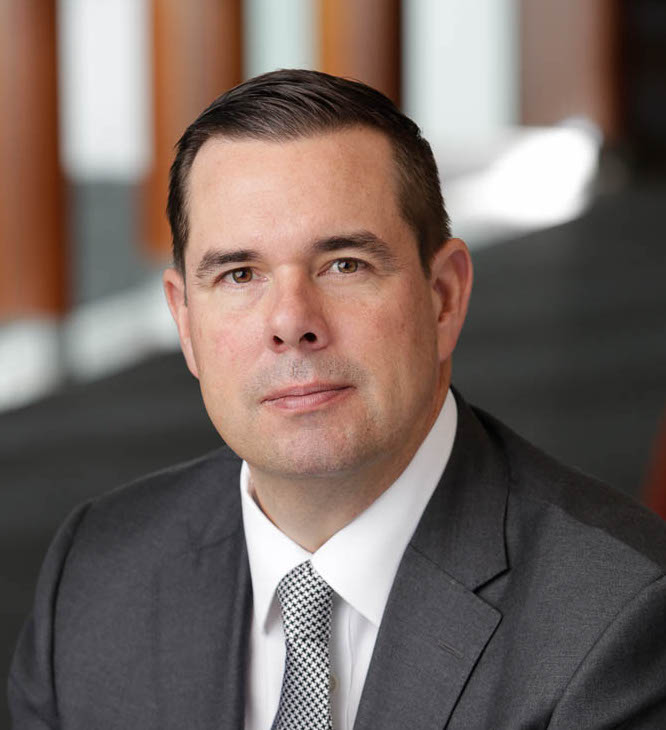
When asked about his background and the path that brought him to Foundation Source, Mrak shared:
I got into technology very early. My father was a computer scientist; we didn’t have a TV in the house, and I was programming by the fourth grade. I always knew technology would be part of my life, although I couldn’t have predicted how much it would shape my career.
I’ve always been a builder at heart. I tend to look at complicated systems and ask, “Why isn’t there a better way?” I helped pioneer the unified managed account model at Placemark Investments and later founded FolioDynamix, which built an integrated wealth management platform ultimately acquired by Envestnet. I went on to lead global wealth management at Refinitiv and serve as Executive Chairman of Solovis. The common thread has been using technology to make complicated, fragmented systems simpler and more scalable.
That’s ultimately what drew me to Foundation Source. I saw many of the same challenges I’d encountered in wealth management years earlier. Philanthropy is an important part of the financial lives of high-net-worth families, but much of the infrastructure supporting it had not kept pace with the technology transformation happening elsewhere in financial services. I saw an opportunity to change that.
The Opportunity For Philanthropy Within Wealth Management
When asked what opportunities he identified for Foundation Source and the broader philanthropy market upon becoming CEO, Mrak explained:
What struck me was the white space. I’d spent decades looking at the financial advisor desktop (trading technology, portfolio reporting, billing, financial planning) and philanthropy was nowhere to be found. I found that surprising because I hadn’t really thought about the omission myself, even after years of building wealth management platforms.
Charitable vehicles belong in the planning conversation just as much as other financial structures. A private foundation is another pool of assets to manage; a donor-advised fund has parallels to other tax-advantaged accounts, except the money ultimately goes to charity. There was a real opportunity to educate advisors, tech-enable the process and help clients build their legacies.
Foundation Source already had tremendous philanthropic expertise. Our opportunity is to make the complex simple: to provide the technology, administration and expertise that create an “easy button” for advisors and their clients.
Foundation Source’s Evolution And Significant Milestones
When asked how Foundation Source has evolved during his tenure and which milestones have been most significant, Mrak explained:
The biggest evolution has been moving from a company historically known primarily for private foundation administration to a much broader PhilTech platform.
We took a platform approach, looking broadly at what a donor might need across the philanthropic journey. We’ve expanded across private foundations, donor-advised funds, planned giving and other charitable vehicles through four strategic acquisitions, while growing enterprise relationships across banks, RIAs and other institutions.
As of year-end 2025, Foundation Source supported more than 5,600 private foundations, 20,000 donor-advised fund accounts and 1,700 nonprofits, administered more than $55 billion in charitable assets, and facilitated more than 190,000 grants and planned gifts.
The story is about bringing capabilities together in one platform so philanthropy is easier for advisors and institutions to offer and easier for donors to navigate.
How PhilTech Can Become A Growth Engine For Wealth Management
When asked what PhilTech means and why it could become an important growth engine for wealth management firms, Mrak explained:
To me, PhilTech is about making philanthropy and legacy-building easier within the advisor-client relationship. People should be able to connect more easily with the causes and missions they care about, with technology facilitating the process.
I believe that our biggest competition is education: people don’t know what they don’t know. They may not understand when a private foundation makes more sense than a donor-advised fund, or vice versa. PhilTech can help clients understand those choices and make it much easier to open and manage the right charitable vehicles.
I call it a growth engine because philanthropy changes the client conversation. Advisors can talk about what clients want their wealth to accomplish, how they want to involve their families, and how they think about transferring wealth and values across generations. Those conversations can create much deeper relationships.
Our recently published 2026 Report on Private Philanthropy analyzed 1,237 private foundations with assets ranging from $1 million to $1 billion and found they made more than 40,000 grants totaling $1.14 billion in 2025, a 15.1% increase in grant dollars from the prior year.
That is meaningful capital in motion, and firms that bring philanthropy into the client relationship gain a more complete picture of how clients want to put their wealth to work.
How Foundation Source Is Integrating AI Into Philanthropy
When asked how Foundation Source’s technology and platform have evolved to support its PhilTech vision, Mrak explained:
Our technology strategy starts with a simple premise: make philanthropy easier. AI is becoming an important part of how we think about doing that, and I think about the opportunity as a three-legged stool.
First, AI can remove operational friction by automating routine administrative work, so our teams can spend more time on higher-value work around a client’s mission, strategy and impact. Second, we’re using AI as a development tool to bring new features to market faster. Third, we’re working toward embedding AI into the products themselves. Over time, that could help donors and their advisors more quickly analyze information, evaluate opportunities and make more informed giving decisions.
One example on our roadmap is scholarship administration. If a foundation receives 1,000 applications, an AI-enabled tool could analyze the donor’s criteria and quickly surface the strongest candidates for review. The goal is to use AI to help people get to better-informed decisions faster while keeping human judgment at the center.
We’ve recently added product and technology leadership with experience applying AI to development and product innovation to accelerate that work.
How Acquisitions And Partnerships Have Expanded Foundation Source’s Capabilities
When asked how acquisitions and partnerships have strengthened Foundation Source’s ability to serve financial advisors and institutions, Mrak explained:
We haven’t pursued acquisitions simply to add products or scale. We’ve been building what I think of as a one-stop shop across the donor spectrum: technology and capabilities spanning private foundations, donor-advised funds, planned giving and other charitable needs.
But technology is only one side of the equation. Philanthropy is deeply personal. These are people’s legacies and missions, so human service and advice remain important.
Our acquisitions have strengthened both sides, including high-touch philanthropic guidance. For institutions, that means offering a broader philanthropic experience without building all of the specialized technology and expertise internally.
We’ve also seen strong traction, with enterprise relationships increasing 25% over the past 12 months.
What Differentiates Foundation Source From Its Competition
When asked what distinguishes Foundation Source within the philanthropy and financial technology markets, Mrak affirmed:
I think it’s the combination of technology, scale and philanthropic expertise to create what is essentially an “easy button” for donors, advisors and institutions.
Technology alone doesn’t solve the problem. Regulatory, tax, administrative, governance and family considerations require real expertise, while expertise without technology is difficult to scale. Bringing the two together is what matters.
Our capabilities span the donor spectrum, backed by a team with tremendous philanthropic expertise. Technology can make all of this much easier, but there are parts of philanthropy you can’t simply automate. Having both the technology and the people who deeply understand this space is a real differentiator for us.
Future Growth Priorities For Foundation Source
When asked about Foundation Source’s priorities for its next phase of growth, Mrak emphasized expanding PhilTech adoption, advancing AI capabilities, and strengthening the company’s philanthropic expertise:
I think one of the biggest opportunities ahead is helping wealth management firms recognize just how much potential there is in philanthropy. It’s still an underdeveloped part of the wealth management ecosystem, and our biggest competition remains education: helping advisors understand the different vehicles and how they can help clients build a legacy.
A major priority is AI-enabling more of what we do: improving efficiency, accelerating development and, over time, embedding it more deeply into the client experience. In parallel, we’ll continue pushing into advisor networks and the organizations that support them, making philanthropy easier to understand and deliver at scale.
The third piece is talent: continuing to build a team with the human expertise that remains essential in philanthropy.
I’ve spent much of my career building technology around complicated financial problems. What makes this chapter interesting is that we can help advisors build stronger relationships, families be more intentional about giving, and more charitable capital reach the organizations and communities it is intended to support. That’s a pretty compelling opportunity.
