

G&A Partners is a professional employer organization (PEO) and human resources services company that helps small and mid-sized businesses manage payroll, employee benefits, HR administration, regulatory compliance, and workforce management. The company combines HR expertise, technology, and personalized support to help business owners navigate increasingly complex employment requirements while focusing on growing their organizations.
Pulse 2.0 interviewed G&A Partners President and CEO Jeff Williams to learn more about his background, the company’s growth priorities, challenges facing small and mid-sized businesses, opportunities for artificial intelligence in HR services, and the future of the PEO industry.
Jeff Williams’ Background
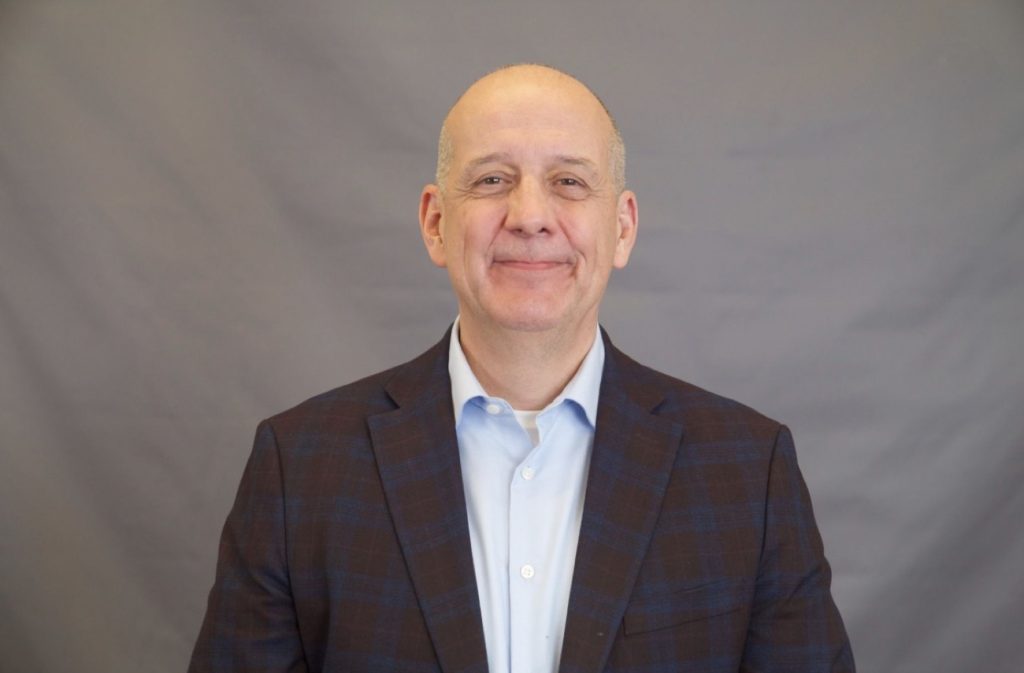
When asked about his background, Williams shared:
I’ve spent more than 30 years leading businesses at the intersection of people, technology, and services. Throughout my career, I’ve been fortunate to work with some terrific organizations and talented people, often during periods of significant growth, change, or transformation.
Before joining G&A Partners, I served as President and CEO of Aptia, where I led the establishment of the company as an independent global benefits administration business. Earlier in my career, I held senior leadership positions with Paychex, Alight, and Aon, among others.
While the businesses have been different, my philosophy has remained consistent: put customers at the center of your decisions, surround yourself with talented people, create an environment where they can do their best work, and bring real discipline to execution.
I’ve also learned that leadership isn’t about having all the answers. It’s about asking the right questions, listening carefully, making decisions, and creating the right conditions for people to succeed.
On a personal level, I’m originally from Canada, and my wife, Susan, and I have 21-year-old twins. We have lived in Canada, the United States, and Europe. We’ve recently relocated to Houston and are enjoying getting to know the city.
After a career that has taken me to some interesting places, I’m genuinely excited about the opportunity ahead at G&A.
Why Jeff Williams Joined G&A Partners And His Growth Priorities
When asked what attracted him to G&A Partners and his priorities after becoming President and CEO in July, Williams explained:
G&A offered a rare combination of a terrific business, a substantial market opportunity, and a culture that genuinely cares about its customers and its people.
My predecessor, John Allen, and the wider G&A team have spent more than three decades building a highly respected company, where 95% of its client services team is customer experience certified. G&A has deep customer relationships, talented people, and a strong reputation for personal service. Those are tremendous assets, and they’re not easily replicated.
G&A has an excellent foundation, and we have an opportunity to become even better.
My priorities are relatively straightforward: preserve and strengthen what makes G&A special, build a more powerful commercial engine, improve our operational capabilities, and use technology and data to deliver a consistently outstanding customer experience.
I also want us to be a company where talented people can build meaningful careers and feel proud of the work they do.
I’ve always believed that growth is an outcome, not a strategy. You earn it by delivering genuine value to customers, executing consistently, and continuously improving.
That’s the journey we’re on at G&A, and I believe we have an exciting opportunity ahead.
The Biggest Challenges Facing Small And Midsized Businesses
When asked which economic, workforce, and regulatory pressures are having the greatest impact on small and midsized business (SMB) leaders, Williams explained:
I think the biggest issue is the cumulative weight of everything business owners are being asked to manage.
They’re dealing with rising healthcare costs, wage pressures, economic uncertainty, increasingly complex employment regulations, and a challenging environment for attracting and retaining talent.
In fact, G&A’s 2026 SMB Readiness Report found that 87% of SMBs say economic conditions have changed how they operate their business and more than half (53%) have had to rely on fewer workers.
Any one of those challenges can be difficult. Dealing with all of them simultaneously can be overwhelming, particularly for a business that doesn’t have the resources of a large enterprise.
But there’s another cost that doesn’t always get enough attention: the opportunity cost.
Every hour a business owner spends navigating benefits administration, employment regulations, or payroll complexity is an hour they’re not spending with customers, developing employees, or growing their company.
I’ve spent much of my career working with organizations of different sizes, and one thing is clear: smaller businesses don’t have smaller ambitions. They simply have fewer resources to pursue them.
That’s where a great PEO can make an enormous difference. Our job is to take complexity off the shoulders of business owners and give them more capacity to do what they do best.
Why More Businesses Are Turning To PEOs And Outsourced HR Providers
When asked why more SMBs are turning to PEOs and outsourced HR providers rather than managing everything internally, Williams explained:
More business owners are recognizing a fundamental truth: you don’t have to do everything yourself to be successful.
As a business grows, so does its need for sophisticated HR, payroll, benefits, compliance, and workforce management capabilities.
Trying to build all that expertise internally can be expensive, complicated, and distracting. And even when companies can afford to do it, it’s worth asking whether that’s really the best use of their resources.
A strong PEO relationship can give a smaller organization access to capabilities, expertise, and benefits solutions that would otherwise be difficult to assemble independently.
But I think the real value goes well beyond administrative efficiency.
It’s about helping business owners make better decisions, provide a better employee experience, reduce risk, and operate with greater confidence.
The best outsourcing relationships aren’t simply about transferring work from one organization to another. They’re about creating capabilities and outcomes that neither organization could achieve as effectively on its own.
When we do our job well, our customers become more successful. That’s a pretty compelling business model.
How The Role Of a PEO Is Evolving
When asked how the role of a PEO is changing as businesses expect more than payroll and benefits administration, Williams explained:
For years, our industry has largely defined itself by the services it delivers: payroll, benefits, compliance, HR administration, and related capabilities.
Those services remain critically important. In fact, they need to work exceptionally well. Customers have every right to expect accuracy, reliability, and responsiveness.
But I believe the next chapter of our industry will be defined less by the transactions we process and more by the outcomes we help customers achieve.
Business owners want insights, not just information. They want solutions, not just services. And increasingly, they expect the same intuitive, convenient experience they receive from the best consumer technology companies.
That creates an enormous opportunity.
Imagine a business owner being able to understand workforce trends, identify emerging risks, evaluate benefits costs, and access expert guidance through a simple, connected experience.
Technology can make that possible, but the human element remains essential.
I’ve always believed the best service businesses combine excellent technology with exceptional people. I don’t see that changing.
Technology should make the experience easier. Our people should make it better.
That combination is where I believe G&A can distinguish itself.
Opportunities For AI In HR And Employee Benefits Administration
When asked where technology and artificial intelligence (AI) could create the greatest improvements in employer and employee experiences, Williams explained:
I believe AI has the potential to fundamentally reshape our industry, and I don’t think that’s an exaggeration.
Throughout my career, I’ve seen several major waves of technological change. What makes AI different is the breadth of its potential impact. It can change how we operate internally, how our employees perform their jobs, how customers interact with us, and ultimately what customers should expect from a PEO.
I see three particularly significant opportunities.
The first is productivity. There are enormous amounts of repetitive administrative work across payroll, benefits, compliance, and HR service delivery. Automating and simplifying those activities can improve speed, quality, and cost efficiency.
The second is intelligence. We have the opportunity to turn substantial amounts of workforce and business data into meaningful, actionable insights. That could allow us to identify issues earlier, make better recommendations, and help customers make more informed decisions.
The third, and perhaps most exciting, is the customer experience. I envision a world where customers can interact with us far more naturally, receive immediate answers to routine questions, and access specialized expertise much more seamlessly.
Done well, these changes can transform the economics of service delivery while materially improving the experience.
But here’s an important distinction: I’m not interested in AI for the sake of AI.
I want to know what problem we’re solving, whether the solution actually works, and how we’re measuring its impact. We also have a responsibility to protect sensitive information and ensure appropriate human oversight.
And I certainly don’t see this as a choice between technology and people.
Quite the opposite. I believe AI can free our people from lower-value administrative work and allow them to spend more time doing the things humans are uniquely good at: exercising judgment, solving complicated problems, building relationships, and helping customers.
To me, that’s an exciting proposition for our employees, our customers, and our business.
Balancing Healthcare And Benefits Costs With Employee Retention
When asked how SMBs can control healthcare and benefits costs while remaining competitive in attracting and retaining employees, Williams explained:
It’s a difficult balancing act, particularly given the continued pressure on healthcare costs.
But I think employers need to resist viewing benefits purely as an expense to be minimized.
For employees and their families, benefits represent financial security, access to quality healthcare, and an important component of their overall employment experience.
For employers, they’re an important tool for attracting, retaining, and engaging talented people.
The right answer starts with understanding your workforce, what employees value, and what the business can sustainably afford.
From there, employers should be thoughtful about plan design, available alternatives, employee education, and making sure people understand and appreciate the benefits they’re receiving.
This is an area where a strong PEO can bring meaningful value by providing access to benefits expertise, competitive options, and administrative capabilities that may be challenging for smaller businesses to develop on their own.
I’m a big believer in bringing financial discipline to these decisions, but also in recognizing that investing in people is central to building a successful business.
The goal isn’t simply to find the cheapest benefits program. It’s to deliver the best sustainable value for the employer and its employees.
Common Misconceptions About HR Outsourcing And Choosing A PEO
When asked what business owners misunderstand about outsourcing HR and what they should evaluate when selecting a PEO or HR partner, Williams explained:
One of the biggest misconceptions is that outsourcing HR means giving up control.
A great PEO relationship actually gives a business owner greater control through better information, stronger capabilities, expert guidance, and greater confidence in decision-making.
With a PEO or outsourced HR, you’re not giving up accountability for your people or your culture. You’re gaining a partner that can help you manage both more effectively.
When evaluating providers, I’d encourage business owners to look beyond the price quote and the list of services. Certainly, capabilities and cost matter. But so does the experience of being a customer.
Will the provider be responsive when something goes wrong? Do its people genuinely understand your business? Is its technology easy to use? Can it support you as you grow? And perhaps most importantly, does it take ownership of solving problems?
I’d also encourage prospective customers to speak with existing clients. There’s no substitute for understanding how a company performs when it really matters.
I often remind teams that customers don’t judge us by our organizational structure, our internal processes, or how hard we’re working. They judge us by their experience and whether we’re helping them succeed.
That’s the standard we should hold ourselves to.
Ultimately, selecting a PEO is an important business decision, but it’s also a relationship decision. Trust, accountability, and consistency matter enormously.
The Future Of HR Outsourcing And G&A Partners’ Growth Strategy
When asked what changes he expects across the HR outsourcing industry over the next several years and how G&A Partners is preparing, Williams explained:
I believe we’re entering one of the most interesting periods of change our industry has experienced.
Demand for outsourced HR capabilities should continue to grow as businesses confront increasing complexity and recognize the benefits of accessing specialized expertise.
At the same time, AI and other emerging technologies will create opportunities to fundamentally redesign how services are delivered, how information is used, and how customers interact with their providers.
I also expect customers to become increasingly demanding, and appropriately so. They’ll want easier experiences, better insights, greater transparency, and stronger value for their investment.
And I expect the industry to continue evolving structurally, including further consolidation and the emergence of new competitors and business models.
For G&A, I see all of this as opportunity.
We have an outstanding foundation built on personal service, deep expertise, and longstanding customer relationships. Our challenge, and our opportunity, is to combine those strengths with greater scale, operational excellence, commercial sophistication, and modern technology.
We also have to remain willing to challenge conventional thinking. Just because something has been done a particular way for 20 years doesn’t mean it’s the right way to do it for the next 20.
At the same time, I don’t believe technology will eliminate the importance of relationships. If anything, as technology becomes more widely available, genuine trust and exceptional service may become even more valuable differentiators.
I’m optimistic about where we’re headed, both as an industry and as a company.
My ambition is for G&A to be recognized not simply as an excellent PEO and HR services provider, but as an indispensable partner to the businesses we serve.
That means helping our customers succeed, creating opportunities for our employees, and building a company that continues to grow and improve.
It’s a terrific challenge, and one I’m genuinely excited to take on.
