Harri is an AI-first workforce OS built for hospitality. Its end-to-end platform helps restaurants and hotels manage labor operations across hiring, onboarding, scheduling, compliance, and employee engagement, serving 5 million workers across 800 corporate clients and 70,000 locations globally. Pulse 2.0 interviewed Harri’s Founder and CEO Luke Fryer to learn more about the operator frustrations that inspired the company and the AI-driven future of hospitality workforce management.
Luke Fryer’s Background

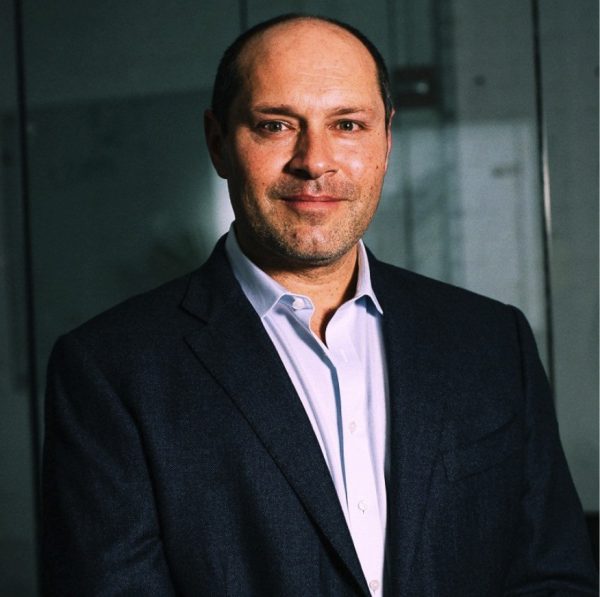
Screenshot
When asked about his career and what came before Harri, Fryer shared:
At 22, I convinced Burger King to let me open their first direct Australian franchise at Sydney Airport. No real experience, just conviction.
That location became the top-performing Burger King in Australia out of 65 stores, through 18-hour days and the kind of hard lessons that stay with you.
Those years running a restaurant taught me something that no MBA could: labor is everything. It’s the biggest cost line, the biggest source of risk and the biggest lever you have. I just didn’t have the tools to pull it properly back then.
After my time as an operator, I transitioned into tech, specifically building the workforce management tools I wished existed when I was a franchisee.
How Harri Started
When asked how the idea for Harri came together, Fryer explained:
Harri was born out of frustration. When I was operating in hospitality, the technology available to manage labor was either outdated, disconnected, or built for someone else entirely, not the operator or manager scrambling to fill a shift at 10 am on a Tuesday.
I wanted to build a platform purpose-built for the frontline, not adapted from corporate HR software.
The complexity of shift work, compliance, high turnover and real-time demand changes requires a different kind of solution.
My goal with Harri was to give hospitality operators a single platform that handles everything from hiring and onboarding to scheduling, time tracking and compliance.
One system, one experience, built for the people actually doing the work.
Core Products And Features
When asked about Harri’s core products and features for the frontline restaurant workforce, Fryer detailed:
Harri is a workforce operating system built specifically for the hospitality industry. We’re intentionally not a generic HR tool bolted onto a restaurant workflow.
The platform covers the full employee lifecycle: talent acquisition, applicant tracking, digital onboarding, employee scheduling, time and attendance, compliance management and engagement.
Increasingly, we’re developing and layering in AI to make those capabilities proactive rather than reactive.
The scheduling product is a big one. We’re using AI-driven forecasting to help managers build schedules that match actual demand to 15-minute increments while balancing employee availability, labor rules and cost targets.
Harri recently introduced One-Click Schedule, which helps managers generate optimized, compliant schedules faster with fewer manual adjustments.

The goal is precision, not just efficiency.
On the compliance side, we’ve built tools that flag overtime before it happens, enforce clock-in grace periods and help operators navigate the growing patchwork of predictive scheduling laws across jurisdictions such as New York, California, Colorado, Ohio and more.
Navigating Restaurant Industry Challenges
When asked about recent challenges facing the restaurant industry and how Harri is helping, Fryer explained:
The hospitality industry is fighting three battles simultaneously, and they compound each other.
First, the labor cost equation has gotten brutal. In some markets, operators are paying $21/hour to sell a $6.50 burger.
You can’t cut your way to profitability; you have to optimize, which we covered in our 2025 Wage and Labor report.
That means better forecasting, tighter scheduling and the elimination of the hidden costs most operators don’t even see: time theft, schedule creep and preventable overtime.
Our analysis shows there’s $80,000+ in annual savings hiding in plain sight at a typical QSR location.
Second, compliance is a changing minefield. An estimated 91% of hourly restaurant workers in California experienced at least one labor law violation last year.
Most operators aren’t doing it intentionally; instead, the rules are genuinely complex and constantly fluctuating. Harri gives operators the guardrails to stay compliant before violations happen.
Third, the QSR industry turnover averages over 130%, with the first 90 days being extremely difficult to maintain staff.
Every time someone walks out the door in the first 90 days, you’re absorbing recruitment costs, training costs and lost productivity. Most of it doesn’t show up cleanly in the P&L.
Harri helps operators focus obsessively on those critical first 90 days: better onboarding, scheduling tools and engagement features that make people feel like they belong, like the recent launch of our Engage360 offering.
How The Technology Has Evolved
When asked how Harri’s technology has evolved since launch, Fryer said:
When we started, the core problem was fragmentation. Hospitality operators were managing hiring in one system, scheduling in another, payroll in a third, and none of them talked to each other.
The first evolution was building a unified platform that eliminated that patchwork.
The second evolution was mobile-first. Frontline workers don’t sit at desks. They need to check their schedules or swap shifts while completing onboarding on a phone. We rebuilt the employee experience around that reality.
Now we’re in the third evolution of AI, with our customers and prospects asking for AI to do scheduling, labor optimization and real-time decision support.
That’s the role of Salli, our new AI assistant for frontline operators: helping managers ask questions naturally within their workflow, surface the information that matters and act with more confidence in the moment.
Key Company Milestones
When asked about some of Harri’s most significant milestones, Fryer highlighted:
The milestone I’m most proud of is scale.
Harri now serves 5 million hospitality employees across 70,000 restaurant and hotel locations globally.
We’ve also become an approved tech provider by McDonald’s, officially launching 5,000 locations on our platform, with franchisors seeing strong results.
Earning the business of brands like McDonald’s, Shake Shack, Jersey Mike’s and Dave’s Hot Chicken required us to solve real, complex problems at scale.
Enterprise hospitality isn’t forgiving. If the system fails during a Friday dinner rush, you hear about it fast.
Customer Success Stories
When asked to share specific customer success stories, Fryer said:
The ones that stick with me are the operators who can quantify it.
If one franchise operator is saving a couple of hundred dollars per day just by tightening labor operations, such as better scheduling, eliminating time theft and avoiding compliance penalties, that’s thousands a year.
Multiply that across a 50-location franchise system, and you’re talking serious money.
We recently piloted Salli with The Fonseca Group, which has McDonald’s locations in NYC. Fair Workweek laws make it one of the hardest markets to operate in.
Across 29 locations, schedule warnings have dropped from 300 compliance warnings to only 5 valid flags.
The team has been able to publish schedules in just 8.5 minutes, a third of the time it took before Salli.
Managers now get to shift to human-first tasks that actually drive results: coaching their teams, improving service quality and being present on the floor.
We’re seeing the same pattern with One-Click Schedule.
In a recent Harri survey of over 1,200 frontline managers, “build the schedule for me” was the top AI request at 52%.
Mitra QSR’s beta results showed why: scheduling time dropped to less than two minutes, with 93% of weekly scheduling time given back to each manager, 98% schedule accuracy and 4% labor savings.
The brands that are winning right now are the ones treating workforce management as a competitive advantage, not a back-office function.
Competitive Differentiation
When asked what differentiates Harri from the competition, Fryer explained:
Three things.
- Hospitality-native design: Built from day one for the complexity of shift work, the compliance nuances, the turnover realities, the manager who needs to decide in 30 seconds, not 30 minutes.
- Full lifecycle coverage: Most competitors own a piece of the workflow, hiring, scheduling or time and attendance. Harri covers the full employee journey from engagement to development and retention.
- Acting on the data you have: The hospitality industry is drowning in dashboards. We’re building an operating system that acts on their behalf using native systems and data, not one that hands them more reports to interpret.
Over 3 million people apply for jobs using Harri each month, with approximately 100,000 being hired through the platform across 65,000 restaurant and hotel locations globally.
Total Addressable Market
When asked what Harri’s addressable market looks like, Fryer explained:
The hospitality industry employs roughly 15 million people in the US alone.
Workforce management spend in this sector has historically been underinvested relative to the problem’s complexity, partly because the technology wasn’t built for it.
That’s changing fast.
As compliance requirements multiply, labor costs climb and AI makes sophisticated workforce tools accessible to operators of all sizes, the market is expanding in both directions: more locations adopting platforms and more spend per location as capabilities deepen.
The global workforce management software market is valued at tens of billions of dollars.
Hospitality represents a significant and underpenetrated slice of that, with the added tailwind that the problems we solve are getting harder.
Future Goals
When discussing Harri’s future goals, Fryer concluded:
The near-term focus is making our AI capabilities indispensable: agentic AI that actually monitors, recommends and acts within a manager’s workflow.
Scaling that across our customer base and proving the ROI in concrete terms is the priority.
Long-term, I want Harri to be the workforce operating system for the hospitality industry.
Not a tool managers use, but infrastructure they build on.
That means deeper integrations, more automation and a better experience for frontline employees.

