

Hidonix is a technology company developing spatial intelligence, computer vision, machine learning, robotics, and immersive technologies for defense, security, and other complex physical environments. Pulse 2.0 interviewed Hidonix Founder and CEO Achille De Pasquale to learn more about his background, the company’s evolution from indoor navigation to defense technology, its spatial intelligence capabilities, and its plans to introduce additional technologies at CES 2027.
Achille De Pasquale’s Background
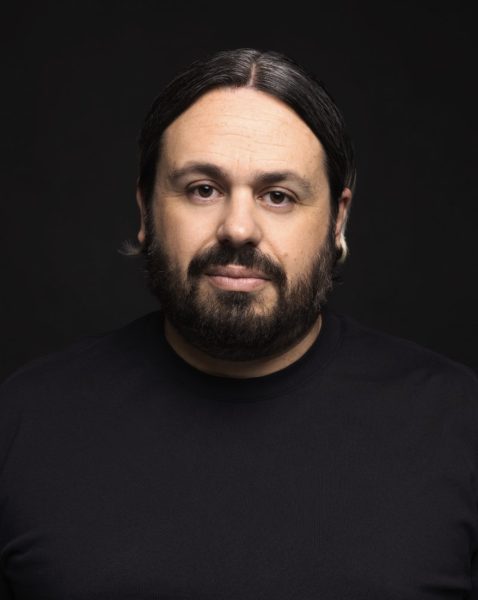
When asked about his background, De Pasquale said:
I grew up between Calabria and Sicily in southern Italy. My parents were Judo champions who trained under Japanese masters, so discipline and persistence were a big part of my upbringing.
I became interested in technology very early. My grandfather gave me an Apple II when I was seven, and I was immediately more interested in understanding how it worked than simply using it.
Over the past fifteen-plus years, I have built companies and technologies across virtual reality, security, and deep technology. Today, as Founder and CEO of Hidonix Industries, I remain closely involved in both the strategic and technical direction of the company. I have always believed that the strongest technology companies keep engineering, product, and business strategy closely connected.
How The Idea For Hidonix Came Together
When asked how the idea for Hidonix originated, De Pasquale shared:
There is still a significant gap between the intelligence available in the digital world and the information available to people operating in the physical world.
We started by looking at a very specific part of that problem: indoor navigation. We were developing technologies to help people understand where they were and navigate complex indoor environments where GPS was not available or reliable.
As we started applying that technology in real environments, we realized that knowing where someone or something is could be useful for much more than navigation. Our work expanded into schools, where location, movement, and activity became increasingly connected to questions of safety and security.
That opened our eyes to a much broader problem. In complex and high-consequence environments, understanding what is happening in the physical world can be critical to preparedness, threat prevention, and response.
That evolution ultimately led us toward defense. The applications have changed considerably, but the underlying problem we are trying to solve has remained consistent: closing the gap between what is happening in the physical world and the information available to the people and systems operating within it.
Favorite Memory Working At Hidonix
When asked about his favorite memory working at the company, De Pasquale recalled:
One of my favorite moments was when our algorithms began producing reliable indoor positioning from geomagnetic signatures without beacons or other installed infrastructure. For a long time, the accepted view was that precise indoor positioning required additional hardware throughout a facility. Seeing the system work challenged that assumption and changed how we thought about the company’s potential.
It was more than a technical milestone. It meant the technology could eventually support environments where installing and maintaining infrastructure is difficult, expensive, or impossible. That was the moment the team understood that we were not building another navigation feature; we were building a foundation that could support safety, coordination, and autonomy across many industries.
Core Products And Features
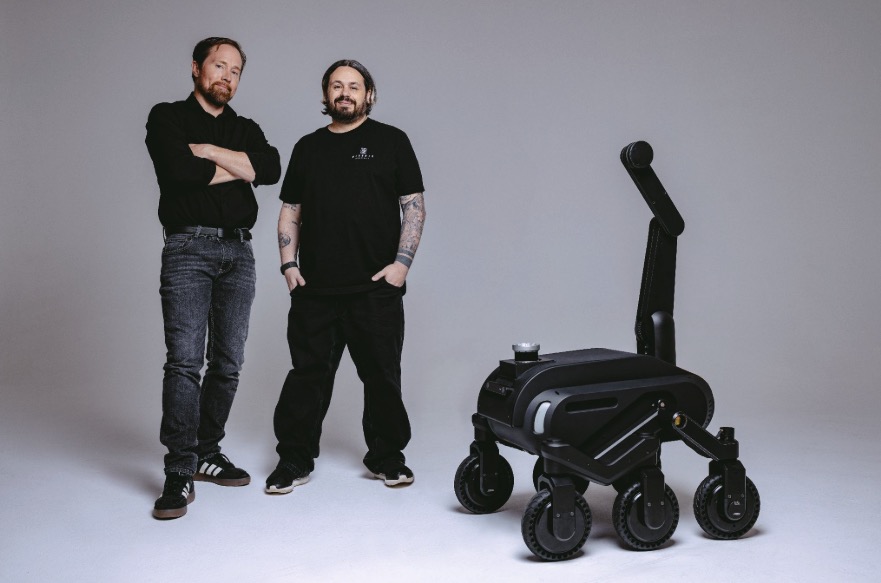
When asked about Hidonix’s core products and features, De Pasquale explained:
Hidonix develops dual-use technologies with a clear mission: to build some of the best protective technologies for U.S. warfighters and first responders, and ultimately help protect and save lives. That is why much of our work is focused on preparedness, threat prevention, and improving awareness in complex physical environments.
ION is the technology we can discuss most openly today. It is our spatial intelligence platform for positioning and navigation in environments where GPS is unavailable or unreliable. One of its core capabilities is indoor positioning based on geomagnetic signatures, which allows it to operate without requiring costly infrastructure to be installed throughout a facility.
Beyond ION, we are developing additional dual-use technologies across computer vision, machine learning, robotics, and immersive technologies. We are intentionally selective about what we disclose while these technologies are still in development, but one area we are currently working on is Mixed Reality for professional training and preparedness.
While these technologies address different problems, they are connected by the same mission: helping people prepare for threats, understand what is happening around them, and stay safer in complex environments.
We expect to share much more about these technologies at CES 2027.
Challenges In Developing Reliable Defense Technology
When asked about recent challenges in the defense technology sector and how Hidonix has addressed them, De Pasquale acknowledged:
One of the biggest challenges in defense technology is the difference between building something impressive and building something dependable.
A technology can perform extremely well in a controlled demonstration and still encounter completely different conditions in the real world. Physical environments change. People behave unpredictably. Connectivity is not guaranteed. Systems are used differently than engineers expect.
Our response has been to make real-world validation a fundamental part of how we develop technology.
We also take a very deliberate approach to development. In defense, reliability, security, interoperability, and accountability cannot be added at the end. They have to influence how you build from the beginning.
That creates a higher bar, but it is the right bar.
How Hidonix’s Technology Has Evolved
When asked how the company’s technology has evolved since launching, De Pasquale noted:
The technology initially focused on indoor positioning and navigation. As we deployed it in real environments, we began to understand that location alone was only one part of a much larger problem.
Over time, our work expanded to include movement, activity, and a broader understanding of what is happening within a physical environment. That also changed the way we thought about the information our technologies generate. Knowing where something is can be valuable, but understanding what is happening around it and why that information matters is much more powerful.
Today, our R&D extends beyond positioning into computer vision, machine learning, robotics, and immersive technologies. The individual capabilities are different, but they are increasingly connected by the same objective: creating a better understanding of the physical world and making that information useful in complex environments.
That evolution is now shaping the technologies we are developing for defense and security.
Significant Company Milestones
When asked about Hidonix’s most significant milestones, De Pasquale highlighted the company’s achievements in indoor positioning technology, public demonstrations, and research and development:
There have been important technical milestones, external recognition, and opportunities to demonstrate our work publicly.
Among our most significant milestones was achieving reliable infrastructure-free indoor positioning, which I mentioned earlier.
CES 2026 was another major milestone. It gave us the opportunity to present Hidonix and our technologies to a broader international audience, including the robotics component of our platforms, and opened new conversations across both commercial and defense applications.
Since then, our R&D efforts have expanded significantly, resulting in new proprietary technologies across computer vision, machine learning, and robotics, with intellectual property protections underway.
CES 2027 will be another important milestone for the company, as we plan to introduce some of what we have been working on over the past year and show more clearly where Hidonix is going next.
Customer Success Stories And Real-World Deployments
When asked about customer success stories and deployments demonstrating Hidonix’s technology, De Pasquale explained:
There are deployments and relationships that I’m not able to discuss publicly, particularly as our work increasingly touches defense and security.
What I can say is that some of the most valuable validation we have received has come from deploying and testing our technologies in real environments, including museums, schools, and hospitals.
Schools in particular helped us understand how technologies originally developed around positioning and spatial awareness could have a much broader role in safety and security. By combining location information with other systems, including cameras, we explored how different signals could provide a more complete understanding of activity within an environment and help identify situations that may require attention.
During a critical event, location and contextual information can also give responders a clearer understanding of where people are and what is happening around them, supporting a faster and more informed response.
That experience has been extremely important as we move toward defense and other mission-critical applications. The environments may be different, but the underlying objective is similar: identify potential threats earlier, improve awareness when an incident occurs, and ultimately help protect lives.
Funding And Revenue Metrics
When asked about Hidonix’s funding and financial performance, De Pasquale revealed:
Our priority today is building the company for long-term relevance in defense. That means continuing to validate the technology, developing the right strategic relationships, and being disciplined about where we invest our resources.
Hidonix is privately held, and we are focused on building a durable technology company rather than optimizing around short-term metrics. We are ambitious about the scale of the business and remain open to strategic opportunities that could help accelerate our growth and expand our capabilities.
What Differentiates Hidonix From Its Competition
When asked what distinguishes Hidonix from other defense and spatial intelligence technology companies, De Pasquale affirmed:
Our differentiator is that we create technology that supports the operator before and during a mission.
Before a mission, our technology can help operators prepare and understand the environment. During a mission, it can help them interpret changing conditions, maintain situational awareness, and focus on the information that matters most.
A key part of that is how we approach the technology itself. Hidonix has an internal R&D division that develops technologies from the ground up across computer vision, machine learning, spatial intelligence, and robotics. This includes the robotics component of our platforms, which we presented at CES 2026 and will soon introduce in its latest version.
We also address a gap we see between what is happening in the physical world and the sensing and automated systems designed to understand it. We do not simply analyze data generated by other systems, and we do not only create the technology that senses the environment. We do both. We generate information from the physical world and build the intelligence that helps make sense of it.
We design these capabilities to integrate with existing systems and environments without requiring extensive or costly additional infrastructure. That combination of sensing, intelligence, and integration is central to how we are building Hidonix.
Future Company Goals
When asked about Hidonix’s future goals, De Pasquale outlined the company’s plans to expand its defense technology capabilities and support mission-critical operations:
Our goal is to establish Hidonix as a trusted defense technology company and build some of the best protective technologies for U.S. warfighters and first responders.
Ultimately, what we want to do is help protect and save lives. That is why much of our technology is focused on preparedness and threat prevention. We believe that giving warfighters and first responders the ability to prepare for complex situations before they happen, identify potential threats earlier, and better understand what is happening around them can make a meaningful difference when lives are at stake.
In the near term, our goal is to continue developing and validating our technologies against real operational requirements and putting them in the hands of the people who can benefit from them.
Longer term, we want to expand what we are building across different defense applications and continue developing new technologies that can help protect warfighters and first responders before and during a mission.
That is ultimately the company we want to build: one that develops technology with a clear purpose, to help people come home safely.
The Future Of AI In The Physical World
De Pasquale concluded by discussing the challenges and opportunities of bringing artificial intelligence into physical environments:
There is enormous attention right now on what AI can do in the digital world. I think the next major challenge is what happens when intelligence has to operate in the physical world.
The physical world is much more fragmented. Information comes from different sensors, systems, environments, and sources that do not always communicate with each other. At the same time, many technologies are very good at either collecting information or analyzing it, but those two sides of the problem are still often disconnected.
I think the next step is bringing those capabilities together. As AI, computer vision, robotics, spatial computing, and other technologies continue to move beyond the digital world, the ability to sense what is happening, understand it, and connect that information across systems will become increasingly important.
That is the problem space we are building Hidonix around.
