

Humand is an AI-powered operating system for deskless workers, giving employees access to onboarding, training, benefits, recognition, and company updates through a single mobile platform. Pulse 2.0 interviewed Humand Co-Founder & CEO Nicolas “Nico” Benenzon to learn more.
Background in Software Engineering
Asked about his background, Benenzon shared:
I started coding at a very young age, around eight years old, while playing video games. I knew pretty early on that it was something I was passionate about and wanted to explore further.
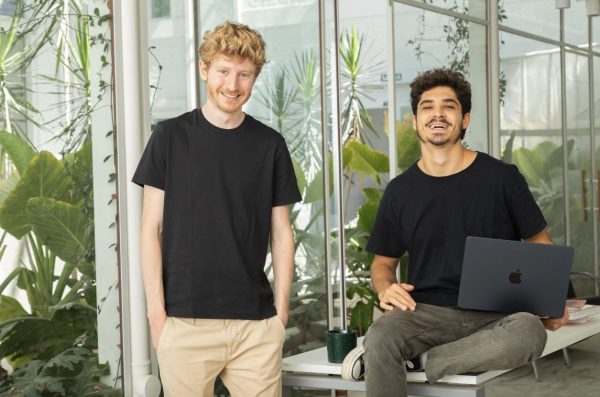
I eventually went to college to study Software Engineering, which is where I met my co-founder Gero. We actually met after attending a talk by a well-known technology entrepreneur who later became an investor in Humand. We were the only two students bold enough to follow him after the talk to ask some follow-up questions to his session.
From that moment, Gero and I realized we shared many ideas and values. We went on to co-lead the Entrepreneurs Club at our college, where we won many hackathons and coding competitions. That really became the jumping-off point for us to eventually start Humand together.
Origins of the Company
Asked how the idea for the company came together, Benenzon explained:
The idea came from seeing firsthand how broken the work experience was for frontline workers.
My uncle was the CHRO at McDonald’s at the time, and he would tell me about the operational challenges they had managing their frontline teams. Something as simple as requesting time off or replacing a lost badge could take weeks because requests had to go through layers of managers and help desks.
At the same time, workers were already using mobile apps in their personal lives, such as Amazon, Uber, or DoorDash. So we started asking ourselves: why can’t work function the same way? Employees should be able to onboard, request PTO, complete training, and answer surveys through a simple mobile app, the same way they order a ride or their dinner.
That’s when we realized the enterprise experience for deskless workers was fundamentally broken. We believed that this was a problem worth solving and the idea for Humand was born.
The Problem Humand Is Solving
Asked to talk more about the problems Humand is solving, Benenzon described:
There are about 2.7 billion deskless workers globally, working in stores, hospitals, factories, restaurants, warehouses and more.
Historically, enterprise software was built for people who work behind a computer. There are great tools out there for the 20% of workers at desks, but the remaining 80% of the workforce was largely left out of the digital workplace. As a result, many companies still rely on paper forms, disconnected systems and manual processes to manage their frontline teams.
Humand enables companies to digitize, automate, and efficiently manage those workflows through a single mobile platform.
Core Products and Features
Asked about Humand’s core products and features, Benenzon detailed:
Humand is an AI-powered operating system for deskless workers, allowing employees to access everything they need for work through a single mobile platform.
Through the app, employees can request time off, complete onboarding and training, access benefits and perks, receive recognition, and stay up to date on everything happening in their company.
The platform integrates with more than 5,000 HR systems and enterprise tools, so companies don’t have to replace their current software stack. Instead, Humand becomes the single access point for employees.
We built the platform around modular “mini apps,” which allow companies to activate different operational capabilities such as training, communications, workflows and scheduling. Increasingly, these mini apps are enhanced with AI to automate routine tasks and support decision-making for frontline teams.
Our goal is for deskless workers to have everything they need for work, accessible through a single app on their phone.
Smartphone Adoption’s Impact on Communication
Asked how smartphone adoption has changed the way companies can communicate with frontline employees, Benenzon noted:
The smartphone has become the most powerful communication and operational channel companies have to reach their frontline workforce.
For a long time, companies didn’t have a digital channel to reach frontline workers. Over the past decade, that’s changed dramatically because nearly every worker now has a smartphone. Companies finally have direct access to their deskless employees, but many still rely on paper forms or word of mouth to communicate with them.
With Humand, we make it easy for companies to connect with their entire workforce and communicate with employees instantly on their mobile device. Increasingly, that channel is also becoming an AI interface. Frontline employees can ask questions, complete tasks or receive guidance directly through the platform, making the smartphone not just a communication tool but an intelligent workplace assistant.
Growth Since Launch
Asked how the company has grown since launching, Benenzon described:
We began a pilot with 200 employees at ArcelorMittal. With the arrival of the pandemic, the platform became the only digital communication channel for over 3,000 employees, accelerating its implementation. We spent more than a year working closely with the company to refine and improve the product.
In 2021, we launched more broadly to large companies. Adoption was strong from the beginning. Within the first year, we were working with dozens of large organizations, and the platform scaled quickly from there.
Today, we work with more than 1,500 companies including MINISO, Domino’s and OXXO, supporting 2 million users and 2,000 clients in more than 51 countries.
Industries Adopting Humand
Asked what industries are adopting Humand most quickly, Benenzon explained:
Our ideal customers are companies with deskless workforces. We aim to bridge the gap for the 80% of the global workforce that does not work from a desk across more than 40 industries, including retail, healthcare, manufacturing, hospitality, restaurants, and transportation, among others.
These organizations tend to struggle the most with communication, engagement, and operational coordination across distributed teams.
Series A Funding
Asked to share more about the company’s recent $66 million Series A raise, Benenzon shared:
Our Series A round was co-led by Kaszek and Goodwater Capital, with participation from Y Combinator, Arash Ferdowsi (Founder of Dropbox), Guillermo Rauch (Founder of Vercel), Martin Varsavsky (Founder of Overture and four other unicorns), Rajat Suri (Founder of Lyft), among others. The investment allows us to accelerate AI development across the platform and expand automation across core operational workflows that historically required large HR teams and help desks.
AI’s Role for Deskless Workers
Asked how he sees AI changing the experience for deskless workers, Benenzon observed:
Most AI tools today are designed for people who work on computers. But because deskless workers work in physical environments, they typically don’t have access to those tools.
Because we already connect deskless workers through their smartphones, we can deliver AI directly into their daily workflow. For example, we’ve introduced our AI agent called Sammy AI, which employees can ask questions about benefits, policies, or time off. Instead of reaching out to their manager or spending hours trying to find information across different departments, employees can get answers instantly.
We’re also developing several additional AI agents focused on training, onboarding, performance insights, and shift management.
What’s most important–and what we’re focused on–is ensuring that these AI agents are designed to be extremely simple to use, because many deskless workers are interacting with AI for the first time.
Competitive Differentiation
Asked what differentiates Humand from other workforce platforms, Benenzon emphasized:
Humand was designed specifically for deskless workers, rather than adapting legacy software built for office environments. We combine AI with our mobile-first platform, allowing companies to deliver intelligent tools directly to frontline workers through their smartphones.
We also focus on operational efficiency, not just HR or communication. While those capabilities are important, we’ve found what leadership teams are really looking for is how technology improves productivity and simplifies operations. Humand helps automate workflows, digitize operational processes, and deliver AI-driven support directly to frontline employees.
Future Goals
Asked about the company’s future goals, Benenzon concluded:
Our goals are centered around growth, product innovation, and impact. We’re building to expand our presence in the U.S. and the other 50 countries we work in.
We want to continue expanding our platform’s capabilities so organizations can enable more workflows based on their needs. We’re building deeper AI support and creating more “mini apps” that teams can activate as they grow.
Over time, we believe AI agents will become the primary interface between deskless employees and the workplace.
Ultimately, our vision is to connect 100% of workers everywhere, enabling companies to give deskless employees the same support as those behind a desk.
