

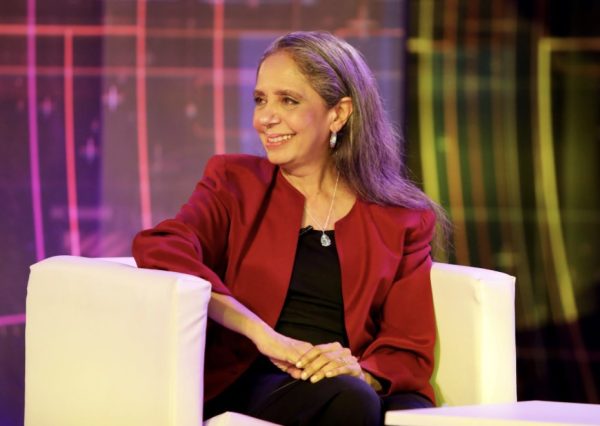
iMerit is a leading AI data company that powers advanced machine learning and artificial intelligence models. The company delivers high-quality data across industries such as autonomous mobility, medical AI, and high-tech, enabling trusted, ethical, and scalable AI through its software AngoHub. Pulse 2.0 interviewed iMerit CEO, Radha Ramaswami Basu, to learn more about how her company attracts and retains the best cognitive experts to take large models and make them very customized towards solving enterprise AI problems.
Scholars Program Integrated Into Overall Strategic Vision
How does the “Scholars” program align with iMerit’s overall strategic vision, particularly in light of the rapid evolution of Generative AI and AGI? Basu said:
“Our strategic vision is clear: Expert-led data is the third pillar of AI. Compute and algorithms are vital, but without precision data, models fail at the last mile. Even advanced models struggle with complex problem-solving, domain-specific intricacies, and human-like judgment. Scholars is our answer to that need. Scholars are PhDs, MDs, linguists, engineers—experts with domain depth and cognitive range. The work of Scholars is not like traditional data labeling. These experts question, prompt, coach and debug models across failure points. They are training the behavior of generative AI models in the same way teachers train students and test them.”
“The frontier model companies have done a good job of publishing general models. Creating precision in specific domains requires an additional layer of advanced intervention. Some of these industries are directly being tackled by these companies themselves, like OpenAI and Google. Other industries are being served by enterprises and startups building advanced tuned models on top of the foundation models. In all these vertical efforts, very high quality, pristine, expert training is needed. The race for expert data is on.”
“For example, physicians refine ambient scribe models for clinical accuracy. Mathematicians coach LLMs through complex logic chains. Creative writers build stronger communication capability. There is a lot of insight that goes into building this beyond subject matter knowledge. We are building the expert-human layer that AGI systems will increasingly depend on; mainly profound understanding, cross-domain knowledge transfer, and ethical alignment.”
Unique Problem Being Addressed
What unique problem or market gap was iMerit Scholars specifically designed to address that traditional data labeling or annotation services couldn’t? Basu explained:
“To be clear, Scholars is not a replacement for traditional labeling. We still see a lot of work being done in the Computer Vision sphere which relies on data labeling. Even in that space, the problems are becoming more nuanced and complex. The data is intricate, for example, multi-sensor fusion and MRI. It also increasingly requires expertise such as agriculture and pathology.”
“Scholars come in when we talk of Generative AI. Here, the base model has already absorbed billions of unsupervised data inputs. Now it is further tuned by prompting it with advanced examples which are created by experts and the model is also coached by evaluating its responses to challenging problems posed by these experts. Think of it as setting exam papers, rather than teaching a whole syllabus. These are relatively short, sharp interventions in an advanced specialty like Python or sub-specialty like oncology. iMerit’s particular focus is in mission critical areas where the penalty for mistakes is high, like healthcare, autonomous mobility and agriculture.”
“Naturally, this has technology implications for the toolchain also. We are no longer working offline on a dataset in an S3 bucket. Instead, our software Ango Hub has a Deep Reasoning Lab module where the expert is directly connected to the customer’s model and is recording a log of a live interaction session. The workflows are more complex, mixing and matching experts and models with multiple data handoffs. Ango’s Workflow Manager allows this to be snapped together very quickly and its plugin capability allows models to be brought in from anywhere to participate in the interactions.”
“The tooling and data pipelines for this are more advanced and need to have high trust and security. Additionally, the infrastructure for finding, curating, selecting and matching elite Scholars is more dynamic and nuanced.”
Demand For Human-In-The-Loop Data Expertise
How do you see the demand for highly specialized, human-in-the-loop data expertise evolving in the next 3-5 years, and how are Scholars positioned to capture that growth? Basu predicts:
“The constraint will not be data volume. That is already abundant, but on the other hand, it has all been accessed and scraped. Foundation models trained on internet-scale data can generate fluent text or images, but when the task is diagnosing a heart condition, validating a financial transaction, or reasoning through policy risk, generic annotation simply does not hold. The real bottleneck is high-fidelity, domain-grounded human input and human monitoring.”
“We’ll need layers of experts, from the ones who create the problems, to the ones who can verify the solutions, and the ones who can continuously monitor model accuracy over time. I want to emphasize again that subject knowledge is only the starting point. We have a whole rubric of meta-cognitive skills that we are assessing for the suitability of a subject expert for this kind of work. These include curiosity, creativity, problem solving, and cultural empathy. Finding this is not trivial. For one project, we interviewed 100 PhD mathematicians but hired only 30. The other had the Math knowledge but not the cognitive skills to interrogate and ‘torment’ the models and make them fail. It’s like a hacker mindset.”
“Finally, these may not be full-time roles. Most experts are occupied in their profession, for example, in a hospital. They have to be able to dedicate some hours in a week to the work.”
“All these insights are being built into the design of Scholars, from the sourcing to the matching to the toolchain.”
Typical Workflow For Client Engaging With Scholars Program
What is the typical workflow for a client engaging with the Scholars program, from initial need assessment to delivery of annotated or fine-tuned data? Basu described:
“A customer initially works with our team to define the type of specialty needed and the form of interaction needed to achieve their goal. For example it could be RLHF (Reinforcement Learning Through Human Feedback), prompt-response pairs, puzzles, red-teaming (trying to break a model to create inappropriate responses), or chain-of-thought-reasoning.”
“Once this is determined, we set up the interface and toolchain to capture this session and agree on a data format to share the output. It’s not just a final ‘answer.’ The whole process, including missteps and corrections is of value to the client. The context can be quite large. For example in an ambient scribe application, we are creating technically comprehensive clinical notes from the audio of a patient-doctor interaction. In a language-vision model, we may be creating entire spoken descriptions of the decisions being made by the perception engine of an autonomous vehicle.”
“Next, we develop the requirements for the experts, bootstrapping from a trusted Scholar in that field. This includes subject matter and cognitive ability needs, and assessments to match those requirements. We apply these to source and curate the right Scholars, onboard them on Ango and proceed. As the project progresses, some people are identified to do the quality checking as a second layer. Finally, the data is delivered to the client. Along the way, it is common to see guidelines evolving and changing as the client goes deeper in and discovers more nuances.”
Compelling Benefits Of iMerit Scholars
What are the most compelling benefits for a client choosing iMerit Scholars over an in-house expert team or a less specialized external vendor? Basu revealed:
“We pride ourselves on being an UnCrowd. It is actually far removed from the crowd model. Engaging a cardiologist and getting the best from them is where Scholars has been designed differently, drawing upon our experience of building a data company with 90% retention over a decade.”
“Our Scholars are handpicked, highly skilled domain experts. They are curated and matched to a specific project and are assigned to work on that project. As one of our Scholars put it, they are most definitely not logging onto a platform and hitting refresh to find gig tasks.”
“Second, we emphasize a smooth experience on our end-to-end software AI suite Ango Hub via Deep Reasoning Lab. A lot of care has gone into designing the flow and also the global payments system.”
“Next, we are invested in creating a community, with collaboration, engagement, coaching and support. This goes a long way in achieving consistency and commitment to quality. There’s a lot to do to engage a global community of elite professionals. We are still learning and evolving.”
“For us, success lies in attracting and retaining cognitive experts who do not just complete tasks but stay to teach and shape AI for years. It is more like building long-term, high-value relationships with expert talent and this will be the trend of the future. Such professionals will be highly sought after because they know how to work alongside advanced AI in their field.”
Success Story
Can you share a success story or a quantifiable impact metric? Basu highlighted:
The 100% Failure Test: Mathematician vs. Model:
Challenge: A leading foundation model team tasked iMerit with creating 600 original chain-of-thought math prompts and multi-turn human–model interactions in just 2 weeks. The challenge was to integrate the customer’s dev build into Ango Deep Reasoner, design problems to force model failures, iterate on stepwise correction, and deliver full JSON reasoning traces of every session.
Solution: To boost model performance, iMerit sourced 100+ math MAs and PhDs for its Scholars program. Candidates were tested not just on credentials but on problem-setting skills— only 30 made the cut. iMerit built a custom automation-assisted tool to enforce schema compliance, support mathematical notation, and validate computational accuracy. Semantic deduplication was integrated to eliminate redundancy and further strengthen training data quality.
Results: Only rigorously vetted experts generated responses, supported by Ango’s customized task interface for clarity and precision. Within two weeks, iMerit delivered 600+ original puzzles—each with a 100% model failure rate—providing not just RLHF training data but also critical insights into model blind spots for future improvement.
Key Areas Of Investment
What are the key areas of investment for the Scholars program in the coming year (e.g., new domain expertise, platform features, geographic expansion)? Basu elaborated:
“Growth is being driven by both client-side scale-up and increased investment in talent onboarding, domain certification, and continuous training infrastructure. We expect at least 3x expansion of our scholar workforce within the current fiscal year, driven by demand for high-context annotation in GenAI, healthcare, and autonomous systems. In the next year, our focus is threefold:
- Expanding domain depth—particularly in medicine, finance, coding, languages and policy—where the demand for expert reasoning is surging.
- Advancing iMerit’s software suite- Ango Hub to support more complex multimodal interactions, from chain-of-thought debugging to vision-language tasks, and adding layers like semantic de-duplication and automated error checking.
- Scaling our Scholars network efficiently with more AI-driven selection and assessment rubrics, with new clusters of expertise across new domains and newer geographies.”
Continuously Upskilling And Managing A Network Of Scholars
How does iMerit plan to continuously upskill and manage its network of Scholars to stay ahead of the rapidly evolving AI landscape? Basu concluded:
“For almost over a decade, iMerit has delivered expert data solutions for mission-critical AI, powered by its software platform (Ango Hub) and deep domain expertise. From radiology to chain-of-thought reasoning, our experts bring both specialization and last-mile customization to some of the most complex AI challenges.”
“iMerit Scholars program builds on this foundation—creating a structured, scalable workforce of domain experts to fine-tune both enterprise and foundational GenAI models. Every iMerit Scholar undergoes structured interview, onboarding, followed by domain-specific certification and recurring training cycles tied to real client use cases.”
“We are also investing in peer-review frameworks—think of it as an ‘academic review board’ inside an enterprise setting—where experts audit each other’s work to raise collective standards. On the software platform side, Ango Hub is being enhanced to capture multimodal workflows and embed continuous feedback loops, ensuring Scholars are always training against the newest modalities and reasoning challenges. Ultimately, it is not static training. It’s a living system of learning, benchmarking, and expert-driven community advancement.”
