Infragistics develops software tools—enterprise UI component libraries, design/prototyping products, its Reveal embedded analytics platform that helps teams build modern web and desktop applications, and Slingshot, where AI-powered insights meet seamless work management. Pulse 2.0 interviewed Infragistics founder and CEO Dean Guida to gain a deeper understanding of the company.
Dean Guida’s Background


Could you tell me more about your background? Guida said:
“Technology has been my passion since I was a teenager and it has carried through each milestone in my life. From investing in an IBM PC instead of a car at age 16 to my early career as a freelance software developer working with Wall Street giants in New York City, I have laid a strong foundation in the technology industry. I was lucky enough to kickstart my company in my early 20s, so much of my adult experience is with Infragistics. It has been amazing to grow in my career alongside the company that I have built.”
Formation Of The Company
How did the idea for the company come together? Guida shared:
“While I was doing well as a freelance software developer on Wall Street, I knew I had larger aspirations. I wanted to build beautiful, simple products that solved real problems. This vision began to come to life for me at 23, when I co-founded what would become Infragistics with my friend Don Preuninger. With $25,000 to start and a technology landscape that had not yet realized the full potential of UX and developer tools, our software company was small and scrappy. We grew organically, working our day jobs and coding at night, scaling until Infragistics’ UX/UI tools were being used by major international companies, including Intuit, Morgan Stanley, Credit Suisse, Bank of America, Fidelity, Ikea, Exxon, and Charles Schwab.”
Favorite Memory
What has been your favorite memory working for the company so far? Guida reflected:
“There are countless memories that stand out for me, including our many product launches, customer wins, and team milestones. In the early 1990’s we became friendly with the developer’s tools group at Microsoft. We built the first user interface components that went out with Visual Basic 1.0. We built one of the first data bindings into an early versions of Internet Explorer for Microsoft. We had this great relationship with Microsoft. They were and still are wonderful partners of ours.”
Core Products
What are the company’s core products and features? Guida explained:
“At Infragistics, our core focus has always been on building software tools that empower developers and designers to create beautiful, high-performance applications. Over the past three decades, we’ve adapted with every major technology shift—from Windows desktop to web, mobile, and now cloud.”
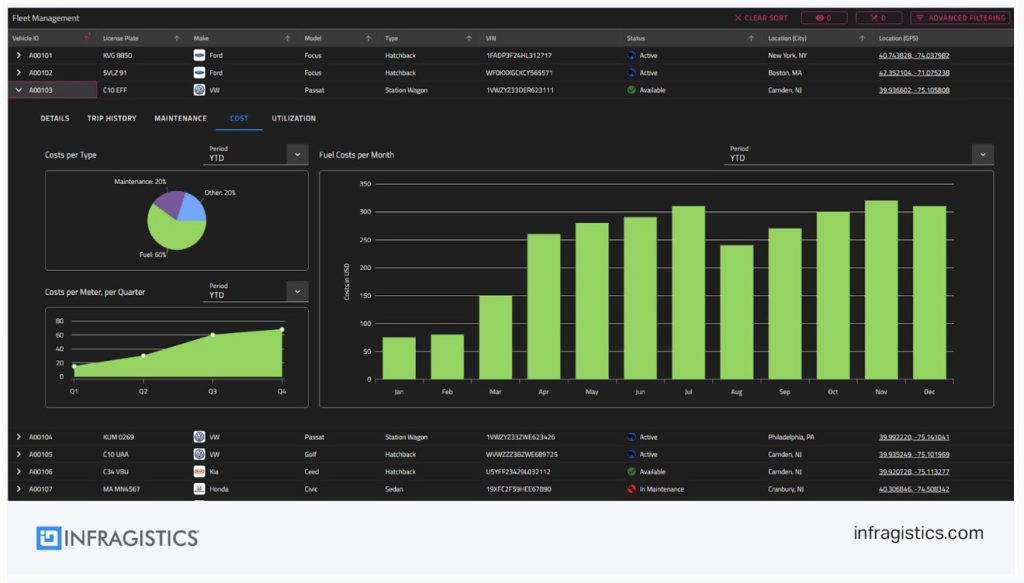
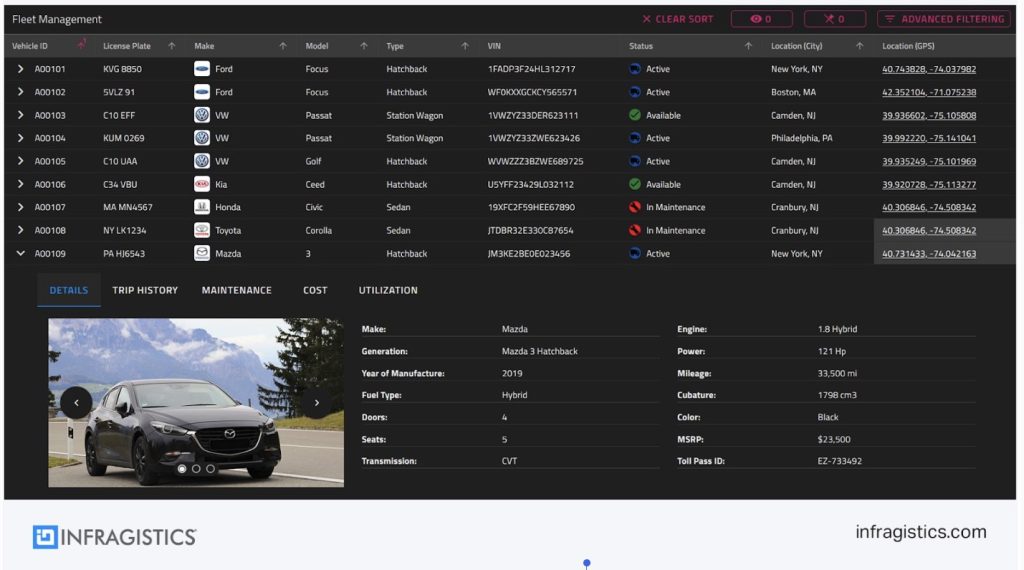
Twenty years ago, we created Infragistics Ultimate, our solution for building high-performance business applications. As time went on, we added user interface toolkits for popular platforms, such as Angular, Blazor, Web Components, React, WPF, Windows Forms, and more. Four years later, we developed our UI toolkit, Ignite UI, which is designed to supercharge web application development. This product enables users to build and maintain the fastest Grids and Charts on the web stack, while integrating AI-assisted code generation and IDE experiences that seamlessly incorporate our components into developer workflows.”
“We continued to create new products and in 2012, we developed Indigo.Design, which is our complete design-to-code system. This tool empowers users with a low/no-code full-stack AI app builder that enables rapid app development, while simultaneously supporting professional developers by integrating into AI-assisted toolchains to create stunning modern UIs.”
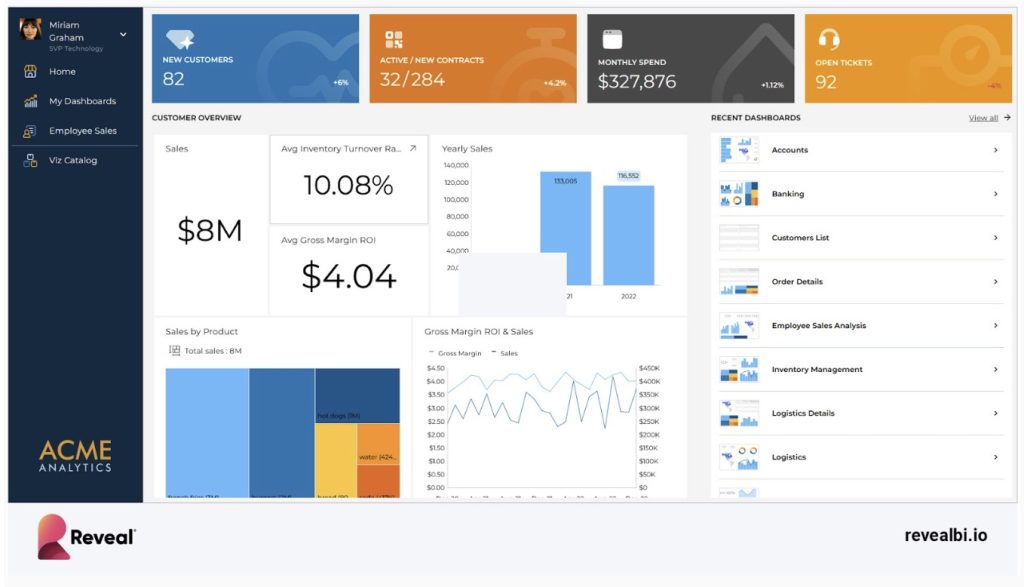
“We also launched our embedded analytics solution, Reveal, a few years ago and it allows companies to easily integrate self-service business intelligence into their apps. It offers a simple, elegant SDK that enables developers to embed advanced dashboards with conversational AI capabilities and pluggable agents that enable deep business insights directly into their apps using modern web and cloud technologies.”
“Our newest tools are App Builder, our low code platform that streamlines the design to code process, and Slingshot, an AI-native, data-driven work management platform that consolidates operational data, provides analytics, and enables agentic execution to drive measurable business growth.”
“At the end of the day, all our products are designed to help teams collaborate better, build faster, and deliver exceptional user experiences. That’s what we’re passionate about, and we’re constantly evolving to meet the needs of modern development teams.”



Challenges Faced
Have you faced any challenges in your sector of work recently? Guida acknowledged:
“Challenges are constant in the software industry, especially in a sector that moves as fast as UI/UX development and enterprise technology. Throughout my career I’ve seen significant tech shifts such as the transition from desktop to mobile-first design, the rise of cloud-native platforms, and the growing use of AI. Adapting to these changes has not only refined my technical skill set but also strengthened my ability to lead teams through uncertainty, always with a focus on creating intuitive, scalable, and innovative solutions.”
“One of the recent challenges we’ve faced is the rapid evolution of development frameworks and user expectations. Keeping pace while maintaining performance, consistency, and innovation across multiple platforms isn’t easy. For example, when frameworks like Angular, React, and Blazor began dominating the front-end space, we had to rebuild entire UI component libraries from the ground up, making sure they met the new standards of performance, responsiveness, and accessibility.”
“The key to us overcoming these challenges is the entire company’s willingness to shift and adapt to market changes. We’ve built a culture where we’re always learning, always experimenting, and never afraid to pivot. Our strategies focus on AI, speed, design simplicity, business outcomes, and growth enablement. That’s what keeps us moving forward, even in the face of disruption.”
Evolution Of The Company’s Technology
How has the company’s technology evolved since launching? Guida noted:
“When we started in 1989, we were building tools for Microsoft Windows 2.0 using Basic and C. That was the early desktop era. Since then, we’ve gone through major technology shifts, from Windows Forms and WPF to web technologies like Angular, React, and Blazor to mobile and cloud platforms.”
“With every shift, we’ve rebuilt our products from scratch to stay ahead. We didn’t just port features, we reimagined them for each new environment. That’s how our flagship products like Infragistics Ultimate, Ignite UI, Indigo.Design, Reveal, App Builder and Slingshot came to life, each tailored to the latest development trends while solving real-world enterprise needs.”
Significant Milestones
What have been some of the company’s most significant milestones? Guida cited:
“One of the biggest milestones was launching our first UI toolkit for Microsoft Windows back in the early ’90s. We built a code generator for C, C++ and Pascal for then the best compiler company Borland. That project is what put us on the map and established our reputation in the developer community.”
“We went from the C and C++ market and started competing in the Visual Basic market. That opened up new opportunities for us because it was a faster language and was growing in popularity with developers.”
“We worked closely with Microsoft to build a library of professionally-designed UI components for C# and .NET developers using Blazor. A significant part of our joint customer base with Microsoft includes C# and .NET developers. Providing tools for Blazor enables them to build web applications without having to learn JavaScript, while allowing us to further expand our relationship with Microsoft’s customers.”
“Another landmark was our merger with a competitor, Sheridan Software Systems, which made us the #1 UI tools company at the time. That was a major turning point and a really good team experience.”
“Launching Indigo.Design has helped bridge the gap between design and development. And building a global community of over two million developers and UX pros using our tools has been incredibly rewarding.”
“We’ve also gone through major technology rebuilds, each one was a milestone in itself. When we developed our first product, the current software was Microsoft Windows 2.0 and the development platform was C. This software evolved into Java and C++. Infragistics had early success as a startup but we would not be in business today if we didn’t rebuild our software ahead of each technology shift.”
Customer Success Stories
Can you share any specific customer success stories? Guida highlighted:
“There are many customer success cases I could point to, but one that stands out in particular is our work with 911 emergency systems across the U.S. Infragistics’ UI tools are used in the software that dispatchers rely on every day to save lives. Our products and solutions are critical for business operations and strategy, which is extremely important in the tech industry. But this use case also highlights how our technology is making an impact in communities. Knowing that our components are part of such critical infrastructure is incredibly meaningful. Success for us isn’t just about software, it’s about enabling our customers to deliver real value and build trust with their own users.”
Funding/Revenue
Are you able to discuss funding and/or revenue metrics? Guida revealed:
“Infragistics is a bootstrapped, private company. We have never taken outside funding.”
Total Addressable Market (TAM)
What total addressable market (TAM) size is the company pursuing? Guida assessed:
“We operate across several fast-growing markets – developer tools, UX/UI design platforms, embedded analytics and AI data-driven work management software. Collectively, these markets represent a multi-billion-dollar opportunity. The developer tools market alone is projected to surpass $12 billion globally in the next few years.”
“More than two million developers use Infragistics software, and its client roster boasts 100 percent of the S&P 500, including Fidelity, Morgan Stanley, Exxon, Intuit, and Bank of America. Our goal is to serve product teams end-to-end, developers, designers, and business users—so we’re uniquely positioned to capture value across the entire product development lifecycle.”
Differentiation From The Competition
What differentiates the company from its competition? Guida affirmed:
“What sets Infragistics apart is our combination of deep technical expertise, beautiful design, and long-term independence. We’ve been around for three decades, evolving with every major tech shift, and we’ve done it without taking outside funding. That means we’ve always been laser-focused on customer value, not investor pressure.”
“Our products are also end-to-end. Few companies offer what we do across the entire product development cycle. With Infragistics Ultimate, developers get the most powerful grids, charts, and components across web, desktop, and mobile. With Indigo.Design, designers and developers collaborate seamlessly, from prototyping to real-time usability testing to generating production-ready code. And then there’s Reveal, our embedded analytics solution that gives non-technical users the power to build dashboards without needing IT support. With Slingshot we are driving growth for our customers by bringing data from all their operational systems together in a work management tool.”
“Beyond our products, we create a culture of innovation where every employee feels that they are contributing to the company and every employee’s ideas are valued.”
“Infragistics continuously evolves as a learning organization by applying the scientific method across teams, fostering a data-informed culture of experimentation that directly ties learning to business outcomes.”
Future Company Goals
What are some of the company’s future goals? Guida emphasized:
“Our main goal is to expand our impact across the entire product development lifecycle, from design to development to analytics. We want to double down on App Builder, making it the go-to platform for design-to-code collaboration, and help more teams eliminate the friction between UX designers and developers.”
“We’re also focused on growing Reveal, our embedded analytics platform, as data-driven decision-making becomes even more critical across industries. Helping other software companies build out an AI data driven analysis and visualization with our embedded SDKs is a major growth area for us.”
“I’m also very proud of our new digital work management tool, Slingshot. Successful teams use Slingshot because of its combination of powerful data insights, project management and collaboration features. It’s an exciting tool for transforming organizations and enabling them to make data-backed decisions and leverage AI to ensure every action is informed and impactful.”
“We’ve also been concentrating on incorporating AI into our products. AI helps minimize repetitive engineering tasks, giving developers more time to focus on solving complex problems and driving product innovation.”
“Another big goal is to deepen our global footprint, especially in regions like Asia and Europe, where we’re already seeing strong adoption.”
“But most of all, we want Infragistics to remain a place where the best designers and developers want to work, and where customers know they’ll get innovative, reliable, and beautiful software, year after year.”
Additional Thoughts
Any other topics you would like to discuss? Guida concluded:
“I recently wrote the book, “When Grit Is Not Enough: An Entrepreneur’s Playbook for Taking Your Business to the Next Level” based on my decades of experience navigating in an unforgiving marketplace. It is a guide with actionable information for business leaders and entrepreneurs to deal with the complexities of the business world. The book shares my battle-tested insights and systems, revealing the art of bootstrapping, and the goals that shaped my company’s trajectory.”

