Innodisk develops DRAM solutions for AI, edge computing, industrial systems, and other applications requiring high performance, power efficiency, reliability, and long-term support. Pulse 2.0 interviewed Innodisk USA Director of DRAM Product Management Tom Lee to learn more.
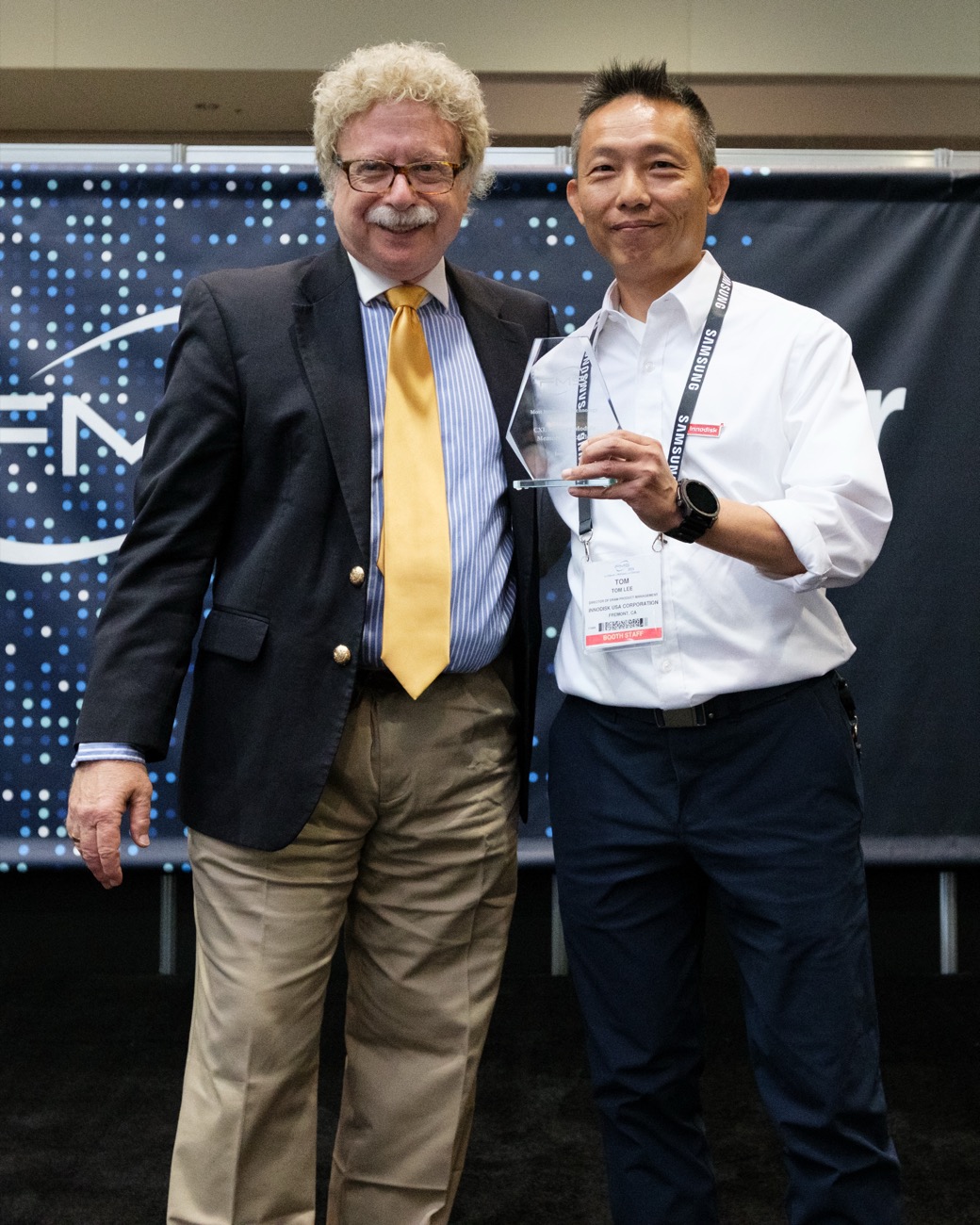
Tom Lee’s Background
When asked about his background and history with Innodisk, Lee shared:
I’m currently the Director of DRAM Product Management at Innodisk USA. In my role, I work closely with our global headquarters to drive our overall U.S. DRAM strategy, manage supply allocation, support key client projects, and handle internal operations and customer escalations.
I actually joined Innodisk right when the company was founded at our headquarters in Taiwan. Over the years, as the company grew, I took on a range of high-impact responsibilities, including setting up our very first manufacturing plant and co-founding the business unit that became our DRAM product line today.
Later, I had the opportunity to relocate and take leadership of the DRAM Product Management team here in the United States.

Entering The Memory Industry
When asked about his career journey and what led him to focus on the memory industry, Lee explained:
People often talk about applying what they studied in school to their careers, but in my case, only my associate’s degree in electronic engineering was directly related to what I do today. I went on to study languages in college and earned my master’s degree in law, which, on paper, has almost zero direct connection to my current work.
But that initial educational background was enough to get my foot in the door of the DRAM industry early on. From there, I threw myself into learning every aspect of the business, from factory operations and quality assurance to customer service, product development, OEM project management, and sales.
What I learned during that critical phase is that it’s not really about what you majored in; it’s about having the relentless curiosity to take on any challenge or opportunity that comes your way. That mindset allowed me to broaden my skill set rapidly, so when I transitioned to Innodisk, I was able to hit the ground running and make an immediate impact.
As for why I stayed in memory: Memory is truly the heart of every system. It’s a high-tempo, dynamic industry characterized by strong market cycles. It requires not only technical insight but also a sharp intuition for market supply, demand, and price fluctuations, along with a clear view of the end-to-end supply chain.
No matter how technology evolves, whether we’re talking about servers, networking, or the shift to AI, memory remains both the ultimate bottleneck and the breakthrough point. Being actively involved in generational transitions, like the shift from DDR4 to DDR5, gives me an incredible sense of professional accomplishment.


Product Management Responsibilities
When discussing what his role as Director of Product Management for Innodisk’s DRAM Business Unit involves, Lee detailed:
As the Director of Product Management for the DRAM Business Unit, I oversee the overall product strategy and go-to-market planning for the U.S. region, including product launches, lifecycle management, and product updates. I am also responsible for providing strategic planning recommendations based on key projects and future market demands to accelerate product deployment and address emerging customer needs.
One of my core responsibilities is working closely with the sales team to develop key accounts and expand into new markets. Based on the specific application requirements of different regions and customers, I provide the most suitable product portfolio and solutions.
In addition, I collaborate cross-functionally with engineering, supply chain, and operations teams to ensure the timely delivery of highly reliable solutions, particularly as the rapid growth of AI and edge computing continues to drive demand for next-generation memory technologies.
AI’s Impact On Memory Demand
When asked how the rapid growth of AI is reshaping demand across the global memory market, Lee noted:
Due to the rapid development of artificial intelligence, DRAM has structurally begun to differ from the past, no longer showing typical cyclical growth. For example, compute units such as GPUs and TPUs have massive demand for HBM, LPDDR, and DDR5, leading to the crowding out of traditional DRAM production capacity and causing supply tightness.
Secondly, in recent years, AI servers and data centers were mainly focused on training. Now, they are gradually starting to shift toward inference led by edge AI, meaning an expansion from servers to edge AI and AI PCs. This will be another wave that causes memory capacity and specifications to surge.
Next-Generation Memory Requirements
When asked which memory requirements are becoming most important for next-generation AI systems and infrastructure, Lee specified:
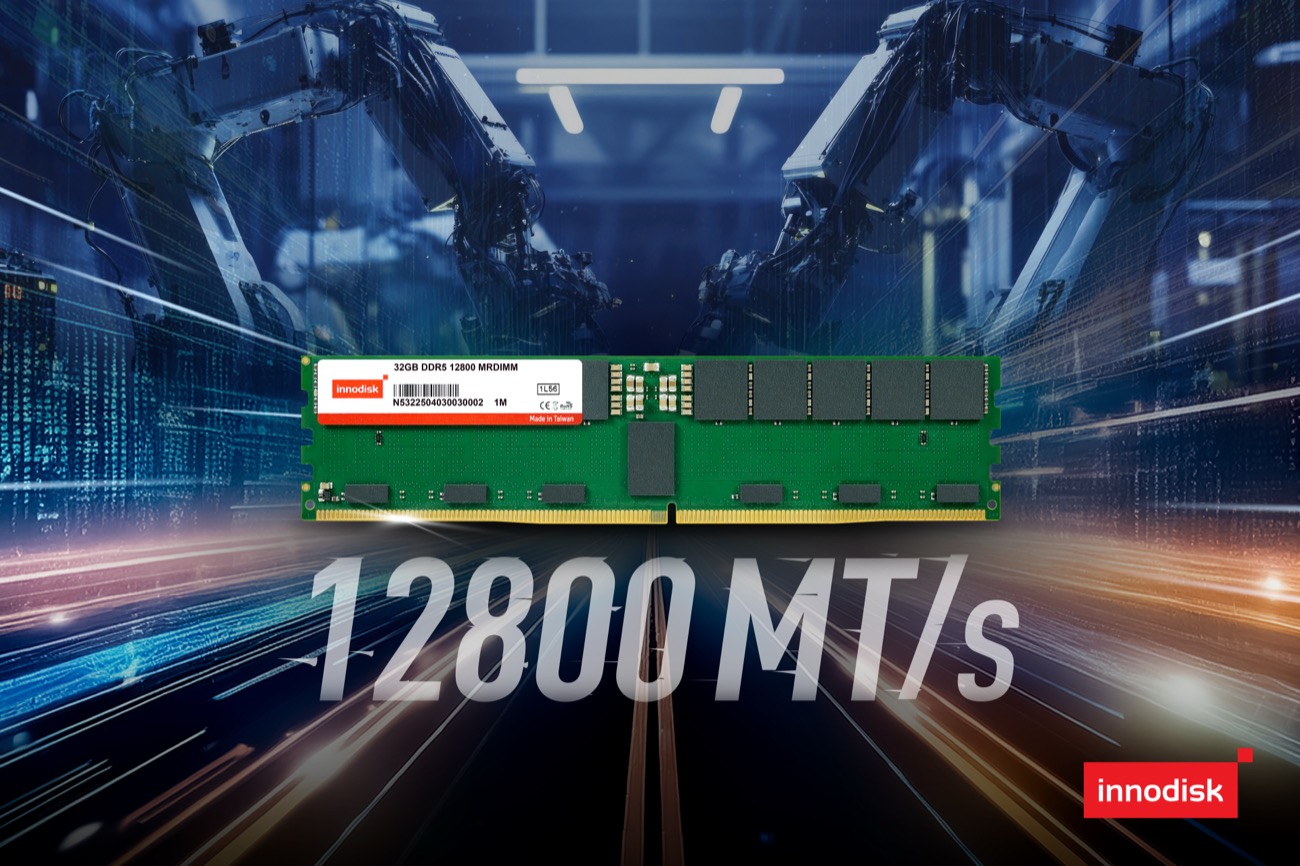
I think there are four key requirements for next-generation AI memory: higher bandwidth, larger capacity, better power efficiency, and strong reliability. As AI workloads continue to grow, memory has to move data much faster while maintaining stable performance.
For industrial AI applications, reliability becomes even more critical. Many of these systems operate 24/7 in harsh environments, so features like wide-temperature support, long product longevity, and consistent long-term performance are just as important as speed.
AI Moving To The Edge
When discussing the trends emerging as AI workloads move from centralized data centers toward edge environments, Lee described:
I think the biggest trend is that AI is becoming much more distributed. In the past, most AI workloads were concentrated in large data centers. Today, we’re seeing AI deployed across factories, transportation systems, robotics, and many other edge applications.
That changes memory requirements significantly. Instead of focusing only on maximum performance, customers are looking for the right balance of performance, power efficiency, reliability, thermal capability, and long-term support.
Expanding The DRAM Portfolio
When asked how Innodisk is developing its DRAM portfolio to address the performance, capacity, and power-efficiency requirements of AI applications, Lee explained:
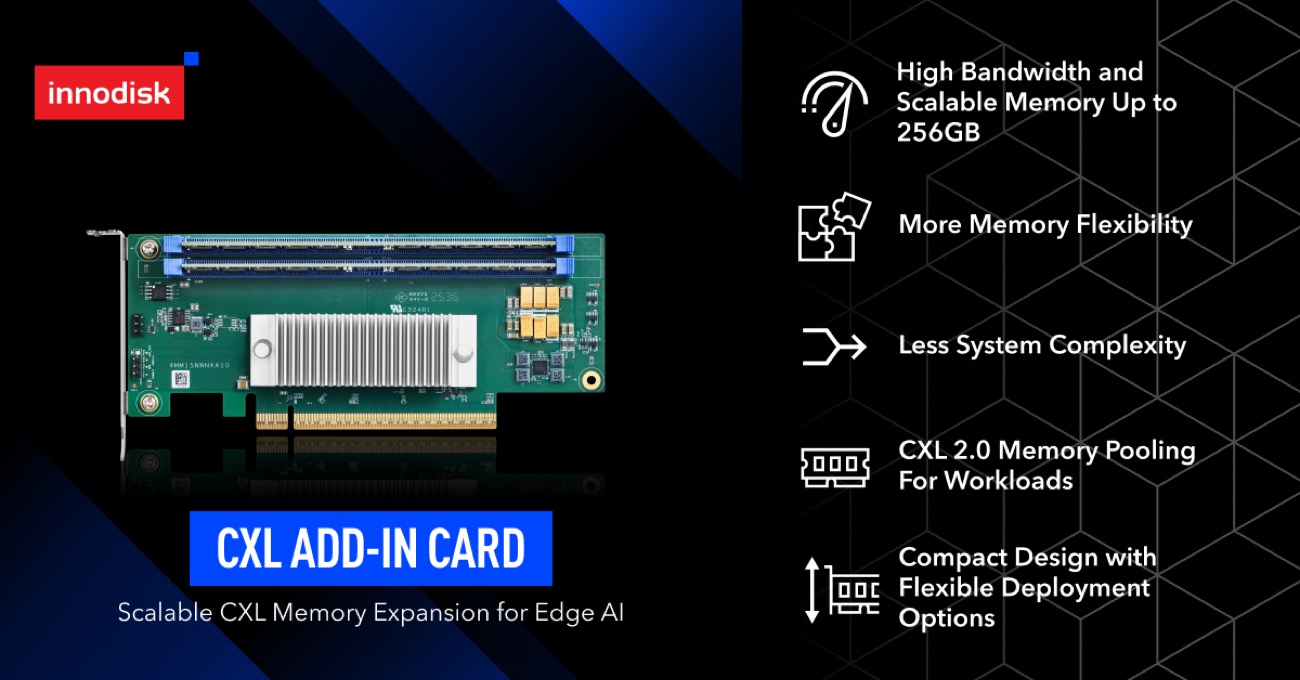
At Innodisk, we’re continuously expanding our DDR5 portfolio to support the evolving needs of AI applications. Our focus is on delivering higher bandwidth, larger capacities, and improved power efficiency to meet the increasing demands of AI computing. That’s why we developed the AI Memory Series.
At the same time, we understand that performance alone isn’t enough, especially for industrial AI. That’s why we also integrate technologies such as Wide Temperature support, Conformal Coating, and Anti-Sulfuration to ensure long-term reliability in demanding operating environments.
Mission-Critical Reliability
When asked about the reliability challenges that arise when deploying memory in mission-critical sectors such as automation, transportation, and healthcare, Lee emphasized:
When we talk about mission-critical applications, reliability is no longer just a product feature; it’s a system requirement.
Whether it’s an autonomous production line, a railway control system, or a medical device, these applications are expected to run continuously with minimal tolerance for failure. Even a single memory error can affect overall system availability.
That’s why we place as much emphasis on long-term reliability and validation as we do on performance, ensuring our memory solutions can support customers throughout the entire product lifecycle.
The Future Of AI Memory
When discussing how AI-related memory technologies and customer requirements could evolve over the next several years, Lee stated:
I believe AI will continue driving memory innovation, but the future isn’t just about faster memory. It’s about delivering the right memory solution for the right application.
As AI expands from cloud computing into edge AI, industrial automation, robotics, and autonomous systems, memory requirements will become much more diverse. We’ll continue to see broader DDR5 adoption, higher-capacity modules, and more optimized solutions for different AI workloads.
At the same time, customers will place greater emphasis on long-term reliability, power efficiency, product longevity, and supply continuity. These factors will become just as important as raw performance when deploying AI systems in the real world.
Building Reliable AI Systems
When invited to discuss an additional topic, Lee concluded:
AI is creating exciting opportunities across every industry, but successful AI deployment requires the right hardware foundation.
At Innodisk, we’re committed to helping customers build reliable AI systems through high-quality memory solutions, close technical collaboration, and long-term product support. We believe those partnerships will become even more important as AI continues to evolve.

