

Ivalua provides a unified Source-to-Pay platform that connects sourcing, supplier management, contracts, procurement, invoicing, analytics, and AI capabilities through a single data model. Pulse 2.0 interviewed Ivalua CMO Alex Saric to learn more.
Alex Saric’s Background

When asked about his professional background and path into procurement technology, Saric shared:
My path to procurement technology wasn’t a straight line. It started at West Point, where I studied economics, and then continued with the U.S. Army Cavalry. After a stint in strategy consulting, I moved into the technology world as a founding member of Zeborg, a B2B procurement software company, before spending over a decade scaling procurement solutions globally.
I joined Ivalua in 2017 as CMO, excited by the strategic impact the platform was having for leading global businesses and the need to let the market know about it.
Today, I lead Ivalua’s global marketing strategy. But what I’m most proud of over nearly 25 years is the teams I’ve built. Of the more than 200 employees I’ve hired, I can count the ones who’ve resigned on one hand.
Primary Responsibilities
When discussing his primary responsibilities as Ivalua’s CMO, Saric explained:
As CMO, I lead the development and execution of Ivalua’s global marketing strategy, brand, and thought leadership programs. My role spans product marketing, demand generation, analyst relations, public relations, and go-to-market alignment with sales, product, and customer teams.
The Ivalua Community
When asked about his favorite memory from working at Ivalua, Saric recalled:
I have many fond memories of my time at Ivalua already, but if I have to pick one, I’d probably say it was a moment during our large annual conference, Ivalua NOW, in Paris this year.
At the closing party, a customer came up to me and gave me a big hug. She told me how great it was to be back at our event again because it felt like a family reunion more than a business event, seeing so many of the same leadership and peer faces again and having such open conversations.
It reminded me that we have something really rare at Ivalua, especially in the fast-moving world of technology.
Core Products And Features
When describing Ivalua’s core products and features, Saric detailed:
Ivalua provides the only truly unified Source-to-Pay platform built with AI at its core. We offer modular solutions for sourcing, supplier management, contract management, procurement, invoicing, and analytics, all seamlessly connected on a single data model, giving organizations end-to-end visibility and control over all spending and supplier activity.
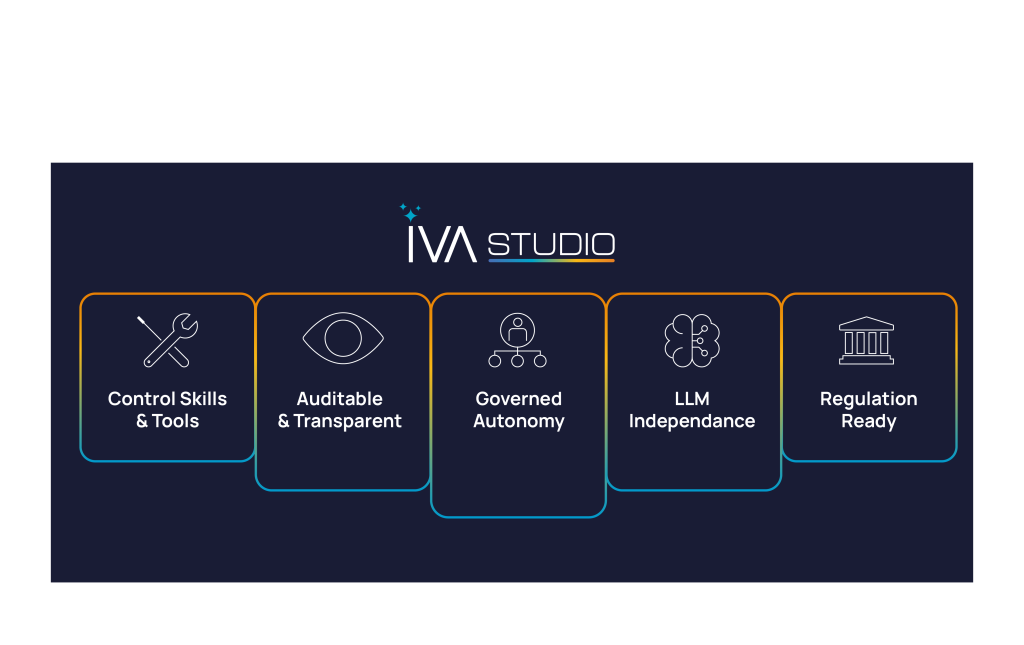
Embedded in the platform is our Intelligent Virtual Agent, IVA, powered by IVA Studio. IVA knows the customer’s data, follows their rules, and gets work done from Day 1 by running sourcing events, monitoring supplier risk, accelerating contract reviews, and answering questions across the full procurement picture.
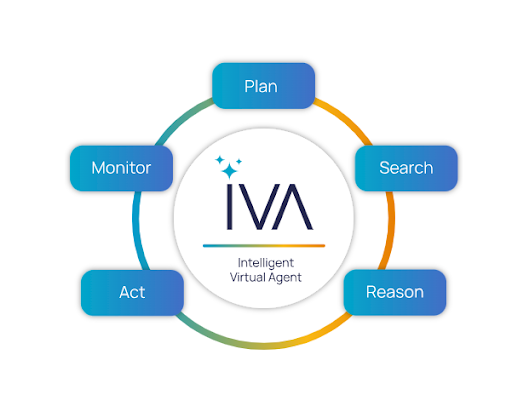
Unlike other offerings, it’s a single master agent that creates and orchestrates subagents as needed and can do anything a person can within the platform. IVA operates under the same role-based access controls that already govern people, so every action ties back to an accountable human, with complete auditability.
We call this governed autonomy: AI doing the work, with people directing and improving it.
Navigating Market Volatility
When asked about recent procurement and supply chain challenges and how Ivalua has responded, Saric noted:
Procurement and supply chain teams are operating amid sustained geopolitical and trade volatility. Back-and-forth tariffs, shifting trade policies, and regional instability are driving higher costs and increasing supply chain complexity, which inevitably affects all industries involved. At the same time, evolving trade regulations and compliance requirements are adding friction for organizations operating across borders.
In response, we’ve prioritized proactive, AI-enabled spend and supplier management. AI-powered platforms are giving procurement teams real-time visibility into supplier risk, tariff exposure, and upstream dependencies while freeing their time to develop strategies and relationships to manage today’s turbulence.
Intelligent agents can continuously monitor risk signals, model tariff and sourcing scenarios, and surface early warnings before disruptions hit. This allows teams to move faster, make data-driven sourcing decisions, and reduce reliance on manual analysis.
Technology Evolution
When discussing how Ivalua’s technology has evolved since the company launched, Saric described:
Ivalua has evolved from a configurable Source-to-Pay platform into a truly unified enterprise AI platform for procurement. As generative AI became a practical enterprise technology, we focused on embedding it directly into the core of our platform rather than offering it as a separate, bolted-on tool.
This evolution led to the development of our master agent, IVA, which can perform any work across the entire Source-to-Pay process that a human can do, rather than requiring customers to build and maintain a growing library of separate agents, as with competing solutions.
Our approach positions IVA as a powerful collaborator for procurement teams, not a replacement. IVA automates routine, time-consuming work and supports data-driven decisions by analyzing large volumes of procurement data and surfacing insights and recommendations, while leaving judgment and accountability with humans.
The key to our success with AI is that IVA is a native part of our unified, no-code/low-code platform, built into the system and integrated across sourcing, supplier management, contracts, and payments. This means our AI inherits the security, data privacy, and end-to-end integration of the Ivalua platform. Customers can simply tell IVA what they want, and IVA executes it.
Major Company Milestones
When asked about Ivalua’s most significant milestones, Saric said:
Ivalua was founded in France in 2000. We expanded to the U.S. in 2011 and signed our first U.S. customer that same year. In 2015, we were recognized as a Leader in Gartner’s 2015 Magic Quadrant for Strategic Sourcing Application Suites, and we are the only vendor to have remained a Leader in every Gartner Magic Quadrant for our industry since.
In 2019, we raised €60 million and reached unicorn status. We surpassed $100 million in revenue in 2020 and reported $235 million in revenue in 2025, with a 24% year-over-year increase in organic subscription revenue.
Today, Ivalua serves over 500 organizations worldwide, with more than 3 million users and 3,100 certified consultants, an increase of 26% year over year.
The U.S. has grown into one of our strongest markets, where we’ve established a leadership position in highly regulated industries like aerospace and defense and the public sector, where the security and integrity of a single data model are non-negotiable. This month, we launched IVA Studio, redefining how procurement works with AI.
Customer Success Stories
When invited to share a specific customer success story, Saric provided two examples:
I have two examples that capture different sides of what we do: one focused on the foundation of unified procurement and the other on what’s possible when AI builds on top of it.
CACI digitized the complete Source-to-Pay process using Ivalua’s platform. The unified nature of our platform, with seamless process flows, a single source of truth for suppliers, and a single intuitive experience, helped drive rapid adoption and massive efficiencies.
CACI was able to enable more than 98% of its 40,000 suppliers, most within a few months, and reduce the onboarding of new suppliers from 21 days to less than one day. The company reduced overall procurement and accounts payable operating costs by 30%.
The flexibility of the platform also helped CACI transition to a shared services model, following a decision by its board, in only three months. The complicated nature of federal contracting required specialized knowledge that would have otherwise required hiring new, more costly resources. However, by configuring those requirements into intelligent workflows, CACI was able to rapidly establish a shared services center without hiring new resources.
On the AI side, Körber, the German technology group with businesses spanning machine building, pharmaceuticals, and supply chain technology, offers a window into what AI can look like when governance comes first.
Körber began its AI journey in 2023 with strong principles from Day 1: an ethics council, AI guiding principles, and the same IT governance the company already relied on. The organization has realized significant commercial and operational benefits through AI-driven automation and by tackling areas that procurement previously didn’t have the capacity to address. None of that works without getting the underlying data and governance right.
Competitive Differentiation
When asked what differentiates Ivalua from its competition, Saric emphasized:
Ivalua’s biggest differentiator is the architecture our platform is built on, and going forward, it’s even more important. We’ve spent two decades building a truly unified Source-to-Pay system on a single data model and code base.
That foundation removes silos across sourcing, procurement, and supplier management and gives organizations end-to-end visibility into spending and supplier activity. It’s the single biggest reason we have maintained the industry’s highest retention rate every year for more than two decades.
In the AI era, that architecture matters even more. A unified data model means our agent, IVA, sees the full procurement picture instead of inheriting the gaps and duplicates that come with fragmented systems, which is where AI tends to hallucinate or simply make poor decisions.
The same role-based access controls that already govern our users carry over directly to AI, so governance scales without new permission layers or effort. The single code base means there’s nothing to integrate. As a result, IVA works from Day 1 and can do anything a user can across the entire Source-to-Pay process. It’s fast, easy, and powerful.
Future Goals
When discussing Ivalua’s future goals and the evolving role of procurement, Saric concluded:
A longstanding goal is to help procurement complete its evolution from an operational function into a true strategic business driver, and AI is the catalyst to get it there.
For most procurement teams today, the real bottleneck is bandwidth. Even strong teams spend the bulk of their time on tactical work: chasing approvals, reconciling data, and managing exceptions. That leaves little room for the work that only people can do well, such as building close supplier relationships, developing strategies to improve resilience and sustainability, and modeling how potential trade policy shifts would affect the business.
That’s the gap we’re investing to close. We don’t believe in AI replacing people, but in people working with AI to unlock their true potential.
Our direction is AI in production across the full Source-to-Pay lifecycle, under governed autonomy: AI doing the work, with people directing and improving it. As that capacity is returned to procurement teams, they can spend it on the work that actually moves their organizations forward.
