

JFFVentures is an impact investment fund that provides early-stage capital to technology companies developing education, HR, and workforce solutions designed to improve economic mobility for low- and middle-wage workers. Pulse 2.0 interviewed JFFVentures Managing Partner Sabari Raja to learn more.
Sabari Raja’s Background
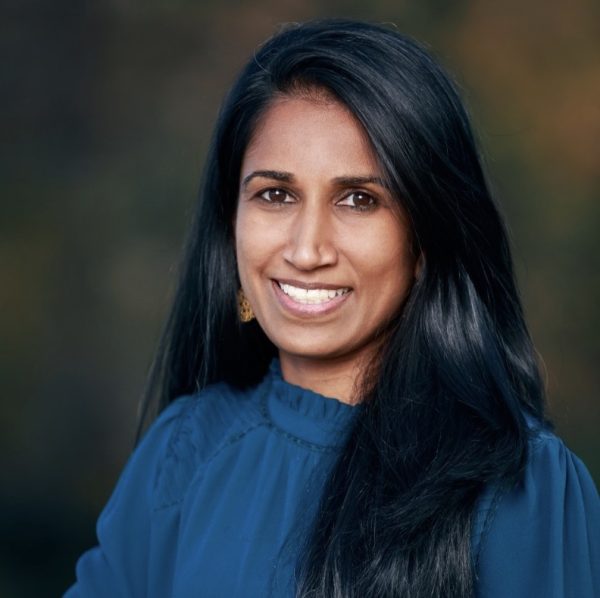
Could you tell me more about your background? Raja said:
“I grew up in rural South India on a coconut farm and was a first-generation college student. Education was the bridge my parents emphasized, and at age five I went to a highly disciplined boarding school—an experience that shaped my independence and resilience early on. I earned my undergraduate degree in electrical engineering in India and then moved to the U.S. on my own to pursue a master’s in computer science at Louisiana State University.”
“I began my career at Texas Instruments as a software engineer in what would become the early days of modern ‘edtech,’ and over 14 years I moved into product, business development, and emerging markets—spending a lot of time in classrooms and underserved districts, which deeply influenced my focus on opportunity gaps. That work ultimately led me to found Nepris (now renamed Pathful after the acquisition and merger in 2021), an edtech company bridging education and industry to prepare students for the future of work. Today, as Managing Partner at JFFVentures, I apply my operator experience to help shape our investment strategy and support our portfolio companies’ growth.”
Evolution Of The Firm’s Thesis
How has your firm’s thesis evolved over time? Raja noted:
“Our core ‘why’ has stayed consistent. We invest in solutions that expand economic mobility for low- and middle-wage workers, especially at a time when AI and automation can either widen opportunity gaps or help close them. What has evolved is how we execute that thesis.”
“Early on, we had the opportunity to test and refine our approach through a pilot fund. It was a true proof of concept that helped us sharpen what it means to be a strategic, value-added partner (beyond just capital). We learned how to better evaluate scalability and go-to-market realities, which business models can truly reach workers at scale, and how to support founders as they move from early validation to durable growth, while keeping impact at the forefront alongside financial performance.”
Favorite Memory
What has been your favorite memory working for your firm so far? Raja reflected:
“One standout ‘full circle’ moment was making our first investment from the Economic Mobility Fund I. We invested in Pace AI. It was the moment our vision became real of backing a founder with lived experience, building a cutting-edge, AI-native solution for the exact communities we care about. As someone who’s been on the other side of the table as a founder, that “first institutional check” is something you never forget. By providing that to Pace AI, and truly feeling the alignment across mission, product, and founder, was incredibly meaningful.”
Significant Milestones
What have been some of your firm’s most significant milestones? Raja cited:
“Reaching $25 million in committed capital was an important milestone for us. We are emerging managers raising Fund I with the right structure, team and thesis in place, and we’re fortunate to be supported by strategic LPs who believe in our mission. We’re grateful for that support and see this as an early step with more work ahead.”
Investment Success Stories
Would you like to share any specific investment success stories? Raja highlighted:
“One standout example is BoodleBox, a collaborative AI platform purpose-built for higher education that gives students, faculty, and institutions secure, unified access to multiple leading AI models in a single, FERPA-compliant environment. Within just one year of launch, BoodleBox reached nearly $2M million in annual recurring revenue, a strong indicator of product–market fit and clear demand from both higher-education leaders and students for institution-ready AI infrastructure.”
“Since launching in Q4 2024, BoodleBox has seen rapid adoption across the sector, with educators, students, and professionals at more than 125 college and university partners selecting BoodleBox as their AI infrastructure, extending equitable AI access to faculty, staff, and students. “
“BoodleBox’s momentum reflects not just early traction, but a clear appetite within higher education for collaborative, secure AI tools that prepare learners for the future of work.”
AUM And Other Metrics
Can you discuss total AUM or any other notable metrics? Raja revealed:
“We’ve publicly shared that Economic Mobility Fund I has surpassed $25 million toward our $30 million fundraising goal as of our second close.”
. On the impact side, we measure reach and outcomes across the portfolio from early diligence through ongoing portfolio support. To date, our portfolio companies, across 16 states and four countries, have collectively reached more than 24 million people, expanding access to education, skills training, and advancement opportunities.”
“Because we invest at the pre-seed and seed stage, financial outcomes and “dollars returned” are naturally longer-cycle, but we’re intentional about building toward both market-rate performance and measurable economic mobility outcomes.”
Industry Focus
What are some of the industries that your firm is focused on? Raja pointed out:
“We are a workforce investor. Rather than anchoring to a single industry, we invest across sectors where talent shortages, skills mismatches, and workforce access challenges are most acute. That includes healthcare, industrials and advanced manufacturing, and the care economy—industries where demand is high, labor constraints are persistent, and better workforce solutions can unlock real economic value.”
“Because we invest in economic mobility end-to-end, we also look at adjacent verticals such as fintech and health-related solutions when they directly influence job access, retention, and advancement. Our focus isn’t the sector itself, it’s whether a solution meaningfully improves how people enter, stay in, and progress through the workforce.”
Differentiation From Other Firms
What differentiates your firm from other firms? Raja emphasized:
“Two things are foundational. First, we’re built to be a strategic, value-added partner, not just a check on a cap table. Through our partnership with Jobs for the Future (JFF), we can help founders access an ecosystem of employers, educators, and policymakers to test, validate, and scale solutions. We’re operationally independent, but strategically aligned with JFF’s mission and national platform.”
“Second, we’re highly intentional about how we support companies post-investment. We offer a dedicated role, a Director of Platform and Partnerships, to navigate the JFF ecosystem and “own” the strategic value and founder relationship after we invest. That structure makes our support more thoughtful and systemic, rather than ad hoc.”
Challenges Faced
What are some of the challenges you faced while working at the firm? Raja acknowledged:
One challenge is turning a big advantage—access to a large, established ecosystem—into real, repeatable value for early-stage founders. It’s easy to say ‘we have this incredible network,’ but integrating innovative startups into a 40-year-old organization and ensuring value for all stakeholders takes intention and design.”
“We addressed this by building the right structure and team from the start, including creating the Director of Platform and Partnerships role to connect the dots, navigate the ecosystem, and build a consistent post-investment support model that benefits founders and partners across JFF.”
Future Goals
What are some of your firm’s future goals? Raja emphasized:
“Our near-term goal is to continue building JFFVentures’ brand as a thoughtful, strategic, value-added investor.”
“Longer term, we want to help shape the field by proving a core belief that impact isn’t a risk to returns. It can be an enabler of financial success. As we build future funds, we also want our founders to be the strongest spokespeople for what this model makes possible because the best story of any fund is the success of the companies and people it backs.”
Additional Thoughts
Any other topics you would like to discuss? Raja concluded:
“AI can be a bridge, not a barrier, if it’s designed with workers in mind. The most exciting founders we meet aren’t building technology that replaces people; they’re building technology that expands access, embeds learning into work, and creates real pathways to quality jobs.”
