

Joan Workplace is a workplace management platform developed by Visionect that combines wireless ePaper devices with software for meeting room booking, desk reservations, visitor management, and digital signage. Pulse 2.0 interviewed Visionect Co-Founder and CTO Luka Birsa to learn more about his background, the origins of Joan Workplace, its workplace technology solutions, customer success stories, financial milestones, competitive advantages, and future growth plans.
Luka Birsa’s Background

When asked about his professional background and responsibilities at Joan Workplace, Birsa shared:
I’m co-founder and CTO of Visionect, the company behind Joan Workplace. My job covers most of the road from a customer problem to a product in their hands. I lead our product teams, who build the Joan platform and devices, including the new Joan ePaper badge, and our growth team, who take those products to market. I also oversee security at Visionect, which is ISO 27001 certified, and how we bring AI into the way the whole company works. I’m an engineer by background and have spent well over ten years building low-power ePaper devices and the software that runs them.
How The Idea For Joan Workplace Came Together
Discussing the company’s origins and how ePaper technology inspired its first workplace products, Birsa explained:
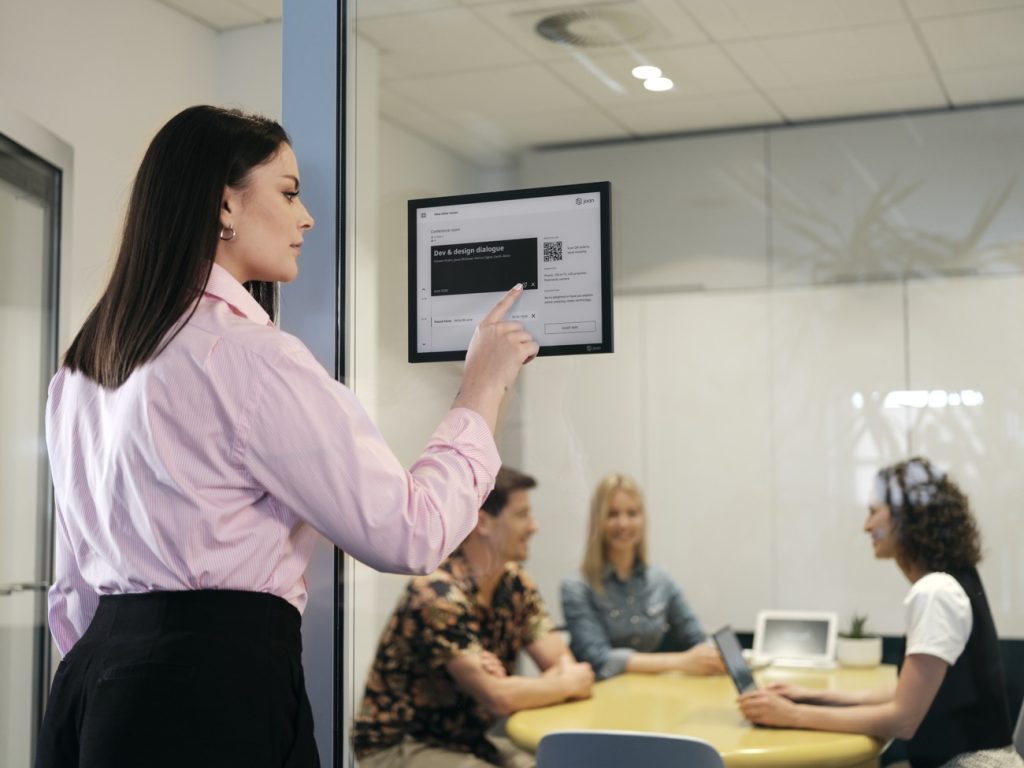
It started with early experiments with ePaper, the same technology that made the Amazon Kindle work. We could see that what made ePaper great for reading would also solve real problems in the workplace: it uses very little power, it’s easy to read and it doesn’t need cables. Our first product was a wireless meeting room display. At the time, room booking systems were expensive, wired and complicated. We were the opposite of those spaceship-like systems. We cared most about user experience and removing friction, and we still do.
Favorite Memory Working At Joan Workplace
Reflecting on his favorite memories and one of the company’s most important turning points, Birsa recalled:
On the big picture, it’s seeing how far we’ve come, from a small and fairly naive team of engineers to a proper company that delivers real value to its customers.
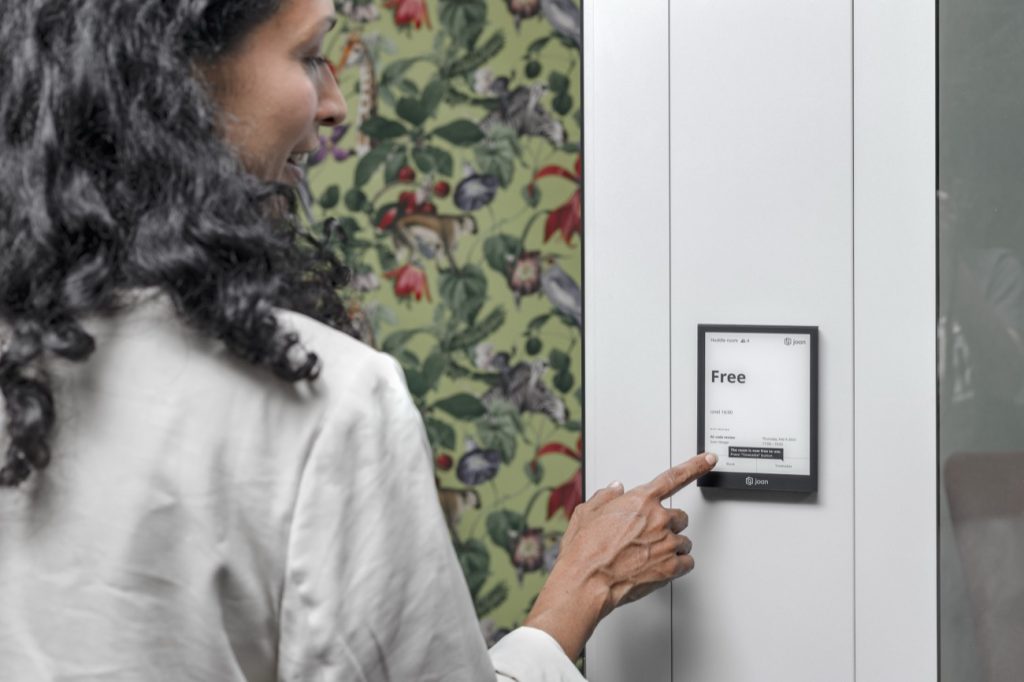
The memory I come back to most is how Joan was born. Back then Visionect was a platform company. We built ePaper technology and helped other companies turn it into their own products. To show what was possible, we published ideas for things people could build with ePaper. One of them was a display on a meeting room door that showed whether the room was free. It was only an idea, but it hit a nerve and people across the industry got excited about it.
We saw there was real demand and decided to turn it into a product as fast as we could. Kickstarter was only just starting to be used for hardware, which was still mostly something big companies did, and we went for it anyway. Until then we’d spent years imagining products and trying to convince customers they needed them. Now people were swiping their credit cards months before the product was ready, and sticking with us while we built it. That pull from the market was our biggest aha moment and probably the most important turning point for the company. Since then, customers and product have been at the front of everything we build.
It’s also why I’m so excited about right now. AI is giving our teams new ways to serve customers better, and it’s a great time to be a product builder.
Core Products And Features
Describing Joan Workplace’s core products and capabilities, Birsa highlighted the company’s unified workplace management platform and its newly introduced reusable ePaper badge:
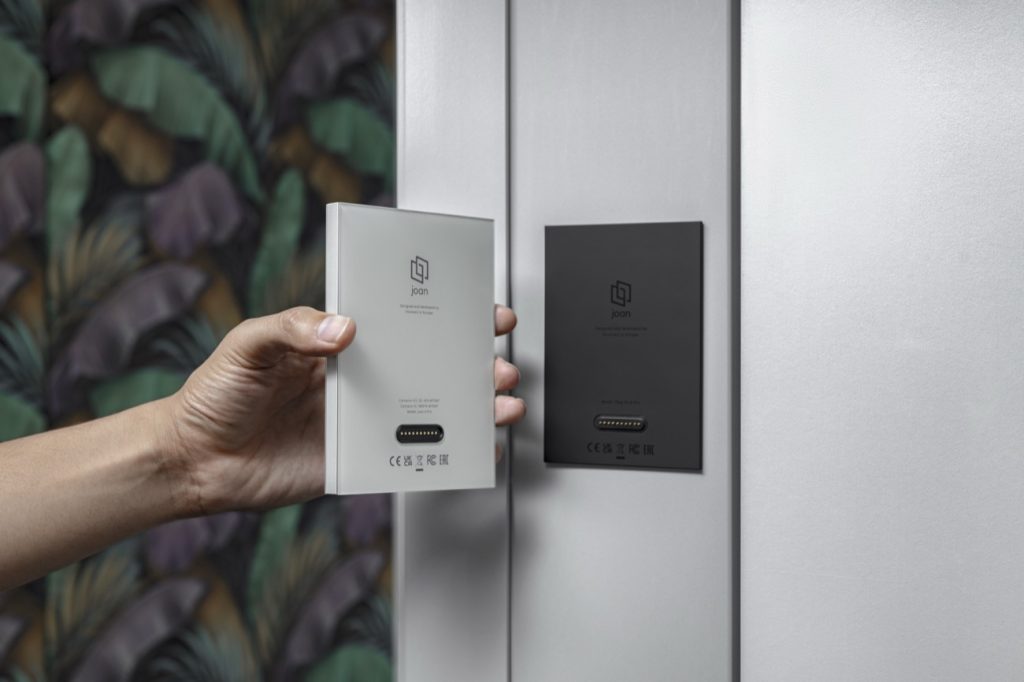
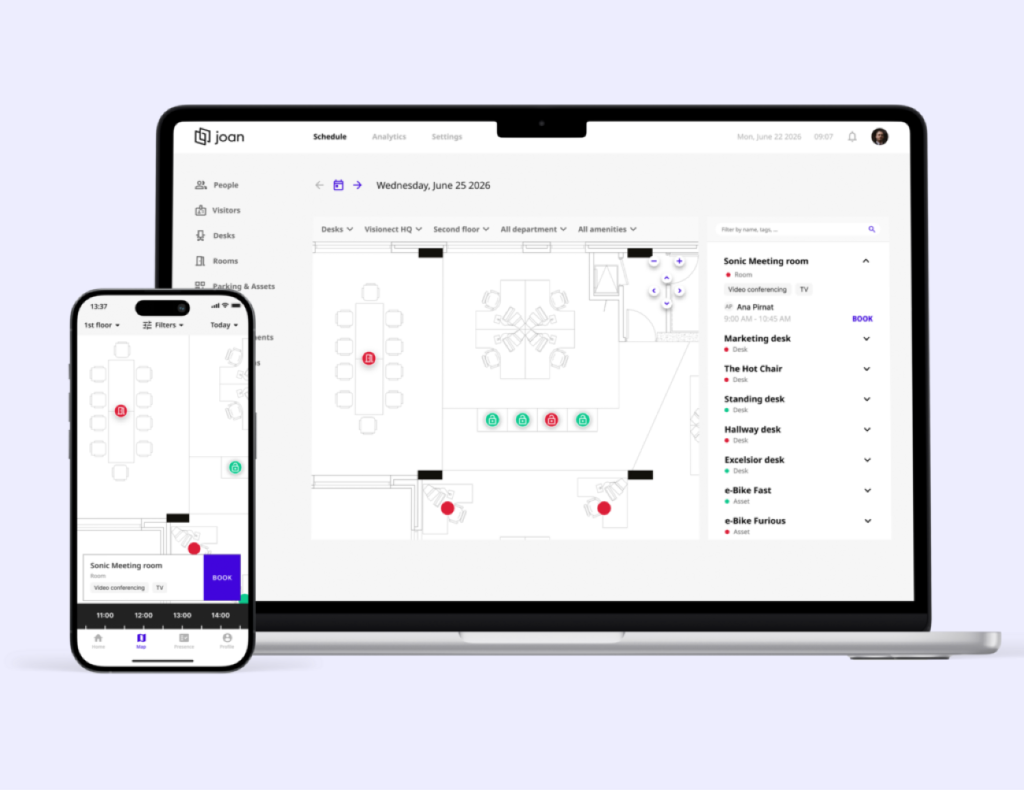
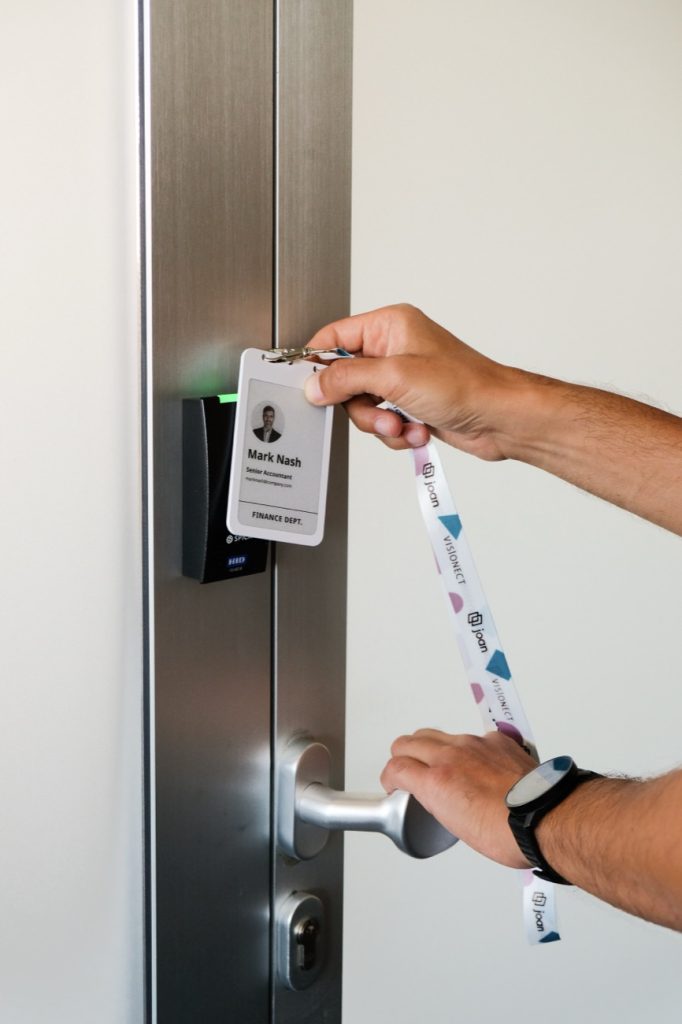
Joan Workplace is one platform for running an office. It covers meeting room booking, desk booking, visitor management and digital signage. All of it is managed from the same software and shown on wireless ePaper displays. Our newest device is the Joan ePaper badge, a reusable 4-inch, four-colour badge that updates over Bluetooth instead of being reprinted. One badge can work as an employee ID, an event badge or a visitor pass. Its NFC chip opens doors where the access-control system supports it, and it runs about seven weeks on a rechargeable battery.
Challenges In The Workplace Technology Industry
Addressing the challenges Joan Workplace encountered as office environments changed during the pandemic, Birsa discussed how the company adapted its products and business model:
The biggest one was COVID. It changed what offices are for, almost overnight. If we had stayed a meeting room company, we would have shrunk with the meeting room. It was a hard period, and looking back it was also one of the best things that happened to us, because it forced us to move faster than we ever would have on our own. We expanded into desk booking, visitor management and workplace content, built a new suite of products and redefined what Joan is. Our mission stayed the same: better everyday workplace experiences. The centre of gravity moved from hardware to software, and that move is what made products like the badge possible. The company is in a very different and much better place today because of it.
How Joan Workplace’s Technology Has Evolved
Looking back at how the company’s technology has developed, Birsa described its transition from standalone ePaper hardware to an integrated workplace platform:
We started with ePaper hardware and grew into a workplace company. We’re still closely tied to hardware, and the Joan ePaper badge is the clearest example. It’s the smallest screen we make, and it has the biggest job. Every other display we make belongs to a room, a desk or a wall. The badge belongs to a person.
Today we do a lot more than hardware. Most of our effort goes into the experience around the device: the platform, the integrations with the systems our customers already use, and making the device and the backend work together as one seamless thing. The badge runs on the same platform as our room displays and signage, and the content is prepared in the backend, so for a customer a rebrand is just a template change.
Significant Company Milestones
When asked about Joan Workplace’s most important achievements, Birsa pointed to the company’s international expansion, product design recognition, and recent ePaper badge launch:
Moving from a platform company that built ePaper solutions for anyone to focusing fully on Joan, and building what our customers were asking for.
Four Red Dot Design Awards in ten years. Every product we’ve launched has won a design award.
Around 100,000 ePaper devices shipped to around 5,000 customers in more than 100 countries.
Product longevity and almost zero failure rate.
20 October 2026: the Joan ePaper badge launched in more than 90 countries. We believe it will redefine what we offer and how we’re positioned in the market.
Customer Success Stories
Highlighting examples of Joan Workplace’s technology in use, Birsa described implementations at PwC Norway, University Children’s Hospital Zurich, and Takeaway.com:
PwC Norway moved from closed offices to activity-based working. Its first desk booking system worked on paper, but people ignored it. They’d put a jacket on a chair and that was the booking. With Joan desk booking and Zens occupancy sensors, booking now happens automatically across 4 buildings, 16 floors and 1,100 desks. Employees either book ahead or just sit down at a free desk, and the sensor books it for them. “The most important change is that you do not need to do anything,” says Nina Ottesen, who runs facility operations. The same data also tells cleaners which desks were used, so unused desks aren’t cleaned for nothing.
University Children’s Hospital Zurich opened a new hospital in November 2024 with open-plan spaces for doctors instead of traditional offices. Hundreds of Joan devices outside treatment and meeting rooms show live availability and sync with Outlook, so staff can book a room on the spot instead of hunting for a laptop. The hospital won the Joan Future of Work Award 2025. “The minimalistic design matches our special architecture perfectly,” says Adnan Jakupovic, Application Manager.
Takeaway.com chose Joan to end the daily hunt for free meeting rooms. The biggest surprise was how many “ghost meetings” they had been running without knowing it. Weekly room-use reports and automatic cancellation of unattended bookings freed up rooms and made meetings more efficient. “Due to simplicity, low cost, and the ease of use, we chose Joan,” says Dewi Siemerink, Functional Application Manager.
Funding And Revenue Growth
Discussing Joan Workplace’s financial development, Birsa noted that the company raised outside capital during its early years and has since established a profitable business:
We raised outside funding in our early years. Today Joan is a healthy, profitable and growing company, with more than €10 million in annual revenue.
What Differentiates Joan Workplace From Its Competition
Explaining how Joan Workplace distinguishes itself from other workplace technology providers, Birsa emphasized product design, security, simplicity, and its unified software platform:
Design, security, support and ease of use. We don’t try to compete on the lowest hardware price. We compete on how little effort our products ask of the people who use them and the people who run them. Design and user experience are part of our DNA, and every product we’ve launched has won a design award. The other difference is that everything runs on one platform. Rooms, desks, visitors and signage are managed from the same system, so IT deals with one vendor, one integration and one security model instead of a stack of point solutions. And because ePaper uses so little power and needs no cables, our devices go where other screens can’t, without an electrician.
Future Company Goals
Outlining the company’s long-term vision, Birsa discussed plans to expand Joan Workplace’s reach and further integrate workplace software, hardware, and artificial intelligence:
We want to improve the daily working life of more than 10 million employees worldwide by removing friction from everyday workplace interactions. That means going further from screens to experiences and from hardware to platform: workplace workflows, software integrations and AI-driven content management. Our industry has spent a long time asking how big and how bright a screen can get. The more interesting question now is how many surfaces a building needs to show what’s true, and how few of them should need a cable.
Why Joan Workplace Continues To Build Hardware
Discussing why a workplace software company continues developing its own hardware, Birsa highlighted how the Joan ePaper badge reflects the company’s focus on integrated products and workplace experiences:
Yes, why a workplace software company still builds hardware. Our newest product, the Joan ePaper badge, is a good way to explain it.
Every other Joan device belongs to a room. The badge belongs to a person, and that makes it the hardest one to get right. People join, change teams and leave, and their badge should keep up with all of it without anyone reprinting a card.
So most of the work on the badge went into the platform behind it. The device itself stays simple, and what makes it useful is how it works together with the rest of Joan.
It’s the same thing we learned with the first Joan. Customers kept telling us badges were a mess: facilities prints them, HR asks for them, security owns the door readers, and nobody owns the whole process. We built for that problem. The badge is the part people see, and it only works because of everything behind it.
